

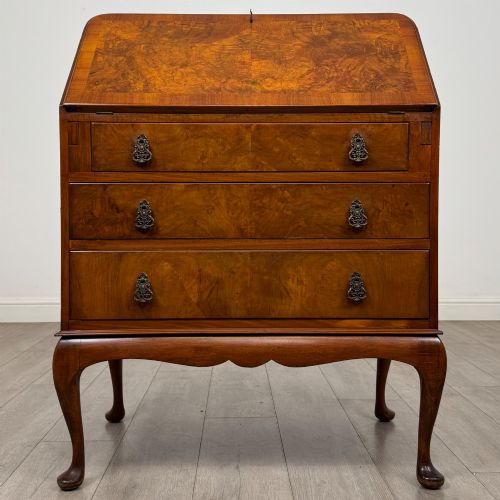
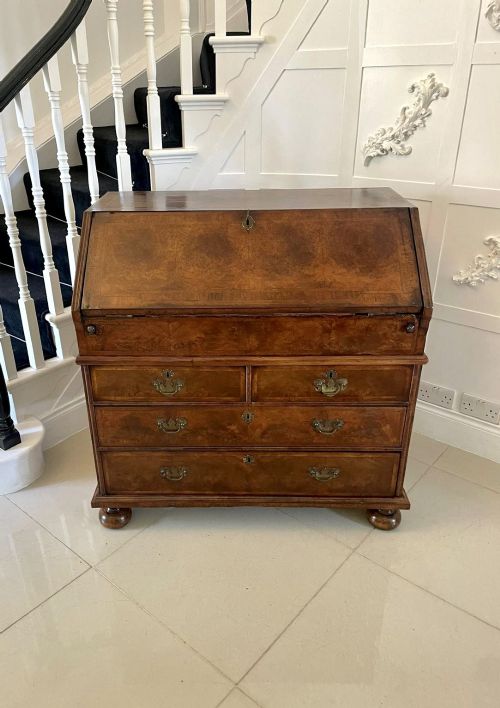
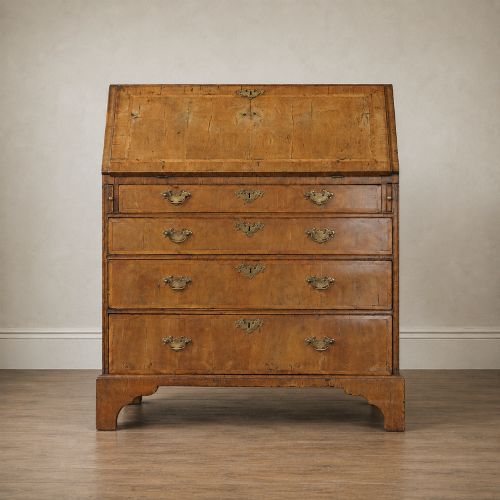
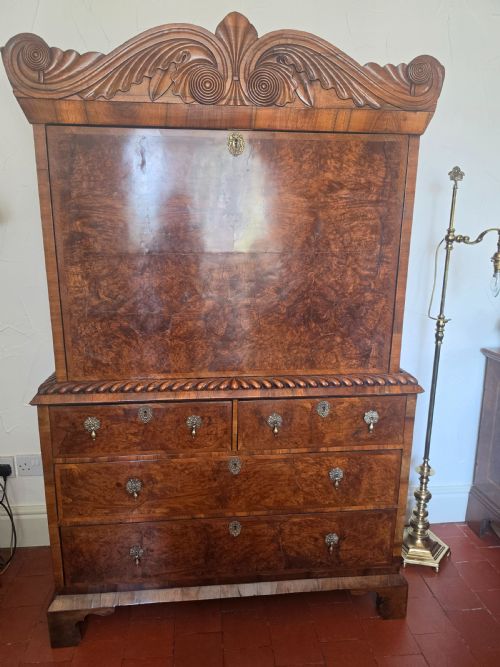
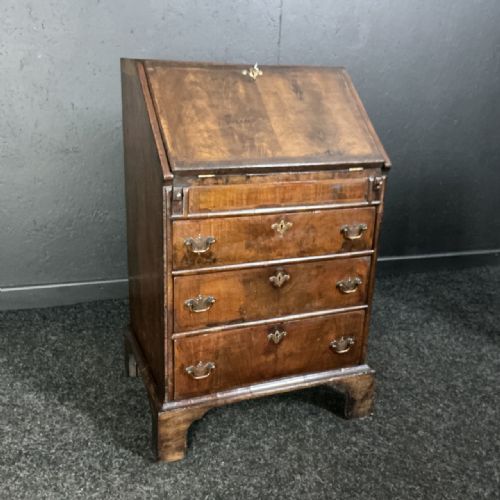
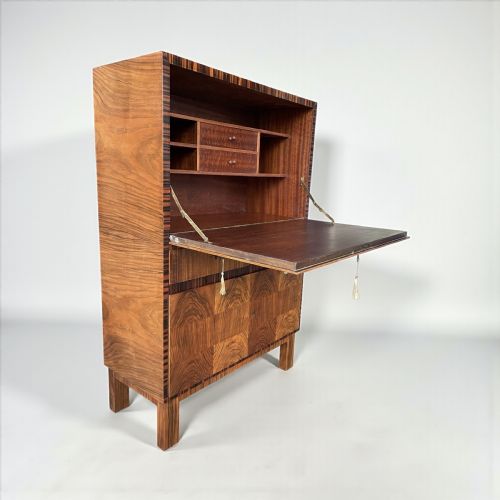


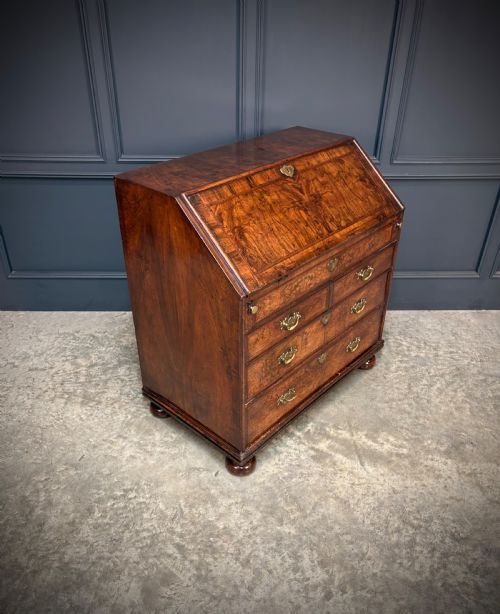

Brown Walnut Drop Front Desk
A brown walnut drop front desk combines a concealed writing surface with compartmented storage, appealing to collectors seeking period cabinetry with functional interiors.
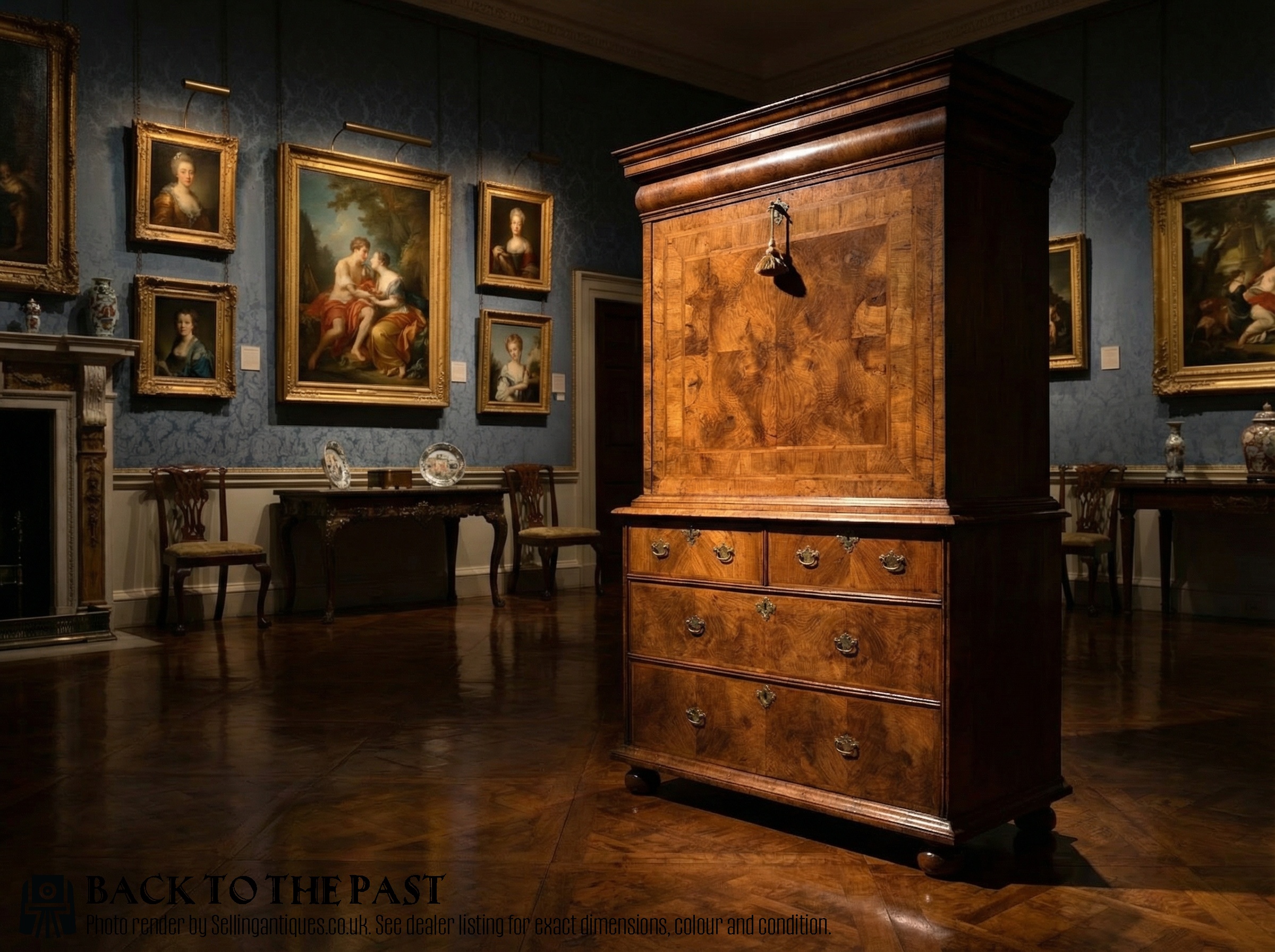
Brown Walnut Drop Front Desk
A brown walnut drop front desk encompasses a variety of forms including traditional bureaux, bureau bookcases, secretaire cabinets, and escritoires. These pieces span multiple periods, ranging from the seventeenth century through the Georgian era to the Edwardian period and Art Deco designs.
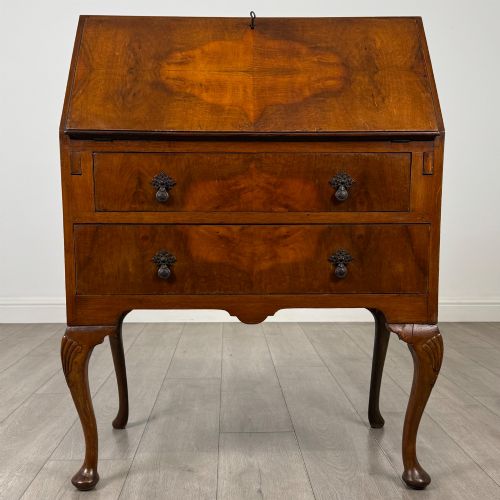
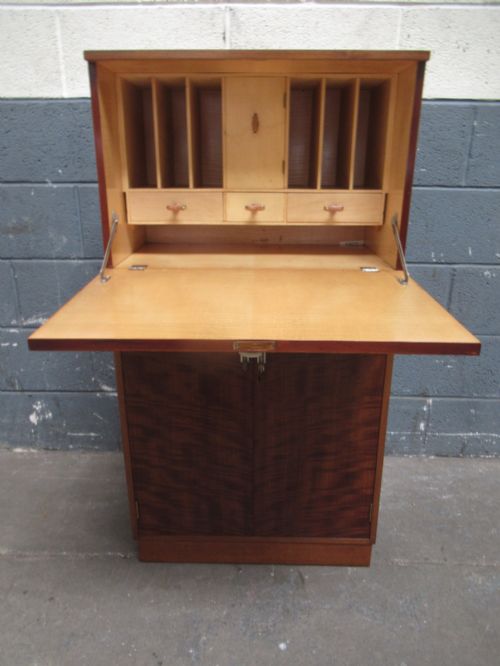
The most common versions met on this page are compact writing bureaux and larger bureau bookcases originating from English, French, Italian, and Spanish workshops. Pieces often feature fitted interiors with pigeonholes and small drawers revealed when the hinged writing flap drops open.
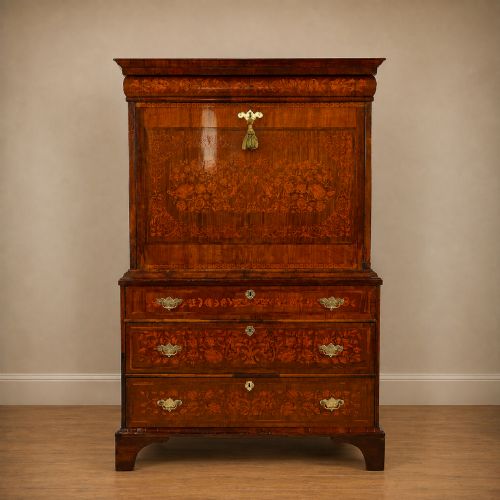
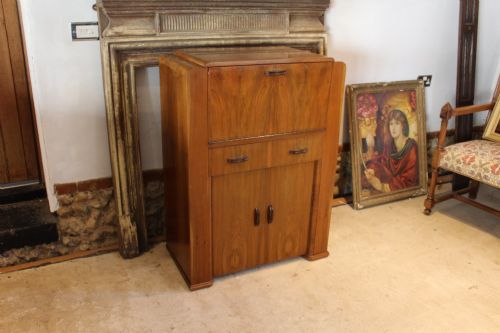
Early examples date to the William and Mary and Queen Anne periods, whilst later interpretations include twentieth-century Art Deco cabinets and Edwardian figured walnut designs. Regional variations also introduce forms such as the Spanish vargueno cabinet and continental secretaire a abattant.
Quality and Craftsmanship
The standard of a brown walnut drop front desk rests upon the selection of timber veneers, where symmetrical burr walnut figures and precise herringbone inlay denote superior craftsmanship. The intricacy of the interior fitted drawers and secret compartments further distinguishes high-grade cabinetwork from simpler utility pieces.
Structural integrity and the preservation of original brass hardware, locks, and patinated finishes dictate the standing of an antique piece. Well-executed marquetry and fine dovetailing on internal drawers indicate workshops of higher repute.
Listings feature walnut drop front desks spanning the seventeenth century through to Art Deco designs, utilising oak and elm as secondary woods.
F.H. Marshall & Co Glasgow·Gregory & Co. of London·Waring & Gillow
The Brown Walnut Drop Front Desk Glossary
- Bureau
- A desk featuring a sloping hinged lid that drops down to form a writing surface, concealing an interior of small drawers and pigeonholes. This form evolved significantly from the seventeenth century onward.
- Escritoire
- A writing cabinet or desk, often fitted with a fall-front flap or drop front enclosing multiple small compartments. These tall pieces frequently incorporate cupboards or bookcase sections above.
- Burr Walnut
- Timber taken from the abnormal growth of a walnut tree, yielding highly figured, swirling grain patterns. Cabinetmakers prized this material for veneering prominent surfaces.
- Marquetry
- Decorative veneer work formed by fitting pieces of various woods or other materials into a glued veneer ground to create pictorial designs. Floral patterns are particularly common on Georgian examples.
- Secretaire
- A piece of furniture designed for writing, typically containing a concealed drop front writing flap. French variants often use the term secretaire a abattant for upright cabinets.
Brown Walnut Drop Front Desk: Frequently Asked Questions
What is a drop front desk?
A drop front desk is a piece of furniture featuring a hinged writing flap that pulls down into a horizontal position for writing. This design conceals an internal arrangement of small drawers, slots, and pigeonholes when closed.
Such desks allow users to lock away correspondence and writing materials, keeping the surface tidy. Examples range from compact seventeenth-century escritoires to twentieth-century Art Deco cabinets.
Are these desks suitable for daily use?
Many antique walnut drop front desks remain fully functional for writing and storing papers today. The sturdy construction of period hardwoods supports modern laptop use and administrative tasks.
Care should be taken to protect the historical wood finishes and leather writing inserts from moisture and excessive wear. Using a desk pad helps preserve the original writing surface.
How do I tell different periods apart?
Period identification relies on observing overall proportions, decorative techniques, and hardware styles. Seventeenth and early eighteenth-century pieces often display William and Mary or Queen Anne characteristics like oyster veneers or herringbone inlay.
Later Edwardian and Art Deco variations exhibit simpler geometric lines or distinctive twentieth-century veneers. Comparing the interior drawer construction and secondary woods provides further dating evidence.