
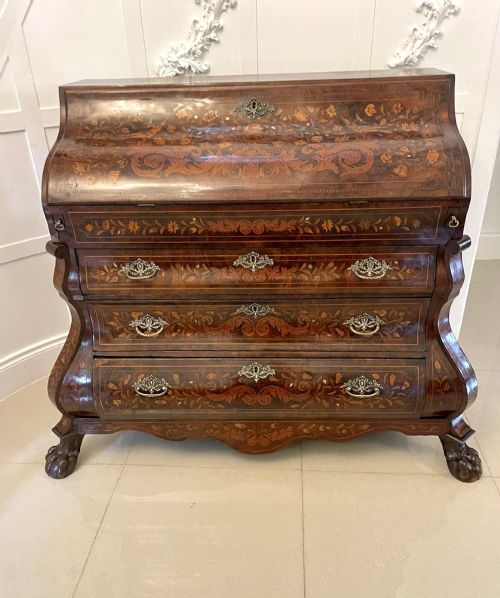
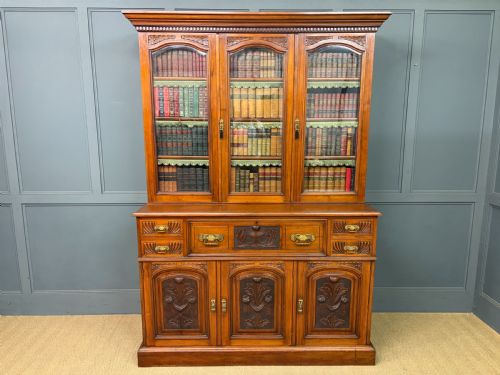
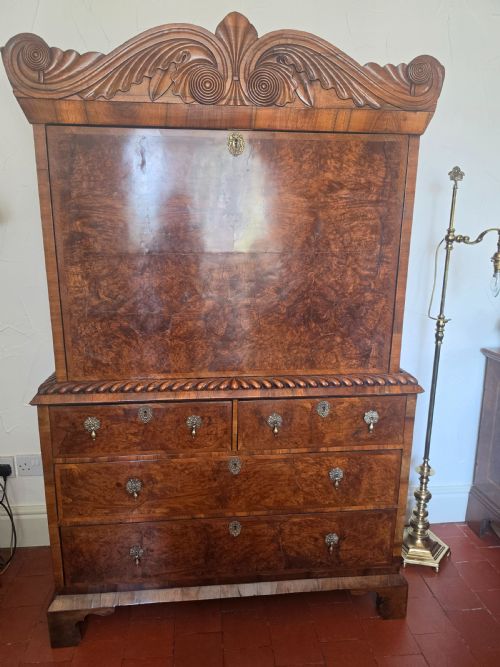
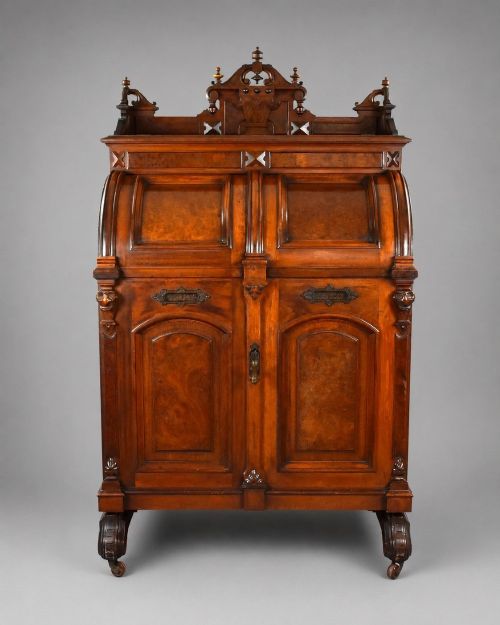
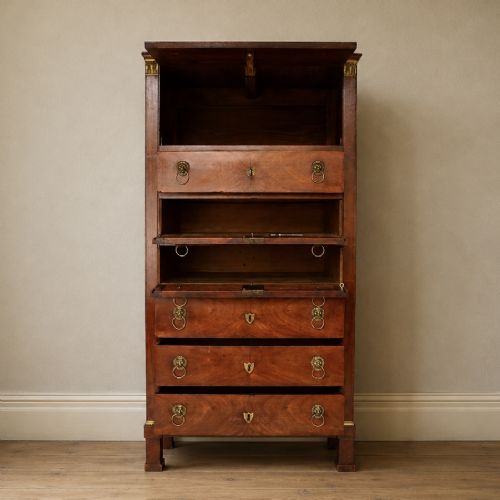
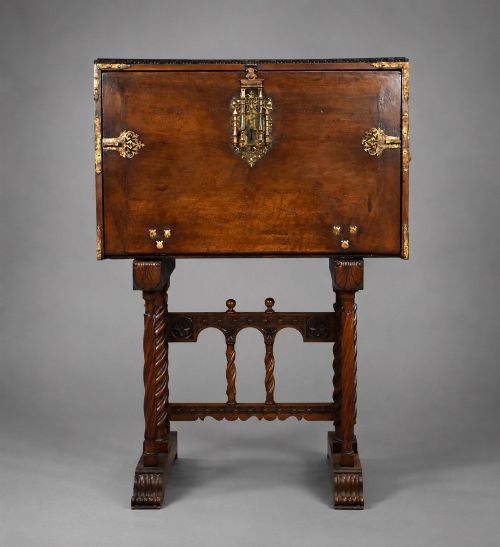


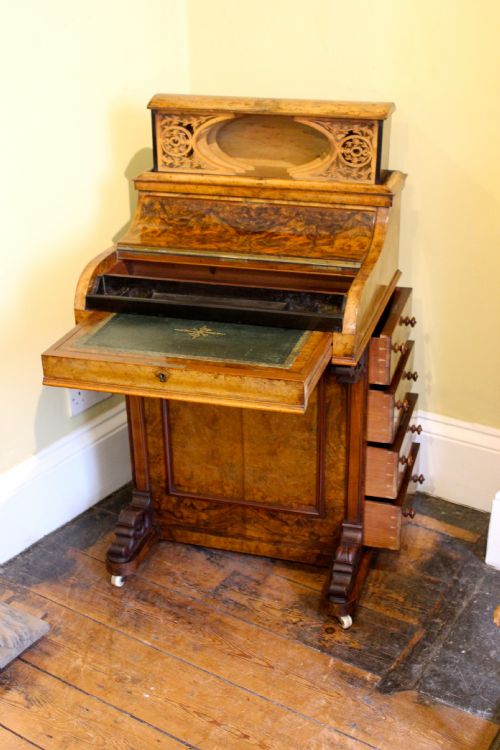


Carved Walnut Writing Cabinet
A carved walnut writing cabinet offers handsome grain and secure storage for correspondence.
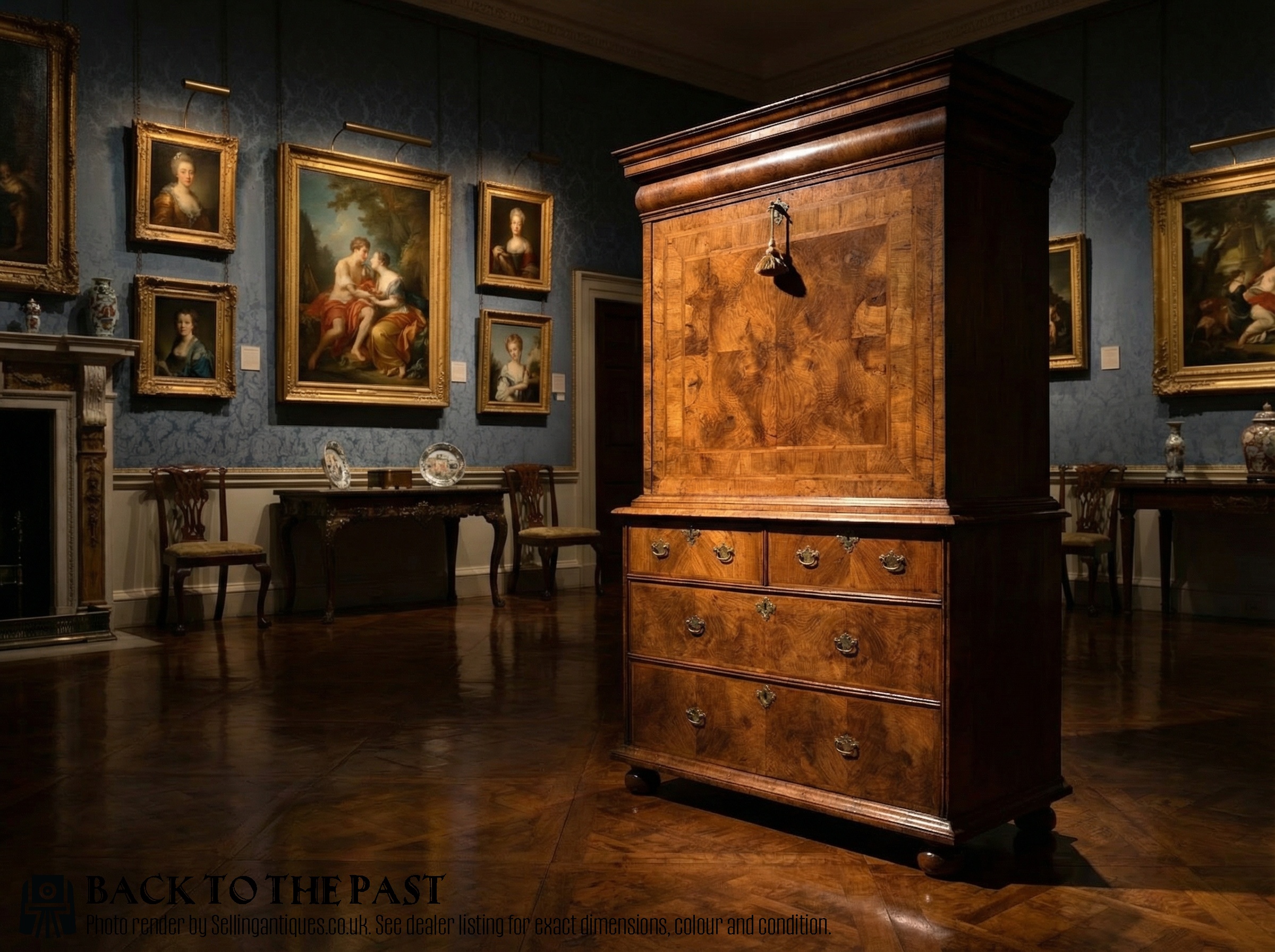
What these pieces are
A carved walnut writing cabinet brings together fine timber and practical workspace across several distinct historical periods.
Buyers browsing this selection will most frequently encounter nineteenth-century Davenport desks and seventeenth or eighteenth-century escritoire forms.
These pieces combine fitted interior compartments with writing surfaces finished in leather, housed within cabinetry defined by carved walnut and burr walnut.
How they were made
Cabinet makers utilised solid walnut and decorative burr walnut veneers applied over secondary timbers such as oak.
Surface decoration relies upon traditional carving alongside brass hardware and fitted leather writing inserts.
Retail Price Guide 2026
Typical UK retail prices for carved walnut writing cabinet, calculated from the Sellingantiques database of over a million retail prices indexed since 2003. This retail price guide relies exclusively on Sellingantiques data; no external sources or auction records are used, so the figures do not describe the wider market.
Listings span periods from the seventeenth century through the nineteenth century, utilising walnut, burr walnut, oak, brass, and leather.
What varies in quality
The standard of a carved walnut writing cabinet depends upon the selection of timber figures, particularly the richness of burr walnut veneers.
Execution of the cabinet work, from internal pigeonholes to the integration of writing surfaces and brass fittings, marks the distinction between standard production and finer examples.
The Carved Walnut Writing Cabinet Glossary
- Escritoire
- A tall writing cabinet featuring a fall front that conceals numerous small drawers and pigeonholes. This form provides substantial vertical storage while maintaining a dedicated writing space.
- Davenport
- A compact desk type popular in the nineteenth century, typically featuring a sloping top and drawers accessed from the side. Pop up variants incorporate internal stationery compartments that rise when opened.
- Burr walnut
- A highly prized wood grain marked by swirling patterns caused by growth knots. Makers selected these decorative veneers for primary display surfaces.
- Secretaire
- A piece of furniture containing a writing drawer or pull-out shelf disguised as a standard drawer front. It allows utilitarian writing functions to remain concealed behind formal cabinetry.
Frequently Asked Questions
What is an escritoire?
An escritoire is a tall writing cabinet with a fall-front desk section.
When closed, it presents as a polished timber cabinet, concealing pigeonholes and small drawers within.
How do Davenport desks function?
Davenport desks provide a sloped writing surface above a compact set of drawers.
Many examples include side drawers and stationery compartments built into the upper section.
How do I date these cabinets?
Dating relies upon stylistic markers associated with periods from the seventeenth century through the Victorian era.
Form, hardware, and construction techniques provide the primary indicators of age.