


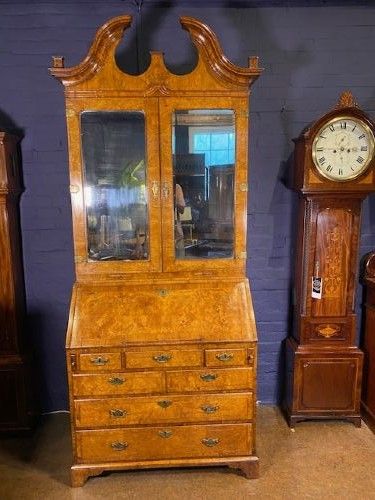
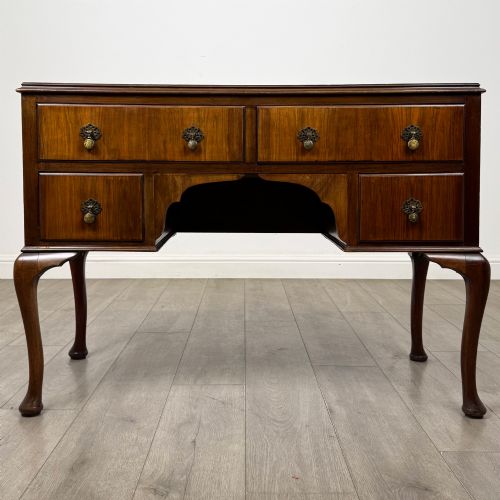
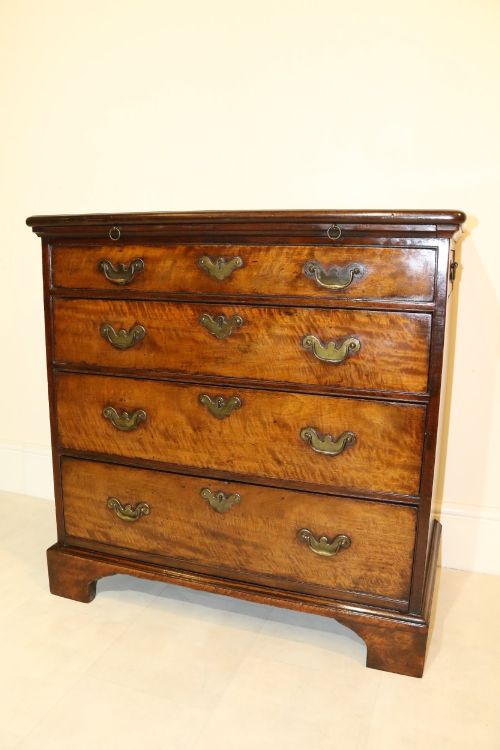
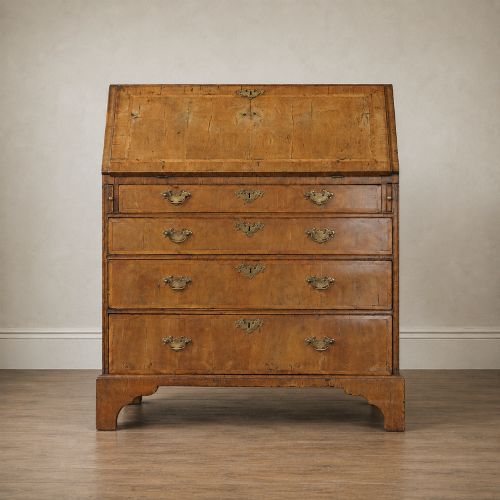
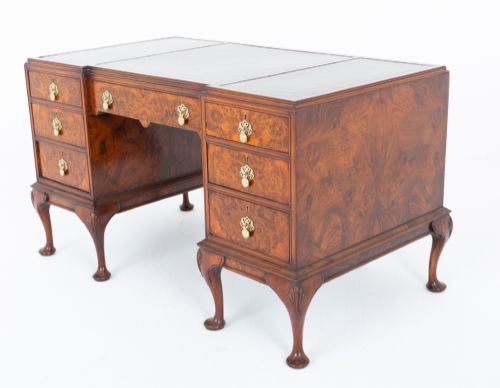
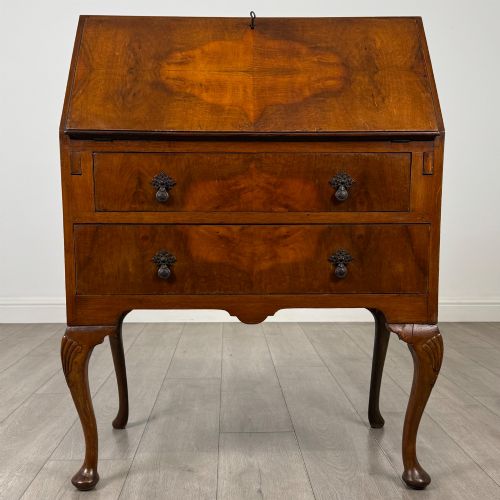
Queen Anne Walnut Bureau
A queen anne walnut bureau offers fitted drawers and a sloping fall front, combining practical writing space with rich, figured timber.
What a queen anne walnut bureau is
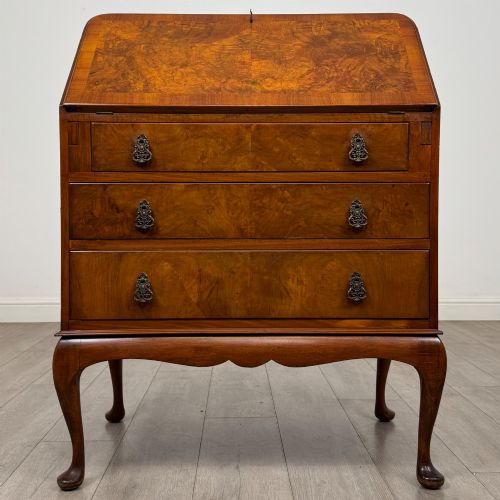
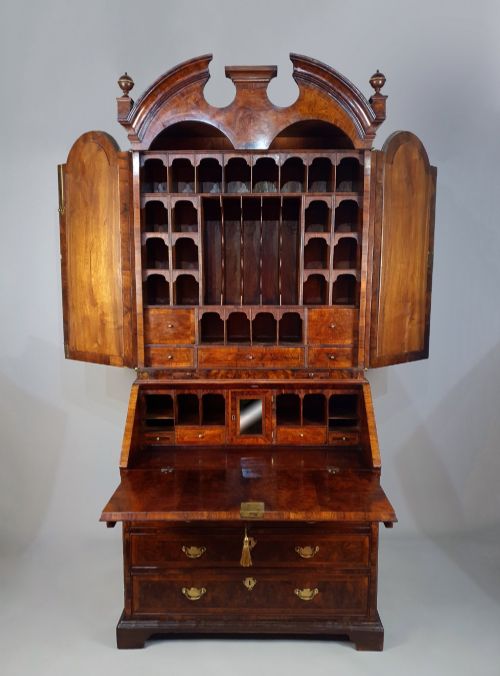
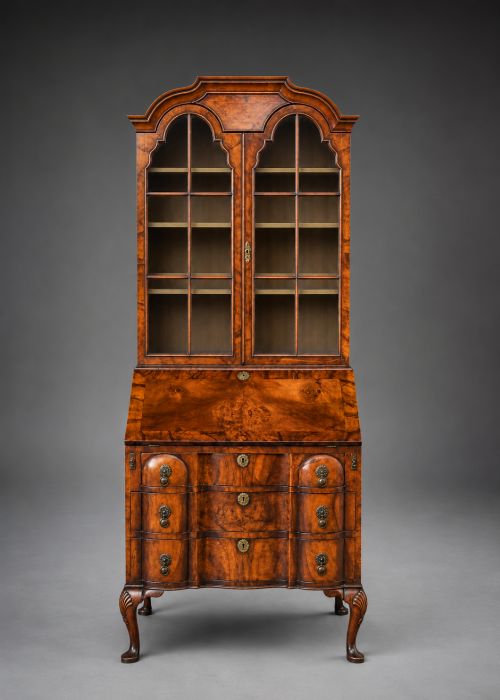
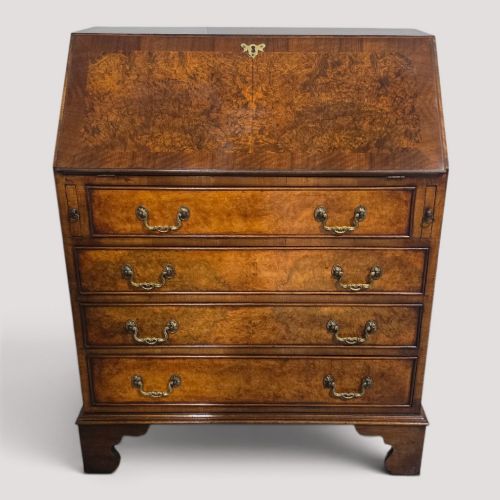
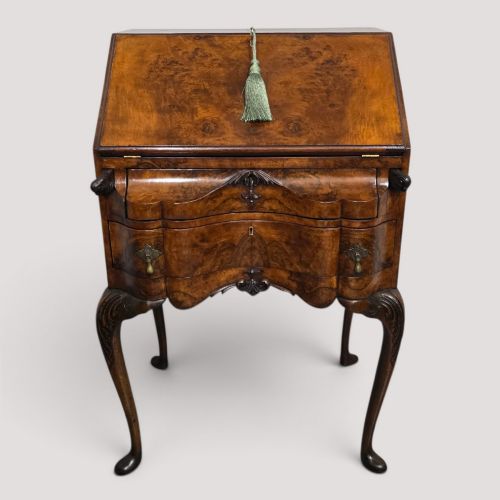
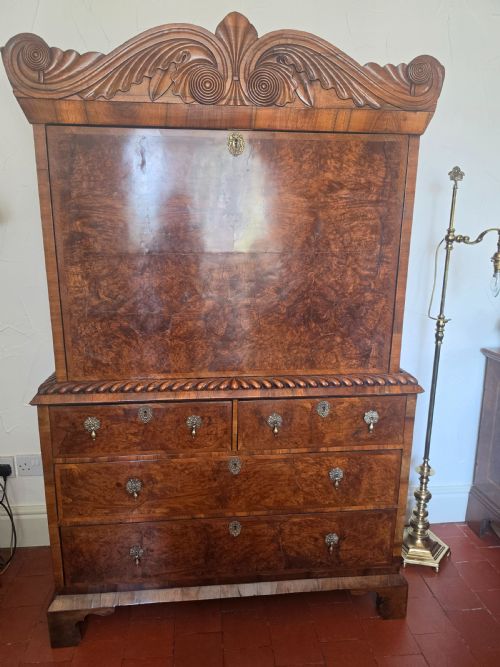
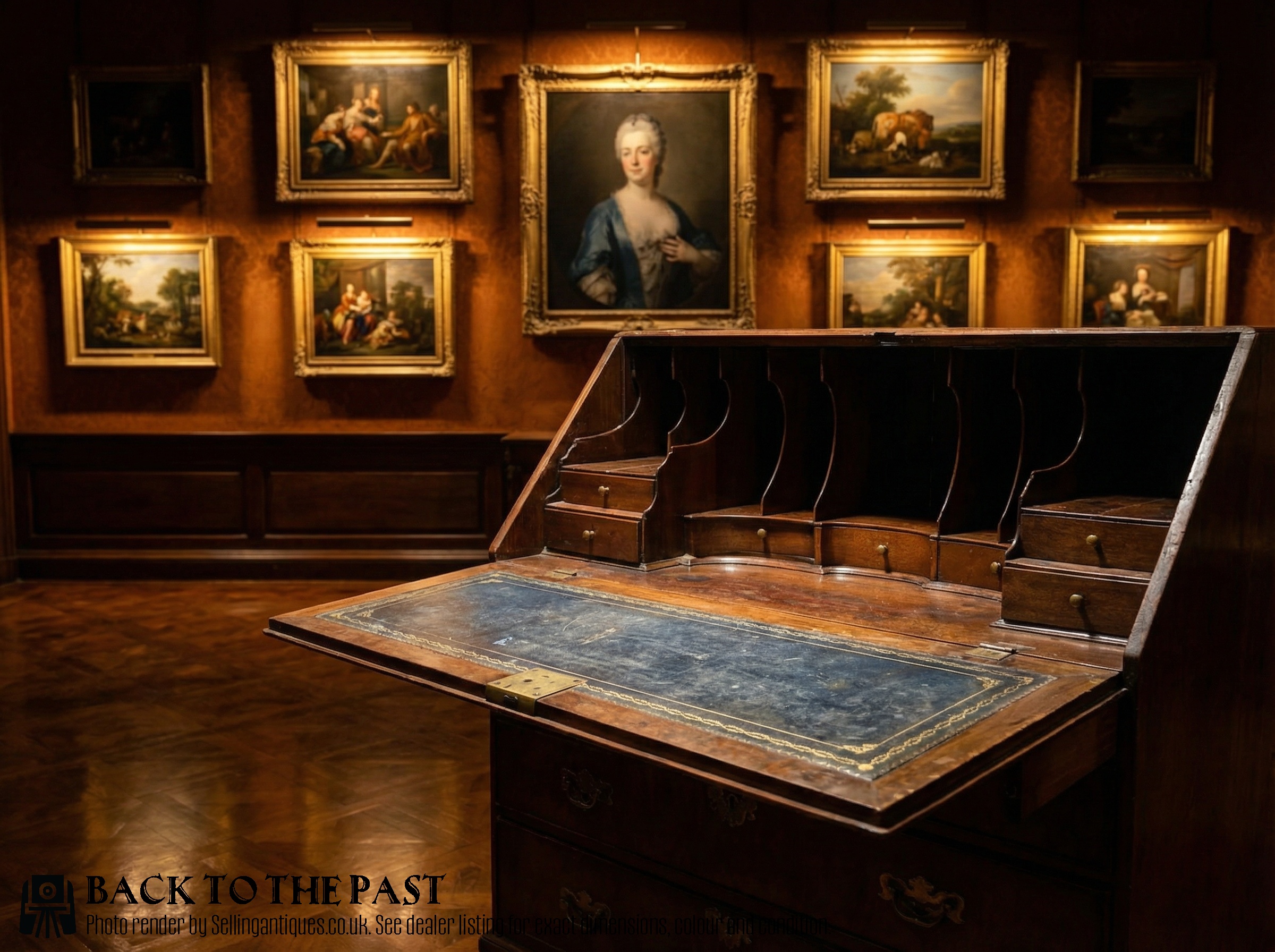
A queen anne walnut bureau is a compact writing desk featuring a fall-front flap that opens to reveal internal pigeonholes and small drawers. Most examples found here date from the eighteenth century or belong to later revival periods.
The form typically rests on bracket or cabriole supports, maintaining a slender silhouette designed for domestic writing and correspondence. These pieces serve as both functional desks and decorative cabinets of drawer storage.
How they were made
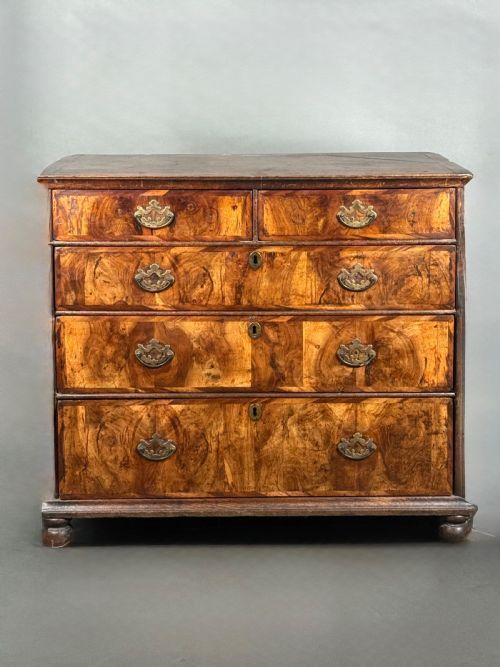
Cabinet makers utilised native oak for internal carcases and drawer linings, applying figured walnut veneers and burr walnut across exterior surfaces. Brass handle furniture and escutcheons secure the drawer fronts.
Selected sections display featherbanding and crossbanding to frame the drawer panels and the fall-front writing surface. Joinery relies on traditional dovetail construction for the internal and external drawer boxes.
Retail Price Guide 2026
Typical UK retail prices for queen anne walnut bureau, calculated from the Sellingantiques database of over a million retail prices indexed since 2003. This retail price guide relies exclusively on Sellingantiques data; no external sources or auction records are used, so the figures do not describe the wider market.
What varies in quality
The grain configuration of the walnut timber dictates much of the visual appeal, with burr veneers and matched panels sitting at the upper end of the scale. The crispness of internal drawer divisions and the integrity of the secondary oak timbers also set better examples apart.
Proportion and scale influence desirability, particularly in smaller formats where clean lines and original brass hardware remain intact. The depth of colour achieved through age and wax finishing defines the character of the surface.
The Queen Anne Walnut Bureau Glossary
- Burr walnut
- A figured timber obtained from tree growths, producing swirling patterns across veneer surfaces.
- Escutcheon
- A protective brass plate surrounding a keyhole on a drawer or fall front.
- Featherbanding
- Inlaid banding of contrasting wood veneers arranged in a herringbone design.
- Cabriole
- A furniture leg that curves outward at the knee and tapers inward to a foot.
- Fall front
- The hinged writing flap that drops forward to create a desk surface.
Frequently Asked Questions
What is a bureau bookcase?
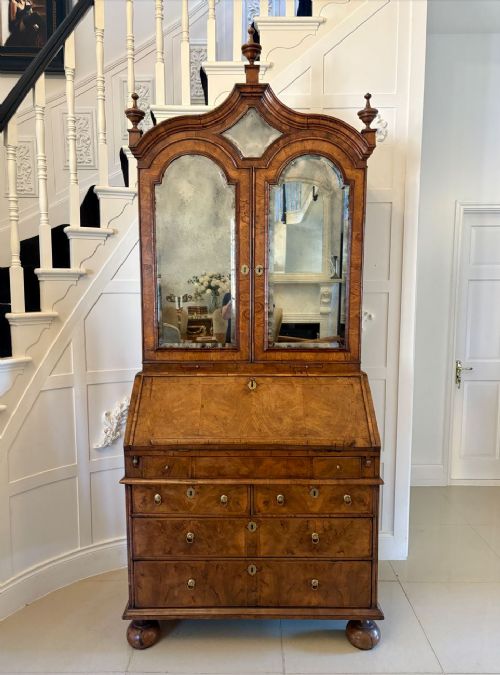
A bureau bookcase combines a sloping desk base with an upper glazed or panelled shelving cabinet.
These taller units provide both enclosed storage for books and a dedicated writing surface below.
How do I date a walnut bureau?
Dating relies on examining construction methods, secondary timbers such as oak, and the style of the hardware.
Eighteenth-century examples display hand-cut dovetails and period handles, while later revival pieces show twentieth-century manufacturing traits.
Where were these bureaus used?
These desks were designed for private studies, bedrooms, and reception rooms to manage correspondence and personal accounts.
The fitted interior kept papers and ink supplies neatly concealed when the flap was closed.
What is oyster walnut?
Oyster walnut involves cutting small branch timber across the grain to create circular, repeating patterns on the surface.
This decorative technique appears on specific eighteenth-century writing desks and cabinets.