


Antique Escritoire Bureau
An antique escritoire bureau offers a drop-down writing surface concealing fitted compartments, spanning walnut, mahogany, and rosewood forms across multiple centuries.
Antique Escritoire Bureau
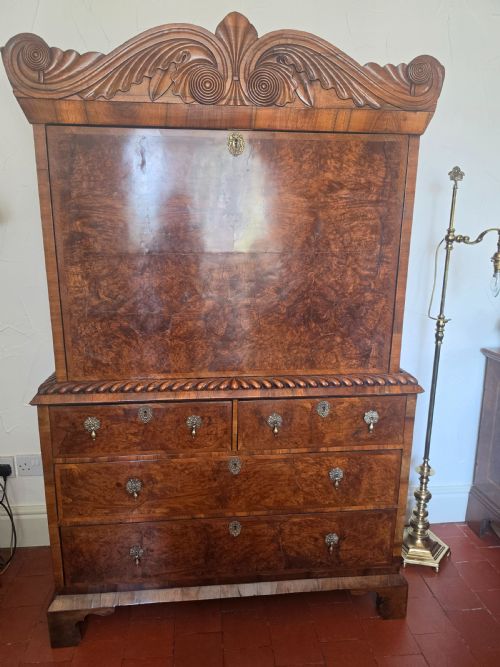
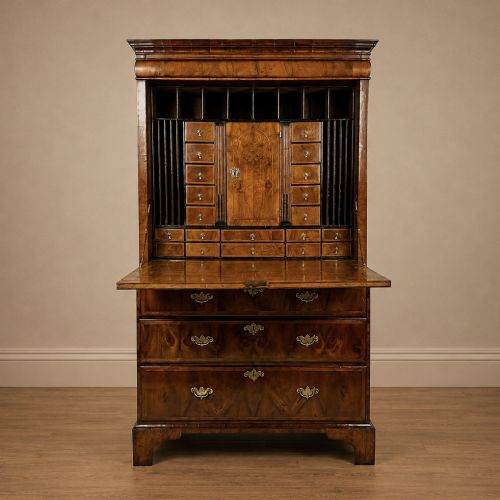
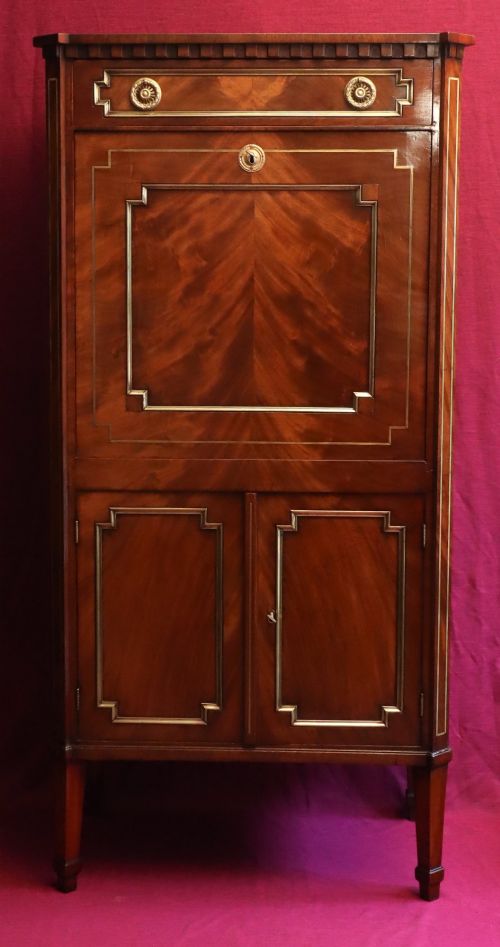
An antique escritoire bureau is a dedicated writing cabinet featuring a fall-front writing flap or drop lid that conceals internal pigeonholes and small drawers. When exploring this selection, buyers frequently encounter walnut and mahogany examples from the eighteenth and nineteenth centuries.
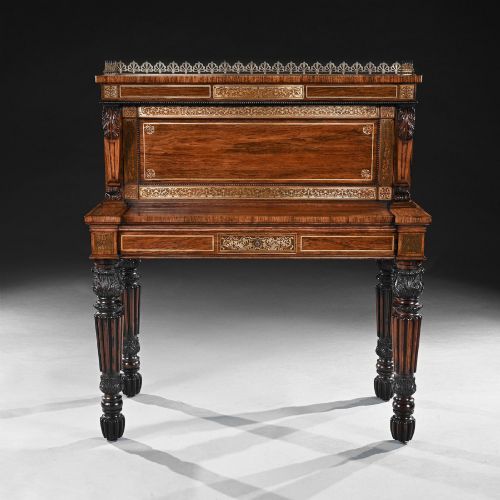
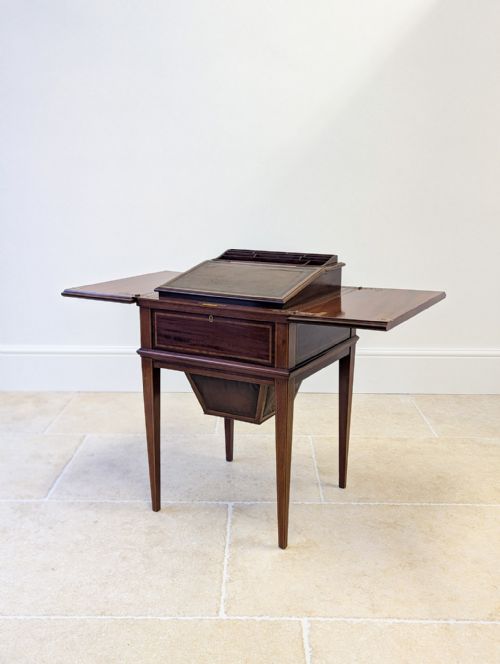
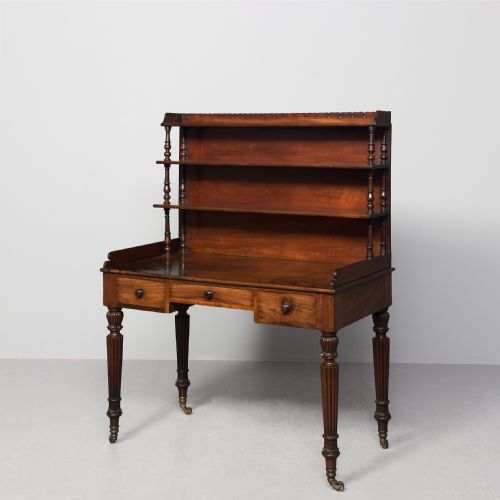
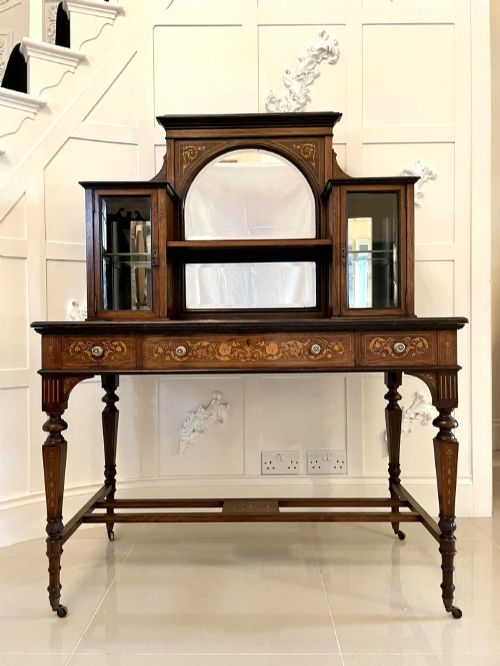
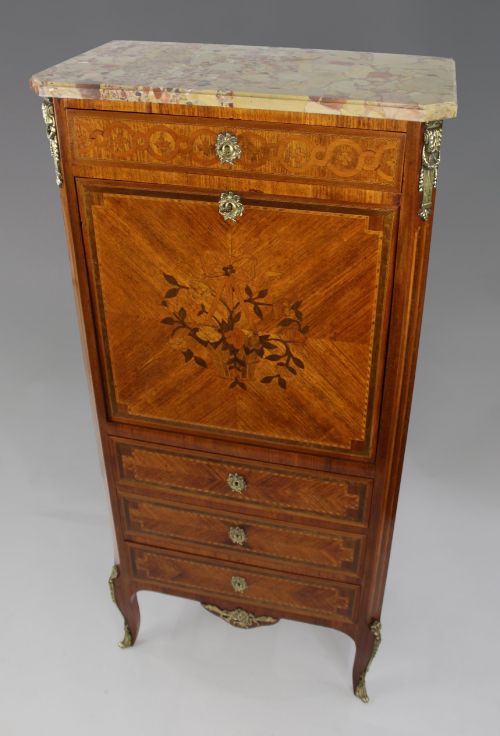
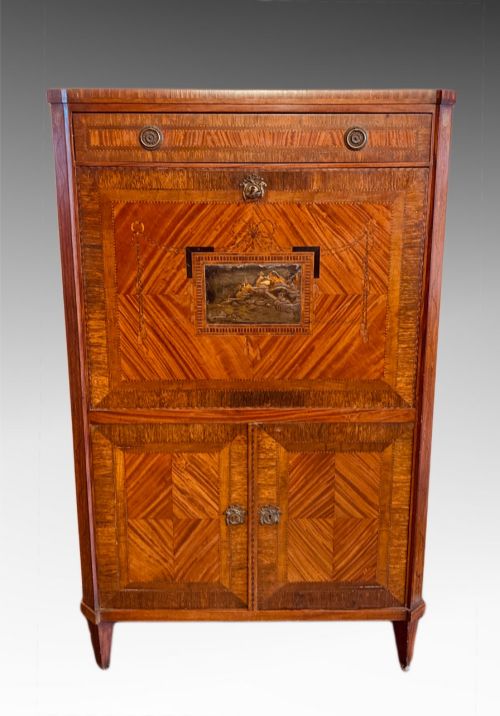
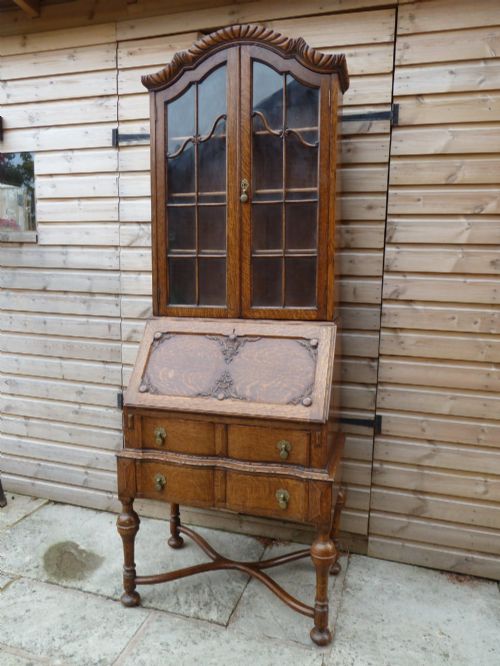
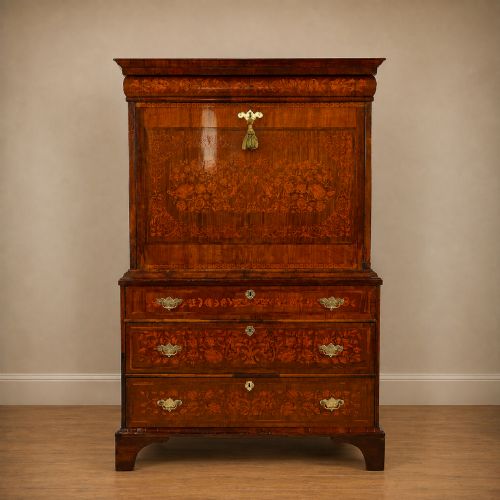
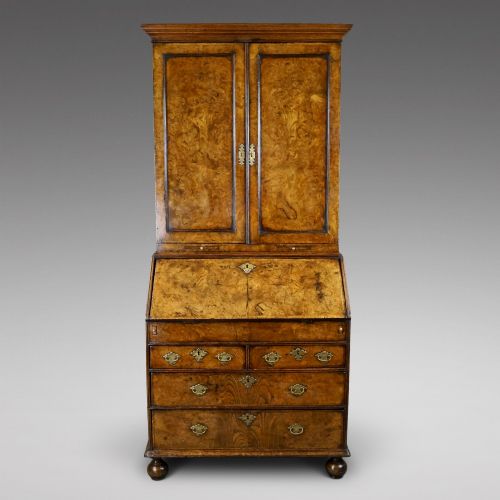
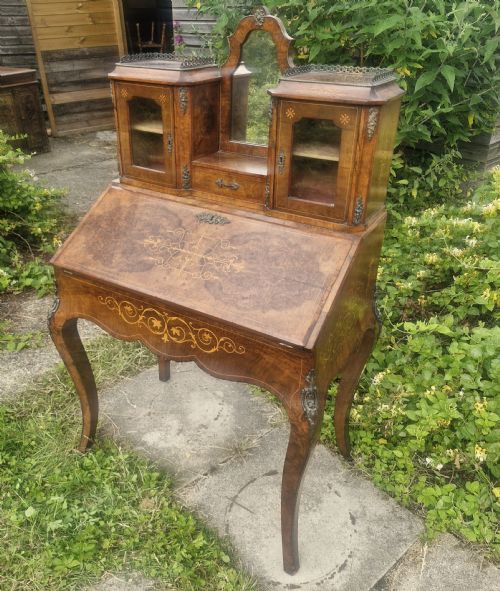
The category spans tall cabinet forms, bureau bookcases with upper shelving, and smaller ladies' writing desks or bonheur du jour pieces. English Georgian and seventeenth-century walnut pieces appear alongside French Louis XV style marqutry escritoires and Biedermeier secretaires.
Pieces range from compact boudoir writing cabinets to imposing bureau bookcases designed for formal libraries. The primary function remains the provision of a concealed writing surface and organised document storage within a handsome furniture facade.
How they were made
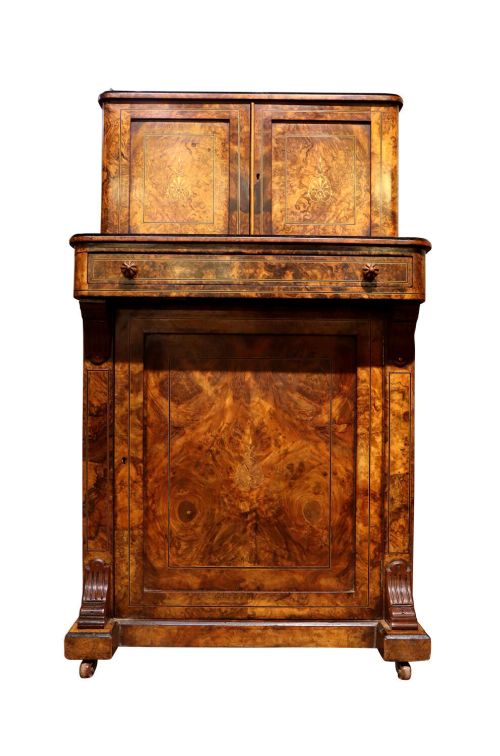
Cabinetmakers constructed these writing pieces using dense timbers such as mahogany, walnut, and kingwood, frequently applying burr walnut or burr elm veneers to create highly figured surfaces. Marquetry, brass inlay, and satinwood banding adorn the exterior facades of select desks.
Structural integrity relied on dovetailed drawer construction and solid timber framing. Metalwork components include brass handles, ormolu mounts, and specialised hinges supporting the heavy fall-front writing flaps.
Interior compartments required intricate miniature joinery to form tiny drawers, secret compartments, and pigeonholes behind the main writing flap. Marble tops feature on specific French and Continental secrétaires à abattant.
Many antique escritoire desks hide tiny secret drawers behind innocuous pigeonholes, designed for letters nobody else was ever meant to read.
What varies in quality
The choice of timber figure dictates the visual impact, with matched burr walnut or flame mahogany veneers representing superior cabinetmaking. The precision of floral marquetry and inlaid brass strings separates standard items from exhibition quality work.
Internal complexity marks the distinction between basic drop-front boxes and master-built bureau bookcases featuring secret drawers and finely organised letter compartments. The retention of original marble tops, ormolu mounts, and period hardware influences the integrity of the piece.
Gillows Oxford Street Workshop·James Mein of Kelso·George Faulkner Armitage·John MaClean
The Antique Escritoire Bureau Glossary
- Escritoire
- A writing cabinet, typically featuring a fall-front flap that opens to reveal drawers and pigeonholes. It serves as a secure place for correspondence and document storage.
- Secretaire à abattant
- A tall, vertical writing cabinet with a drop-front writing surface. This continental form frequently incorporates a marble top and gilt-bronze mounts.
- Marquetry
- The art of applying decorative pieces of veneer to a structure to form intricate designs or pictorial patterns. Cabinetmakers utilised contrasting woods to create floral or geometric motifs.
- Bonheur du jour
- A light lady's writing desk originating in France, usually featuring a small superstructure of shelves and drawers above the writing surface. These desks became popular during the eighteenth and nineteenth centuries.
- Oyster walnut
- A decorative veneering technique utilising cross-sections of walnut branches arranged in circular patterns resembling oyster shells. This technique is characteristic of late seventeenth and early eighteenth-century English furniture.
Antique Escritoire Bureau: Frequently Asked Questions
What is the difference between an escritoire and a bureau?
An escritoire generally refers to a vertical writing cabinet with a fall-front flap enclosing compartments, whereas a traditional bureau often incorporates sloping desks above chest drawers.
Both forms served identical purposes for correspondence, but cabinetmakers adapted the proportions to suit specific room layouts and stylistic preferences.
How do I identify a walnut escritoire from the 17th century?
Seventeenth-century walnut pieces frequently display oyster veneers, cross-banding, and cushion-molded drawers surrounding the central writing flap.
These early desks rely on heavy oak or pine secondary woods beneath the walnut veneer and possess simple, robust hardware.
Where were secretaire cabinets placed in a historic home?
These writing cabinets sat in private studies, drawing rooms, or bedrooms depending on their size and the social status of the owner.
Larger bureau bookcases stood in libraries for managing estate paperwork, while delicate ladies' writing desks occupied private sitting rooms.
How should I care for a mahogany escritoire surface?
Maintain antique mahogany surfaces by applying quality beeswax occasionally and buffing gently with a soft cloth to nourish the wood grain.
Keep these cabinets away from direct sunlight and heat sources to prevent timber shrinkage and veneer lifting.