


Japanned Writing Desk
A japanned writing desk brings striking lacquerwork and Eastern-inspired motifs directly to your study.
Japanned Writing Desk
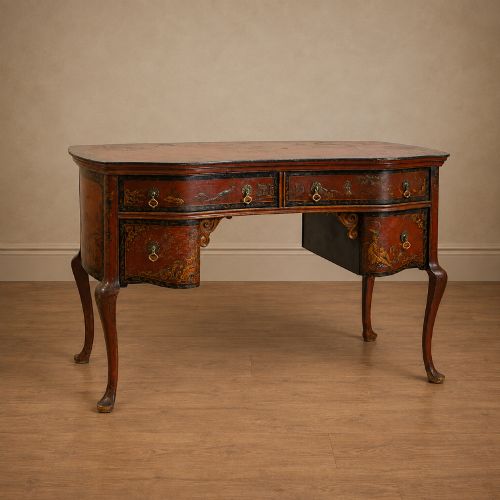
A japanned writing desk combines practical writing surfaces with glossy lacquered finishes and Chinoiserie decoration. You encounter pieces ranging from compact stationary boxes and dressing tables to grand bureau bookcases and kneehole desks.
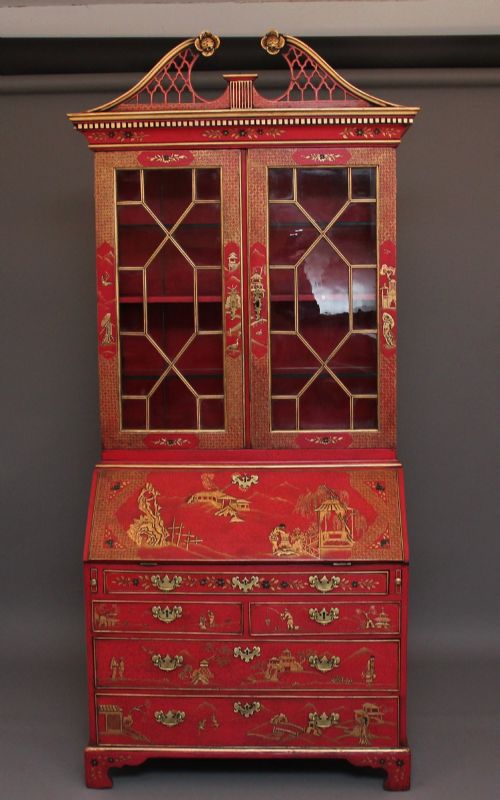
The selection spans several centuries, taking in William and Mary origins, 18th-century Georgian and Venetian examples, Victorian interpretations, and early 20th-century creations. Bureau bookcases and sloping-lid bureaux form a significant portion of what you find here.
Makers and designers drew heavily on Asian aesthetics, applying gilt details and lacquer over wood and papier-mache. These surfaces transformed everyday writing furniture into elaborate decorative statements for the home.
How they were made
Craftsmen built these pieces using timber frames, sometimes incorporating bamboo or papier-mache depending on the period. Artisans then applied successive layers of lacquer to achieve a deep, glossy ground before adding intricate decoration.
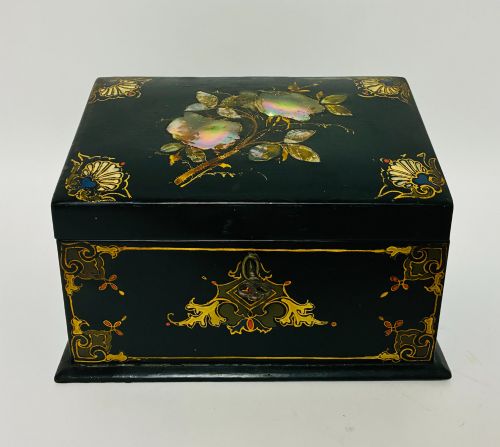
Decoration relied on gilt highlights and painted Chinoiserie or Japonisme motifs depicting figures, landscapes, and flora. Brass hardware, glass panels, and occasional mother-of-pearl inlays completed the construction of desks, dressing tables, and escritoires.
Some Victorian desks swapped heavy timber entirely for moulded papier-mache, proving that papier-mache could handle the rigours of daily letter-writing.
What varies in quality
Quality rests primarily on the depth and preservation of the lacquer finish and the hand-painted detail of the gilt decoration. Finer examples display crisp, intricate Chinoiserie scenes that retain their original lustre and subtle tonal variation.
The structural integrity of the underlying woodwork and the integration of period brasses also separate standard commercial pieces from exceptional workshop productions. Superior items maintain cohesive proportions across complex forms like bureau bookcases and pedestal desks.
Viardot
The Japanned Writing Desk Glossary
- Japannning
- European imitation of East Asian lacquerwork using resin varnishes and metallic powders. This technique became popular during the late 17th century and reappeared in later revival periods.
- Chinoiserie
- European artistic style reflecting Chinese and East Asian artistic traditions. It appears widely in the painted and gilt scenes ornamenting these surfaces.
- Bureau bookcase
- A writing cabinet featuring a sloping fall-front desk compartment below enclosed shelving or cabinet doors. These tall pieces offer substantial storage for books and papers.
- Escritoire
- A small writing cabinet or desk typically fitted with drawers and pigeonholes behind a drop-front panel. The form emerged in various refined configurations across the 18th and 19th centuries.
- Papier-mache
- A composite material made from paper pulp or reinforced sheets mixed with glue and pressed into moulds. Victorian makers utilised this smooth substrate for portable desks and stationery boxes.
Japanned Writing Desk: Frequently Asked Questions
What is a japanned writing desk?
A japanned writing desk is a piece of furniture finished with European lacquerwork that imitates Asian decorative styles. These desks often feature gilt motifs against dark or red backgrounds.
They range from large bureau bookcases to smaller dressing tables and portable desk sets produced across multiple centuries.
How do I care for lacquer furniture?
Keep lacquered surfaces away from direct sunlight and excessive moisture to prevent the finish from cracking or fading. Dust gently with a soft, dry cloth without applying modern chemical polishes.
Stable room temperatures help preserve both the wooden structures and the delicate surface decoration over time.
How do I date a japanned desk?
Dating relies on examining the underlying construction techniques, hardware, and secondary timbers used in the piece. Early examples from the 18th century often feature different carcass construction compared to Victorian or Edwardian revivals.
Stylistic shifts between Queen Anne, Georgian, and later Victorian Chinoiserie also provide clear chronological markers.
Where were these desks used?
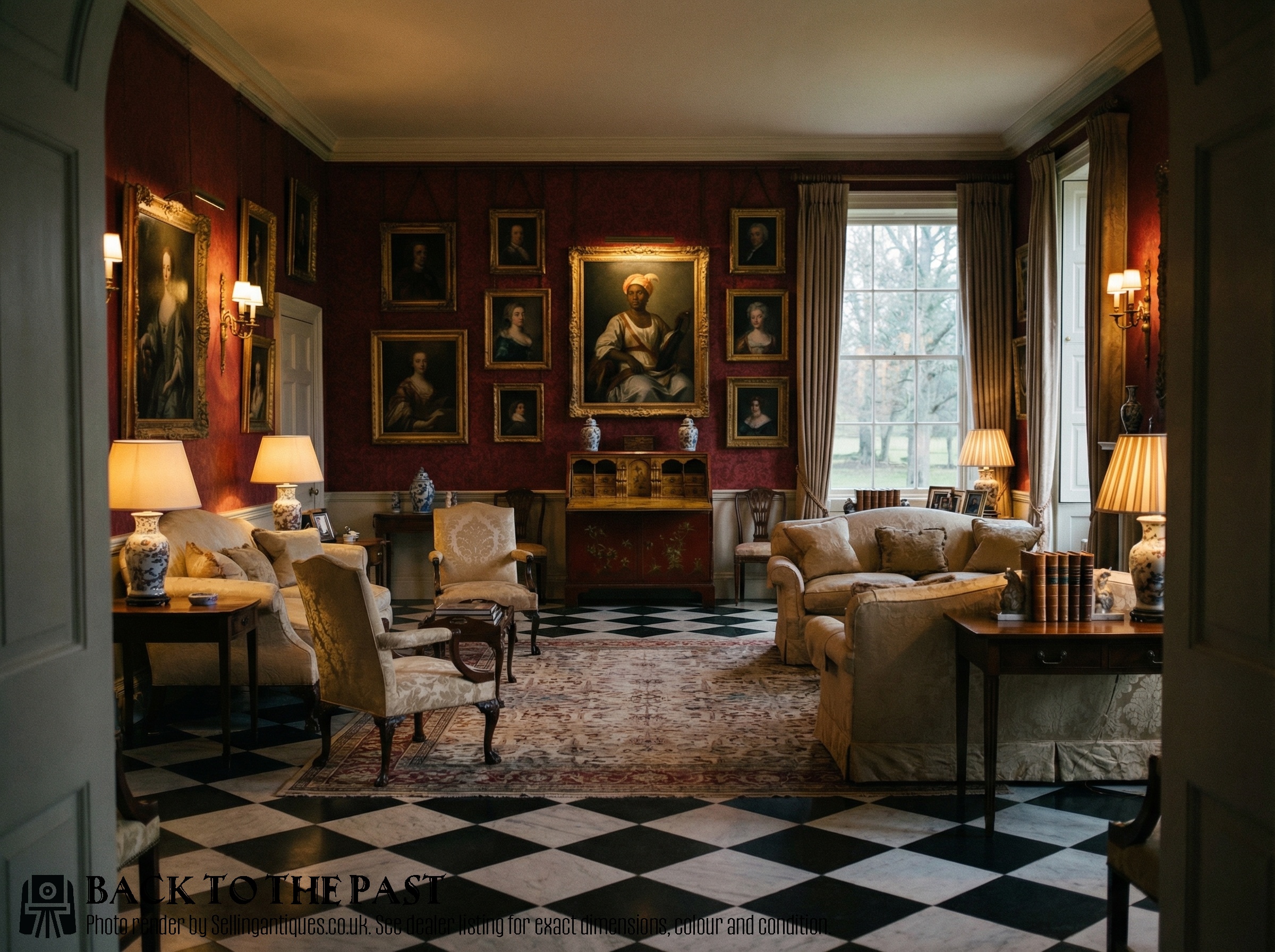
These desks served as functional writing and storage furniture in principal rooms, studies, and private dressing chambers. Their decorative qualities meant they were designed to be seen rather than hidden away in offices.
Wealthy households used bureau bookcases and escritoires to manage correspondence and display curated collections.