


Hand Painted Bureau
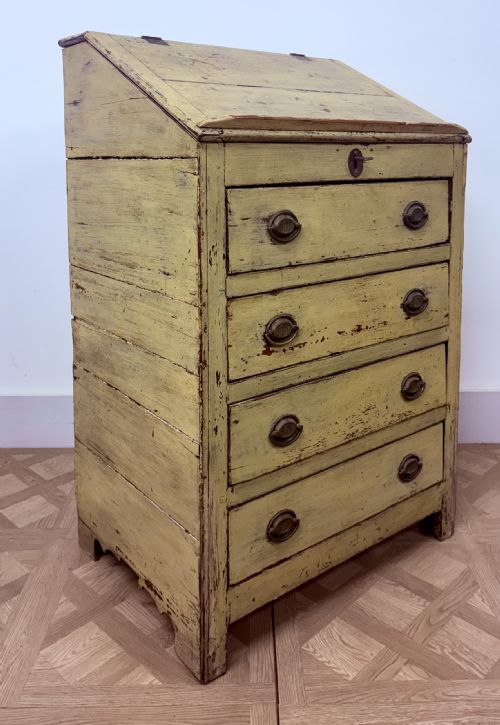
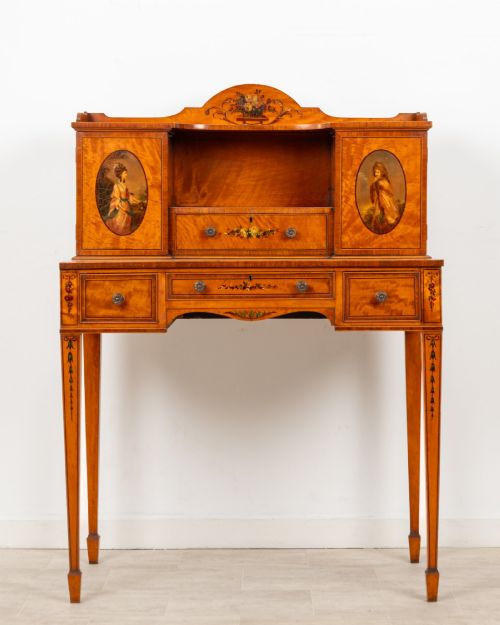
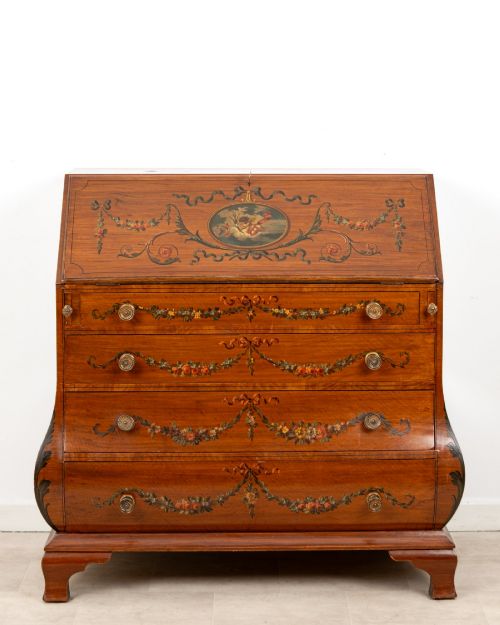
These hand painted bureau pieces combine practical writing spaces with decorative painted surfaces spanning Georgian to Edwardian periods.
Hand Painted Bureau
A hand painted bureau provides a dedicated writing surface combined with enclosed storage, taking forms such as drop-front desks, knee-hole desks, and writing cabinets. When you search for this phrase, you find pieces ranging from provincial English chests with writing slopes to refined satinwood writing desks.
The selection includes pieces from the Georgian and Victorian eras alongside Edwardian revivals. You will encounter forms like the Carlton House desk, the bonheur du jour, and Chinese black lacquered desk cabinets alongside traditional drop-front bureaux.
Origins vary from English provincial workshops to continental interpretations and Far Eastern export pieces. The decoration ranges from delicate floral motifs on satinwood to bold Chinoiserie and black lacquer finishes.
How they were made
Cabinet makers utilised foundational timbers such as mahogany, pine, and oak, frequently overlaying them with satinwood veneers to create a smooth pale ground for artwork. Brass handles, key escutcheons, and glass panels complete the structural assembly of these writing furniture pieces.
Decoration relied on skilled brushwork applied directly to the wood or over lacquer grounds, sometimes incorporating Vernis Martin techniques or elaborate Chinoiserie scenes. Writing surfaces often feature inset panels of leather to provide a durable platform for correspondence.
Materials recorded across the inventory include brass, glass, leather, pine, mahogany, and satinwood applied as fine veneers.
What varies in quality
The refinement of the painted decoration distinguishes simpler provincial work from sophisticated cabinet-maker pieces. Crisp execution of floral panels or intricate Chinoiserie motifs indicates higher skill in the workshop.
Choice of primary timbers and veneers also creates a clear distinction across the range. Selected satinwood grounds and substantial mahogany framing separate standard utility pieces from exhibition-grade furniture.
Edwards & Roberts
The Hand Painted Bureau Glossary
- Satinwood
- A dense tropical timber with a golden sheen, frequently used as a veneer for late eighteenth and Edwardian desks. It provides a pale, reflective ground suited to painted decoration.
- Chinoiserie
- European theatrical interpretations of Chinese artistic motifs, popular in furniture decoration during various revival periods. It involves painted or lacquered scenes of figures, pagodas, and landscapes.
- Bonheur du jour
- A light ladies writing desk featuring a small superstructure of drawers and shelves above the main writing surface. These tables became popular during the eighteenth century and saw revival production later.
- Escritoire
- A traditional writing cabinet fitted with a fall-front flap that conceals internal compartments and pigeonholes. The term encompasses various continental and domestic forms of writing furniture.
- Vernis Martin
- An eighteenth-century European imitation of East Asian lacquerwork using translucent resin varnishes. It produced glossy, durable decorated surfaces on cabinets and desks.
Hand Painted Bureau: Frequently Asked Questions
What is a hand painted bureau?
A hand painted bureau is a writing desk featuring a sloping fall-front or writing flap combined with hand-applied decorative artwork. These pieces range from Georgian provincial examples to Edwardian satinwood creations.
They combine functional storage drawers with artistic painted surfaces, serving as both working desks and decorative furniture for principal rooms.
How do I identify a Georgian bureau?
Georgian pieces date from the eighteenth and early nineteenth centuries, displaying characteristic proportions and construction methods of the period. They often utilise solid mahogany, oak, or early pine carcasses.
Decoration on these examples tends to reflect Georgian neoclassical tastes or provincial folk traditions rather than the later satinwood revivals of the Edwardian era.
Where should I place a satinwood desk?
Satinwood desks benefit from placement away from direct sunlight to protect the pale timber veneers and delicate painted artwork from fading. Natural indirect light highlights the golden tones of the wood.
These pieces function effectively in studies, drawing rooms, or bedrooms as functional writing surfaces or display furniture.
How do I clean painted wooden furniture?
Dust surfaces regularly with a soft, dry lint-free cloth to prevent particulate buildup on the painted and lacquered areas. Avoid harsh chemical cleaners or excessive moisture which can damage aged finishes.
Periodic application of suitable microcrystalline wax helps protect traditional polished wood and painted surfaces without altering the sheen.