



Lacquered Writing Desk
A lacquered writing desk brings glossy surfaces and painted figures into a room, offering a functional writing surface wrapped in decorative depth.
Lacquered Writing Desk
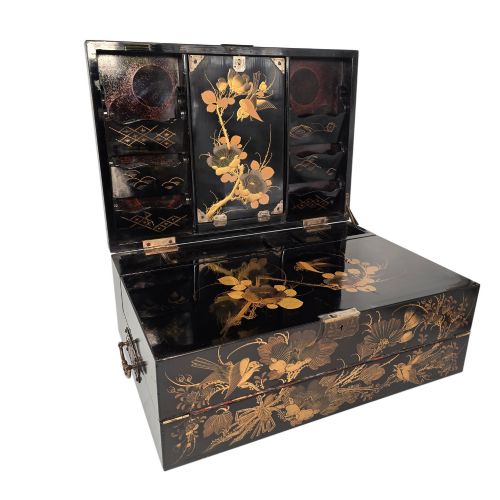
A lacquered writing desk encompasses varied forms designed for correspondence and storage, ranging from compact stationery boxes and writing tables to large bureau bookcases. The pieces appearing in this selection span multiple centuries, including Georgian pieces, Victorian iterations, and early twentieth-century examples.
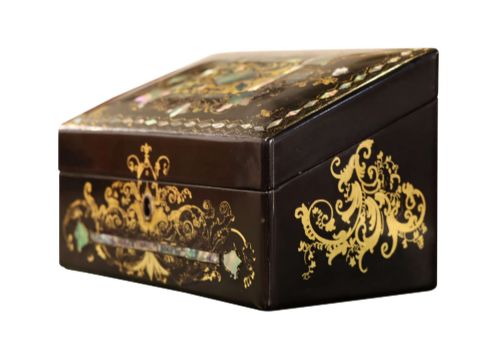
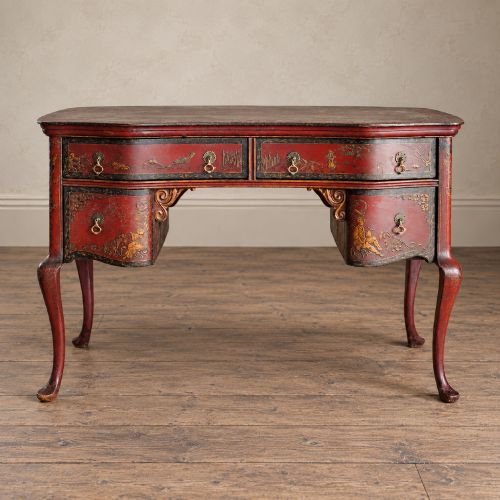
Chinoiserie surfaces and papier-mâché constructions dominate the physical evidence, alongside regional expressions such as Chinese black lacquer cabinets and Japanese writing boxes. Buyers find everything from kidney-shaped dressing tables to fall-front writing cabinets and kneehole desks.
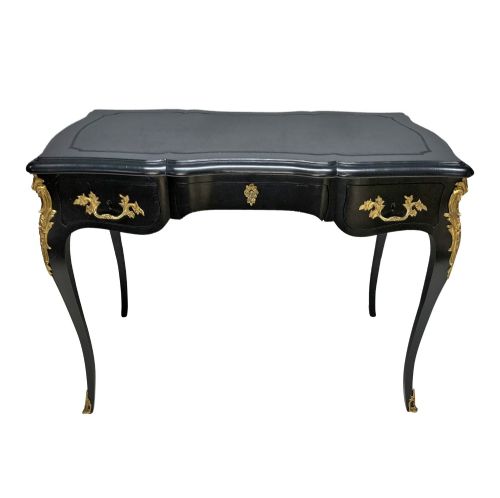
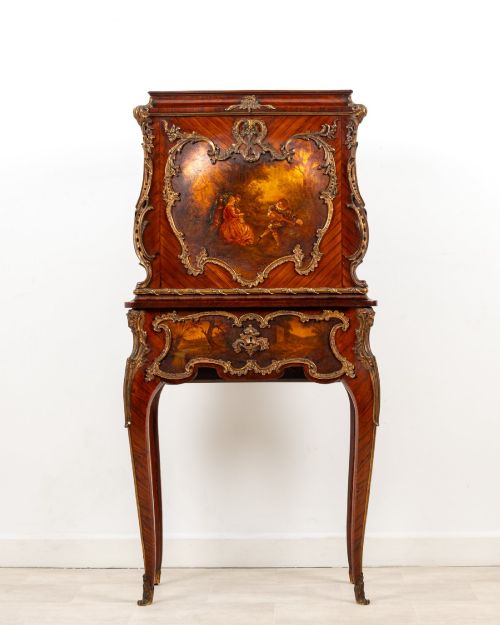
Earlier eighteenth-century examples feature Queen Anne styling and japanned finishes, while nineteenth-century pieces lean towards Louis XV revivals and detailed hand-painted panels. This variety allows collectors to choose between monumental bookcase bureaux and portable desk tidies.
Materials and Technique
Craftsmen built these items using wood, papier-mâché, and bamboo, applying successive layers of lacquer to achieve hard, polished finishes. Gold leaf and gilt ornamentation frequently highlight painted scenes, particularly on pieces executed in the Chinoiserie taste.
Brass handles, ormolu mounts, and glass panels complement the wooden and papier-mâché carcasses on nineteenth-century desks and cabinets. Makers also incorporated exotic timbers such as kingwood alongside traditional elements like Chinese elm.
Surface decoration relies on meticulous hand-painting, visible in the intricate motifs of floral sprays, figures, and architectural landscapes found across the lacquer panels.
Lacquered Writing Desk Retail Price Guide 2026
Typical asking prices for lacquered writing desk among the pieces listed under this phrase on Sellingantiques today, from the lower quarter to the upper quarter. They describe what is for sale here now, not the wider market.
Listings feature items from the eighteenth, nineteenth, and early twentieth centuries, utilising lacquer, papier-mâché, and brass.
Quality Markers
Depth and resilience of the lacquer finish distinguish standard items from superior works, with multi-layered surfaces showing richer tones and smoother execution. The crispness of the hand-painted detailing, especially in gilt Chinoiserie landscapes, indicates the level of artisan skill.
Structural integrity of opening components, such as fall-front desks, drawers, and cabinet doors, separates robust examples from those with weakened hinges or warped timber. The quality of associated hardware, including ormolu mounts and brass fittings, points to workshop standards.
Coherence of the overall design, from balanced proportions on kneehole desks to precise joinery on papier-mâché stationery boxes, dictates the standing of a piece within the broader range.
The Lacquered Writing Desk Glossary
- Chinoiserie
- European imitation and adaptation of Chinese and East Asian artistic traditions, frequently featuring figures, pagodas, and landscapes painted in gold on a dark lacquer ground.
- Japanned
- European lacquerwork imitating Japanese and Asian imports, created by applying layers of varnish and heat-cured finishes to wood or papier-mâché.
- Papier-mâché
- A composite material made from paper pulp or reinforced sheets mixed with glue, moulded into desk sets or boxes and finished with lacquer and paint.
- Ormolu
- Gilded bronze mounts cast and chased for decorative effect, applied to the corners, feet, and borders of nineteenth-century French-influenced writing cabinets.
- Secrétaire à abattant
- A tall writing cabinet featuring a drop-front panel that conceals a fitted interior of small drawers and pigeonholes.
Lacquered Writing Desk: Frequently Asked Questions
How do I care for lacquer surfaces?
Lacquered items require gentle dusting with a soft, dry cloth to prevent scratching the polished finish. Avoid placing them in direct sunlight or near heat sources to protect the varnish from cracking.
Keep humidity levels stable in the room where the desk sits to preserve both the wooden substrate and the decorative painted panels.
What distinguishes Chinoiserie from Japanese lacquer?
Chinoiserie represents European interpretations of Asian design motifs, often executed by local craftsmen using japanning techniques. Japanese lacquer typically originates from eastern workshops employing traditional urushi resin methods.
Visual cues such as regional flora, fauna, and architectural styles help differentiate between European interpretations and imported East Asian work.
Where were papier-mâché desks made?
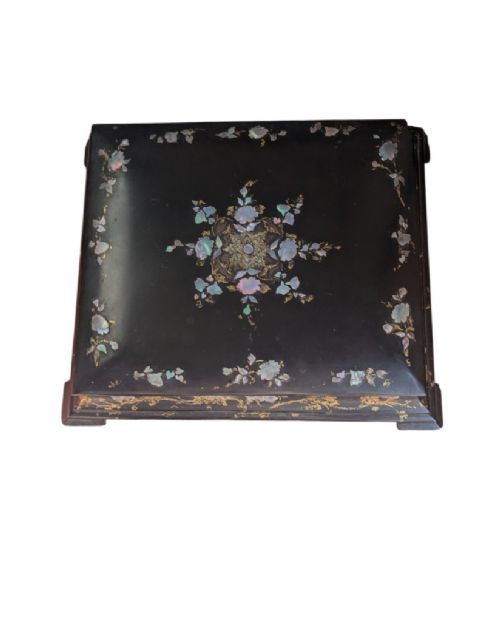
Papier-mâché writing pieces and desk accessories were produced extensively in British manufacturing centres like Birmingham during the nineteenth century. Makers shaped pulp under pressure before applying dark lacquer and hand-painted mother-of-pearl inlay.
Regional variations also include Kashmiri papier-mâché desk tidies and pen stands showcasing distinct local painting traditions.
How do I identify a Victorian writing table?
Victorian writing tables often display eclectic stylistic influences, ranging from French Rococo revivals to bamboo frames and kidney-shaped tops. Examination of the secondary timbers, screws, and lacquer ageing helps confirm nineteenth-century production.
These pieces frequently incorporate brass galleries, leather-inset writing surfaces, and papier-mâché components characteristic of the era.