




Antique Writing Desk Rolltop
An antique writing desk rolltop conceals papers behind a flexible slatted shutter or curved cylinder.
Antique Writing Desk Rolltop
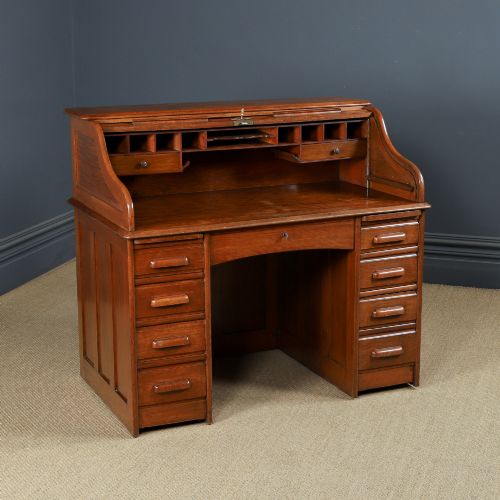
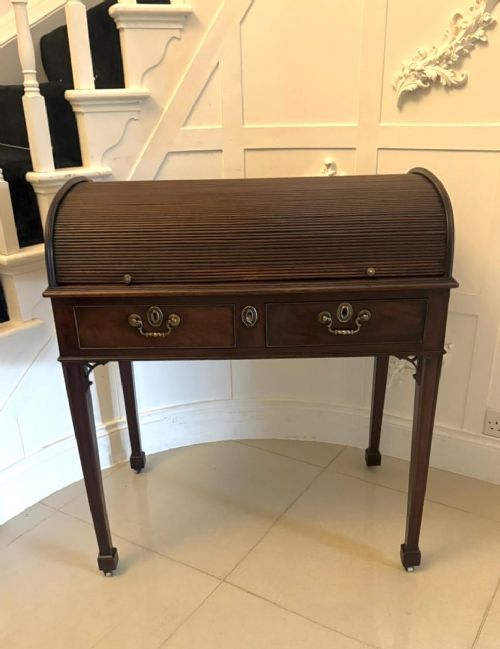
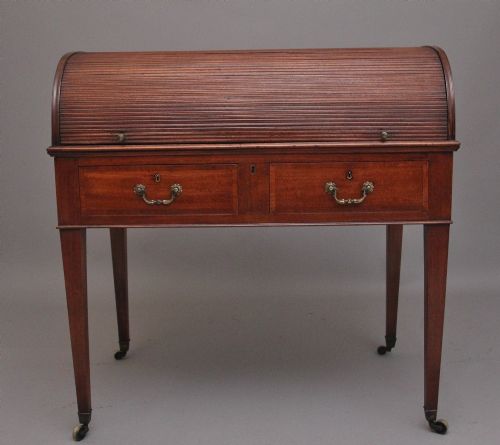
An antique writing desk rolltop brings together pedestal office models and refined domestic cylinder bureaus under one heading. You encounter heavy oak pedestal designs from the Edwardian era alongside lighter mahogany and walnut pieces stretching back to the Georgian period. These pieces are chosen for their ability to hide daily clutter behind a sliding shutter.
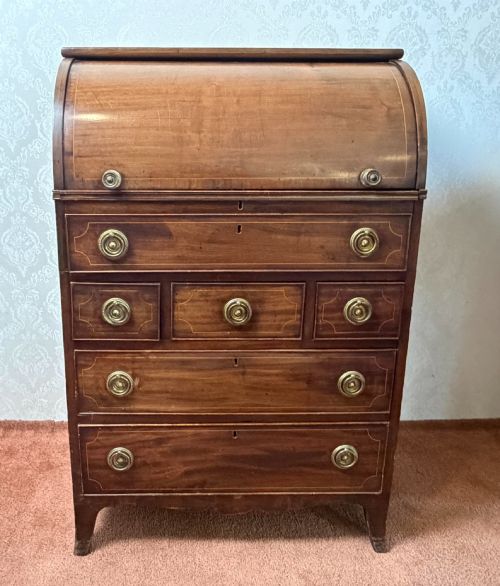
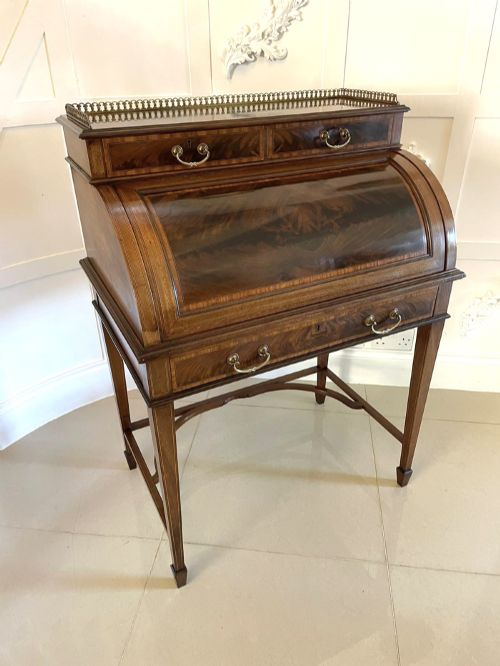
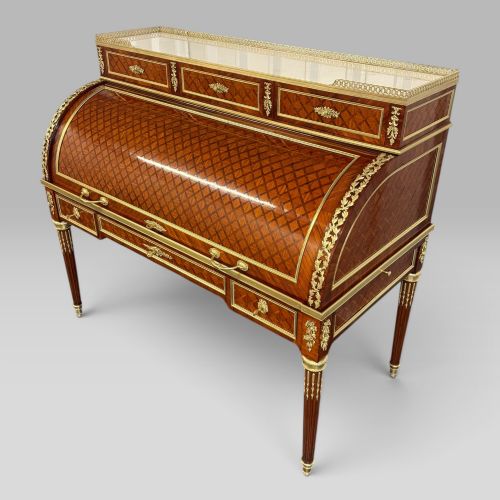
The domestic versions often feature delicate inlay and tapering legs, belonging to the cylinder desk family rather than the heavy office variety. French revival styles appear frequently, decorated with ormolu and marquetry rather than plain commercial timber.
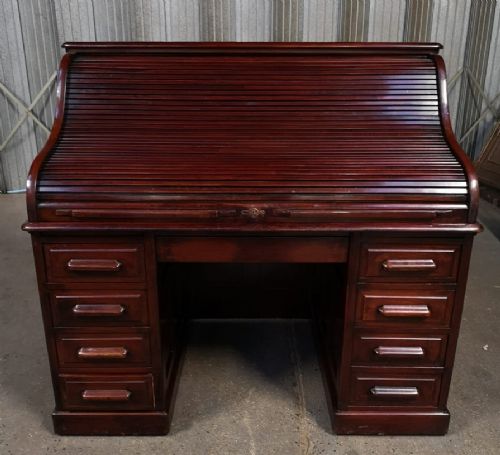
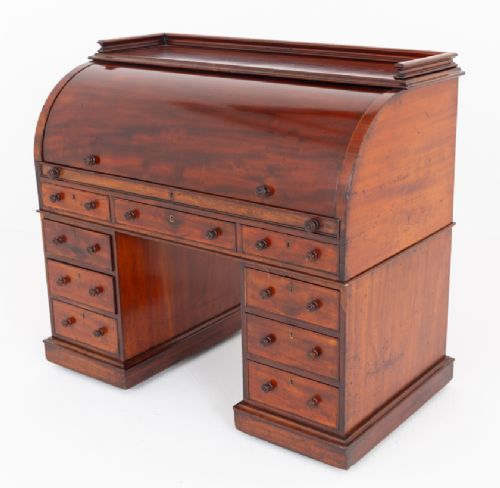
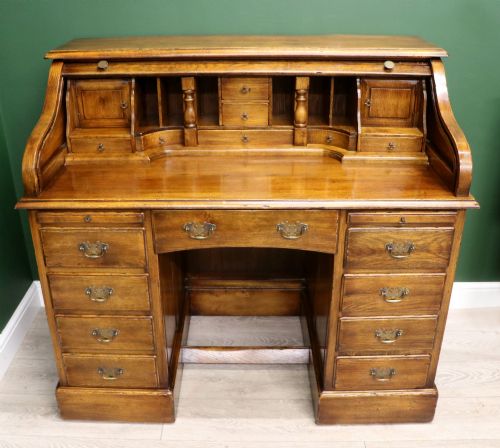
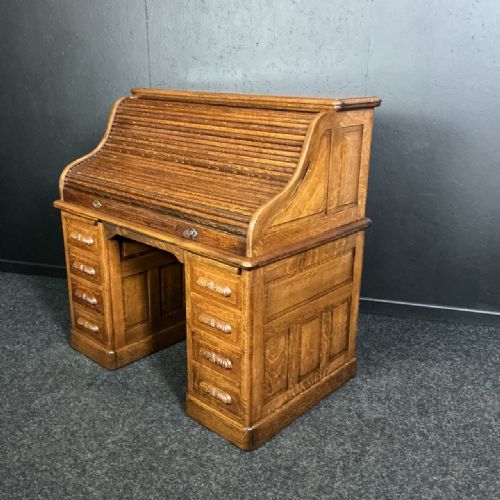
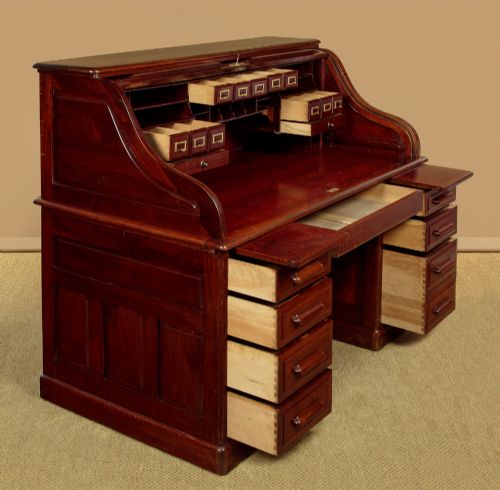
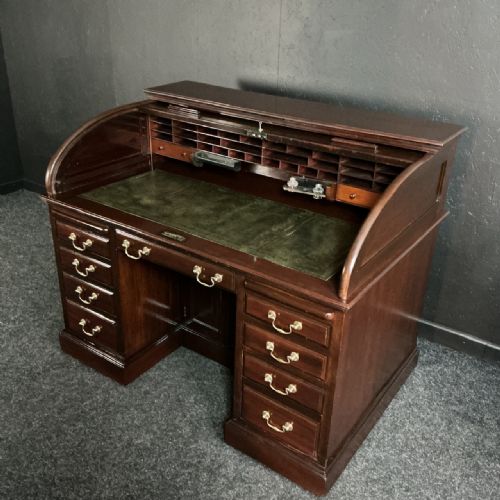
Pedestal formats dominate the later Victorian and Edwardian examples, offering banks of drawers beneath a large tambour shutter. You will find that these utilitarian pieces emphasise workspace and storage over cabinetmaker ornament.
Distinctions in standard
Quality rests upon the smooth operation of the tambour mechanism and the precision of the slatted joints. A superior antique writing desk rolltop runs silently without binding, whereas lesser examples suffer from warped slats and stiff tracks.
The selection of timber grain, particularly in flame mahogany or figured walnut, separates standard production furniture from fine cabinetwork. Hand-cut dovetails in the internal stationery drawers indicate a higher grade of manufacture than machine-cut alternatives.
Listings span from the 18th century through the Edwardian era, incorporating mahogany, oak, walnut, satinwood, brass and ormolu.
Maple & Co London·Boston Chair Company·Horrocks Desk Company
The Antique Writing Desk Rolltop Glossary
- Tambour
- A shutter formed of narrow strips of wood glued to canvas, allowing it to slide in a track around a cylinder. This mechanism conceals the desk interior.
- Cylinder desk
- A writing table enclosed by a solid quarter-circle wooden lid that rolls back into the body of the desk. It differs from a slatted tambour by using a rigid curved panel.
- Ormolu
- Gilded bronze mounts applied to furniture for decoration, seen frequently on French revival pieces. It provides contrast against dark mahogany and walnut surfaces.
- Marquetry
- Inlaid patterns using various coloured woods to create pictorial or geometric designs on the surface. Cabinetmakers use this technique to adorn the exterior panels.
- Pedestal desk
- A heavy office form featuring two banks of small drawers supporting the main writing surface. The rolltop version sits directly on top of these pedestals.
Antique Writing Desk Rolltop: Frequently Asked Questions
How do I maintain the rolltop mechanism?
Keep the wooden tracks clean and free from dust accumulation over time. Apply a small amount of appropriate wax to the sliding surfaces if the slats begin to stick.
Avoid placing the desk in areas with extreme humidity changes, which cause the timber slats to swell and jam in their grooves.
What is the difference between a tambour and a cylinder desk?
A tambour desk utilises multiple small wooden strips attached to a flexible backing fabric, allowing the entire shutter to bend around a tight radius.
A cylinder desk employs a single rigid curved panel of solid wood or heavy veneer that rotates on pivots into the body of the cabinet.
Were these desks used for office work?
The heavier oak pedestal versions served primarily as commercial and office furniture during the late nineteenth and early twentieth centuries. They provided secure storage for ledgers and correspondence.
Lighter mahogany and satinwood variants remained in domestic libraries and drawing rooms for private correspondence and estate management.
How do I date an oak rolltop desk?
Examine the interior drawer construction and the hardware used on the handles and locks. Machine-sawn timber and stamped brass fittings generally point toward the Edwardian period.
Earlier examples from the nineteenth century display hand-cut dovetailing and heavier brass drop handles rather than contemporary plate hardware.
Can I replace a damaged leather writing surface?
Replacement of the leather insert is a standard procedure for restoration. Many pieces feature removable skivers set into recessed wooden surrounds.
Select a traditional gilt-tooled leather hide to match the period of the desk and maintain historical consistency.