



Inlaid Wooden Bureau Desk
An inlaid wooden bureau desk brings together fitted compartments and decorative banding for practical writing.
Inlaid Wooden Bureau Desk
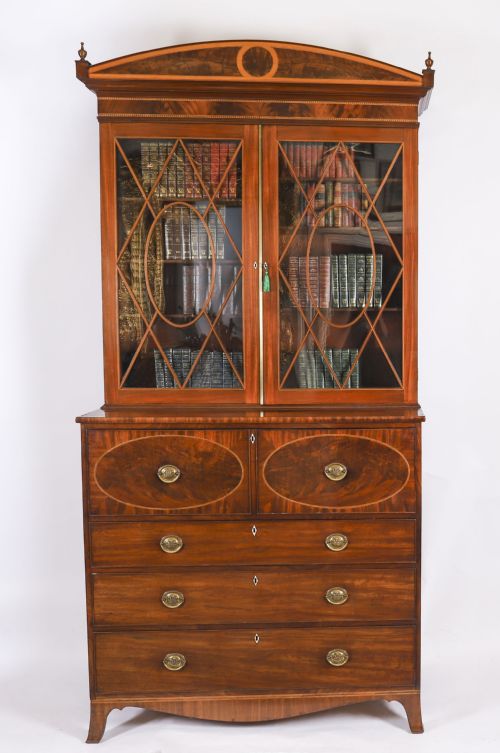
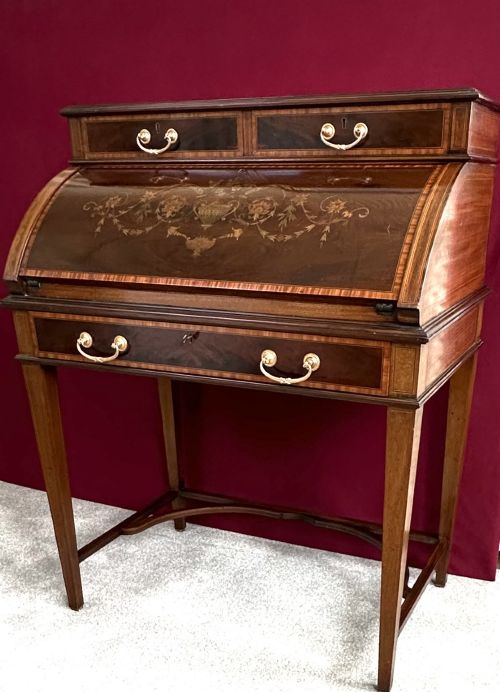
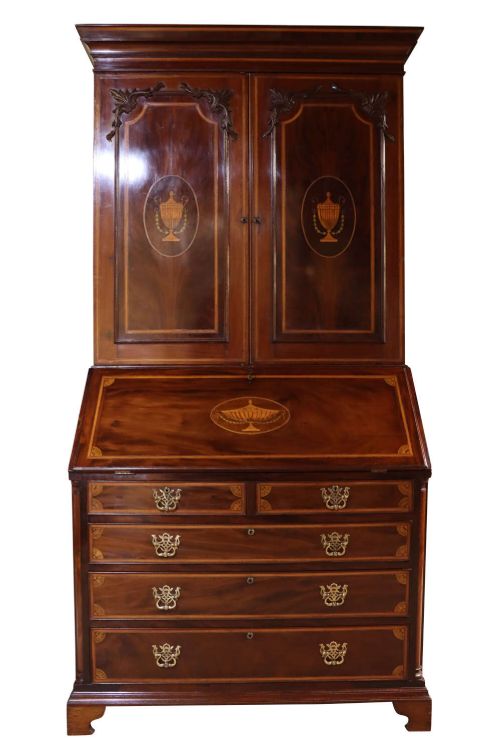
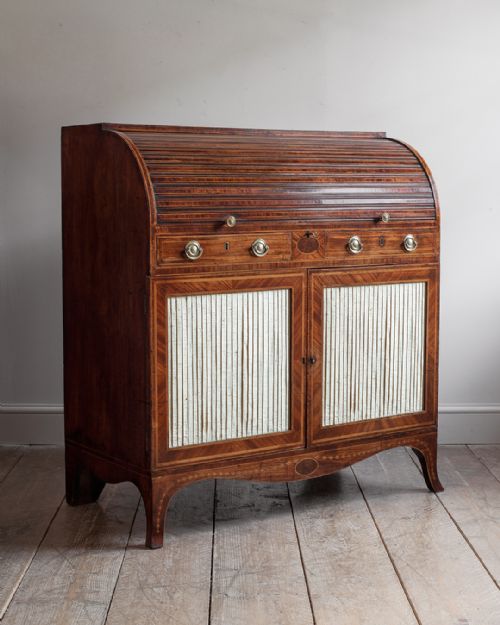
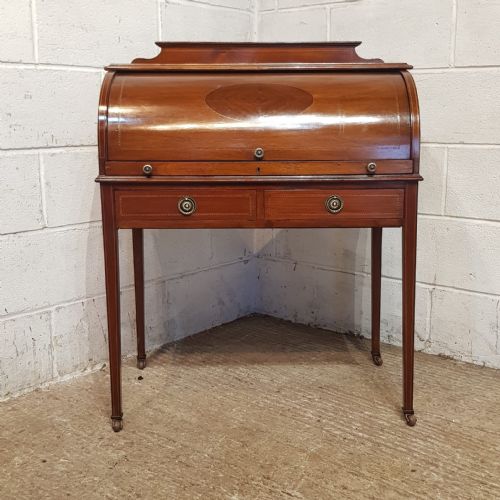
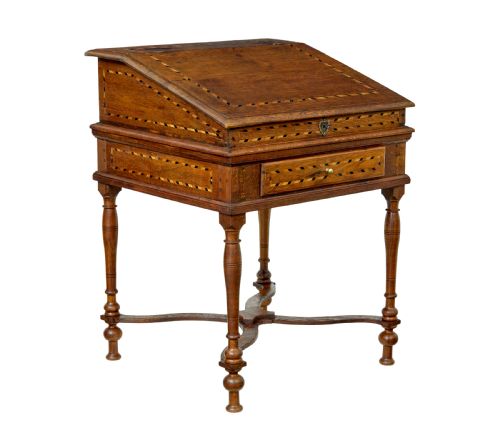
An inlaid wooden bureau desk combines a sloping or drop-front writing surface with internal drawers and pigeonholes, often set upon supporting legs or larger cabinet bases. When buyers search for an inlaid wooden bureau desk, they encounter forms ranging from compact fall-front writing furniture to tall bureau bookcases spanning multiple centuries.
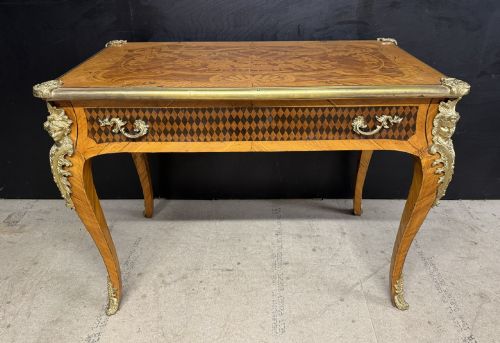
The selections span distinct periods, with Edwardian mahogany writing bureaus and Georgian mahogany bureau bookcases appearing frequently. Pieces utilise various timber surfaces, decorated with contrasting wood inlay, marquetry, or brass fittings to frame the writing compartments.
How they were made
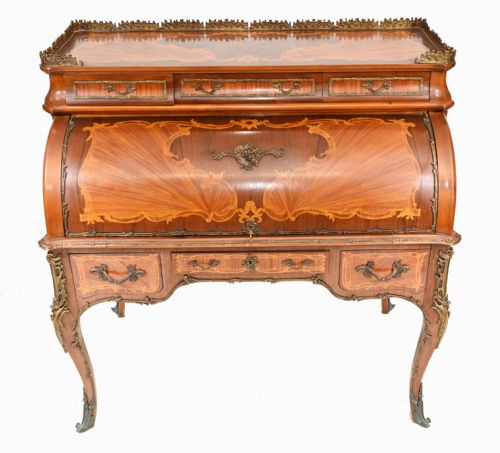
Cabinet makers constructed these desks using solid timbers and veneers like mahogany, walnut, oak, and satinwood, applying intricate wood inlay and marquetry to the exterior surfaces. Brass handles, escutcheons, and occasional ormolu mounts secure the structural drawers and compartments.
Joinery techniques link the fall fronts, cylinder tops, and tambour sections to internal writing slides and stationery nests. Selected examples incorporate glass doors on upper bookcase sections or revolving tabernacle fittings.
Several desks hide internal secret compartments behind dummy drawer fronts for confidential correspondence.
What varies in quality
The refinement of the wood inlay and the choice of primary timber determine the distinction between standard examples and exceptional pieces. Finely figured flame mahogany or burr walnut paired with precise marquetry indicate superior cabinet making.
Internal arrangement complexity also separates pieces, with fitted stationery drawers, secret compartments, and integrated bookcases demonstrating higher levels of workshop skill.
The Inlaid Wooden Bureau Desk Glossary
- Bureau
- A desk featuring a sloping lid that opens to reveal a writing surface and pigeonholes. This form evolved to house correspondence and writing materials securely.
- Marquetry
- Decorative patterns formed by fitting small pieces of veneer into a prepared wood surface. Craftsmen utilise diverse timber colours to create floral or geometric designs.
- Secretaire
- A piece of furniture containing a concealed writing drawer or drop-front writing compartment. These often sit within larger bookcases or cabinets.
- Tambour
- A sliding shutter made from narrow strips of wood glued to canvas or leather backing. This flexible screen conceals desk interiors smoothly.
- Ormolu
- Gilded bronze mounts applied to furniture for decorative effect. Makers used these brass-based enrichments on French and classical styles.
Inlaid Wooden Bureau Desk: Frequently Asked Questions
How do I use a bureau desk?
Lower the fall-front or sloping lid to rest flat and reveal the internal writing surface and pigeonholes.
Store stationery within the internal compartments and close the lid after writing to keep papers contained.
How do I date an Edwardian bureau?
Edwardian bureaus typically date from around 1900 to 1910, reflecting lighter proportions and machine-sawn veneers.
They frequently combine mahogany frames with satinwood stringing and inlaid shell motifs.
Where did bureau bookcases go?
Bureau bookcases combined upper library shelving with a lower writing desk to save floor space in period rooms.
Owners kept reference books above while managing correspondence at the desk level below.