


18th Century Marquetry Desk
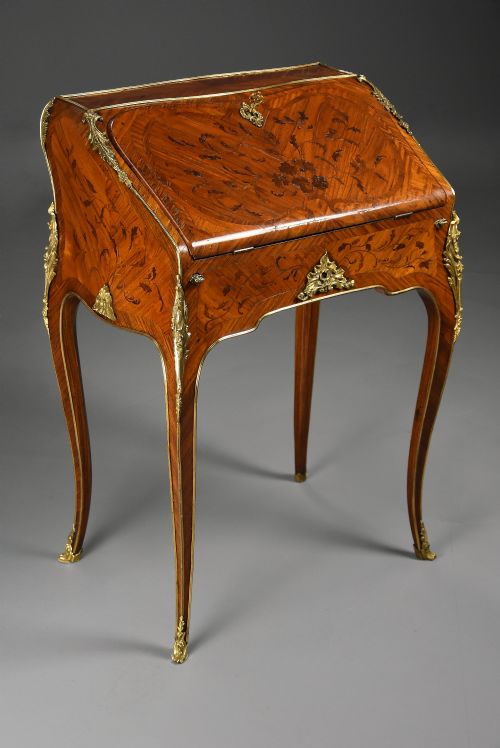
An 18th century marquetry desk brings together intricate floral inlay and practical writing space in a single grand piece.
18th Century Marquetry Desk
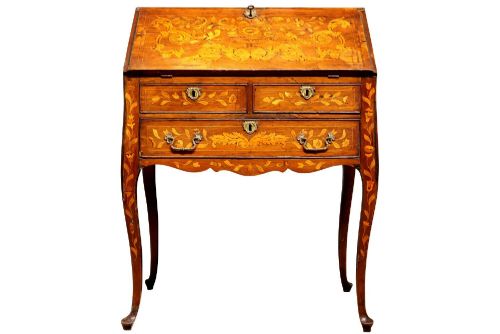
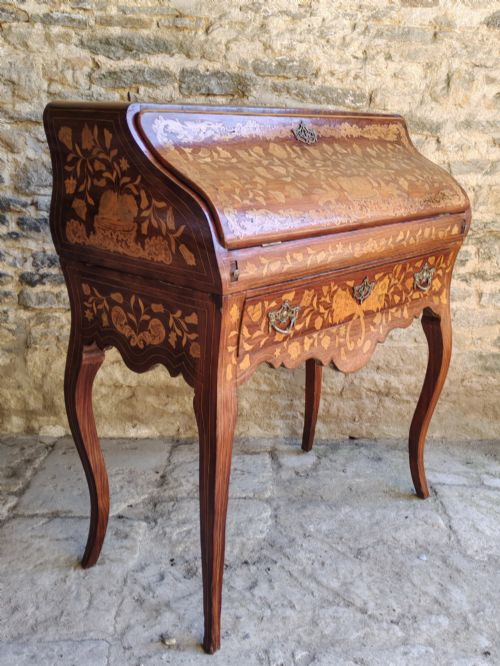
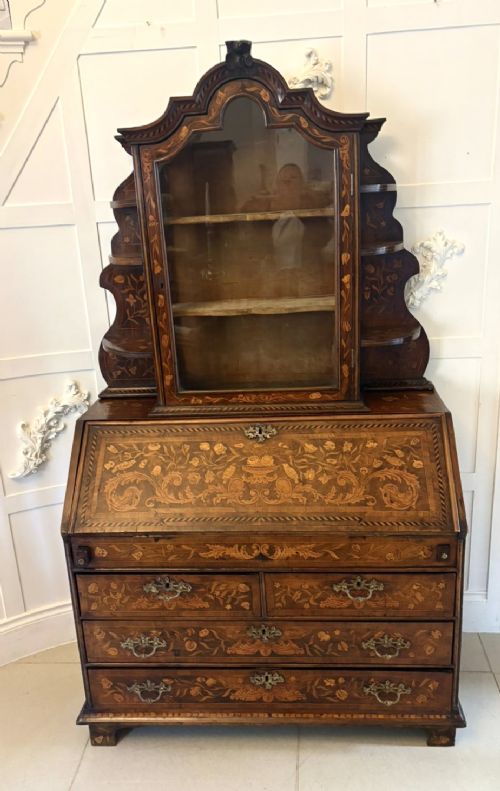
When searching for an 18th century marquetry desk, collectors encounter sophisticated writing furniture designed for display and utility. These objects range from compact slope-front writing surfaces to large bureau bookcases fitted with multiple internal drawers.
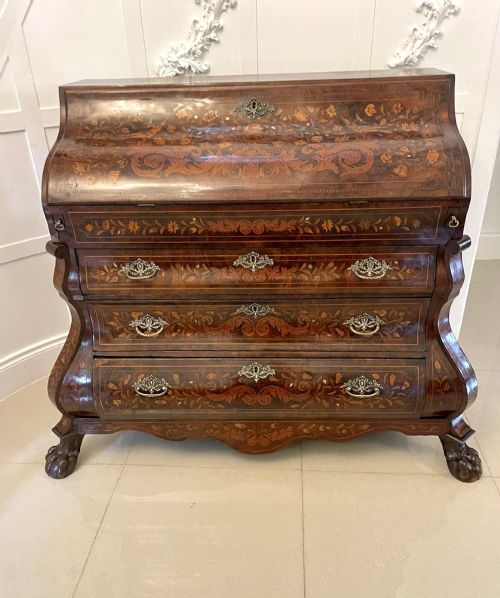
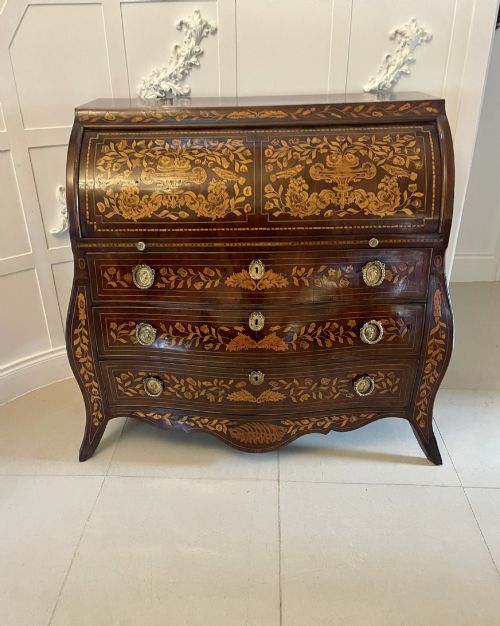
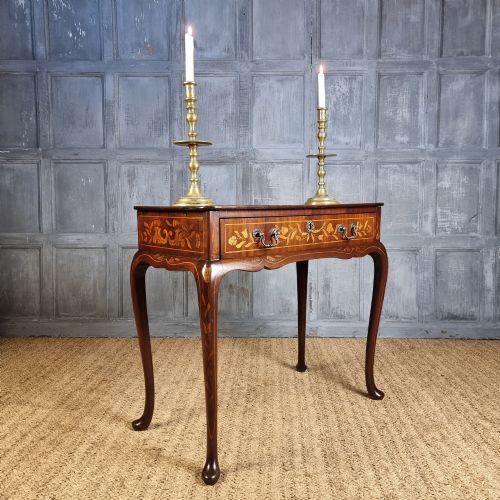
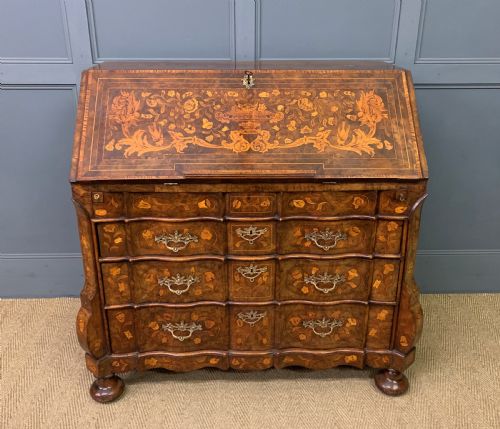
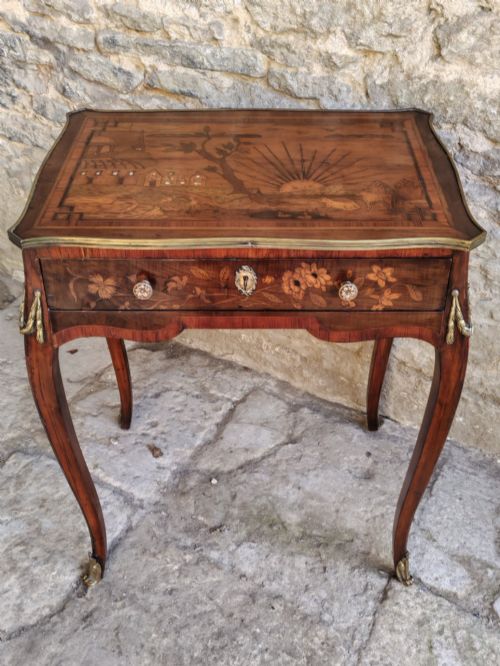
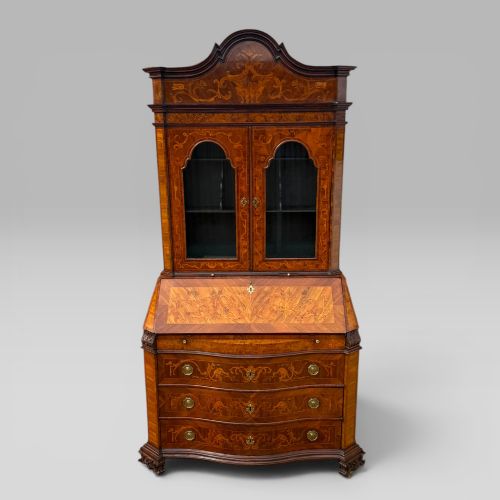
The version most commonly met on this page is the Dutch floral marquetry bureau, often featuring a serpentine or bombe profile. Walnut and burr walnut form the primary foundations for these pieces, overlaid with elaborate floral and bird designs.
How they were made
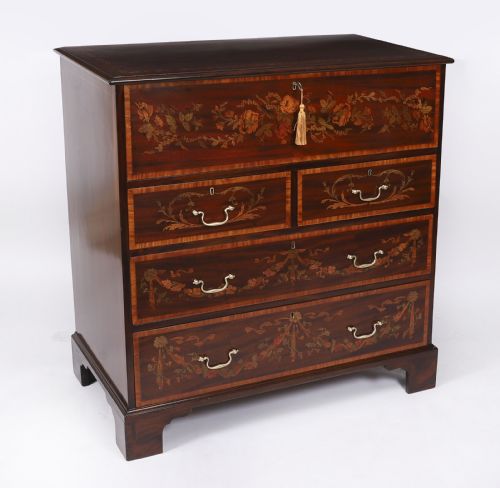
Cabinet makers constructed the carcases from solid timbers like walnut, oak or mahogany, applying finely sliced veneers to the exterior surfaces. Fruitwood, satinwood and boxwood provided contrasting tones for the detailed pictorial inlay.
Artisans cut delicate floral and bird motifs by hand, fitting disparate woods together like a puzzle before gluing them to the substrate. Brass mounts, handles and escutcheons completed the construction, adding structural support and ornamental contrast.
Secret compartments inside these desks often required pressing hidden wooden springs disguised as pigeonhole partitions to pop open.
What varies in quality
The hierarchy of quality rests primarily on the depth and precision of the marquetry work itself. Superior examples display crisp shading in the wood veneers, creating a convincing illusion of three-dimensional depth within the floral sprays.
Construction choices also define the tier of a piece, from simple flat-front carcases to complex bombe shapes that require advanced carpentry. The choice of underlying timber, such as richly figured burr walnut rather than plain local woods, marks the distinction.
The 18th Century Marquetry Desk Glossary
- Marquetry
- Decorative veneer work assembled in geometric or pictorial patterns using various coloured woods. This technique covers the entire exterior surface of the carcase to display elaborate floral motifs.
- Bombe
- A swelling, outward-curved contour found on the front and sides of furniture carcases. This curvilinear shape demands exceptional skill from the cabinet maker.
- Bureau
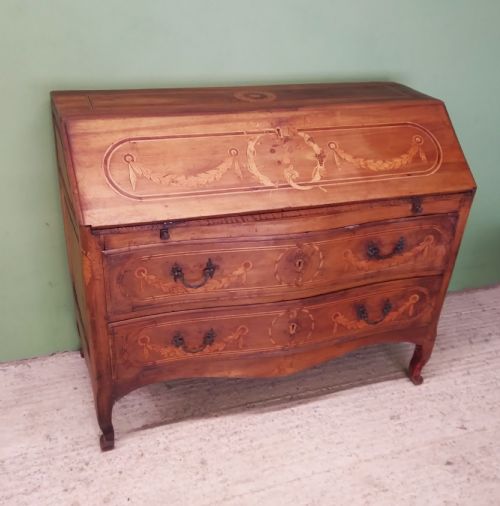
- A sloping desk that opens to reveal a fitted interior of small drawers and pigeonholes. It often sits atop a chest of drawers or a stand.
- Secretaire
- A dedicated writing cabinet featuring a fold-down or pull-out writing surface. These units frequently incorporate hidden compartments behind decorative panels.
- Escritoire
- An alternative term for a writing desk or small bureau cabinet. The form typically includes a slanted writing flap and internal shelving.
18th Century Marquetry Desk: Frequently Asked Questions
How do I identify a genuine period piece?
Examine the timber shrinkage, hand-cut dovetails inside the drawers, and the natural fading of the veneer beneath the finish. Authentic examples show subtle irregularities in the hand-cut marquetry rather than uniform machine precision.
Check the secondary woods used for drawer linings and internal framing to confirm age and regional origin. Period pieces display historical wear patterns consistent with centuries of gentle use.
Where were most of these desks made?
The majority of these pieces originate from Dutch workshops, where artisans specialised in exuberant floral marquetry on walnut carcases. Other notable examples emerge from English, French and Italian makers working in regional variations of the Rococo and Georgian styles.
Each region imparted distinct characteristics, from the swelling bombe shapes of the Netherlands to the restrained linear inlay of English Sheraton designs.
How should I care for the veneer?
Keep the desk away from direct sunlight and strong heat sources to prevent the delicate fruitwood veneers from drying out and lifting. Maintain a stable room humidity to protect both the solid carcase timbers and the intricate inlay.
Apply traditional microcrystalline wax sparingly to nourish the wood surface and preserve the historic polish without sealing the grain permanently.
What is the difference between marquetry and inlay?
Marquetry involves assembling an entire picture from veneers on a background sheet before applying it to the furniture carcase. This technique covers large surfaces with elaborate pictorial designs of flowers, birds and scrolls.
Inlay, by contrast, refers to cutting recesses directly into a solid piece of wood and fitting contrasting materials into those specific channels. Marquetry creates a complete veneer skin, whereas inlay accents a pre-existing solid surface.