

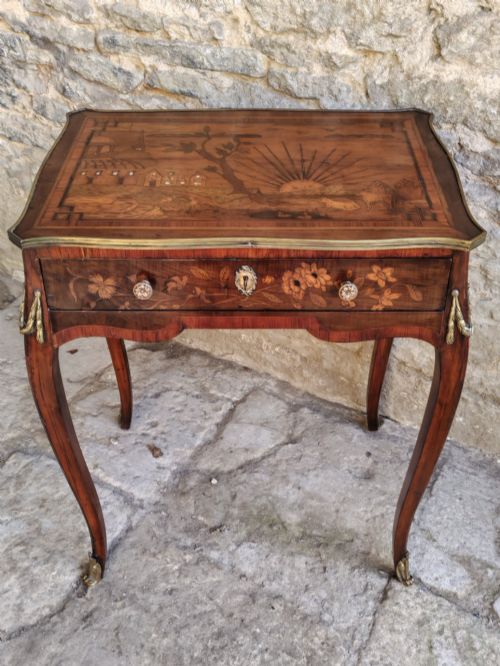
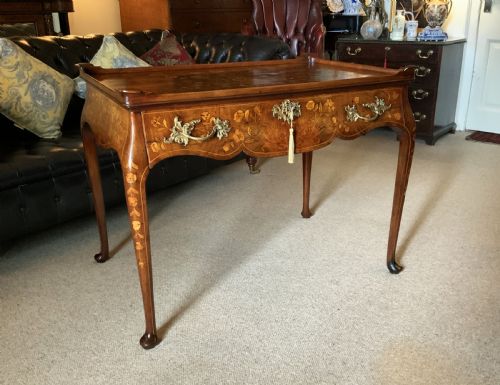


Dutch Rococo Inlaid Desk
A dutch rococo inlaid desk brings exuberant floral marquetry and sweeping serpentine lines into a room, offering both hidden compartments and a dramatic silhouette.
Dutch Rococo Inlaid Desk
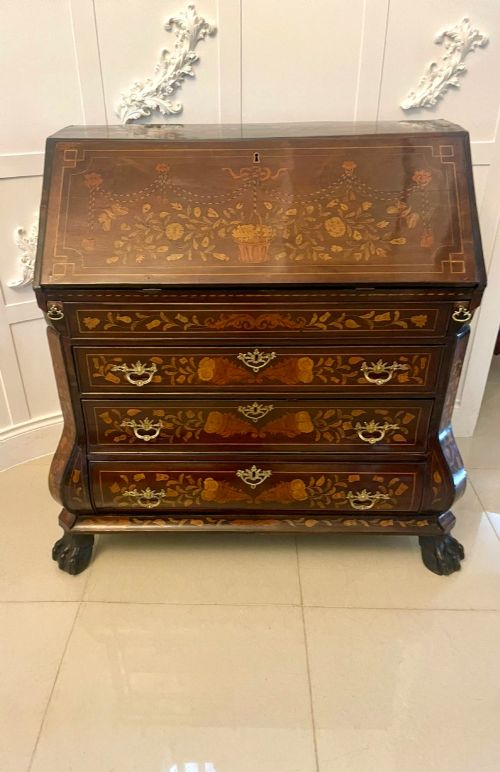
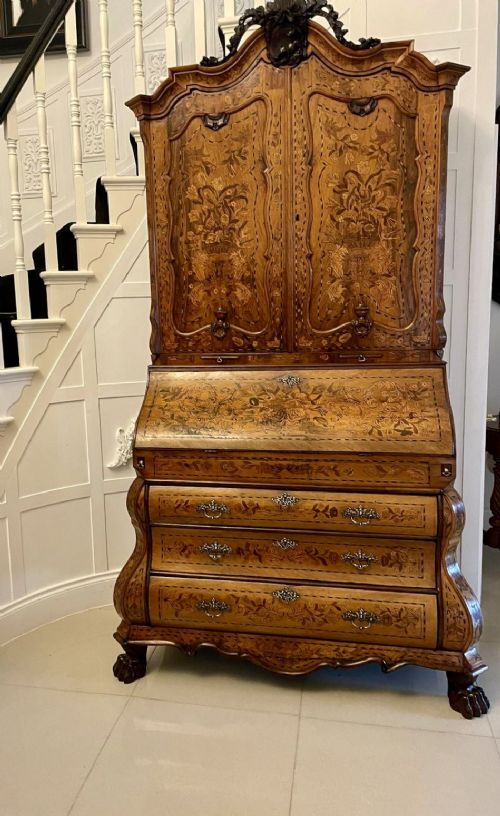
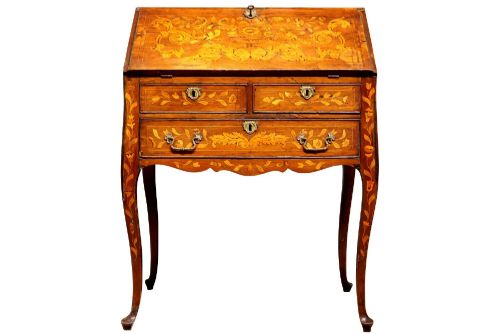
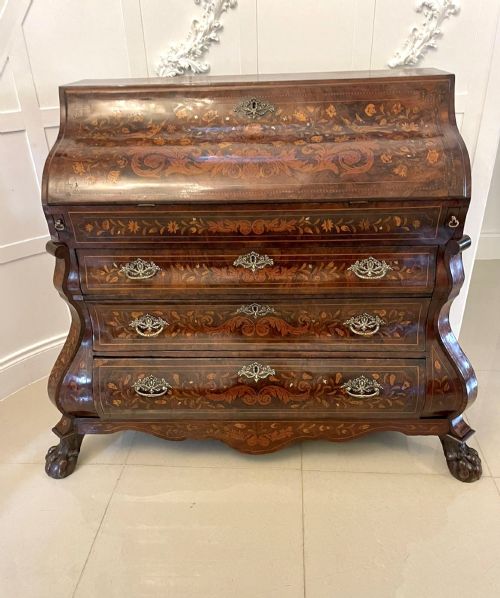
The most common version met on this page is the bureau, frequently featuring a bombe shaped body that swells outward toward the base. Alongside these sloping-lid desks, buyers encounter tall bureau bookcases and occasional side tables that share the same distinctive floral inlay vocabulary.
Origins trace back to eighteenth century cabinetmakers influenced by rococo and baroque tastes, though nineteenth century reinterpretations also appear in the listings. The presence of brass hardware and intricate fruitwood inlay defines the visual character of the category.
How they were made
Cabinetmakers utilised walnut and burr walnut as foundational timbers, laying down rich, figured veneers over secondary woods to create deep tonal variation. Fruitwood inlay and marquetry were then meticulously cut and fitted into the surface to form complex floral and avian motifs.
The characteristic bombe form required skilled shaping of structural timbers and veneers to achieve the swelling, curved profiles associated with the style. Brass handles, escutcheons, and hinges were fitted to secure drawers and fall-front writing slopes, completing the construction.
Dutch Rococo Inlaid Desk Retail Price Guide 2026
Typical asking prices for dutch rococo inlaid desk among the pieces listed under this phrase on Sellingantiques today, from the lower quarter to the upper quarter. They describe what is for sale here now, not the wider market.
Countless tiny wooden petals and leaves are frozen in mid-bloom across these curved drawers, tended by silent inlaid birds.
What varies in quality
The density and precision of the marquetry work distinguish superior examples from simpler ones, with top-tier pieces showing seamless execution of floral and bird designs across curved surfaces. The choice of timber also dictates standing, as heavily figured burr walnut and rich fruitwood veneers command greater visual depth than plain walnut.
Structural ambition separates standard desks from grander bureau bookcases, where the integration of upper cabinet sections and harmonious proportions elevates the overall presence. Preservation of the original surface patination and crispness in the carved or inlaid details marks the upper echelon of these items.
The Dutch Rococo Inlaid Desk Glossary
- Bombe
- A bulging or swelling contour found on the front and sides of furniture bases. This curved shaping requires advanced woodworking skill to veneer successfully.
- Marquetry
- Decorative inlay patterns formed by fitting small pieces of veneer into a prepared background. Floral and bird motifs are typical of this technique.
- Burr walnut
- Timber taken from a growth on a walnut tree, yielding highly figured and swirling grain patterns. It provides a luxurious surface for high-status furniture.
- Bureau
- A writing desk featuring a sloping lid that opens to reveal internal compartments and pigeonholes. Larger versions often incorporate bookcases above.
- Fruitwood
- Dense, pale timber sourced from fruit-bearing trees, utilised in marquetry work for contrasting colour and fine detail.
Dutch Rococo Inlaid Desk: Frequently Asked Questions
How do I use a bureau desk?
The sloping front drops down to form a writing surface, revealing a fitted interior with small drawers and pigeonholes for correspondence. Below this flap, graduated drawers provide storage space for household papers or linens.
Larger bureau bookcases combine this writing function with upper shelving enclosed by doors, allowing both display and writing tasks within a single tall cabinet.
What periods do these desks come from?
The listings span the eighteenth and nineteenth centuries, with many examples originating in the seventeen-fifties through to seventeen-eighties. Georgian and eighteenth-century pieces predominate, alongside nineteenth-century interpretations that maintain traditional techniques.
Dates are typically attributed based on construction methods, timber choice, and the evolution of the rococo and baroque styles in Dutch workshops.
Are these desks suitable for daily use?
These pieces function well as working writing desks provided the fall-front hinges and support ledges bear the weight securely. The internal compartments remain practical for modern stationery and small items.
Placing the desk away from direct sunlight and excessive heat protects the delicate fruitwood marquetry and walnut veneers from drying out over time.
How do I identify floral marquetry?
Floral marquetry consists of contrasting wood veneers, such as fruitwoods, shaped and assembled into pictorial clusters of flowers and birds across the desk exterior. Closer inspection reveals the individual pieces of wood cut to fit flush within the background veneer.
Earlier examples often display intricate shading created by scorching veneer edges in hot sand before gluing them to the carcass.