



Warm Brown Inlaid Bureau
A warm brown inlaid bureau brings rich timber and intricate marquetry together into a practical workspace that anchors a room.
Warm Brown Inlaid Bureau
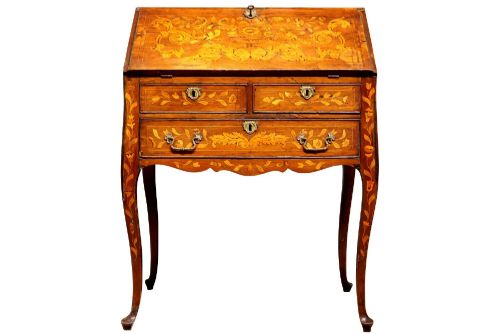
A warm brown inlaid bureau serves as a traditional writing desk that typically conceals a fitted interior behind a sloping flap or cylinder front. These pieces emerge across periods ranging from the Georgian era through to the Edwardian decades, capturing diverse regional tastes.
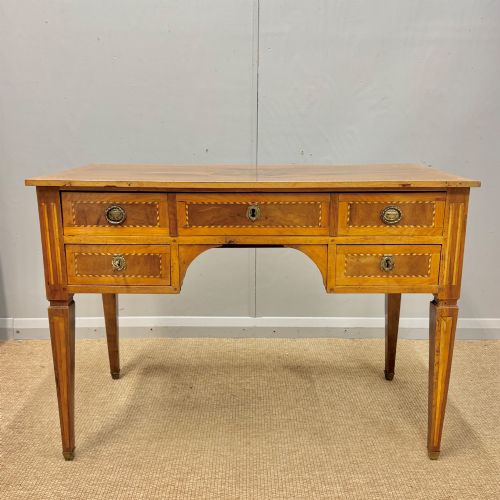
The selections available here showcase forms such as Dutch floral marquetry desks, French bombe shapes, and satinwood writing bureaus. Walnut, mahogany, fruitwood, and kingwood supply the deep, warm brown foundation that underpins the contrasting lighter wood inlays.
Materials and construction methods
Cabinet makers constructed these pieces using dense hardwoods like walnut, mahogany, and fruitwood to build the primary carcase and drawer structures. Secondary timbers and structural framing provide the robust support necessary for daily writing and storage.
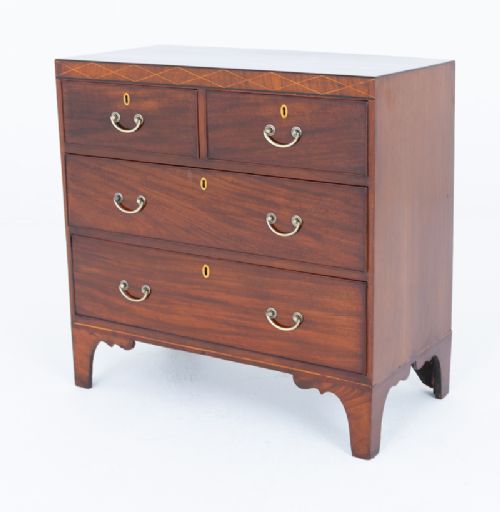
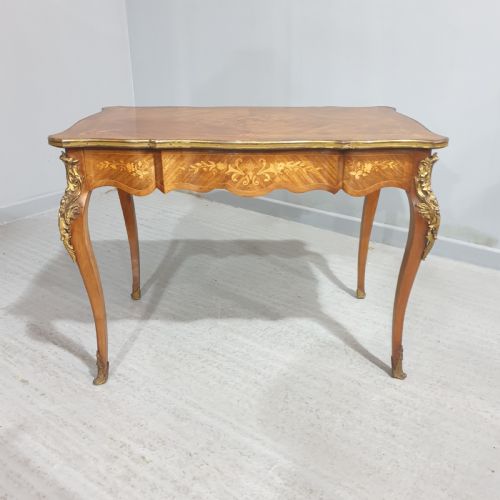
Decorative surfaces rely on precise marquetry, parquetry, and feather-banded borders executed in contrasting woods such as satinwood and various fruitwoods. Brass handles, escutcheons, and occasional ormolu mounts complete the hardware details.
Warm Brown Inlaid Bureau Retail Price Guide 2026
Typical asking prices for warm brown inlaid bureau among the pieces listed under this phrase on Sellingantiques today, from the lower quarter to the upper quarter. They describe what is for sale here now, not the wider market.
The listings span from the 18th century through the Georgian and Regency eras to the Edwardian period.
What separates the finest examples
The sophistication of the timber selection and the precision of the marquetry or parquetry work dictate the distinction between ordinary and exceptional pieces. Master artisans aligned wood grains with care and created intricate floral or geometric patterns that maintain their definition across centuries.
Interior configuration and the retention of original brass hardware or locks further elevate a piece. Superior examples display seamless drawer movement, balanced proportions, and undisturbed patination on the warm brown surfaces.
The Warm Brown Inlaid Bureau Glossary
- Marquetry
- Decorative veneer work arranged in pictorial or floral patterns across the surface of the wood. Craftsmen cut thin slices of various timbers to compose detailed designs on the bureau front.
- Parquetry
- Geometric patterns formed by small pieces of fitted veneer, often seen on tabletop surfaces and bureau flaps. This technique creates a structured visual texture using contrasting wood tones.
- Bombe
- A swelling, outward-curved contour found on the sides and fronts of certain continental pieces. This shaped profile requires advanced woodworking skill to achieve harmonious proportions.
- Secretaire
- A writing cabinet or desk featuring a pull-down flap or drawer that reveals inner compartments and pigeonholes. It combines storage with a dedicated writing surface.
- Feather-banding
- Narrow strips of veneer laid diagonally to form a herringbone pattern around the borders of drawers or panels. This subtle framing highlights the grain of the primary wood.
Warm Brown Inlaid Bureau: Frequently Asked Questions
What is inside a bureau?
Lifting the sloping flap reveals a fitted interior containing small drawers, pigeonholes, and sometimes a central concealed compartment or lockable central door.
These compartments were designed for organising letters, documents, and writing implements securely.
How do I maintain the wood?
Keep the wood away from direct sunlight and steady heat sources to prevent the veneers from drying out and lifting over time.
Apply a traditional beeswax polish sparingly and buff with a soft cloth to preserve the warm brown lustre.
Are these desks practical for daily use?
Many people use them as laptop stations or writing desks by folding down the writing flap when needed.
The internal compartments remain useful for keeping modern stationery and small items neatly organised.
How do I date an inlaid bureau?
Examine the secondary woods inside the drawers, the style of the brass hardware, and the complexity of the marquetry design.
Georgian and 18th-century pieces often feature hand-cut dovetails and heavier carcase construction compared to later Edwardian examples.