



Dutch Writing Desk
A Dutch writing desk combines functional workspace with elaborate floral inlay, offering practical storage alongside distinctive period character.
Dutch Writing Desk
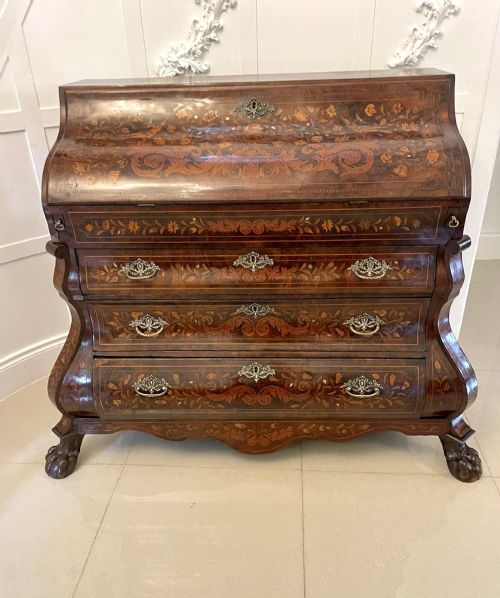
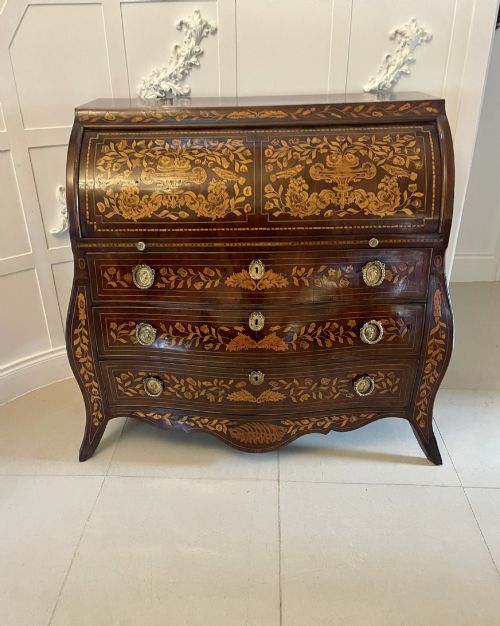
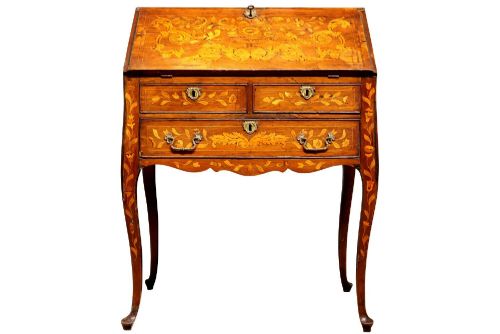
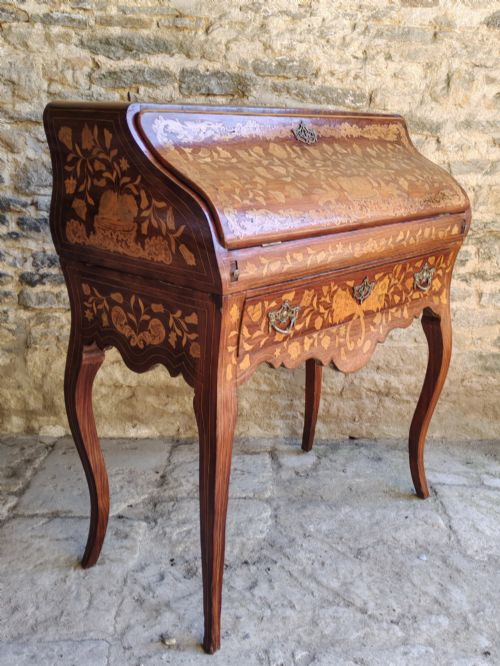
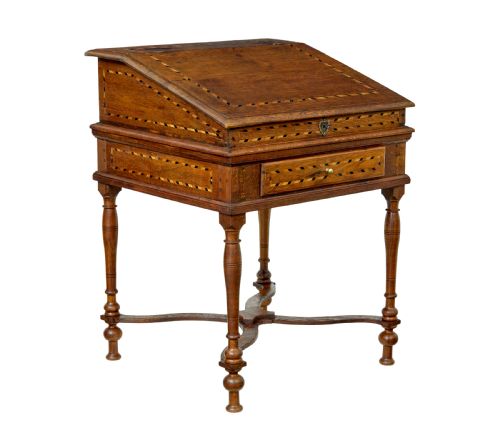
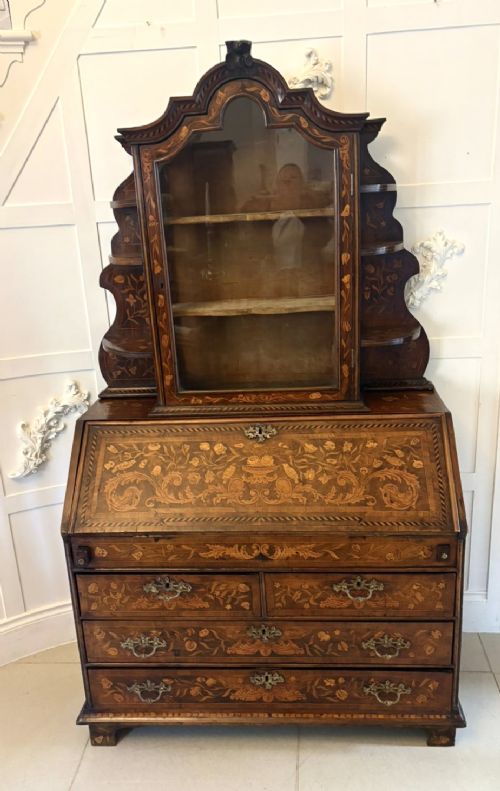
A dutch writing desk primarily appears as a sloping bureau, a bureau bookcase with upper shelving, or a cylinder desk designed for domestic correspondence and record keeping. These pieces emerge predominantly from the eighteenth and nineteenth centuries, reflecting Continental craftsmanship styles such as Dutch Baroque and Rococo.
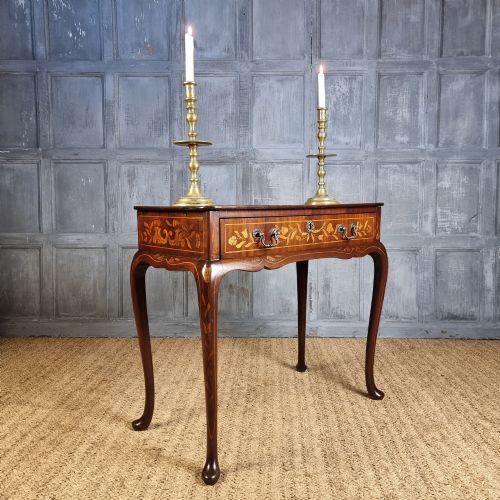
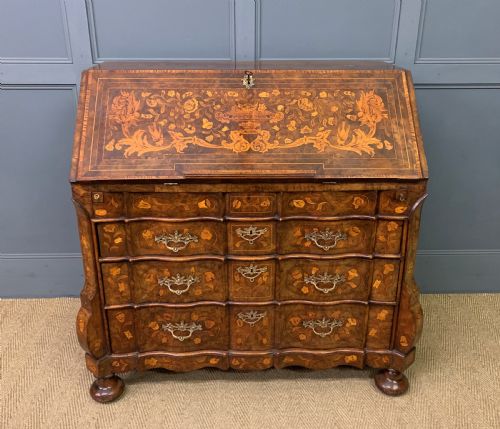
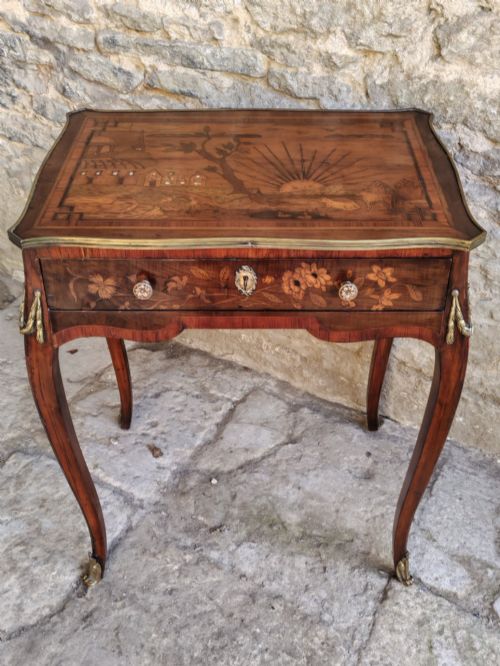
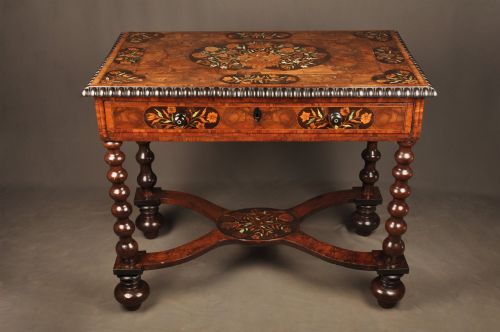
The version most commonly encountered on this page is the walnut bureau, often displaying a bombe profile and floral marquetry across the fall front and drawers. Alongside these sloping desks, listings include writing slopes, bureau bookcases, and occasional centre tables associated with the same stylistic tradition.
Materials and Technique
Cabinet makers constructed carcass frames using solid oak or mahogany, laying burr walnut or fruitwood veneers over primary surfaces to create figured grain patterns. These wooden foundations support elaborate marquetry panels composed of contrasting fruitwoods cut into floral and foliate motifs.
Brass hardware such as handles, escutcheons, and hinges punctuate the exterior, while interior compartments often house secret drawers and small pigeonholes. Selected items incorporate blue and white Dutch Delft inkstands or faience inkwells made from glazed earthenware.
Hidden spring-loaded catches inside the pigeonholes often guard secret compartments meant for private correspondence.
Craftsmanship and Proportion
The standard of a dutch writing desk rests on the intricacy and preservation of its marquetry inlay, where densely packed floral designs demonstrate superior artisan skill compared to sparse patterns. The execution of the bombe curve, requiring careful shaping of wood to achieve a swelling profile, dictates the structural sophistication of the piece.
Integration of secondary woods, the crispness of internal pigeonhole joinery, and the matching of burr walnut grain across drawer fronts separate finer examples from standard workshop production. The balance between decorative exterior embellishment and the practical arrangement of the writing interior defines the overall success of the object.
Morison of Edinburgh
The Dutch Writing Desk Glossary
- Marquetry
- Decorative veneer work forming pictures or patterns by assembling small pieces of coloured wood, ivory, or shell. On these desks, floral and foliate marquetry covers the sloping fall front and drawer faces.
- Bombe
- A swelling, outward-curving contour found on the lower sections of drawers and case furniture. This rounded profile requires specialised shaping of the wood framework.
- Bureau
- A writing cabinet featuring a sloping lid that opens to form a desk surface and conceals internal pigeonholes. It serves as both a storage chest and a writing place.
- Secretaire
- A piece of furniture designed for writing, often containing concealed drawers and folding surfaces. The term frequently applies to cabinets with drop-front writing compartments.
- Faience
- Tinned-glazed earthenware associated with continental pottery production, seen in desk accessories like inkstands. This glazed ceramic material provides a smooth, white ground for blue painted decoration.
Dutch Writing Desk: Frequently Asked Questions
How do I use a bureau desk?
Lower the sloping wooden flap to reveal the internal writing surface, pigeonholes, and small compartments designed for stationery and letters. When writing finishes, lift the lid back into place to conceal paperwork and secure the contents.
The enclosed upper section of a bureau bookcase provides space for displaying books or storing documents behind glazed or panelled doors. This combination keeps everyday writing materials organised while maintaining a tidy domestic appearance.
What is a bombe front?
A bombe front describes furniture with a pronounced, convex curve that swells outward from top to bottom. Cabinet makers achieved this shape by carefully bending and carving thick wood timbers or applying shaped veneers.
This sculptural form adds visual weight and dynamic movement to the piece, catching light differently across the curved grain. It remains a defining characteristic of Continental furniture from the eighteenth century.
How do I care for walnut veneer?
Keep the wood away from direct sunlight and heat sources to prevent the burr walnut veneer from drying, fading, or lifting away from the oak carcass. Regular dusting with a soft, dry cloth maintains the surface without requiring heavy polishes.
Apply a microcrystalline wax sparingly once or twice a year if the wood appears dry, buffing it gently to preserve the natural sheen. Avoid using modern silicone sprays or abrasive cleaners on antique polished finishes.
How can I date a marquetry desk?
Examine the construction methods inside the drawers, looking for hand-cut dovetails and solid secondary woods like oak or pine rather than modern plywood or machine-made screws. Eighteenth-century examples often display deep floral marquetry on walnut or fruitwood, whereas later nineteenth-century revival pieces utilise different underlying timber framing.
Stylistic shifts also indicate age, as earlier pieces favour asymmetrical floral arrangements and bombe contours, while nineteenth-century interpretations sometimes incorporate distinct revival motifs. Reviewing the hardware, lock mechanisms, and secondary construction provides further chronological clues.