


Marquetry Rolltop Desk
A marquetry rolltop desk brings intricate floral and geometric wood veneers together with a concealed workspace.
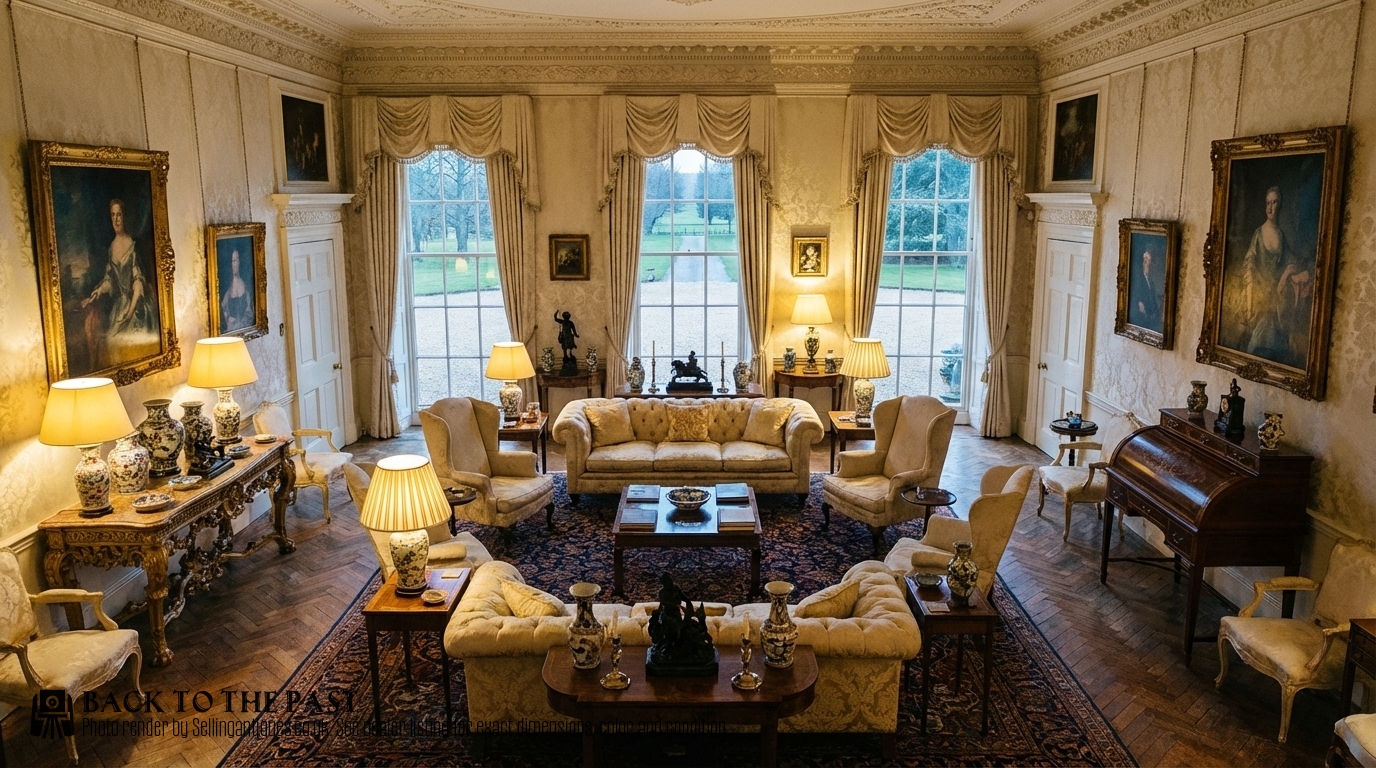
Marquetry Rolltop Desk
A marquetry rolltop desk provides a enclosed writing surface concealed by a flexible cylinder or tambour shutter, decorated with detailed wood veneers. The pieces seen here encompass Victorian and Edwardian iterations alongside Georgian and nineteenth-century Continental interpretations.
Forms span full-sized cylinder desks, bombe fronted bureaux and compact miniature pieces. Makers utilised historical revivals, incorporating Sheraton Revival, French Louis styles and Dutch Baroque influences into the design of these desks.
How they were made
Construction relies upon a robust carcase of mahogany, walnut or satinwood, forming the structural foundation for the moving cylinder shutter and internal fitted compartments. Cabinetmakers shaped solid timber while employing fine secondary woods to support the curved mechanisms.
Surface decoration employs intricate marquetry and parquetry, cutting contrasting fruitwood, rosewood and kingwood veneers into floral or geometric patterns. Artisans occasionally integrated cast brass mounts and ormolu details to accent the principal joints and framing.
Miniature desks allowed master cabinetmakers to practice complex cylinder mechanics on a tiny scale.
What varies in quality
Quality rests upon the precision of the veneer work and the complexity of the floral or geometric compositions integrated into the writing surface and cylinder. Pieces featuring extensive multi-wood pictorial marquetry display a higher degree of artisan skill than simpler inlaid borders.
The smoothness of the mechanical rolltop cylinder operation and the complexity of the internal pigeonholes and small drawers distinguish finer examples. Superior cabinetmaking ensures the tambour slats slide evenly within their tracks without binding.
Linke
The Marquetry Rolltop Desk Glossary
- Marquetry
- Decorative veneer applied to a furniture structure in patterns resembling a picture or mosaic. Artisans cut thin slices of various coloured woods to form floral or architectural scenes.
- Cylinder desk
- A writing desk featuring a curved, quarter-circle wooden shutter that rolls back to reveal the writing surface and interior drawers. This mechanism conceals the desk contents when closed.
- Bombe
- A swollen, bulging outward contour typical of continental furniture fronts and sides. This curved shape requires specialised shaping of both the timber carcase and the applied veneer.
- Parquetry
- Geometric wood inlay forming repeating patterns such as cubes or chequers. It differs from marquetry by using strictly geometric grids rather than pictorial motifs.
- Ormolu
- Gilded bronze mounts applied to furniture for decorative accent. These cast metal ornaments frame panels and protect corners on revival pieces.
Marquetry Rolltop Desk: Frequently Asked Questions
What is a marquetry rolltop desk?
A marquetry rolltop desk is a writing table featuring a curved wooden cylinder that slides back to open, decorated with detailed wood veneer patterns. These pieces combine practical storage with elaborate surface decoration.
They emerged in various revival styles during the nineteenth and early twentieth centuries, drawing on earlier French and Dutch cabinetmaking traditions.
How do cylinder desks work?
Cylinder desks use a rolling shutter made of narrow vertical wood strips glued to a flexible backing fabric or leather. This curved shutter slides along grooved tracks within the desk carcase.
Opening the cylinder typically pulls out a sliding writing slide connected to the internal mechanism, extending the desk surface for writing.
Where were these desks placed?
These desks served as private writing stations in principal reception rooms, libraries or home studies of nineteenth-century residences. Their decorative veneered backs allowed them to stand away from walls toward the middle of a room.
Smaller Edwardian and miniature versions suited intimate sitting rooms or narrower spaces where full-sized furniture proved impractical.
How do you date a marquetry desk?
Dating relies upon examining the secondary woods, construction methods, revival styles and veneer characteristics present in the piece. Victorian and Edwardian interpretations often adopt Sheraton or Louis XV motifs while retaining later nineteenth-century interior joinery.
Earlier examples from around eighteen hundred display distinct continental regional traits, such as bombe profiles and heavier Baroque floral marquetry.