
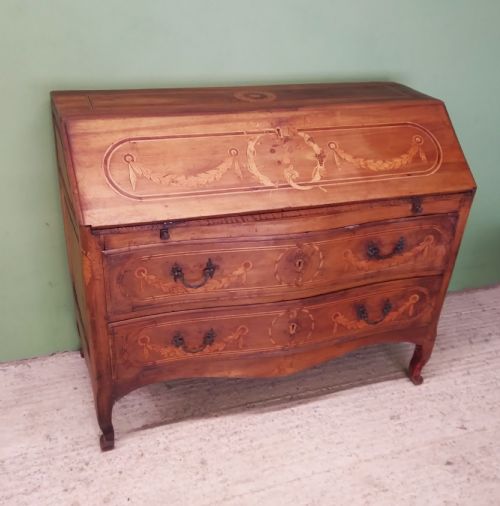


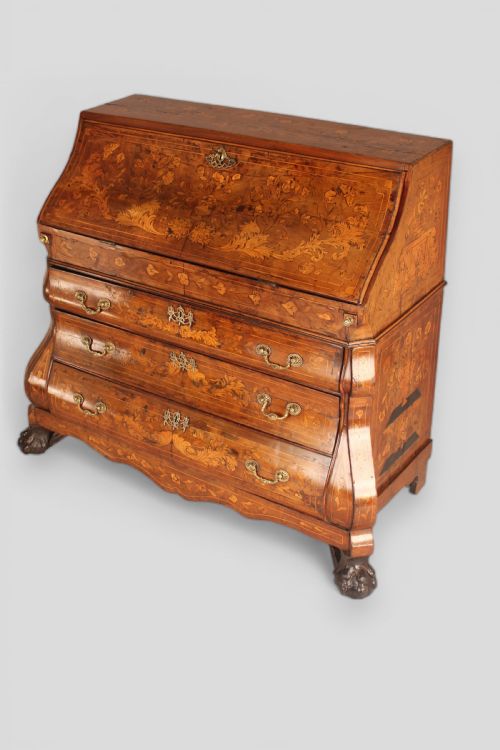


Georgian Marquetry Bureau
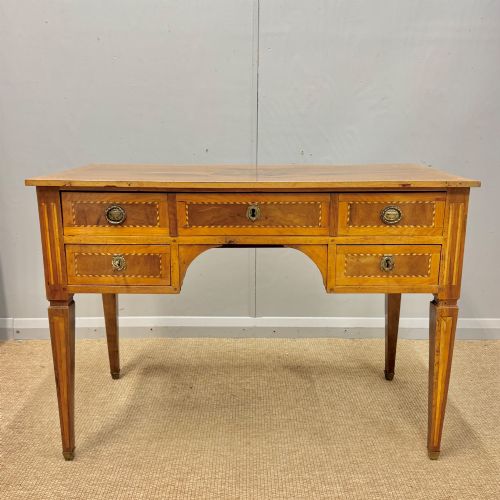
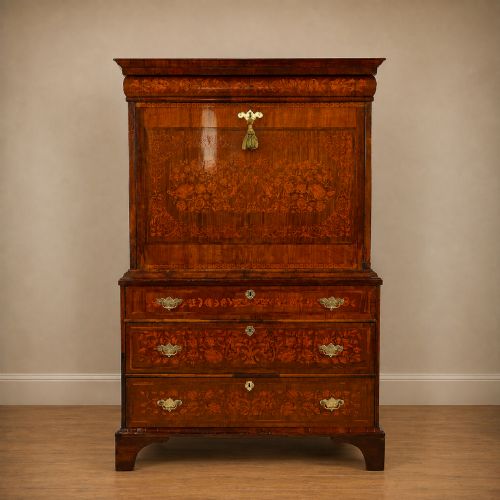
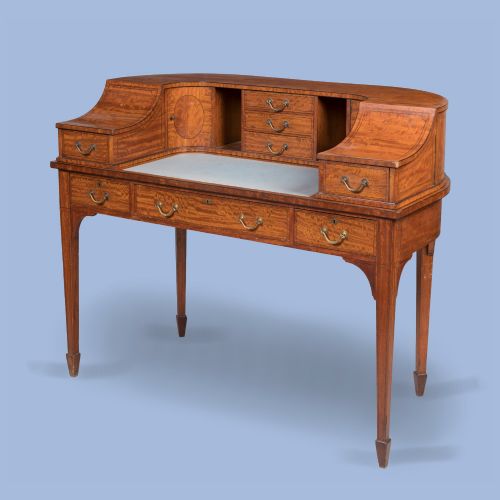
A georgian marquetry bureau brings intricate floral and pictorial inlay together with practical writing storage, offering a focal point that anchors a room.
Georgian Marquetry Bureau
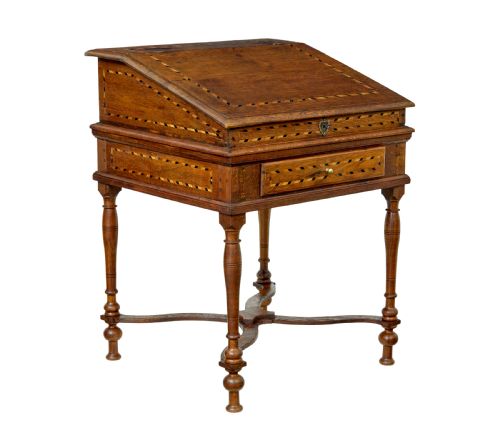
A georgian marquetry bureau typically combines a sloping fall-front writing surface with internal drawers and pigeonholes, standing upon bracket feet or a bombe base. The selection spans walnut, mahogany, and satinwood foundations embellished with contrasting wood inlays.
Beyond standard writing desks, the category encompasses bureau bookcases and escritoires featuring upper display shelving or cabinet doors. Buyers encounter both English craftsmanship and continental Dutch or Maltese interpretations within the selection.
Materials and construction methods
Cabinetmakers utilised dense timbers such as mahogany, walnut, and oak as structural carcases, applying fine veneers of satinwood, fruitwood, and burr walnut over the surfaces. Detailed marquetry panels were constructed by cutting contrasting veneer leaves into floral and geometric motifs before gluing them to the ground.
Secondary elements incorporate brass hardware for key escutcheons and handles, alongside fitted leather writing inserts and interior glass panes on bookcase upper sections.
Listings feature burr walnut, satinwood, fruitwood, and mahogany surfaces finished with floral marquetry and brass hardware.
Distinctions in craftsmanship
The precision of the veneer cutting and the complexity of the pictorial marquetry dictate the upper tier of quality. Finer examples display seamless integration of multiple contrasting timbers without lifting or excessive filler in the joints.
Internal configuration also separates standard pieces from exhibition grade furniture. Sophisticated secret compartments, well-figured drawer linings, and original brass fittings elevate a piece significantly.
Edwards and Roberts
The Georgian Marquetry Bureau Glossary
- Marquetry
- The decorative technique of applying thin veneers of various woods onto a structural carcase to form pictorial patterns. It differs from inlay by covering the entire surface rather than being set into hollowed recesses.
- Bureau
- A desk featuring a sloping lid that drops down to create a writing surface and conceals small drawers and compartments. Older examples often sit above a bank of graduated drawers.
- Bombe
- A swollen or bulging contour found on the front and sides of furniture bases. This curved profile is frequently seen on continental pieces.
- Escritoire
- A tall writing cabinet or desk with a fall-front flap enclosing pigeonholes and drawers. The term often describes more formal writing furniture from the eighteenth century.
- Tambour
- A sliding door or shutter constructed from narrow vertical strips of wood glued to a canvas backing. It runs in concealed grooves to cover desk pigeonholes.
Georgian Marquetry Bureau: Frequently Asked Questions
How do I use a bureau?
Drop the fall-front flap to reveal the interior writing surface, using the internal compartments for letters and stationery. When finished, simply fold the flap back up and lock it to conceal the contents.
Ensure heavy loads are not placed directly on the centre of an unsupported drop-front flap. Modern users often place laptops inside while working, closing the lid afterwards to maintain a tidy room.
What is a bureau bookcase?
A bureau bookcase combines a lower writing desk with an upper shelving or cabinet section enclosed by glass or timber doors. This dual-purpose furniture stored books above while providing a pull-out or fold-down writing surface below.
These taller items served as primary study and library furniture in Georgian homes. They allow collectors to display decorative volumes while keeping correspondence neatly organised out of sight.
How do I date a bureau?
Examine the timber species, construction joints, and hardware styles to determine the era. Eighteenth-century pieces typically feature oak drawer linings and hand-cut dovetails, whereas later nineteenth-century revivals incorporate machine-sawn elements.
Design motifs also change across periods, moving from plain walnut and mahogany in early Georgian pieces to intricate satinwood marquetry during the Sheraton revival and Edwardian years.
How do I care for marquetry?
Keep inlaid wooden furniture away from direct sunlight and steady heat sources to prevent the delicate veneers from drying and lifting. Apply a quality microcrystalline wax periodically to nourish the timber and protect the surface.
Avoid using wet cloths or harsh chemical polishes on antique finishes. Dust gently with a dry, soft lint-free cloth to preserve the contrasting fruitwood and satinwood details.