

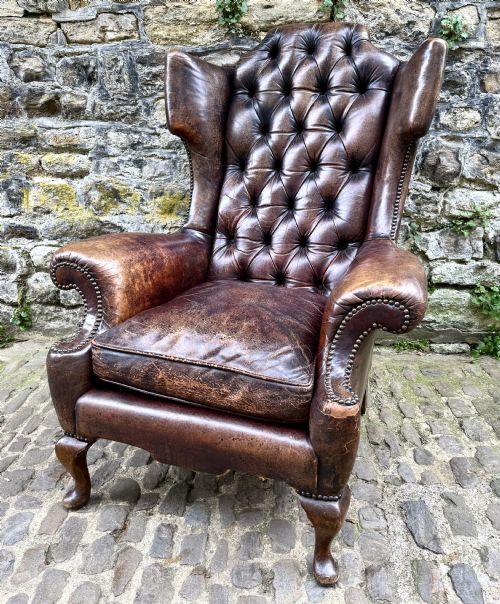


Deep Tufted Wingback
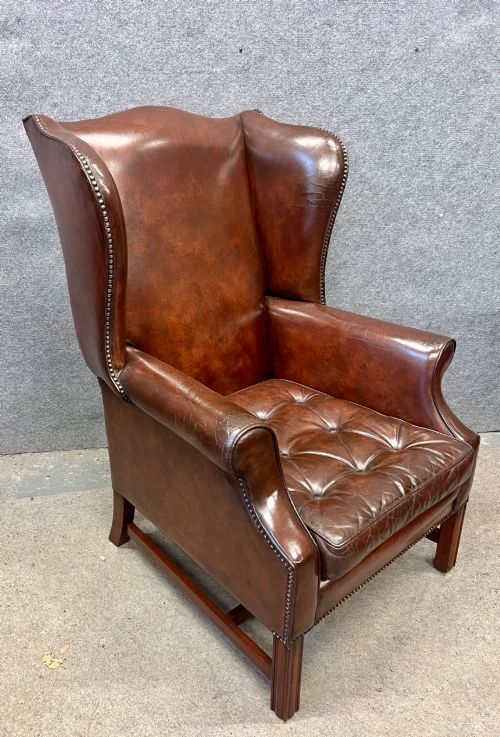
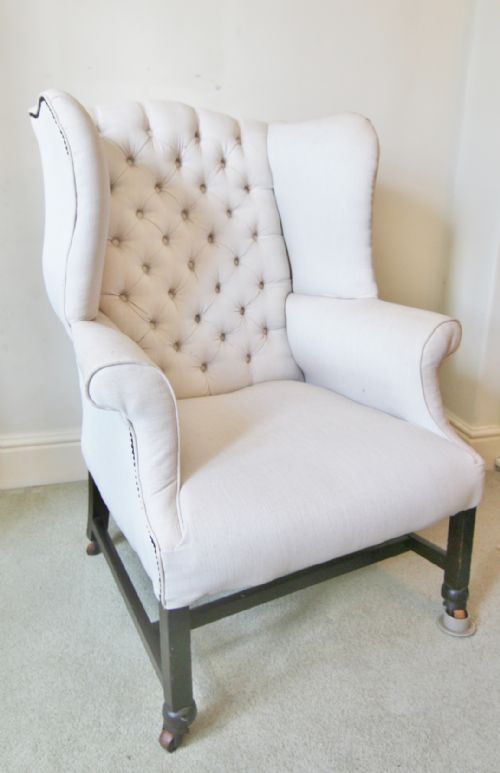
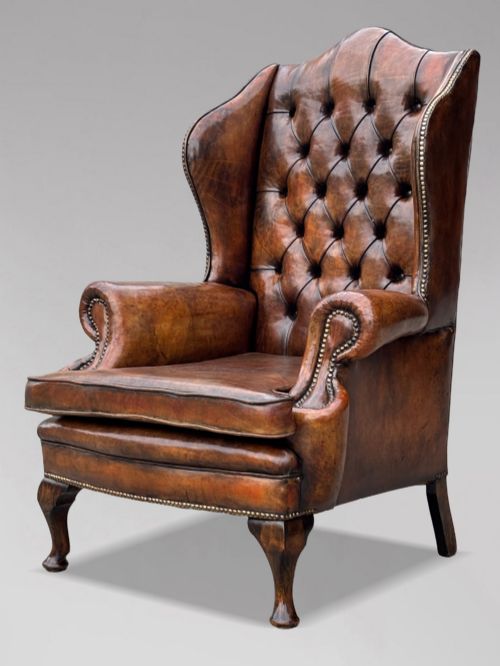
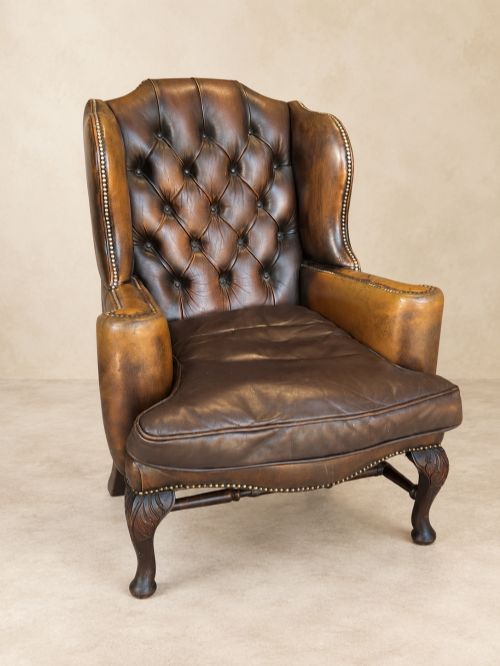
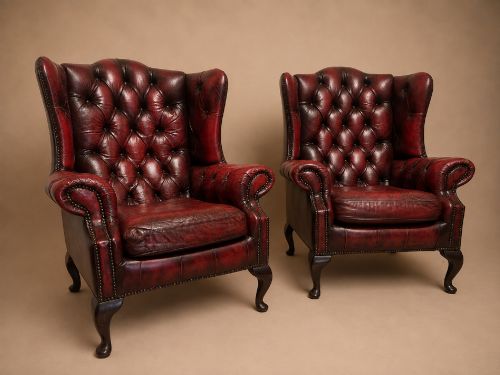
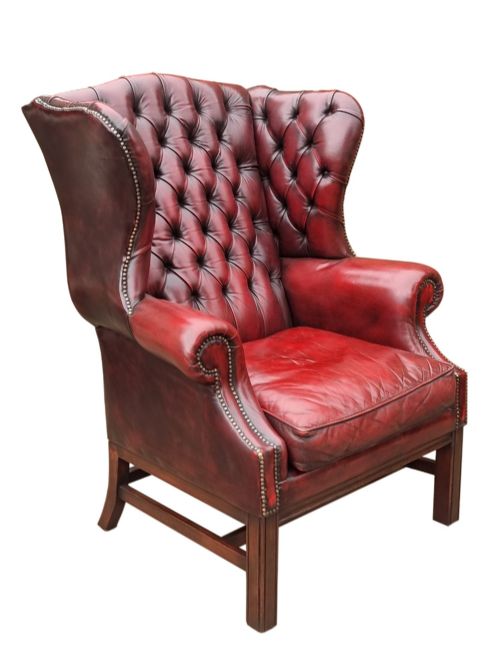
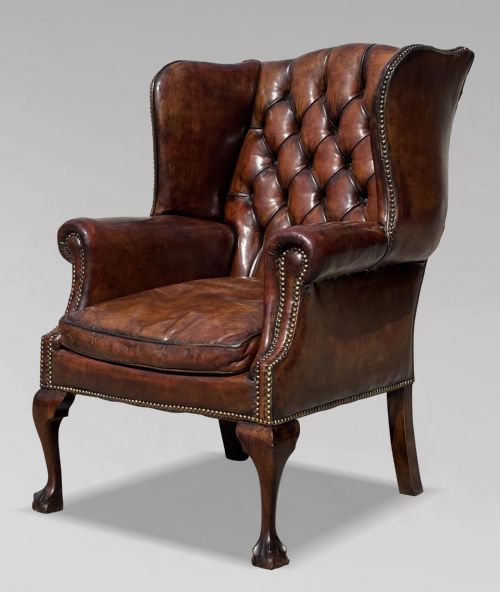
These deep tufted wingback armchairs and sofas offer high-backed comfort and traditional upholstery, making them centrepieces for a period room.
Deep Tufted Wingback
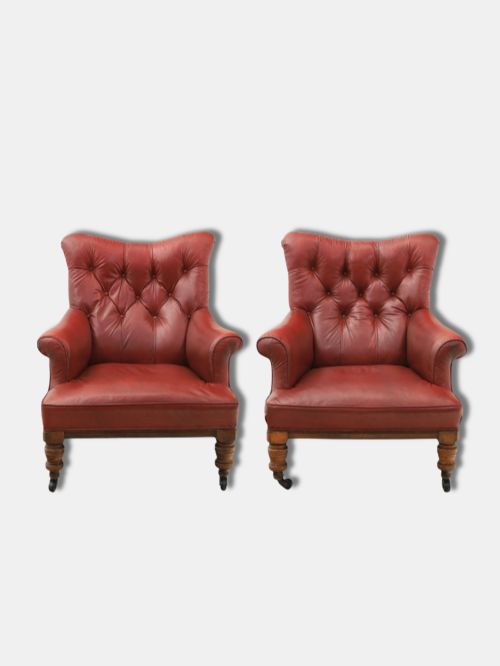
A deep tufted wingback combines protective side wings and buttoned upholstery, designed originally to shield sitters from draughts while retaining heat close to the body. The selection on this page centres primarily on comfortable leather armchairs alongside matched pairs and occasional two-seat sofas.
Examples span several centuries, reaching from eighteenth-century Georgian origins through Victorian and Edwardian interpretations up to nineteen-twenties revivals. Makers of these periods favoured generous proportions, deep seats, and prominent wings that frame the sitter.
Most pieces encountered here are upholstered in brown, tan, or oxblood leather, though occasional variations appear in linen or rexine. Wooden frames in mahogany and hardwood support the heavy padding, often resting on carved legs.
Construction and materials
Frames rely on sturdy timbers such as mahogany and assorted hardwoods, providing the structural skeleton necessary to bear the weight of heavy upholstery and deep springing. Joinery methods of the eighteenth, nineteenth, and early twentieth centuries ensure rigidity across large library and armchair forms.
Upholstery combines deep buttoning with supple leather hides, hand-dyed or left in natural tones, stretched over generous padding. Brass detailing occasionally appears around the trim, securing the leather edges to the wooden framework.
Deep Tufted Wingback Retail Price Guide 2026
Typical asking prices for deep tufted wingback among the pieces listed under this phrase on Sellingantiques today, from the lower quarter to the upper quarter. They describe what is for sale here now, not the wider market.
Armchairs form the vast majority of these listings, accompanied by occasional two-seat sofas and footstools in matching leather finishes.
Judging quality and proportion
Quality rests heavily on the harmony of the proportions, particularly the sweep of the wings and the depth of the buttoning. Finer pieces demonstrate careful carving on the mahogany or hardwood legs, matching the historical idioms of their period.
The choice and treatment of the leather dictate the tactile appeal, with hand-dyed or aged hides offering superior patination compared to uniform modern substitutes. Structural integrity in the frame separates enduring library chairs from lesser revivals.
The Deep Tufted Wingback Glossary
- Wingback
- An armchair featuring protective side panels attached to the arms and back to block draughts. These wings are a defining characteristic of fireside seating from the eighteenth century onwards.
- Buttoning
- An upholstery technique where indentations are pulled tight with twine and secured with buttons. This method keeps the internal stuffing evenly distributed across the backrest.
- Mahogany
- A durable tropical timber widely utilised for chair frames and legs during the Georgian and Victorian periods. Its strength allows for slender yet supportive carved elements.
- Rexine
- A leathercloth material used as an artificial substitute for hide. It appears on certain twentieth-century seating options found within this category.
- Porters armchair
- A high-backed hooded chair designed to keep out drafts in cold hallways. Servants sat in these at the entrance of large houses to monitor visitors.
Deep Tufted Wingback: Frequently Asked Questions
What is a deep tufted wingback?
A deep tufted wingback is a traditional armchair or sofa featuring side wings and button-indented upholstery. These pieces are designed for domestic comfort and draught protection.
They appear across eighteenth, nineteenth, and twentieth-century styles, usually finished in leather over a hardwood frame.
How do I identify a Georgian wing chair?
Georgian examples often display characteristic mahogany frames with straightforward or carved leg supports. They date from the eighteenth century and possess simpler proportions than later revivals.
Look at the woodwork and the shape of the wings to distinguish an eighteenth-century original from a later nineteenth or twentieth-century copy.
Are these chairs comfortable for daily use?
Many buyers utilise these armchairs as primary seating in studies or living rooms. Their deep seats and high backs provide substantial physical support.
The generous padding and upholstered wings make them well suited for long periods of reading or resting.
What materials are used in these pieces?
The listings feature frames built from mahogany and general hardwoods. Upholstery consists principally of leather, alongside occasional linen and rexine.
Brass elements occasionally finish the trim, while the internal stuffing relies on traditional spring or pad construction methods.