

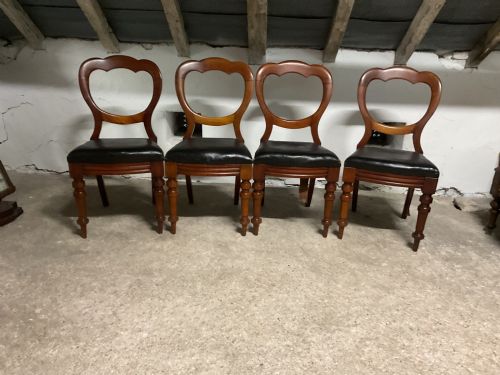
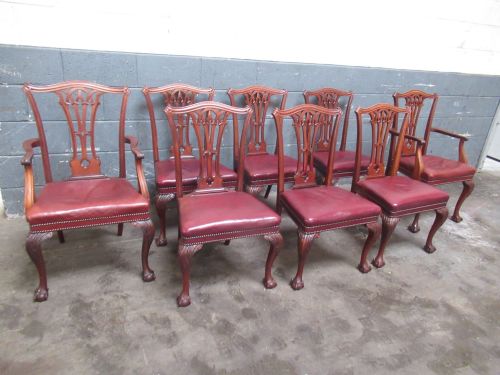
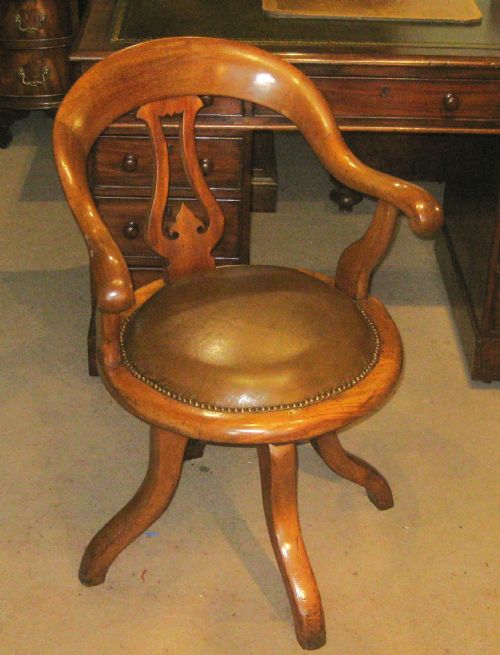
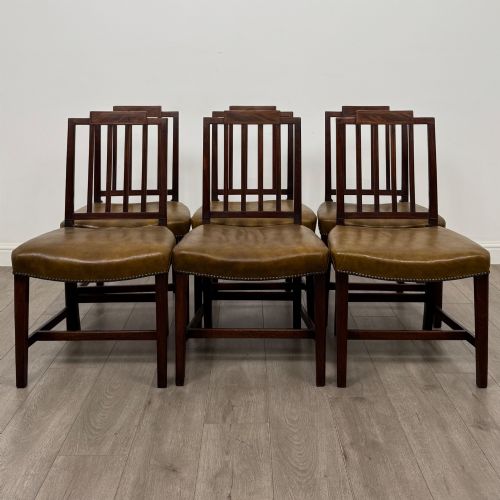
Mahogany Leather Chair
A mahogany leather chair brings together solid timber and supple hide for domestic studies and formal dining rooms alike.
Mahogany Leather Chair
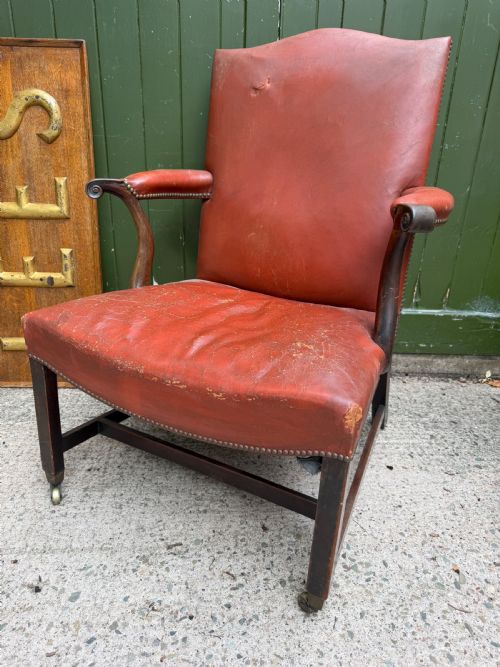
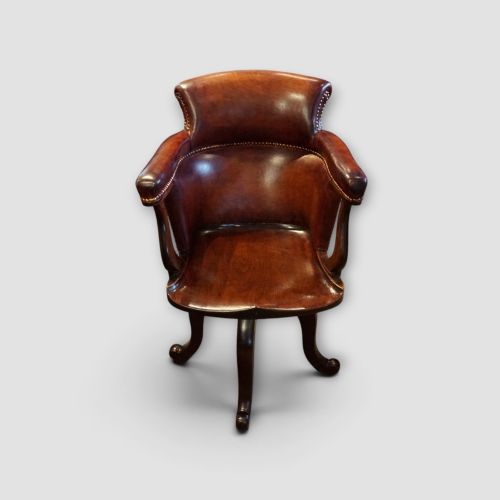
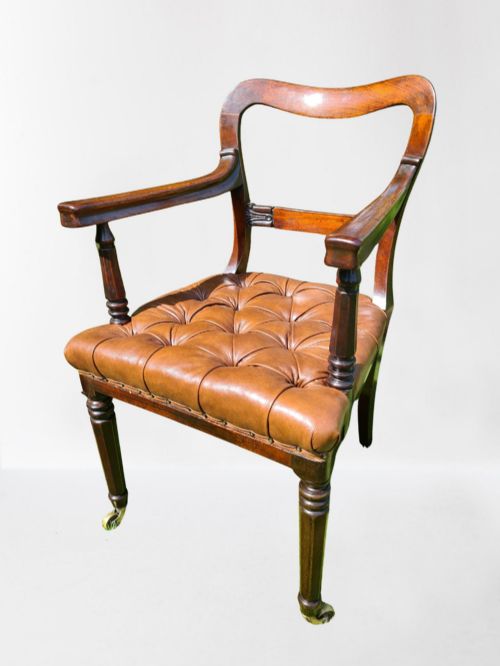
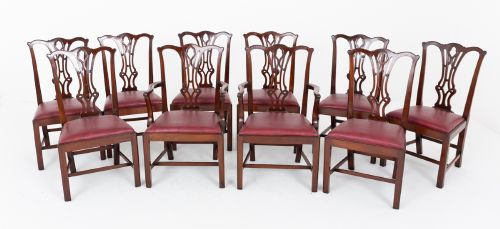
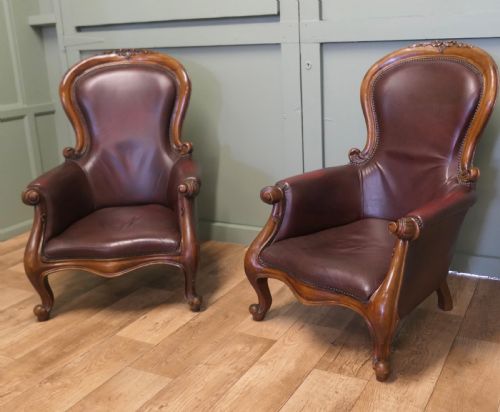
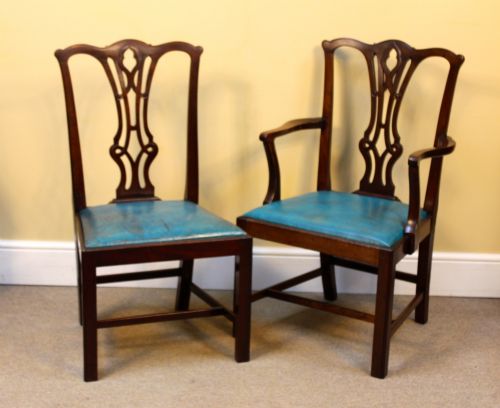
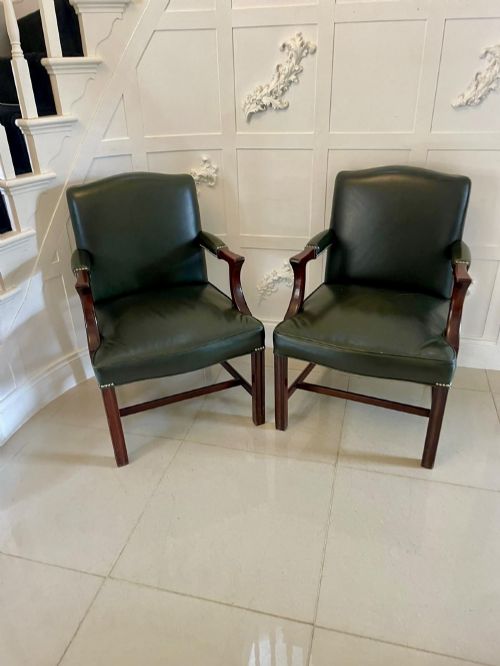
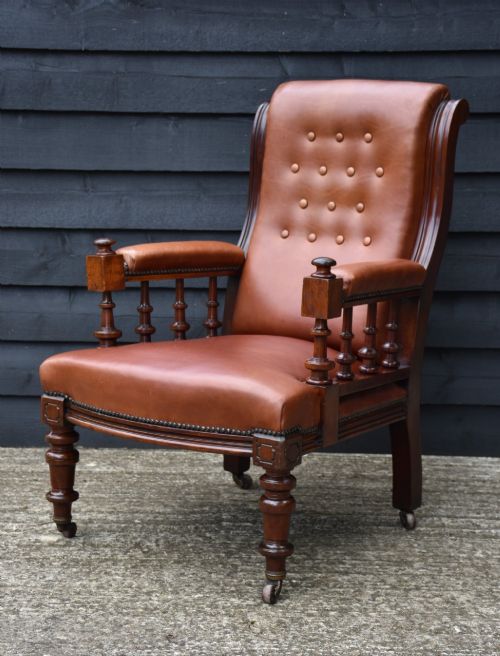
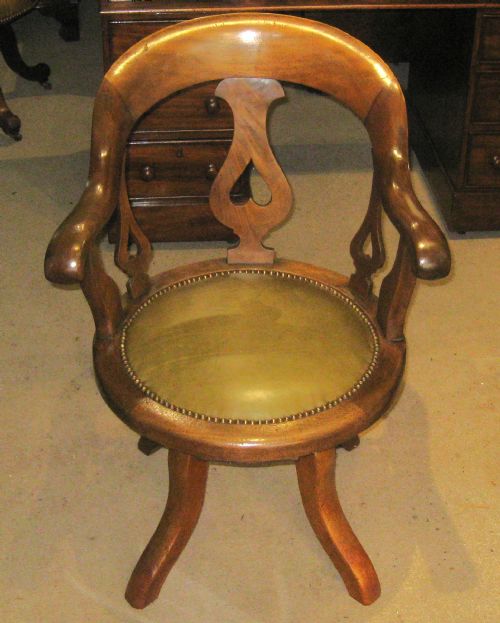
A mahogany leather chair spans centuries of domestic and official seating, encompassing everything from robust Georgian library armchairs to Victorian revolving desk chairs. The phrase frequently leads buyers to swivel desk chairs upholstered in hide, alongside sets of dining chairs and grand Gainsborough armchairs.
Examples on this page draw from the 18th century, the Regency era, and the Victorian period, reflecting the enduring utility of dark timber framing combined with leather seats. Dining sets sit alongside single reading chairs, adjustable dressing seats, and library armchairs.
Origins range across English workshops, with occasional continental pieces appearing, constructed to serve as functional furniture for writing, dining, and reading.
Materials and construction
Frames rely on dense mahogany, sometimes golden or dark, shaped through turning, carving, and joinery to support heavy use. Cabinetmakers paired this hardwood with brass castors, cane panels, and iron fittings.
Upholstery uses English hide leather, fixed with brass studs or secured in buttoned patterns across sprung or stuffed pads. Desk chairs frequently incorporate swiveling mechanisms and adjustable heights using central wooden screws or metal spindles.
Mahogany Leather Chair Retail Price Guide 2026
Typical asking prices for mahogany leather chair among the pieces listed under this phrase on Sellingantiques today, from the lower quarter to the upper quarter. They describe what is for sale here now, not the wider market.
Several Victorian desk chairs come with hidden revolving mechanisms that squeak just enough to betray an afternoon spent dodging paperwork.
Evaluating craftsmanship
Distinction across these chairs rests in the depth of timber carving, the choice of well-figured mahogany, and the integrity of the frame joints. Superior examples exhibit crisp hand-carved details, such as Chippendale blind fretwork or gadrooned edges, rather than soft or mechanical milling.
The treatment of the leather elevates a piece, with hand-dyed English hide showing rich patination compared to flat, modern replacements. Original brass castors and smooth, working swivel actions separate standard production from exceptional workshop output.
WM Heywood Chair Co·Cope and Collinson
The Mahogany Leather Chair Glossary
- Gainsborough armchair
- A wide, upholstered seat with an open wooden frame, low armrests, and padded back, popular during the 18th century.
- Wingback armchair
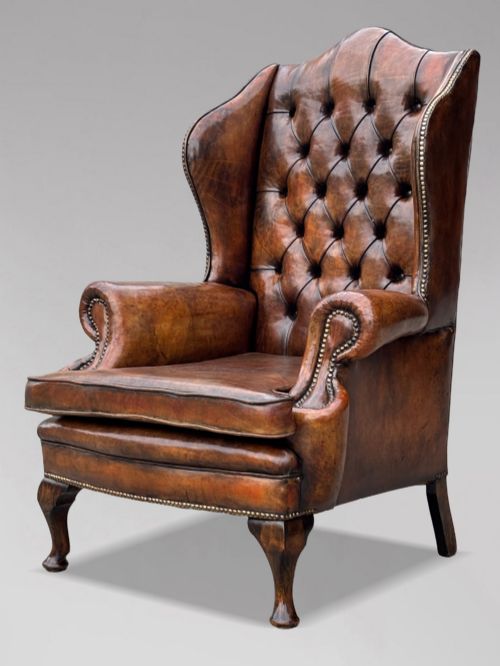
- A high-backed seat featuring protective side panels designed to shield the occupant from drafts.
- Revolving desk chair
- An office seat mounted on a central pivot mechanism allowing rotation, often featuring a buttoned leather back.
- Chippendale style
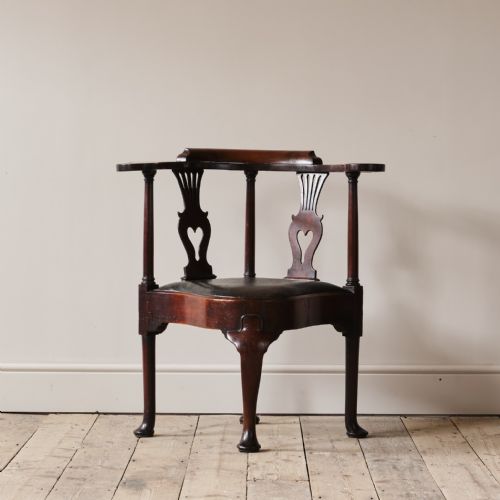
- A decorative manner inspired by Thomas Chippendale's designs, characterised by carved ribbon-backs and blind fretwork.
- Cane
- Split rattan woven into an open mesh pattern, utilised for chair backs and seats to provide lightweight ventilation.
Mahogany Leather Chair: Frequently Asked Questions
How do I date a mahogany leather chair?
Dating relies on observing structural characteristics, such as the taper of the legs, the method of joinery, and the wear patterns on the mahogany frame. Georgian pieces generally show hand-cut dovetails and vernacular carving, whereas Victorian iterations often employ factory-standard turnery and cast iron revolving mechanisms.
Changes in upholstery styles also help establish an era, as original padding techniques and stud work differ noticeably between the 18th century and the late 19th century.
Can these chairs be used at a modern desk?
Many Victorian and Edwardian desk chairs suit modern desk heights, particularly swivel models with adjustable vertical screws. Buyers should verify seat heights and leg clearances before pairing an antique armchair with a contemporary workspace.
Library chairs and captain's chairs provide sturdy support for daily sitting, provided the internal webbing and leather remain stable.
How should I care for antique leather?
Preserving antique hide requires regular dusting with a soft cloth and occasional treatment with appropriate leather balms to prevent drying and cracking. Avoid placing these chairs near direct heat sources or in harsh sunlight, which can fade the mahogany finish and dry out the leather.
Keeping the environment at a stable humidity level protects both the wooden joints and the organic hide from shrinking.
What is the difference between a Gainsborough and a library chair?
A Gainsborough chair specifically denotes an 18th-century armchair with an open frame, upholstered seat, and padded back, typically set beside a desk or fireplace. Library chairs often encompass a broader category of heavily upholstered seating, including wingbacks and buttoned armchairs designed for extended reading.
Both types utilise mahogany frames and leather upholstery, but Gainsborough forms maintain a lighter, more formal aesthetic.