

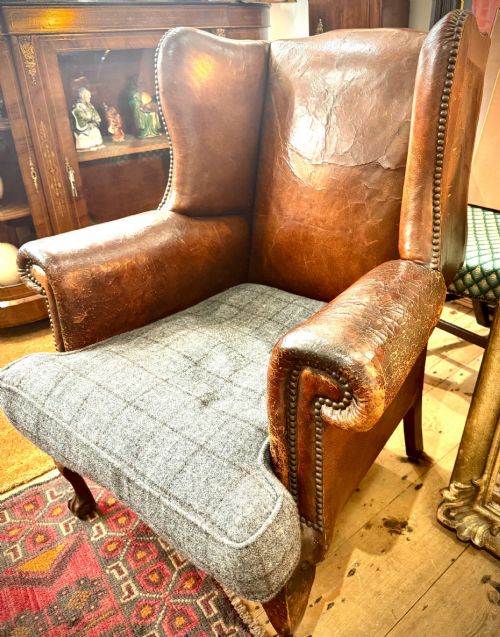


Edwardian Wing Armchair
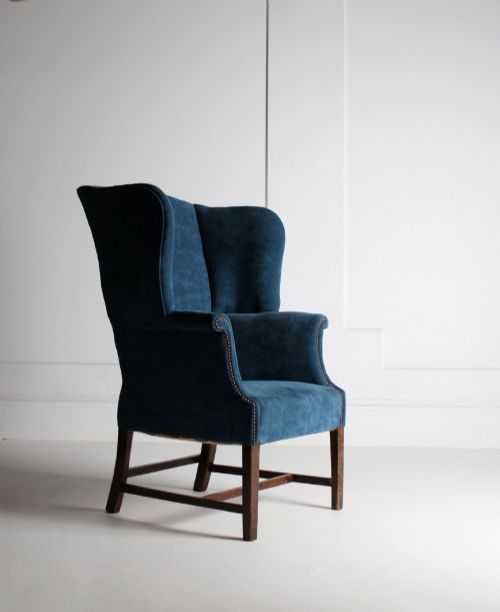
An edwardian wing armchair brings deep-seated comfort and upright dignity to a room, offering classic proportions paired with enclosed upholstered sides.
Edwardian Wing Armchair
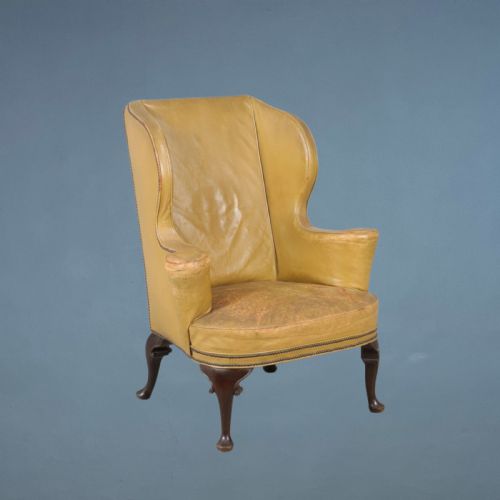
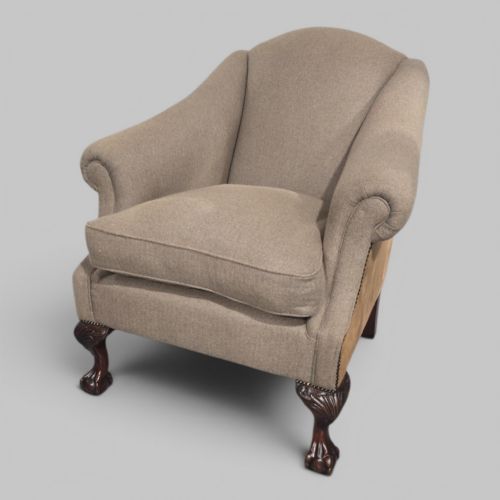
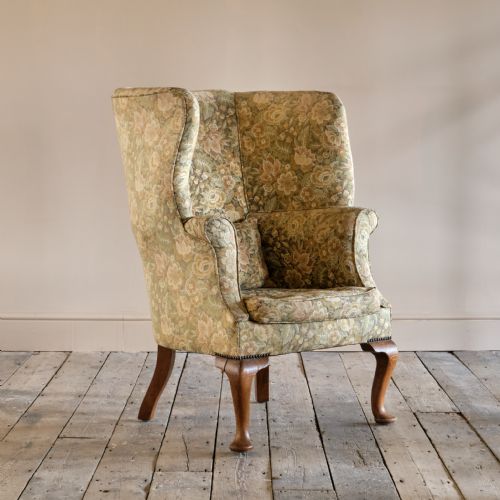
The edwardian wing armchair draws heavily on earlier Georgian and Queen Anne revival styles, combining high protective side panels with substantial upholstered seating. These pieces emerge predominantly from the early twentieth century and the Edwardian period, often standing upon timber legs ranging from straight supports to ball and claw feet.
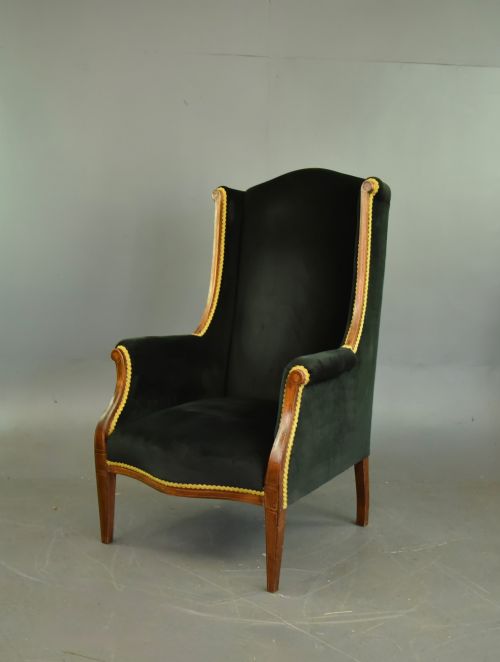
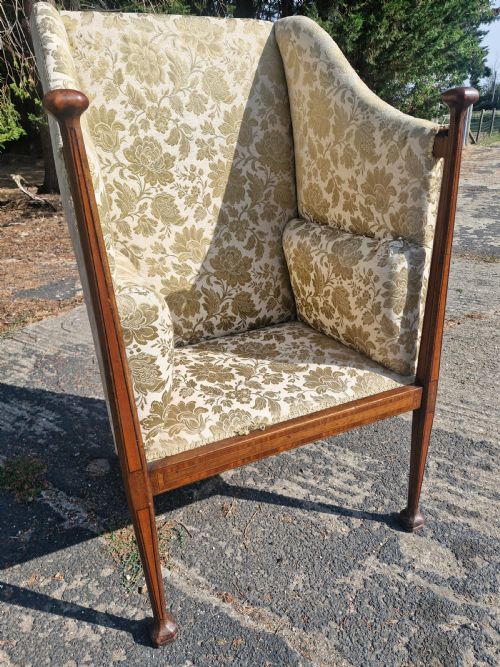
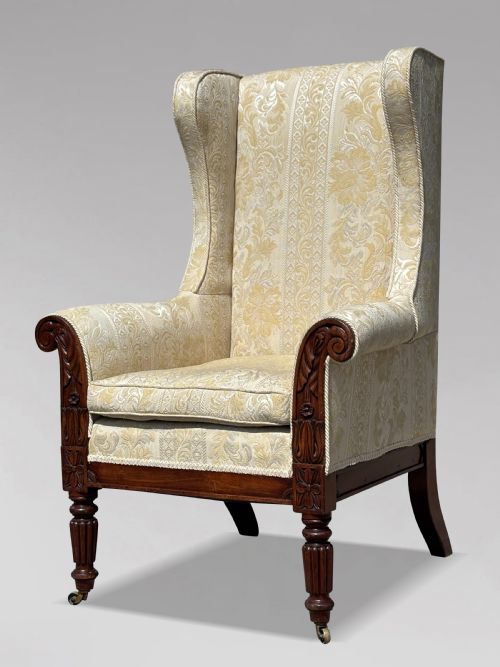
The form exists in several distinct variations on this page, spanning library chairs with deep buttoned leather, child-sized armchairs, and barrel-backed seating. Examples range from simple oak-framed versions to inlaid mahogany models and substantial country house seating built for fireside repose.
Materials and Construction
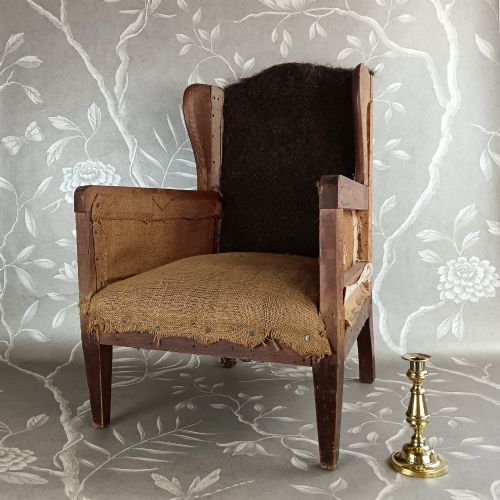
Makers built the structural frames of these armchairs using sturdy hardwoods such as mahogany, oak, walnut, and beech, frequently integrating brass castors beneath the legs for mobility. Woodwork often featured delicate inlay work or polished finishes, supporting internal frames that received traditional stuffing and sprung upholstery.
Upholstery materials recorded in the archive and current listings encompass full grain leather, velvet, silk cotton, and heavy woven fabric. Deep buttoning and hand-dyed hides appear alongside exposed wooden frames to define the finished aesthetic of the seat.
Edwardian Wing Armchair Retail Price Guide 2026
Typical asking prices for edwardian wing armchair among the pieces listed under this phrase on Sellingantiques today, from the lower quarter to the upper quarter. They describe what is for sale here now, not the wider market.
Several armchairs on record include specialised variants built for invalids, children, and hall porters who needed protection from drafts.
Gradations of Quality
Distinctions in quality often rest upon the integrity of the underlying timber frame and the finesse of the joinery rather than surface appearance alone. Pieces constructed with substantial hardwoods and refined details like ball and claw feet or hand-inlaid mahogany sit firmly above simpler utility frames.
The standard of upholstery and the preservation of materials dictate the upper tier of the range, where supple hand-dyed leather, deep buttoning, and maker attribution elevate the piece. Conversely, standard beech frames or later utilitarian iterations represent more modest examples of the form.
Whytock And Reid·Howard And Sons·J Foot And Son·John Ward·Gillow
The Edwardian Wing Armchair Glossary
- Wingback
- An upholstered chair featuring high side panels attached to the arms, originally designed to shield the sitter from draughts.
- Bergere
- An enclosed upholstered armchair featuring cane work panels set into a wooden frame.
- Castor
- A small wheel mounted on swivel joints attached to the bottom of chair legs to assist movement.
- Inlay
- A decorative technique where contrasting strips of wood are fitted into recesses within the primary timber surface.
- Barrel back
- A seating design where the curved backrest flows continuously into the arms without distinct breaks.
Edwardian Wing Armchair: Frequently Asked Questions
How do I identify an Edwardian wing armchair?
Look for the characteristic high-sided wings designed to trap heat and block drafts, combined with early twentieth-century proportions and stylistic nods to Georgian revival.
Examination of the timber frame, such as mahogany with subtle inlay or ball and claw feet, helps separate this period from heavier Victorian or later iterations.
Were these chairs used only by the fireside?
While traditionally placed near hearths for warmth, these seats served widely across domestic spaces including libraries, morning rooms, and drawing rooms.
Their enclosed structure made them favored spots for reading, resting, and formal conversation in large country houses.
What is a porter's chair?
A porter's chair is a specialised form of enclosed seating featuring an exaggerated hooded or winged back designed to keep drafts away from hall attendants.
These pieces often utilise heavy leather upholstery and sturdy timber construction to withstand constant hallway use.
How should I care for leather upholstery?
Historic leather requires gentle cleaning with specialised saddle soaps or balms to maintain flexibility and prevent the surface from drying out over time.
Keep these chairs away from direct sunlight and rapid temperature shifts to preserve the finish of hand-dyed hides.