

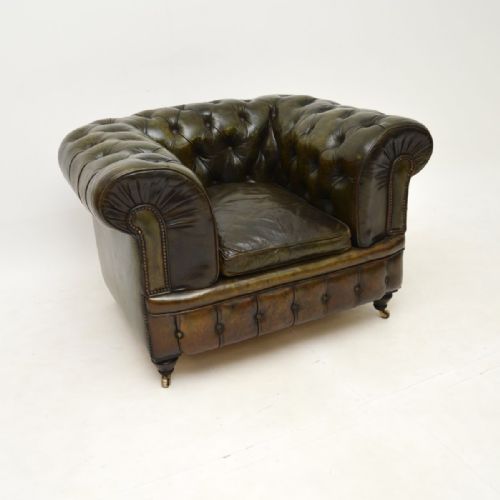


Antique Chesterfield Chair
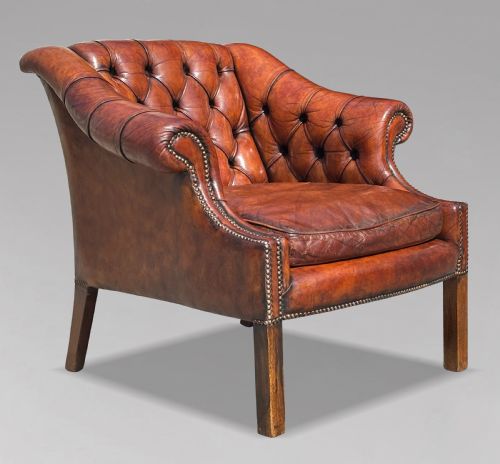
An antique chesterfield chair brings deep buttoned leather and sprung comfort to a room, offering the robust build typical of historic seating.
Identifying an antique chesterfield chair
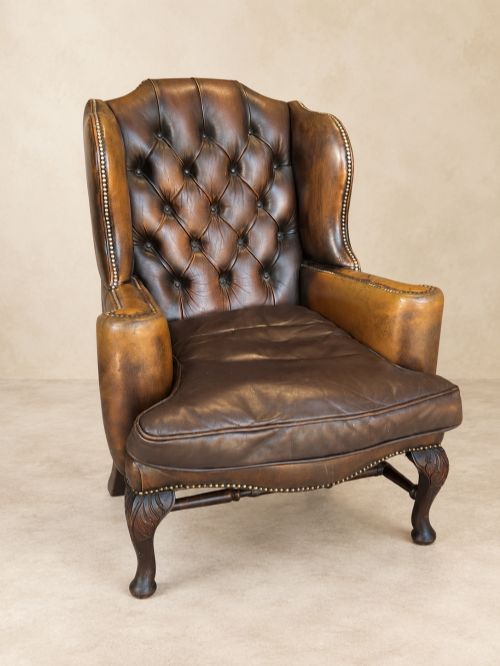
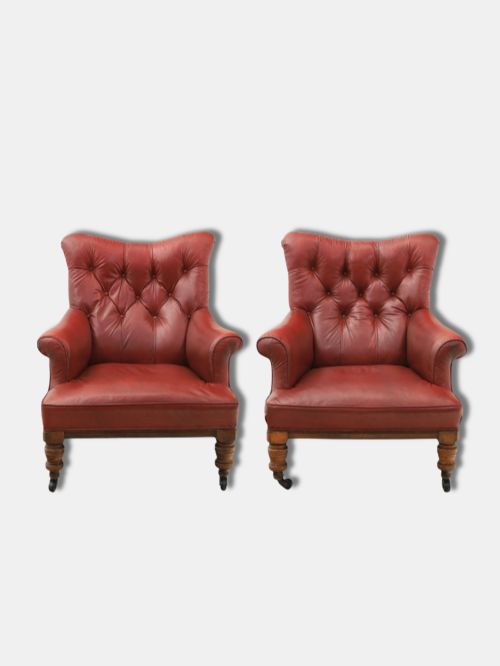
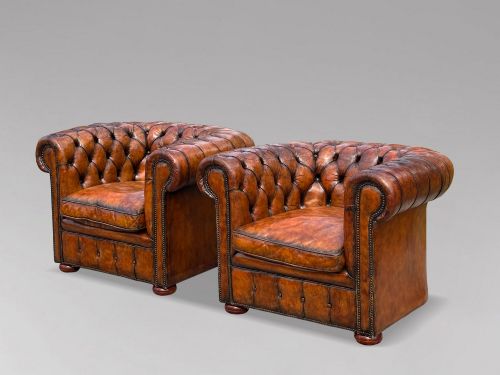
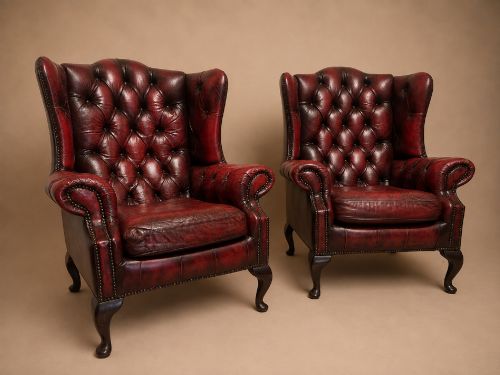
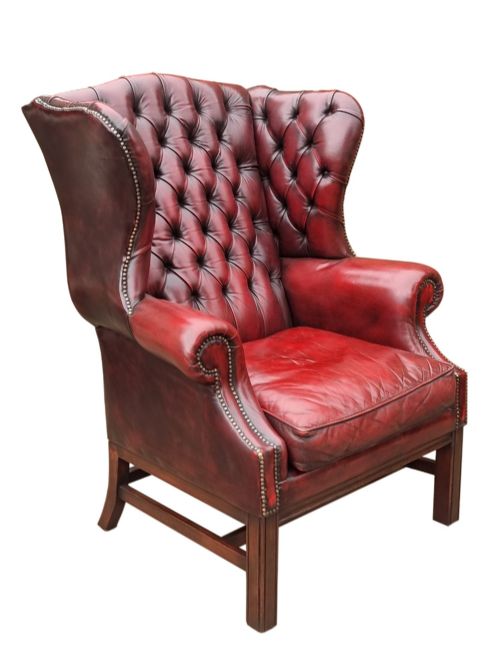
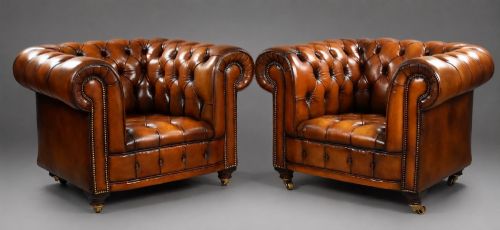
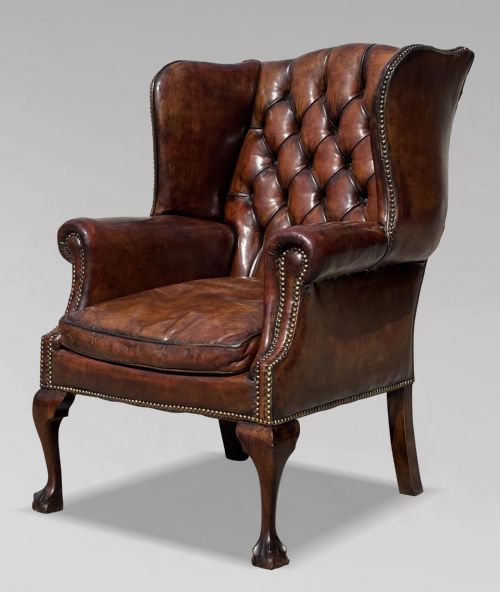
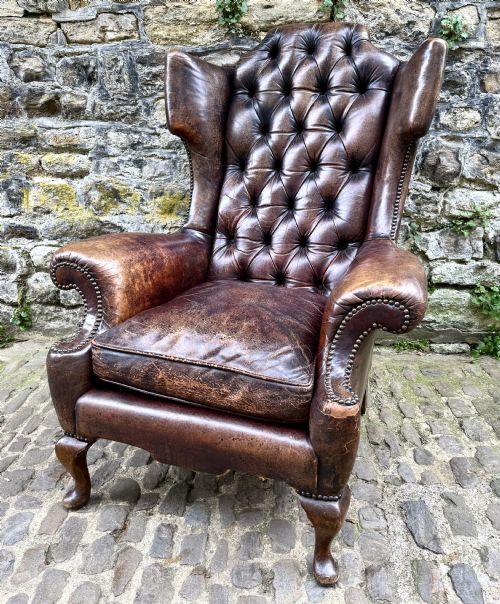
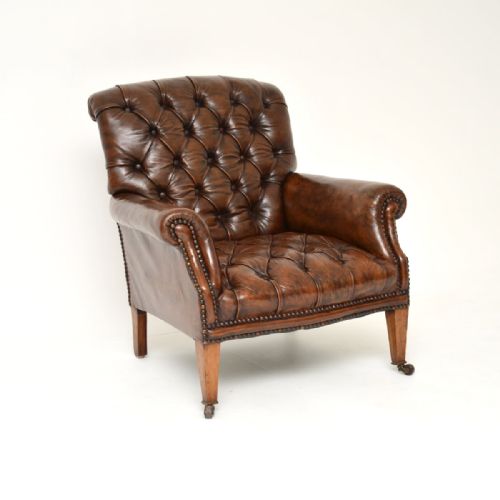
When searching for an antique chesterfield chair, buyers encounter upholstered seating spanning the eighteenth century through to the early twentieth century. The selection contains armchairs, wing armchairs, library armchairs, porters armchairs and club armchairs produced in styles including Victorian, Regency, Edwardian, William IV and George III.
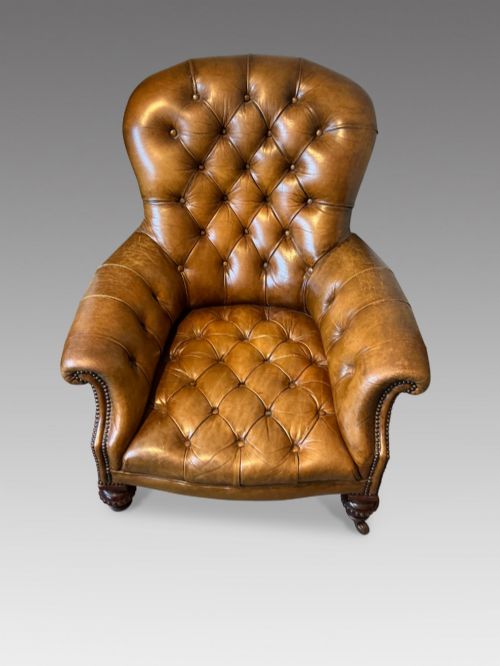
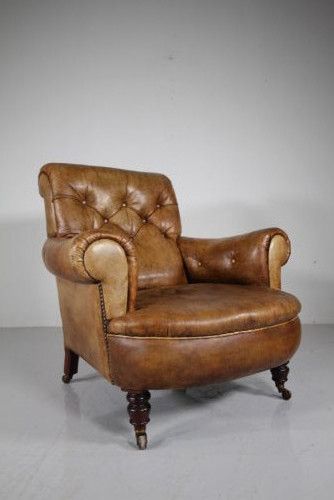
The version most commonly met on this page is the brown or tan leather armchair featuring button back upholstery. Pieces originate from English workshops as well as Swedish makers, often incorporating timber frames.
These armchairs serve as functional seating for studies, libraries and drawing rooms while maintaining a distinct historical presence. The forms range from standard club chairs to grand wing back designs fitted with brass details.
Materials and construction
Construction relies upon solid timber frames built from materials such as mahogany and wood. These sturdy skeletons support deep upholstery systems designed for long term seating support.
Leather forms the primary outer covering, accompanied by brass elements such as studs or castors. Individual buttons secure the leather in tight patterns across the backs and arms.
Retail Price Guide 2026
Typical UK retail prices for chesterfield chair, calculated from the Sellingantiques database of over a million retail prices indexed since 2003. This retail price guide relies exclusively on Sellingantiques data; no external sources or auction records are used, so the figures do not describe the wider market.
Listings feature 19th Century, Regency, 1920, 1880, 1910, Edwardian, 18th Century, and Victorian periods.
Assessing quality and craftsmanship
The distinction between tiers rests upon the depth of the woodwork and the integrity of the leather upholstery. Superior examples display finely turned mahogany frames and thick, durable hides that age with character.
Execution of the buttoning technique dictates visual success, where regular tension and precise folds separate master upholsterers from standard workshops. The integration of brass fittings and the stability of the frame further define the standard of execution.
Gillows
The Antique Chesterfield Chair Glossary
- Button-back
- Upholstery style where buttons are pulled deep into the padding to create a diamond pattern. This method secures the internal stuffing and provides structured back support.
- Wing back
- Seating design featuring projecting side panels attached to the arms or back. These panels historically deflected drafts in cold rooms.
- Library armchair
- Heavy seating form intended for reading spaces. These chairs often feature generous proportions and leather upholstery.
- Porters armchair
- Enclosed seating style designed with a high domed hood. Originally used in drafty entrance halls to keep attendants warm.
- Mahogany
- Dense hardwood utilised for furniture frames. It provides structural strength and a dark reddish-brown grain.
Frequently Asked Questions
What is an antique chesterfield chair?
An antique chesterfield chair is a historic upholstered armchair characterised by deep buttoning and leather covering. These seats date from the eighteenth century to the early twentieth century and include club, wing and library forms.
Such chairs were built by traditional makers using timber frames made from mahogany and wood. They combine functional seating comfort with distinct period styles ranging from Regency to Victorian.
How were these armchairs used historically?
These armchairs served as comfortable seating in private libraries, studies and gentleman's clubs. Their robust construction and supportive buttoned backs suited long hours of reading or conversation.
Enclosed variants like porters armchairs protected occupants from drafts in large entrance halls. Winged designs similarly offered shelter from cold air currents in historic homes.
How do I live with an antique leather armchair?
Living with an antique leather armchair involves placing the piece away from direct heat sources to prevent the hide from drying out. Regular conditioning helps maintain the suppleness of the leather over time.
Pairing the chair with wooden side tables or placing it in a study allows it to function as a primary seat. The sturdy timber frames and durable materials tolerate daily domestic use when treated with care.
How can I tell different periods apart?
Distinguishing periods relies upon observing the silhouette, leg design and woodwork details of the chair. Georgian and Regency pieces often feature specific mahogany leg forms, while Victorian and Edwardian examples lean towards heavy club proportions.
Upholstery styles and brass detailing also provide clues to the date of manufacture. Comparing the framing techniques helps narrow down whether a piece originates from the eighteenth or nineteenth century.