

Library Reading Chair
When you seek a library reading chair, you are pursuing a seat designed for long hours of study, constructed from durable woods and upholstered for comfort.
Library Reading Chair
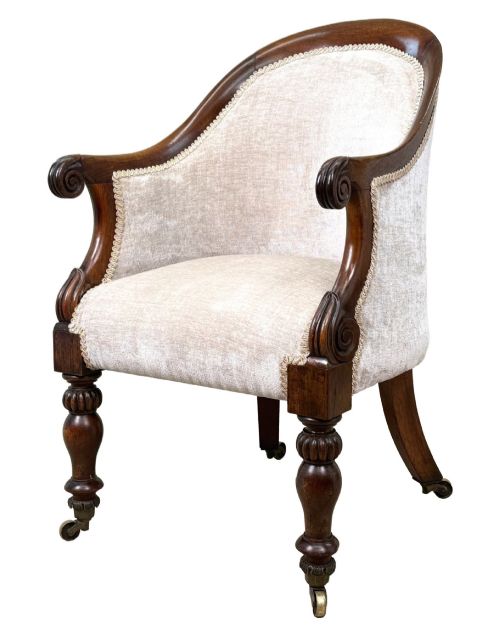
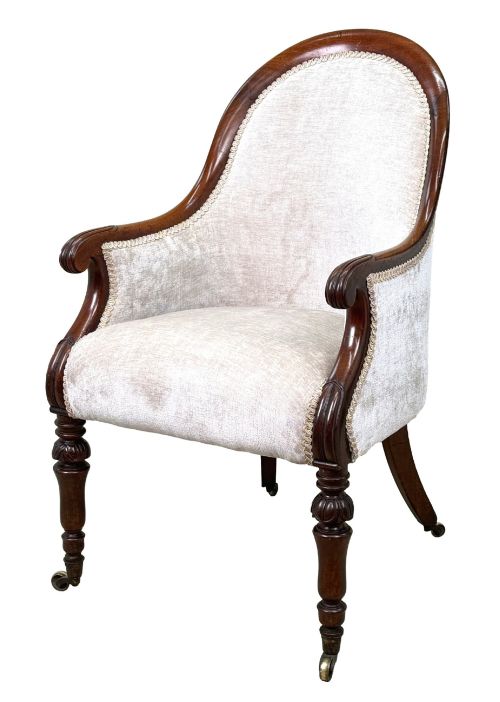
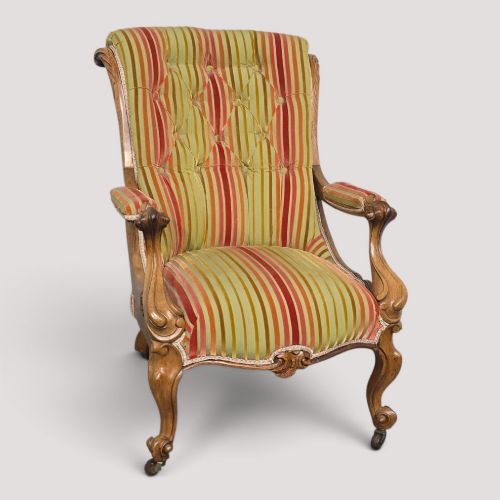
A library reading chair is a substantial seating form built for prolonged study and quiet comfort. Buyers looking for this phrase encounter pieces designed with supportive armrests and deep seats, often adapted specifically for reading rooms and private studies.
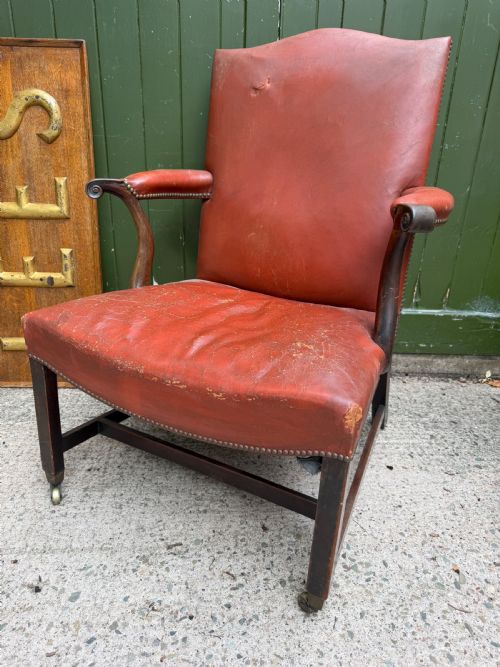
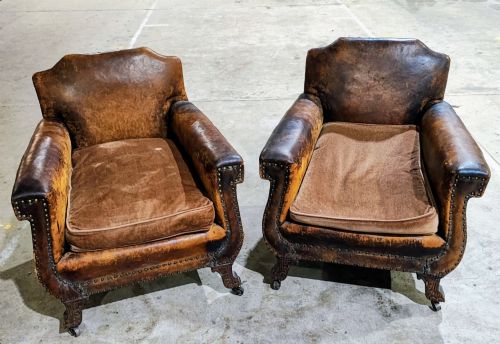
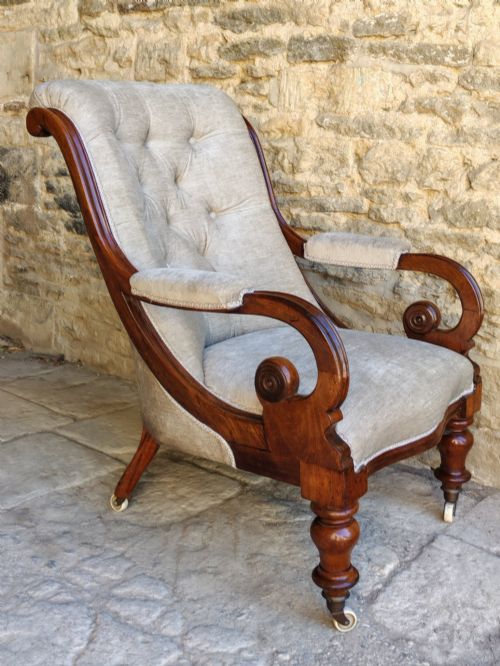
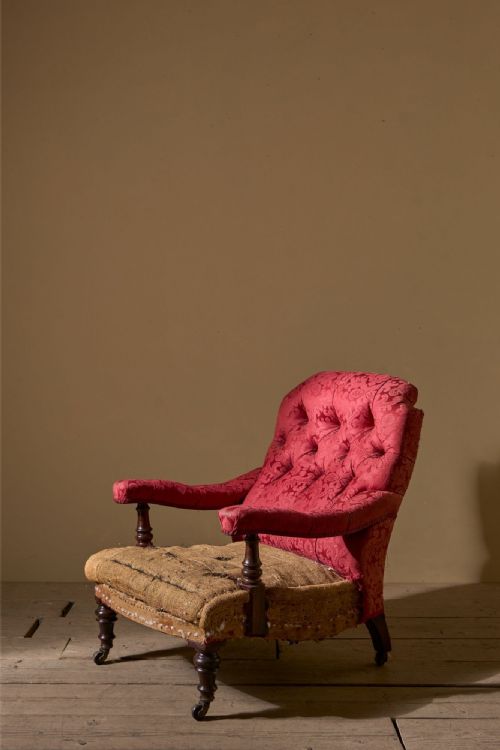
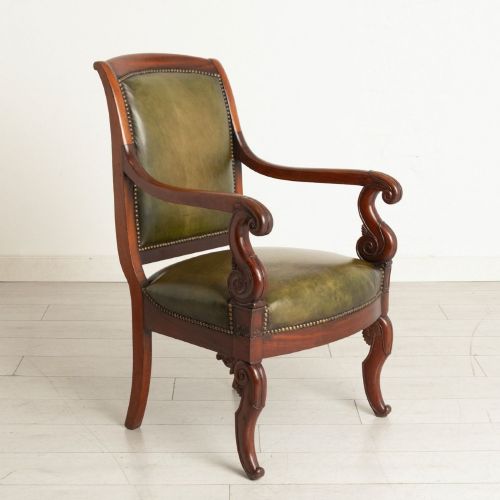
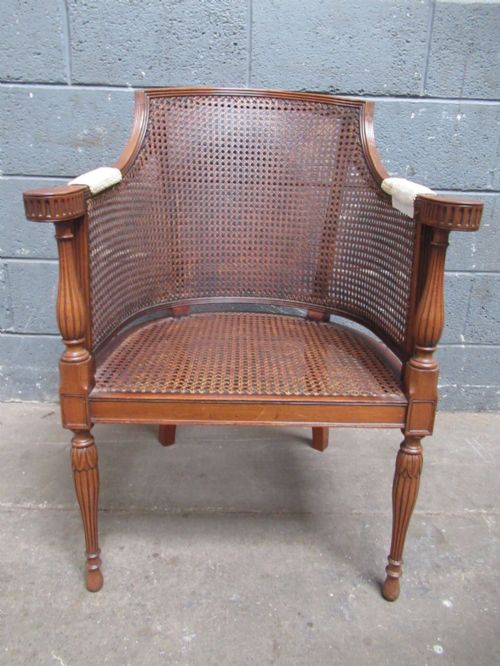
The selections available range widely across periods, encompassing Georgian proportions, Regency elegance, and Victorian mass. The most frequent examples met on this page are mahogany frames from the nineteenth century, paired with leather upholstery or cane seating.
Forms vary from open armchairs and tub shapes to specific reading chairs equipped with integrated book stands or adjustable slopes. These functional additions mark out seats intended for scholars and gentlemen sitting with volumes for hours at a time.
How They Were Made
Frames rely primarily on dense hardwoods like mahogany, walnut, oak, and rosewood, chosen for their structural strength. These timbers are turned, carved, or left with clean lines depending on the prevailing style of the period.
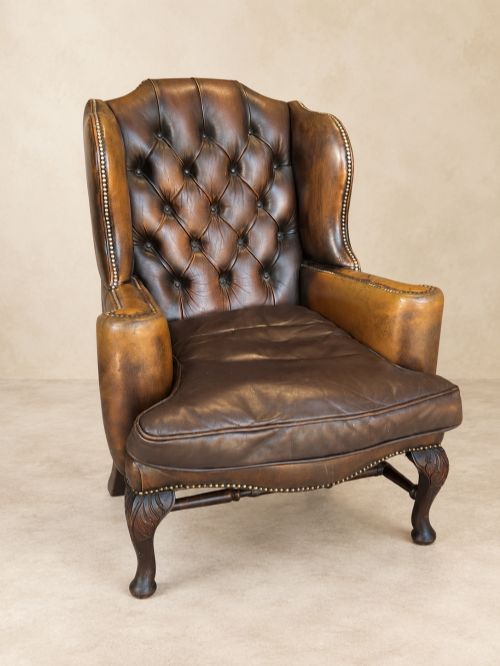
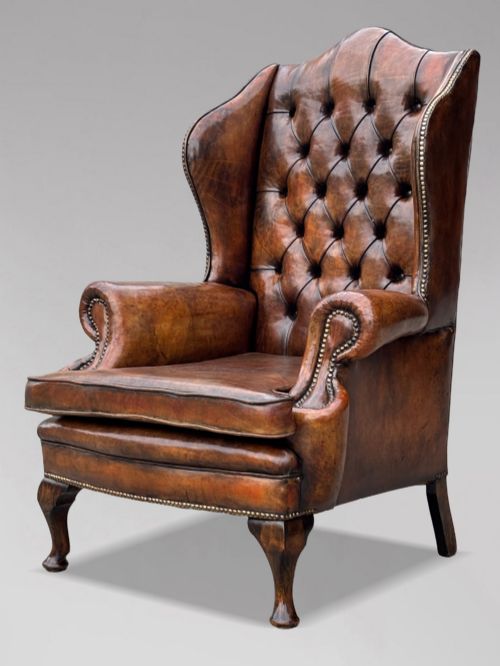
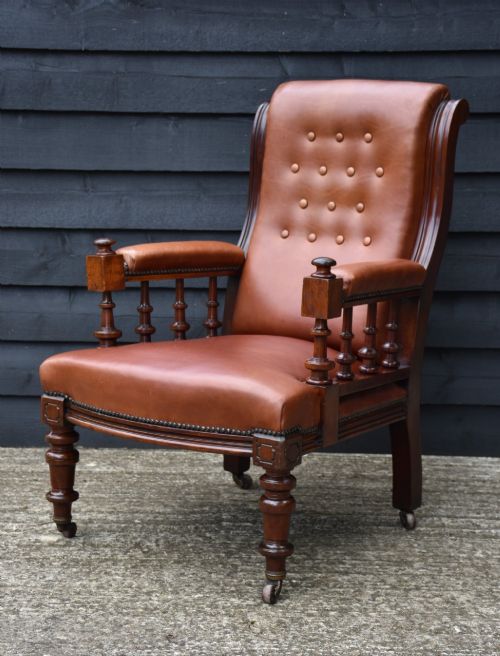
Upholstery forms the core of the seating surface, utilising traditional materials such as leather, hide, velvet, fabric, and hessian. Brass studding frequently secures the leather edges to the wooden framework, providing both durability and a finished decorative border.
Library Reading Chair Retail Price Guide 2026
Typical asking prices for library reading chair among the pieces listed under this phrase on Sellingantiques today, from the lower quarter to the upper quarter. They describe what is for sale here now, not the wider market.
Listings feature mahogany, walnut, and oak frames paired with leather, velvet, and cane across the Georgian, Regency, and Victorian eras.
What Varies in Quality
Quality rests heavily on the integrity of the timber frame and the depth of its construction. Heavy, solid hardwoods joined with traditional methods stand apart from lighter or later compromises in manufacture.
The finish and ageing of the materials dictate the upper tiers of the range. Hand-dyed English hide, well-preserved patination, and fine carving separate superior library chairs from standard utility seating.
Gillows·Howard and Sons·Morison and Co·C Hindley and Sons
The Library Reading Chair Glossary
- Gainsborough armchair
- A wide, open-armed seat originating in the eighteenth century, typically featuring a mahogany frame and upholstered leather panels designed for comfort during writing or reading.
- Tub armchair
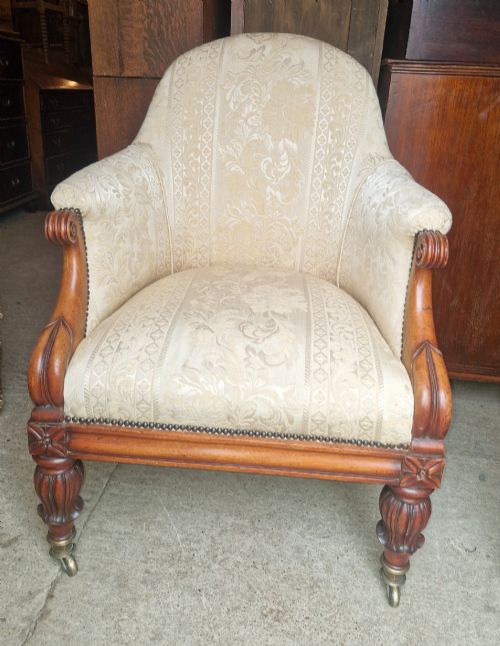
- A rounded seating form where the back rail curves continuously into low arms, enclosing the sitter for warmth and support.
- Wingback
- A high-backed chair featuring protective panels or wings attached to the upper sides, originally intended to shield the occupant from draughts in large libraries and halls.
- Caning
- A woven lattice of split rattan or cane utilised for seats and backs, offering lightweight resilience.
- Hessian
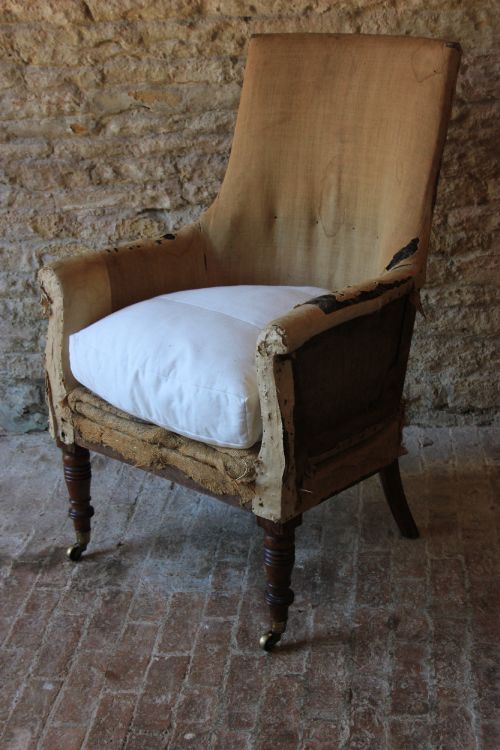
- A coarse woven fabric made from jute or hemp, traditionally used as the foundational inner support layer beneath final leather or cloth upholstery.
Library Reading Chair: Frequently Asked Questions
How were these chairs used historically?
Occupants placed them beside tall bookshelves or near firesides in country houses and private studies for reading heavy folios. The inclusion of desks, revolving mechanisms, or book rests allowed sitters to hold open texts without strain.
They served as functional furniture for working gentlemen, academics, and readers who required physical support over extended hours.
How do I care for leather upholstery?
Leather surfaces benefit from gentle cleaning and occasional conditioning to prevent the hide from drying and cracking over time. Avoiding direct sunlight and excessive heat preserves the natural patination and supple texture of the material.
Traditional hide requires simple dusting and breathable conditions to maintain its structural integrity across decades of domestic use.
How do I identify a Regency period chair?
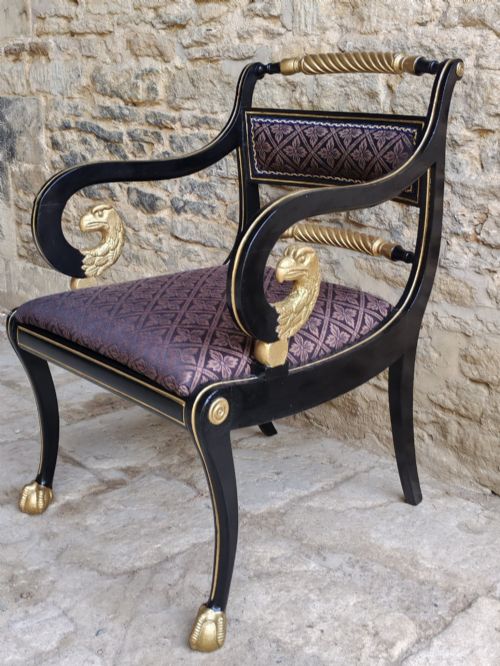
Regency pieces often display classical influences, utilising dark mahogany or rosewood with restrained carving and brass inlay. Their frames tend to feature saber legs, reeded woodwork, and clean architectural silhouettes typical of the early nineteenth century.
Compared to heavier Victorian examples, Regency seating appears lighter and more directly inspired by ancient Roman and Greek forms.