


Classic Wingback Armchair
A classic wingback armchair brings deep sides and stately presence to a room, offering both comfort and traditional British character.
Classic Wingback Armchair
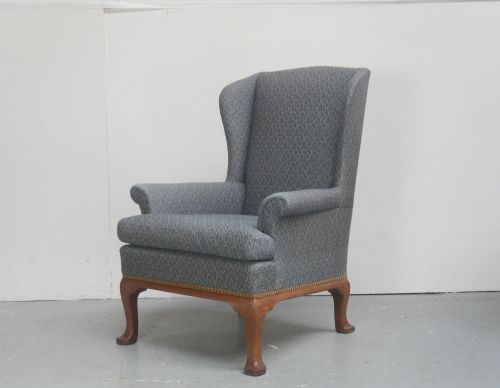
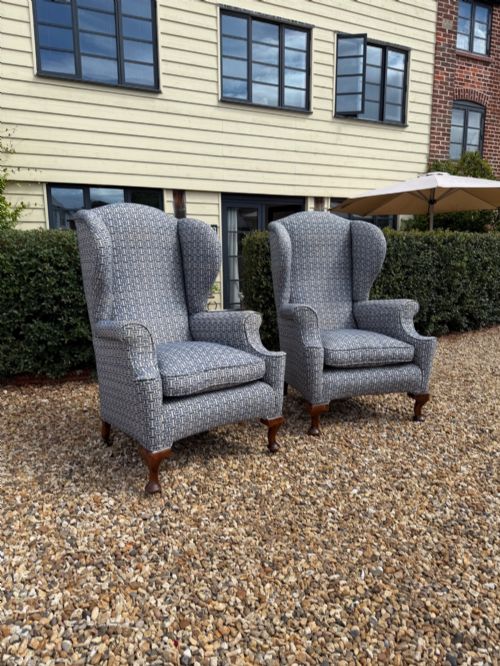
A classic wingback armchair is defined by its characteristic high back and protective side panels, designed originally to shield the sitter from draughts. The examples found here span the eighteenth century, the nineteenth century, the Edwardian era, and the nineteen-twenties, incorporating Georgian, Victorian, and Regency influences.
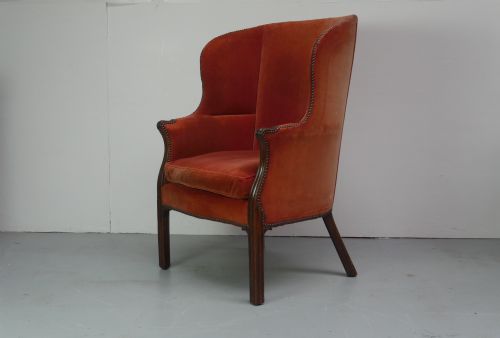
The most frequent variations on this page include traditional mahogany frames, leather upholstery in oxblood or brown, and barrel back shapes. Pieces range from grand eighteenth-century originals to revival styles such as Queen Anne, Louis XVI, and Georgian style chairs intended for re-upholstery.
Materials and construction
Frames are constructed from hardwoods including mahogany, walnut, and general wood, frequently supported by brass details such as castors. Structural forms rely on traditional joinery methods suited to heavy seating furniture of the eighteenth, nineteenth, and early twentieth centuries.
Outer coverings utilise leather, velvet, velour, and various upholstery fabrics. Leather versions often feature buttoned Chesterfield designs, while fabric examples range from plain textiles to powder blue velour.
Listings feature periods spanning from the eighteenth century through to nineteen-twenty, alongside Revival styles like Queen Anne and Louis XVI.
Assessing quality and character
Quality separates pieces by the integrity of the timber frame, the carving detail on the legs, and the proportion of the wings. Earlier eighteenth-century and Regency examples display finer hand-carving and authentic period joinery compared to later revival pieces.
The condition of the upholstery and the integrity of the internal stuffing influence the desirability of each chair. Some items are offered specifically for re-upholstery, allowing buyers to restore the piece using preferred fabrics.
HOWARD AND SONS·GILLOWS
The Classic Wingback Armchair Glossary
- Wingback
- An armchair featuring side panels attached to the backrest designed to block draughts. These panels are a defining characteristic of the seating form.
- Barrel back
- A chair style where the upholstered back curves continuously into the arms. This creates a semi-circular enclosure around the sitter.
- Porters armchair
- A fully enclosed hooded chair traditionally used by hall porters in large houses to block cold air. They frequently appear in leather with deep sides.
- Castors
- Small wheel attachments fixed to the feet of heavy armchairs to aid movement. They are often made of brass and found on nineteenth-century examples.
- Velour
- A plush knitted fabric with a dense pile resembling velvet. It provides a soft texture frequently used on Victorian upholstery.
Classic Wingback Armchair: Frequently Asked Questions
What defines a classic wingback armchair?
A classic wingback armchair is distinguished by its high backrest and protruding side panels, which historically protected sitters from draughts. The style has evolved through various periods from the eighteenth century into the twentieth century.
These chairs combine sturdy wooden frames in mahogany or walnut with upholstered padding in leather, velvet, or fabric. Their enduring silhouette makes them a focal point in traditional interiors.
How do I identify an eighteenth-century wingback?
Eighteenth-century wingback chairs are identified by the proportions of the frame, hand-carved wooden legs, and period joinery techniques. They often feature subtle variations in the curve of the wings and arms.
Comparing these details against nineteenth-century and Edwardian revival pieces helps establish the likely age of the chair. Examining the wood beneath the upholstery reveals further clues about construction.
Where were porters armchairs used?
Porters armchairs were traditionally placed in large entrance halls and drafty corridors of country houses. The high enclosed hood kept porters warm while they monitored the entrance.
Today, these substantial leather chairs function as statement pieces in studies or living rooms. Their enclosed design continues to offer a private and sheltered seating experience.
How should I care for leather upholstery?
Leather upholstery on vintage and antique armchairs requires gentle cleaning and regular conditioning to prevent drying. Avoiding direct sunlight helps preserve the natural tone of oxblood and brown leather.
Keeping the surface dust-free protects the original finish and patina built up over decades of use. Professional restoration may be needed for older hide.