
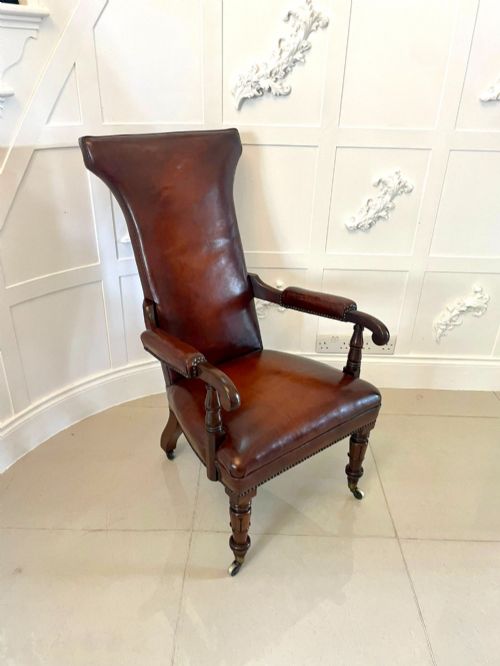
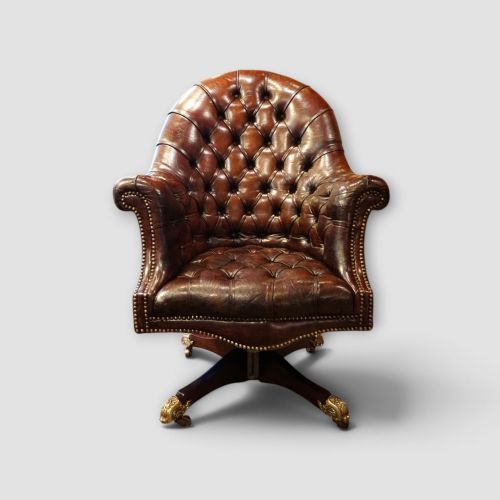
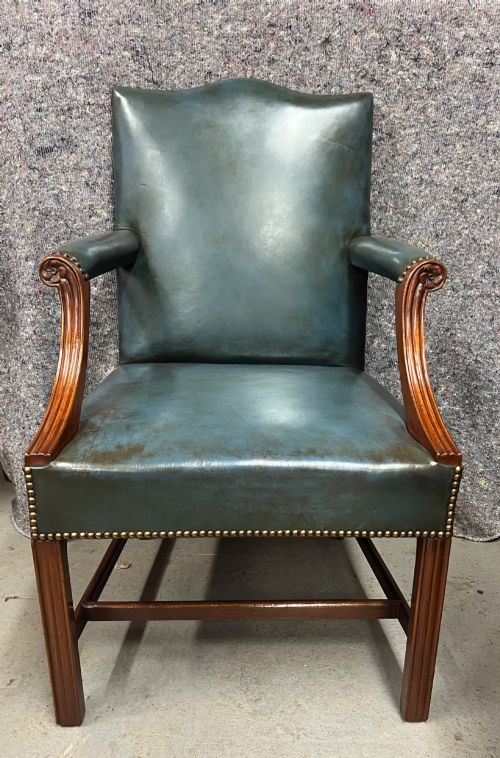


Executive Leather Seat
An executive leather seat brings substance to a workspace, offering solid frames and worn hides that have aged through the nineteenth and twentieth centuries.
Executive Leather Seat
An executive leather seat encompasses sturdy desk chairs, swivel designs, and library armchairs suited for workspaces and studies. These pieces bridge the gap between heavy domestic seating and practical office furniture.
Buyers browsing this selection encounter forms spanning the Regency and Victorian eras alongside later Edwardian and Art Deco interpretations. Mahogany, walnut, and oak frames predominate, often paired with buttoned upholstery.
The most frequent examples on this page are mahogany and walnut desk armchairs from the late nineteenth and early twentieth centuries. These range from simple swivel models to Gainsborough style seats designed for writing desks.
How they were made
Makers built these frames using dense hardwoods including mahogany, walnut, oak, and rosewood, ensuring structural endurance. Joinery relied on traditional methods to support the weight of heavy timber and frequent movement.
Upholstery centres on leather hide, frequently finished with brass studding and deep buttoning for comfort and tactile appeal. Swivel variants incorporate metal mechanisms beneath wooden or upholstered seats to allow rotation.
Secondary timbers and sturdy frames received hand-polished finishes that enhanced the natural grain of the wood over decades of use.
Listings feature timber frames in mahogany, walnut, and oak alongside varied leather upholstery.
What varies in quality
The distinction between standard examples and superior pieces rests on the choice of timber and the refinement of the carving. Finely figured walnut and mahogany display richer grain patterns than plain secondary woods.
Original leather upholstery that has aged gracefully carries more character than modern replacements, though condition depends on careful maintenance. Frame stability and the smooth operation of swivel mechanisms also set better chairs apart from simpler utilitarian seating.
Harry and Lou Epstein·Gillow
The Executive Leather Seat Glossary
- Gainsborough chair
- A type of upholstered armchair with an open-padded back, padded arms, and short legs, typically designed for writing desks in the eighteenth century and later revived.
- Chesterfield
- A traditional style of furniture characterised by deep buttoning and rolled arms of equal height.
- Porters armchair
- A high-backed enclosed seat originally designed to shield inhabitants from draughts in grand halls.
- Swivel desk chair
- A revolving seat mounted on a central pivot base, often featuring mechanical height adjustment.
- Burr walnut
- Timber taken from a growth on a walnut tree, highly prized for its swirling, decorative grain patterns.
Executive Leather Seat: Frequently Asked Questions
What is an executive leather seat used for?
These pieces serve primarily as functional desk seating, reading chairs, or study armchairs. Their robust frames and upholstered backs provide support for prolonged periods of work.
Historically, owners placed them in libraries, studies, and executive offices where appearance mattered as much as comfort.
How do I care for antique leather upholstery?
Regular dusting with a dry cloth keeps the surface free from harmful grit and debris. Applying a suitable leather conditioner prevents the hide from drying and cracking over time.
Keep these chairs away from direct sunlight and heat sources to preserve the natural suppleness of the material.
Are swivel desk chairs authentic antiques?
Mechanical swivel seats appeared during the nineteenth century as office spaces demanded greater mobility. Late Victorian and Edwardian examples frequently feature functional iron or brass swivel mechanisms paired with wooden frames.
Checking the integration of the metal components with the wooden base reveals the age and origin of the mechanism.