

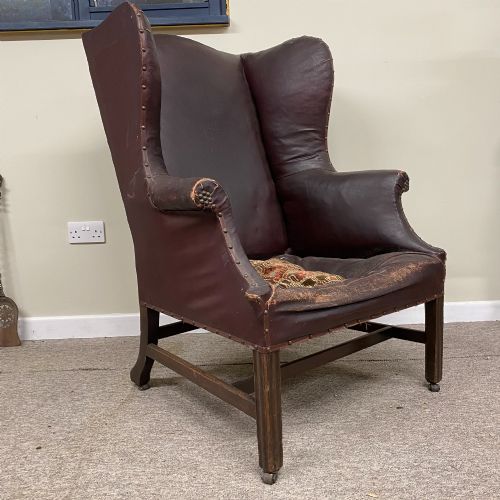
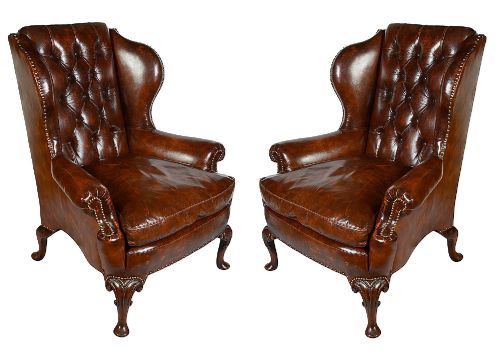
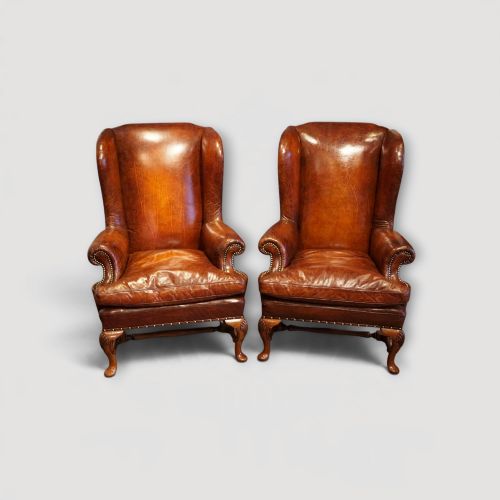
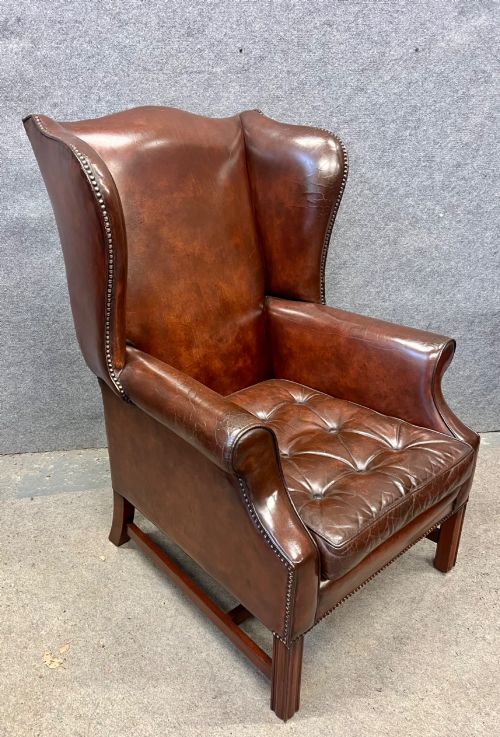

Leather Fireside Armchair
A leather fireside armchair brings warmth and solid construction to a room, offering deep comfort through padded seating and traditional frames.
Leather Fireside Armchair
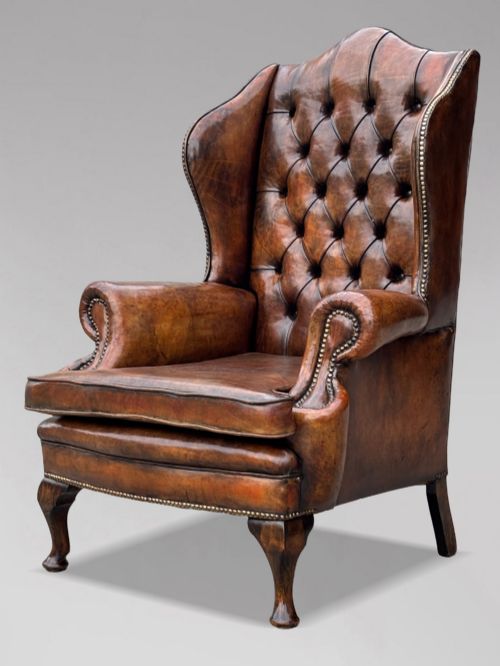
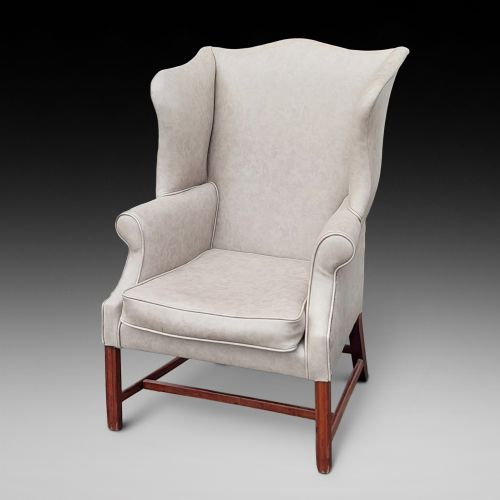
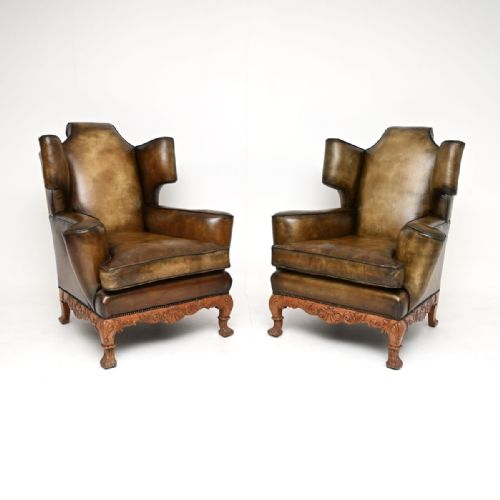
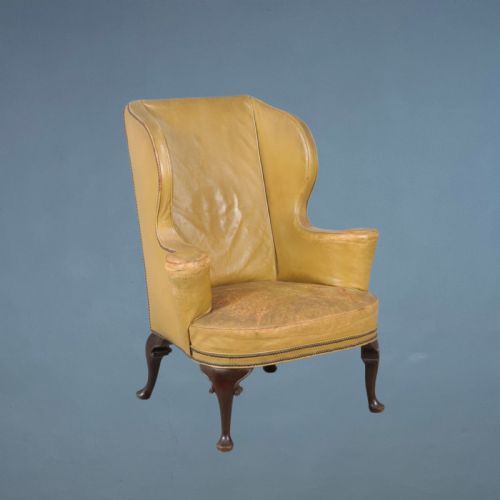
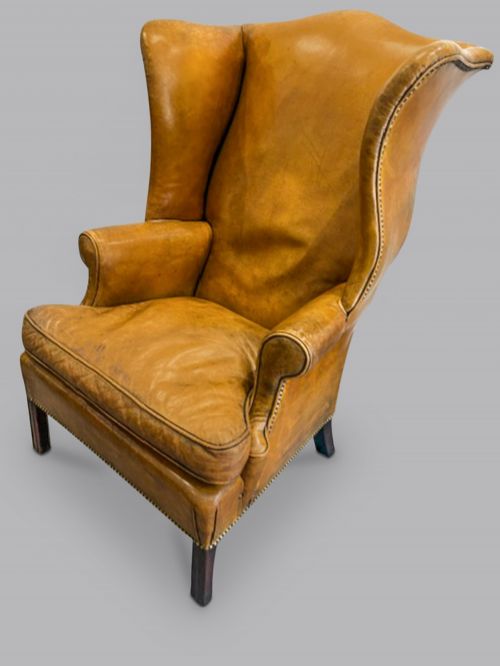
A leather fireside armchair sits low to the ground with supportive wings or high backs designed to block draughts from open hearths. Buyers searching this phrase encounter nineteenth-century wingbacks alongside early twentieth-century club chairs and revival pieces.
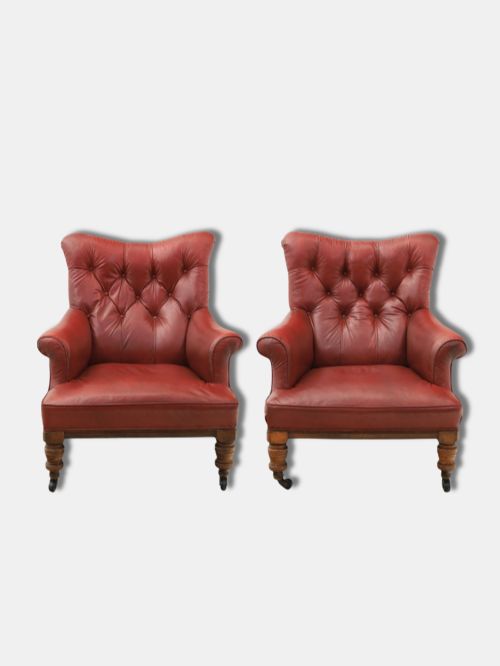
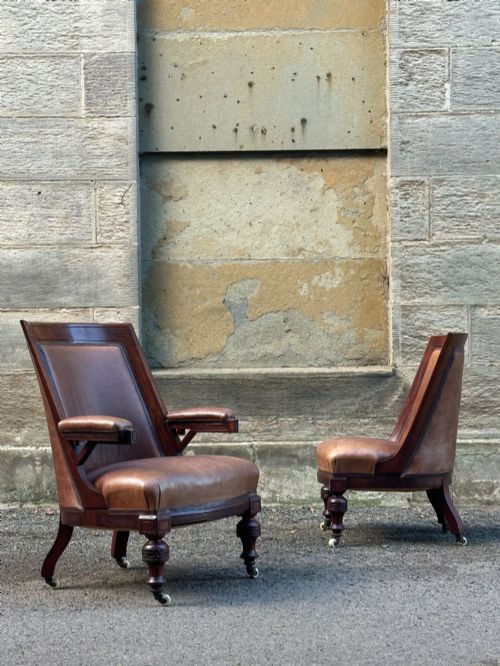
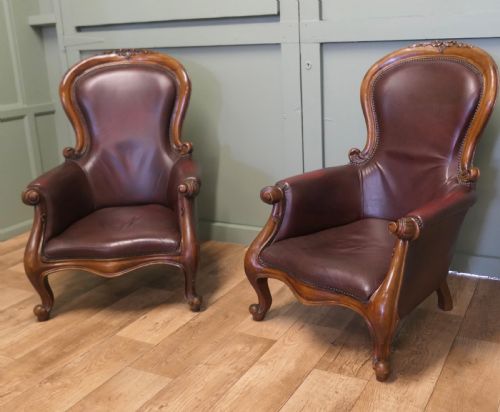
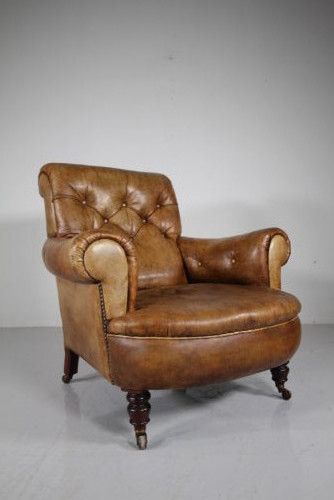
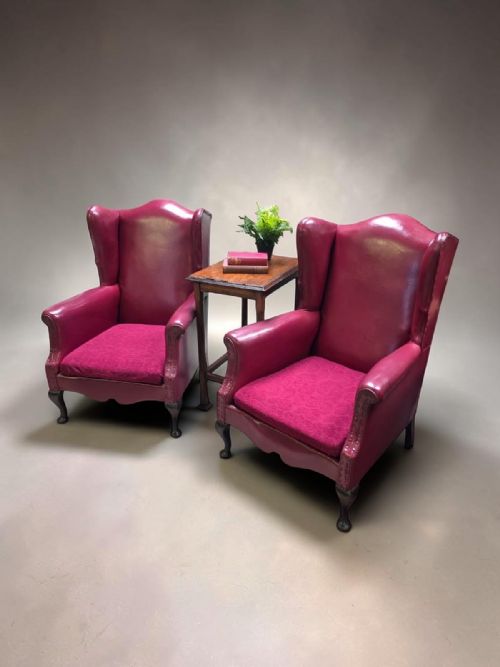
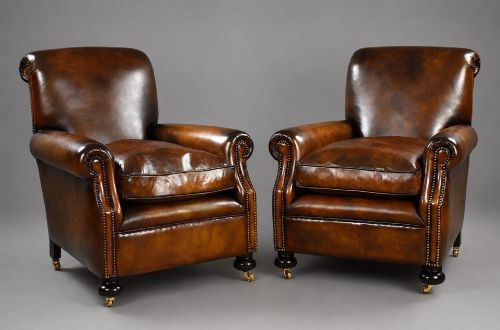
The selection ranges from Victorian library chairs with buttoned upholstery to Georgian style walnut frames and simpler Edwardian forms. Many examples appear in pairs, upholstered in tan, brown, oxblood or green leather.
Originating mostly from British workshops, these seating pieces combine functional domestic warmth with traditional cabinet-making timbers like mahogany, oak and walnut.
How they were made
Frames rely on sturdy hardwoods such as mahogany, oak, walnut and timber, joined to support heavy daily use near the hearth. Upholsterers stretched tough leather over thick padding and secured the hides using brass or iron tacks.
Detailing often includes deep buttoning, hand-colouring, and carved cabriole legs or castors for movement. Wood elements show traditional joinery, while leather surfaces are dyed and polished by hand.
Leather Fireside Armchair Retail Price Guide 2026
Typical asking prices for leather fireside armchair among the pieces listed under this phrase on Sellingantiques today, from the lower quarter to the upper quarter. They describe what is for sale here now, not the wider market.
Listings feature woods including mahogany, oak and walnut, spanning Victorian, Georgian and Edwardian periods.
What varies in quality
The quality of a leather fireside armchair rests on the depth of the timber frame and the handling of the hide. Superior examples show carefully patinated leather that retains its suppleness alongside solid, uncompromised hardwood frames.
Proportion and carving define the better pieces, where cabriole legs are shaped with precision and buttoning remains tight and regular. Lesser examples may exhibit rigid frames or heavy re-upholstery that obscures the original character of the piece.
Howard And Sons·Adolf Loos
The Leather Fireside Armchair Glossary
- Wingback
- An armchair featuring protective side panels designed to shield the sitter from draughts. These extensions frame the upper back and connect to the armrests.
- Cabriole leg
- A furniture leg that curves outward in a convex arc and tapers inward in a concave arc, often ending in a pad or claw foot. This form draws on classical furniture design.
- Buttoning
- An upholstery technique where indentations are pulled deep into the padding and secured with covered buttons. This creates a diamond pattern that keeps stuffing firmly in place.
- Castor
- A small wheel mounted in a swivel housing attached to the bottom of furniture legs. It allows heavy armchairs to move easily across floor coverings.
- Rexine
- An artificial leather cloth made from fabric coated with nitrocellulose. It served as a durable substitute for natural hide during the early twentieth century.
Leather Fireside Armchair: Frequently Asked Questions
How do I spot a true period piece?
Examine the timber beneath the upholstery and look for hand-cut joints rather than modern fixings. Natural wear patterns on the leather and traditional frame construction help distinguish older pieces.
Compare the proportions and leg styles against known historical eras, noting whether mahogany or oak matches the recorded manufacturing period.
Are these chairs comfortable for daily use?
These armchairs were built for long hours by the hearth, featuring deep seats and supportive high backs. Their ergonomic design makes them well-suited for reading and relaxing in modern living spaces.
Substantial padding and supportive armrests provide physical comfort that equals many contemporary seating options.
How should I care for vintage leather?
Apply a suitable leather conditioner periodically to keep the hide supple and prevent cracking. Avoid placing the chair in direct sunlight or close to active heat sources.
Dust the surface regularly with a soft cloth and address spills immediately using a dry, clean absorbent material.