


Brown Leather Wingback Chair
A brown leather wingback chair brings deep seating and draught-excluding wings to a study, drawing on centuries of library and parlour forms.
Brown Leather Wingback Chair
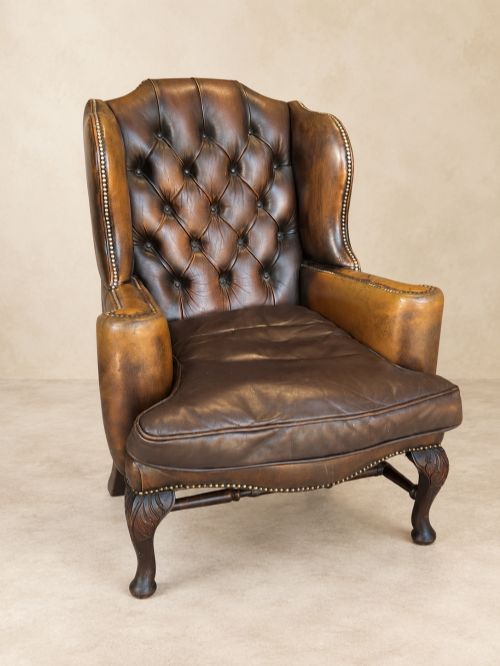
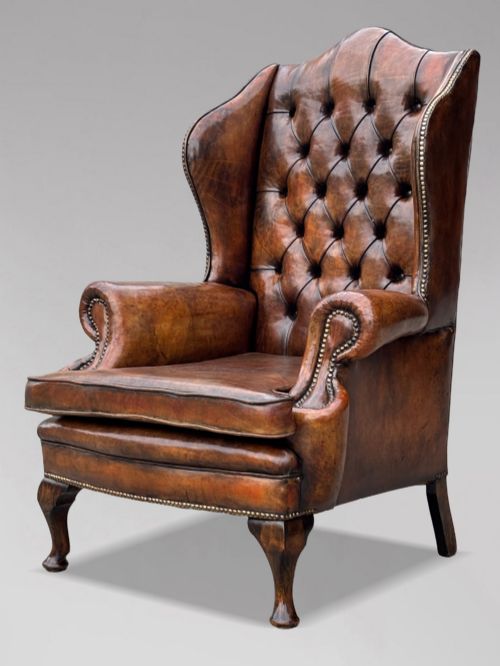
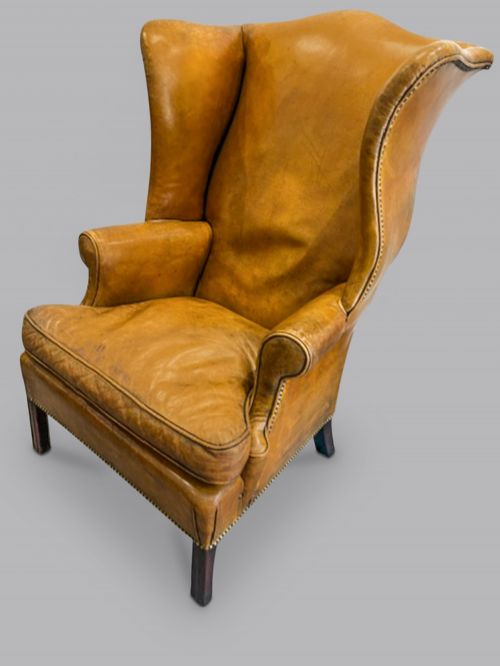
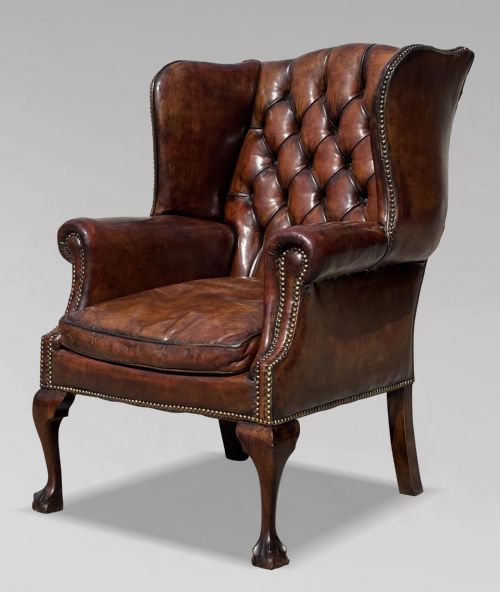
A brown leather wingback chair is a substantial fireside seat defined by its protective side panels and resilient leather upholstery. You will encounter examples spanning the eighteenth century through to the 1930s, encompassing genuine Georgian pieces alongside Victorian, Edwardian, and later revival interpretations.
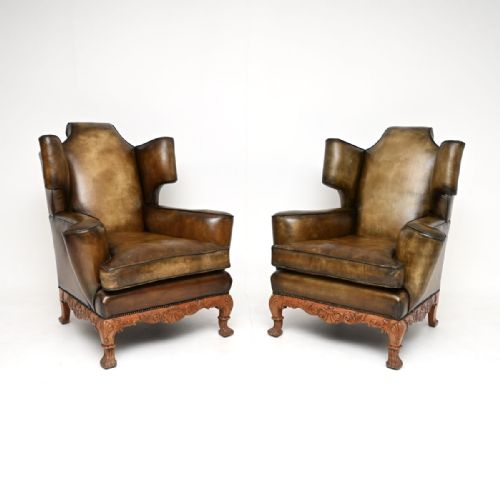
The selections on this page range from straightforward library armchairs to grand Chesterfield styles, occasional pairs, and metamorphic library forms. Frames draw upon historical designs including George II, George III, and Victorian Jacobean revivals, often retaining their original proportions.
Materials and Construction
Frames rely on sturdy timbers such as mahogany, oak, walnut, and assorted hardwoods to support the heavy upholstered body. Joinery is traditionally concealed beneath deep stuffing and stitched leather covers.
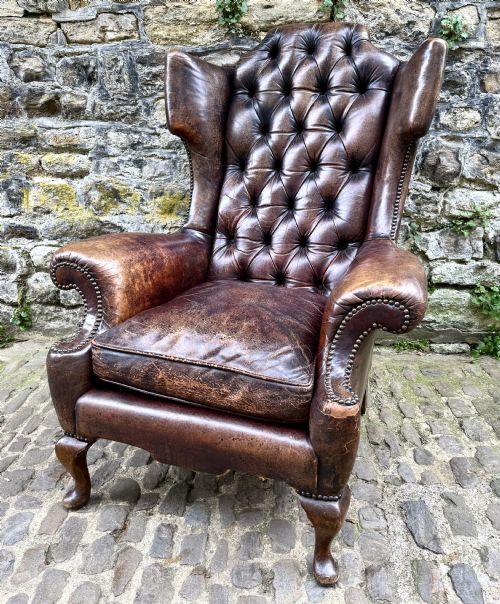
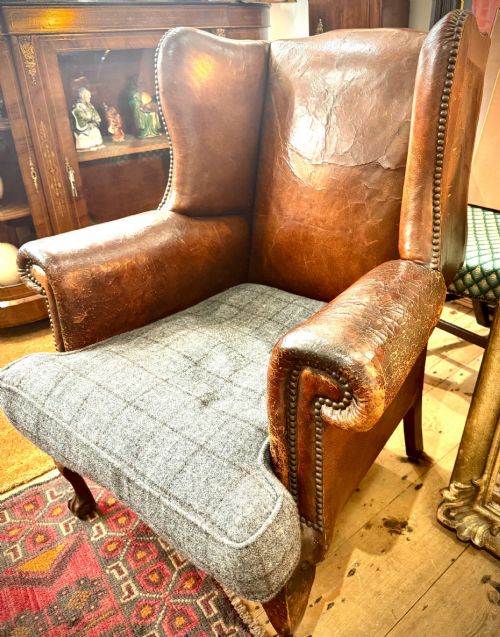
Upholstery centres on durable leather, frequently hand-dyed or hand-coloured to achieve a rich patination over buttoned or plain expanses. Brass tacks often secure the leather margins to the wooden frame.
Undercarriages incorporate cabriole legs, straight supports, or occasionally castors, utilising traditional jointing methods appropriate to each respective period.
The inventory spans multiple eras from the 1880s Victorian period through to George III and 1930s revival pieces.
Craftsmanship and Proportion
Quality rests in the harmony of the timber frame and the depth of the leather's finish, where finer examples display crisply carved cabriole legs and carefully managed proportions. Superior pieces maintain a balanced stance and structural integrity across the seat rails and wing supports.
The character of the hide dictates much of the visual merit, with hand-dyed leathers showing subtle tonal variations rather than flat industrial coatings. Hand-applied brass detailing and dense buttoning further separate standard production from exceptional library seating.
The Brown Leather Wingback Chair Glossary
- Wingback
- An armchair featuring protective side panels attached to the arms and back to block draughts from the fireplace. These wings also served to trap heat around the sitter's head.
- Cabriole leg
- A furniture leg that curves outward at the knee and tapers inward toward the foot, commonly seen on eighteenth-century and revival seating. This form often terminates in pad or claw-and-ball feet.
- Chesterfield
- A deep-buttoned upholstery style characterised by rolled arms and back of equal height. In this context, it describes robust brown leather armchairs with dense tufting.
- Buttoning
- A traditional upholstery technique where deep depressions are formed across the leather by securing buttons through the internal stuffing to the frame. This method keeps the padding evenly distributed.
- Hand-dyed leather
- Hide treated with aniline or similar dyes applied by hand to build up depth of colour and natural patination. This finish ages distinctively through daily use.
Brown Leather Wingback Chair: Frequently Asked Questions
How do I spot a true Georgian chair?
Examine the timber framing beneath the leather and check the joinery methods used in the seat rails. True period examples from the eighteenth century display hand-cut joints and timber characteristics consistent with Georgian cabinet-making.
Revival pieces made in the twentieth century often utilise heavier machine-cut framing or different secondary woods despite copying early silhouettes.
What is the difference between antique and revival styles?
Antique pieces were manufactured during the primary historical eras such as the eighteenth or nineteenth centuries. Revival chairs were constructed later, during the 1920s or 1930s, to emulate those earlier aesthetic standards.
Both categories utilise traditional materials like mahogany and leather, but differ in their production date and underlying wear patterns.
How should I care for antique leather upholstery?
Maintain the hide by keeping the armchair away from direct heat sources and strong sunlight that can dry out the material. Apply appropriate leather balms periodically to preserve flexibility and suppleness.
Avoid harsh cleaning agents that strip the natural hand-dyed finish and patination accumulated over the decades.
Are these chairs suitable for daily sitting?
Most brown leather wingback chairs are built around robust hardwood frames designed for heavy domestic or library use. Their deep stuffing and high backs offer substantial support for regular lounging.
Checking the internal webbing and padding ensures the seat remains comfortable for everyday living.