
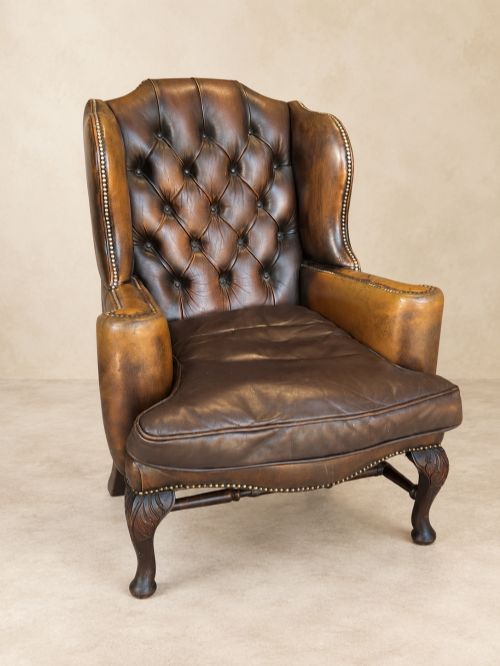
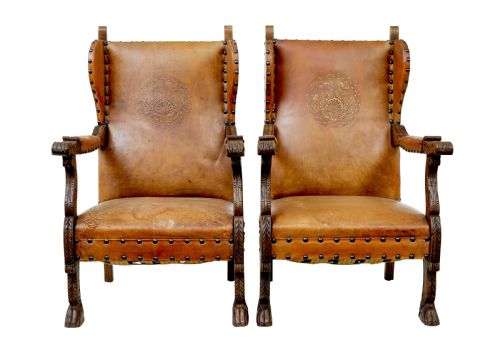
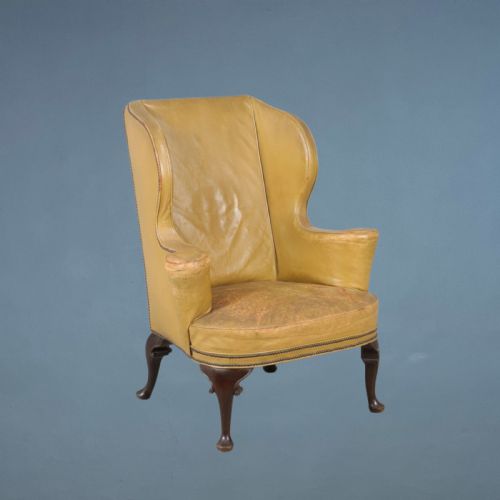
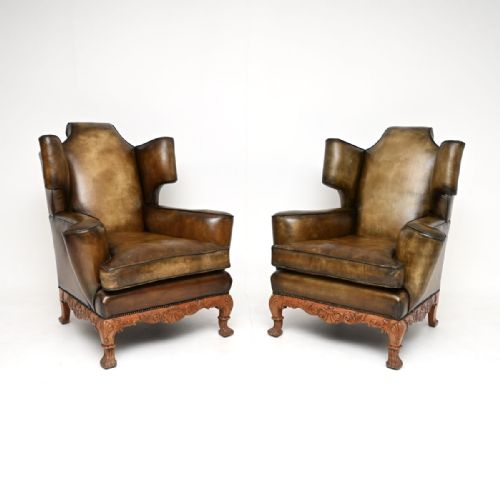
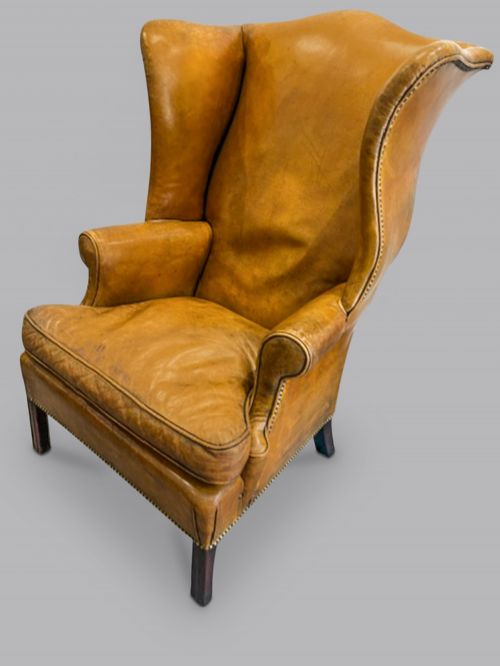


Tan Leather Wing Chair
A tan leather wing chair brings profound comfort and stately character to a room, offering deep seats and sheltering sides designed to block drafts.
Tan Leather Wing Chair
When you search for a tan leather wing chair, you encounter an imposing seating form defined by high backrests and protective side panels known as wings. These traditional pieces span various eras, appearing in Georgian originals alongside later revivals from the Victorian period and the early twentieth century.
The inventory on this page demonstrates that these armchairs frequently combine aged hides with hardwood frames. While single armchairs dominate, pairs and occasional sofas also emerge from periods ranging back to the nineteenth century.
Materials and construction
Cabinetmakers constructed the foundational frames of these chairs using durable timbers like mahogany, oak, walnut, and general hardwood. These sturdy structural elements support the generous proportions required for comfortable seating.
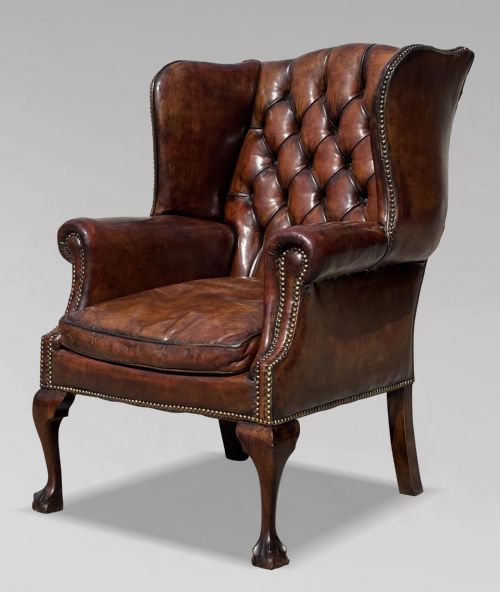
Upholsterers then covered the frames in leather hides, frequently securing the edges with brass studs. Buttoned upholstery and hand-dyed finishes appear across numerous examples, adding texture and depth to the leather surfaces.
Tan Leather Wing Chair Retail Price Guide 2026
Typical asking prices for tan leather wing chair among the pieces listed under this phrase on Sellingantiques today, from the lower quarter to the upper quarter. They describe what is for sale here now, not the wider market.
Listings feature pieces spanning from the Georgian era through the Victorian period and into the 1930s.
Distinctions in craftsmanship
The distinction between ordinary and exceptional examples rests upon the harmony of proportions and the integrity of the timber frame. Superior pieces display carefully carved details, such as lion motifs or polished cabriole legs, executed with precision.
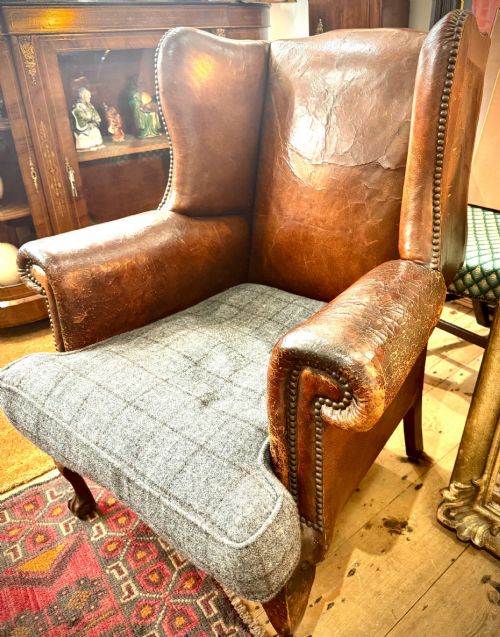
The character of the leather itself shapes the distinction between pieces, with supple hides showing natural patination over decades of use. Skill in hand-dyeing and buttoning further separates standard seating from masterwork library and porter chairs.
J Foot And Son·Gillow
The Tan Leather Wing Chair Glossary
- Wingback
- An armchair featuring projecting side panels attached to the arms or backrest. These wings historically trapped heat from a fireplace and kept out chilly draughts.
- Button down
- An upholstery technique where indentations are formed across the backrest using buttons pulled tight. This method secures the internal padding and creates a distinctive geometric pattern.
- Brass studs
- Small metallic tacks driven into the leather trim along the framework. They fasten the hide securely while providing a decorative metallic border.
- Cabriole leg
- A furniture leg that curves outward and then tapers inward toward a pad or claw foot. This design became prominent during the Georgian and Queen Anne eras.
Tan Leather Wing Chair: Frequently Asked Questions
What is a porter chair?
A porter chair is a specialised enclosed armchair designed to protect guards from draughts in drafty entrance halls. They typically feature a hooded top and fully upholstered sides enclosing the sitter completely.
Over time, these functional pieces evolved into luxurious library seating used for reading and relaxation. Their high enclosed backs provide exceptional privacy and warmth compared to standard armchairs.
Where should I place a wing chair?
These imposing armchairs suit studies, libraries, and living rooms where their high backs and sheltering wings can frame a seating arrangement. They work well positioned beside a fireplace or reading lamp to utilise their original draft-blocking design.
Because of their substantial physical presence, they require adequate floor space so the proportions of the frame and leather can be appreciated from multiple angles.
How do I care for antique leather?
Maintaining antique leather requires keeping the material nourished with appropriate balms to prevent cracking over time. Regular gentle dusting preserves the surface without stripping away the historic patina accumulated over decades.
Positioning the chair away from direct sunlight and heat sources protects the hide from drying out. Treating the leather with care ensures the surface remains supple for daily use.