


Tufted Leather Wing Chair
A tufted leather wing chair brings traditional British seating into a room, offering deep comfort and formal presence.
Tufted Leather Wing Chair
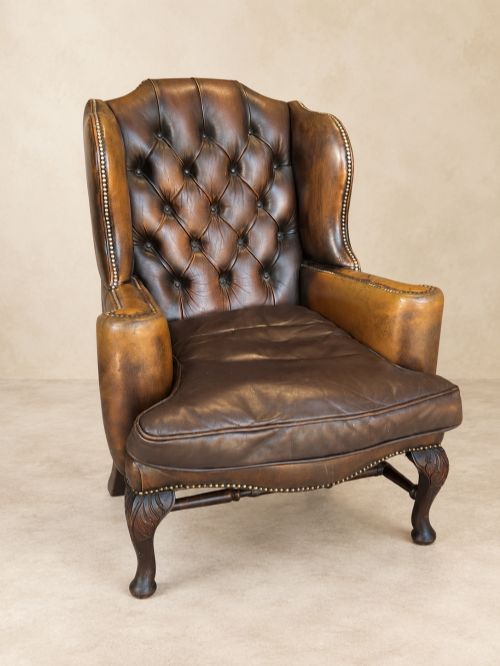
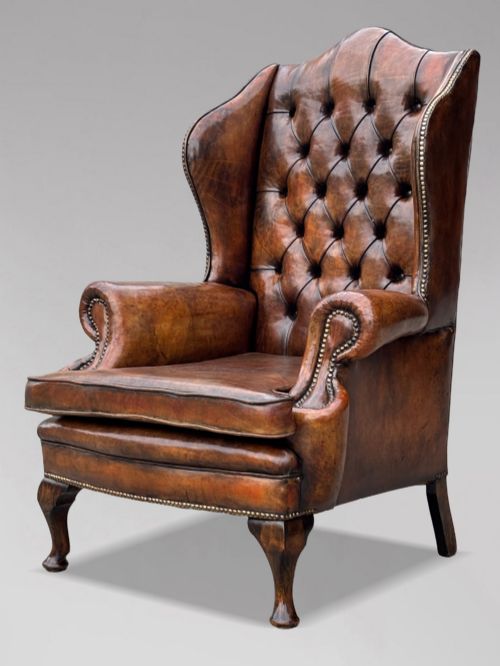
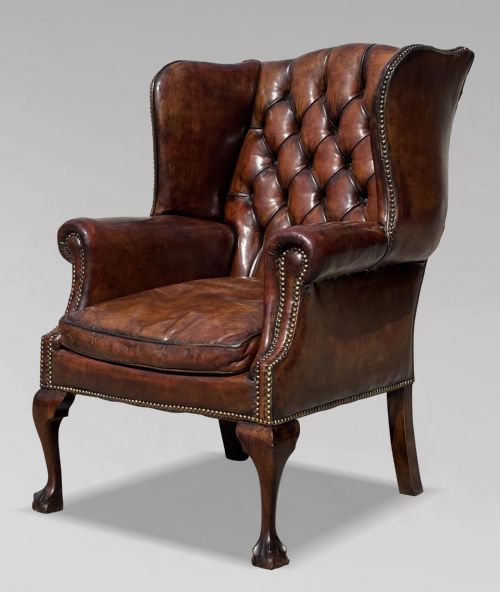
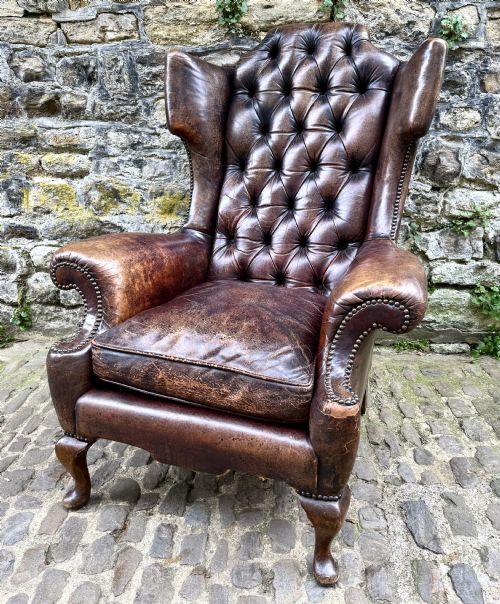
A tufted leather wing chair is a substantial fireside armchair designed to keep draughts away from the head and shoulders, featuring protective side panels known as wings.
The selections on this page span several centuries and revivals, ranging from genuine 18th century pieces to Victorian examples and later 20th century reproductions in the Georgian style.
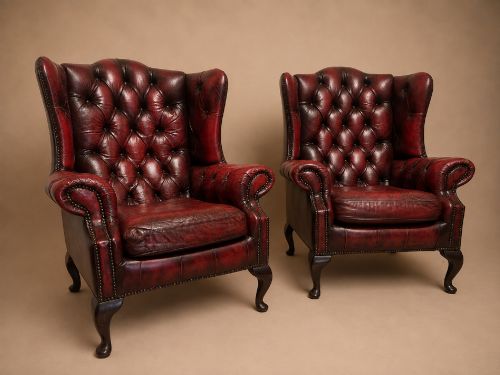
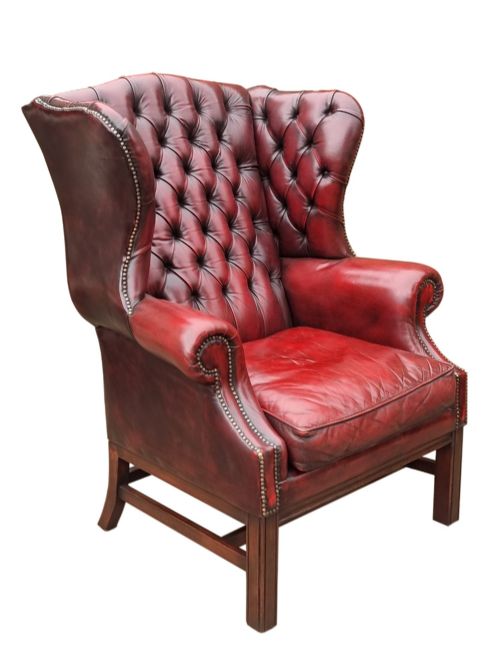
Armchairs and sofas dominate the selection, often upholstered in rich hides ranging from tan and brown to oxblood and faded green.
How they were made
Makers built the foundational frames of these chairs using sturdy timbers such as mahogany, oak, and other hardwoods.
Upholsterers then applied leather over padding, securing the material with deep buttoning and brass detailing.
Some Victorian armchairs feature carved lions keeping watch from the armrests.
What varies in quality
The integrity of the timber frame and the depth of the hand-dyed leather separate standard examples from finer works.
Proportion and the execution of the buttoning dictate the visual balance of the piece.
The Tufted Leather Wing Chair Glossary
- Wingback
- An armchair featuring protective side panels attached to the arms to deflect draughts. These panels frame the upper body.
- Buttoning
- A traditional upholstery technique where buttons are pulled tight into the padding to create a diamond pattern. This secures the filling.
- Chesterfield
- A style of upholstered seating characterised by rolled arms and deep button tufting. It often appears in rich leather.
- Mahogany
- A durable tropical hardwood frequently utilised in the frames and legs of Georgian and Victorian seating. It accepts fine carving.
Tufted Leather Wing Chair: Frequently Asked Questions
How do I date a leather wing chair?
Dating relies on examining the timber frame, structural joinery, and the wear patterns on the leather.
Earlier pieces show hand-cut elements, whilst later revival pieces display machine tooling and different construction methods.
What is the purpose of the wings?
The side panels, or wings, originated to trap heat from an open fire and protect the sitter from cold draughts.
Over time, they evolved into a distinct decorative and formal characteristic of traditional British seating.
How do I care for antique leather?
Antique leather benefits from regular dusting and occasional treatment with appropriate conditioning balms to prevent drying.
Keep these armchairs away from direct sunlight and heat sources to preserve the natural hide.
Are these chairs comfortable for daily use?
These seating options provide firm, upright support combined with deep cushioning suitable for reading or relaxing.
The high back and padded arms offer substantial support for the head and shoulders.