
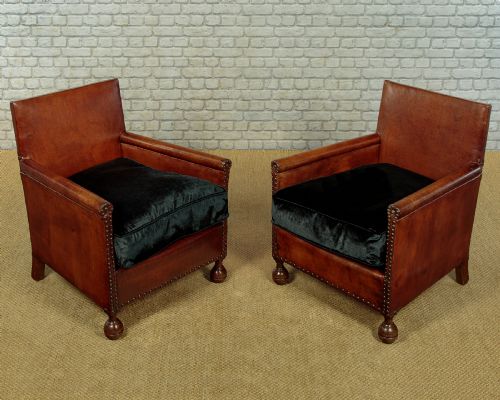
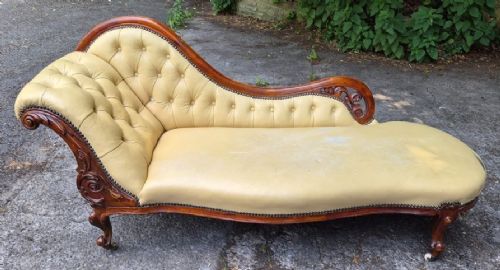

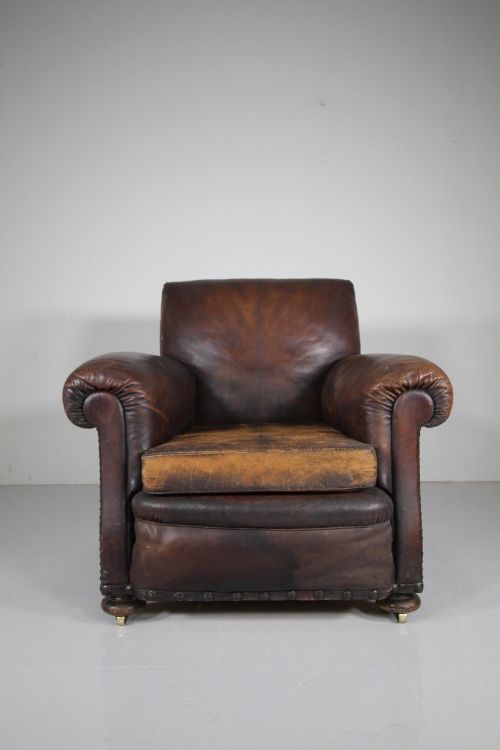


Traditional Leather Lounge Chair
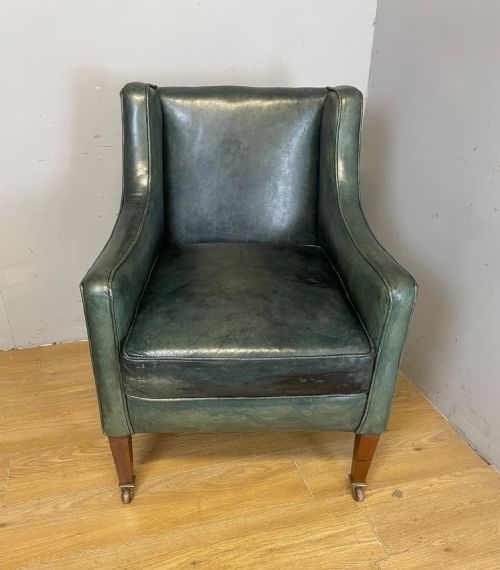
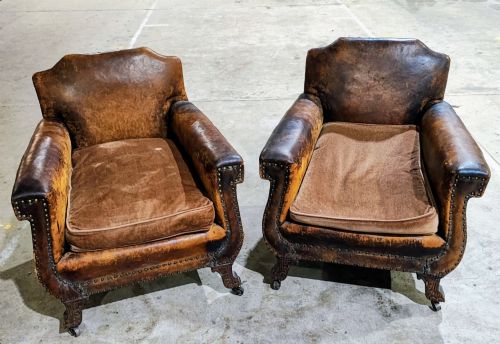
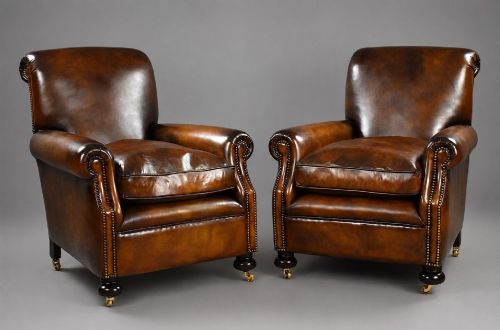
A traditional leather lounge chair brings deep, patinated character and enduring comfort to a room.
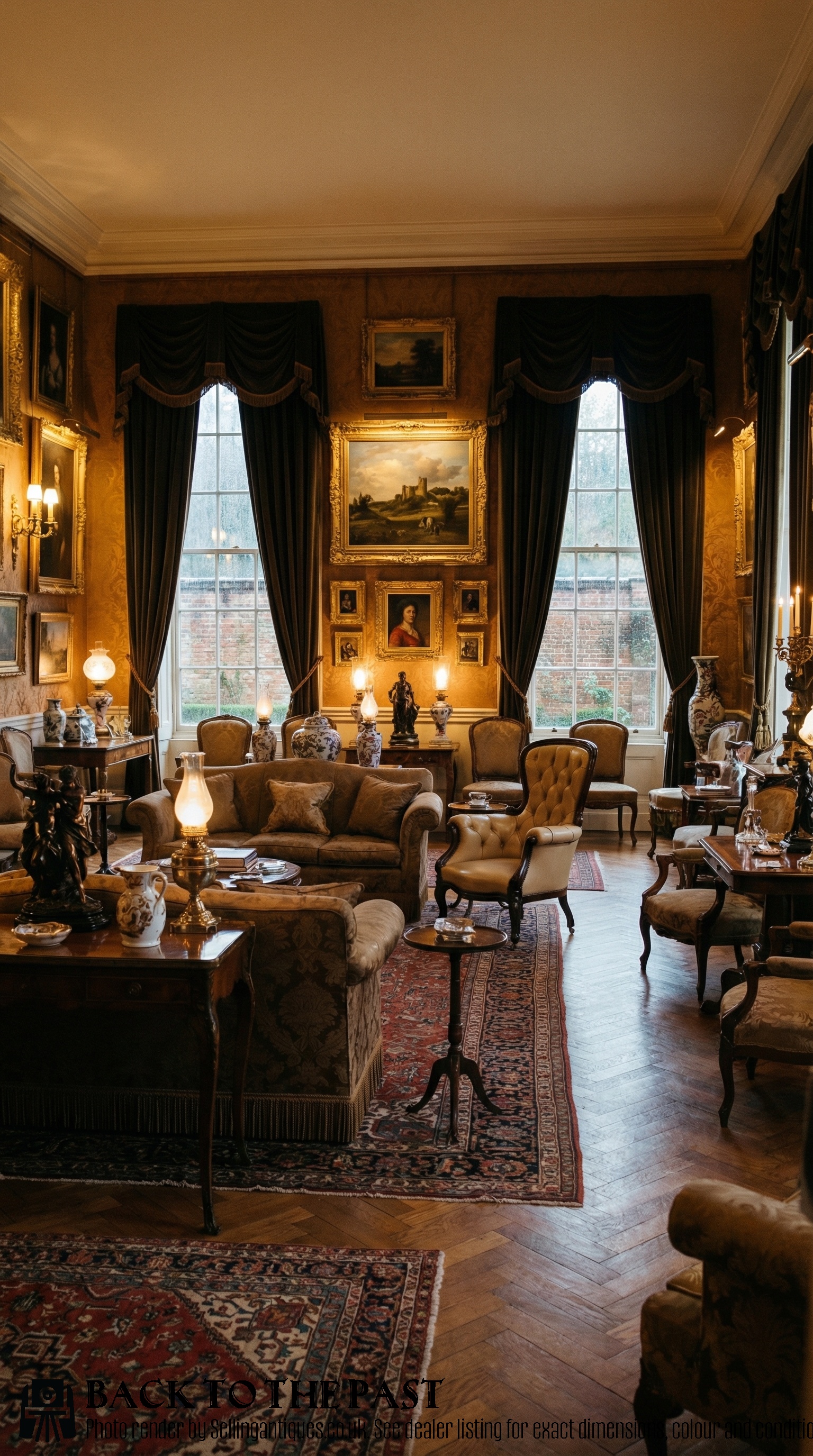
Traditional Leather Lounge Chair
A traditional leather lounge chair encompasses substantial seating designed for relaxation, spanning club armchairs, wingbacks, and library armchairs. Buyers seeking a traditional leather lounge chair will frequently encounter pieces dating from the Victorian and Edwardian eras through to the 1920s and 1930s.
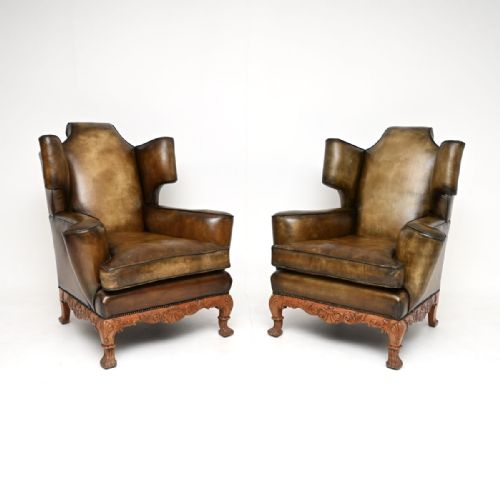
The selection ranges from low-slung club chairs and deep-seated library models to wingbacks supported on turned feet, cabriole legs, or claw and ball feet. Mahogany, oak, and walnut feature prominently as the supporting frames beneath the upholstery.
English country house and Art Deco styles appear alongside period iterations, reflecting both British craftsmanship and continental influences. Armchairs dominate the offerings, accompanied occasionally by chaise longues for reclining.
How they were made
Makers constructed the supportive frames using solid hardwoods including mahogany, oak, and walnut, often joining the timber with traditional cabinet-making methods to ensure structural longevity.
Upholstery relied on durable leather stretched over internal padding, accented frequently with brass detailing such as studwork securing the hides to the wooden frames.
Carved elements on legs and arm supports demonstrated woodworking skill, utilising turned feet, cabriole shapes, and detailed claw and ball formations.
Some club chairs have absorbed decades of tobacco smoke and library quiet, acquiring a scent as genuine as their patina.
What varies in quality
The depth and character of the leather patina distinguish individual pieces, with hand-dyed finishes and rich caramel, tan, brown, or oxblood tones showing varied degrees of natural wear over time.
Frame construction and timber selection dictate structural integrity, separating substantial hardwood frames in oak or mahogany from simpler structural supports.
The refinement of carved details, such as the execution of cabriole legs or claw and ball feet, marks the distinction between standard workshop production and finer bespoke seating.
Howard & Son's
The Traditional Leather Lounge Chair Glossary
- Club armchair
- A deep, heavily upholstered seat designed for comfort, typically featuring low arms and soft leather upholstery. These chairs originated in French and British clubs during the early twentieth century.
- Wingback armchair
- A high-backed seat featuring protective wings designed to shield the sitter from draughts and retain heat from a fireplace. Early examples incorporate substantial wooden frames and leather upholstery.
- Chaise longue
- An upholstered chair elongated to support the legs, combining the functions of a chair and a day bed. Victorian versions often feature carved mahogany frames.
- Cabriole leg
- A furniture leg that curves out and then tapers inward, resembling the shape of an animal's leg. This design appears frequently on Victorian library chairs.
- Claw and ball foot
- A carved furniture foot depicting a bird's talon grasping a ball. It is commonly found on the base of period armchairs.
Traditional Leather Lounge Chair: Frequently Asked Questions
What defines a traditional leather lounge chair?
A traditional leather lounge chair is a comfortable seating option constructed with a hardwood frame and upholstered in leather, encompassing styles from the Victorian and Edwardian periods.
These pieces range from low club armchairs to high-backed wing chairs, utilising materials such as mahogany, oak, and brass detailing.
How do I identify a Victorian leather armchair?
Victorian leather armchairs often feature dense mahogany or walnut frames, sometimes displaying carved details, cabriole legs, or claw and ball feet.
They tend to show rich patination in the leather and deep buttoning or hand-dyed finishes characteristic of the nineteenth century.
Where were club armchairs used?
Club armchairs were traditionally placed in private members' clubs, studies, and drawing rooms as substantial seats for reading and relaxation.
Their deep proportions and supportive leather upholstery made them well-suited for prolonged sitting in domestic and institutional settings.
How do Edwardian chairs differ from Victorian ones?
Edwardian leather armchairs frequently exhibit lighter proportions and simpler lines compared to their heavily carved Victorian predecessors.
They often sit on turned feet and lean towards country house aesthetics or early club chair designs popular in the early twentieth century.
How should I care for vintage leather furniture?
Vintage leather benefits from regular dusting and occasional conditioning to maintain the suppleness of the hide and preserve its natural patina.
Keeping these chairs away from direct heat sources and strong sunlight prevents the leather from drying out over time.