




Bentwood Desk Chair
A bentwood desk chair offers clever steam-formed curves and resilient seating, combining lightness with lasting daily utility.
Bentwood Desk Chair
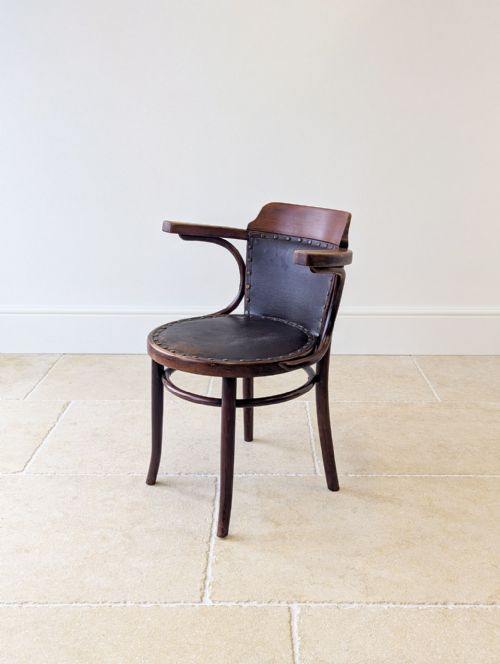
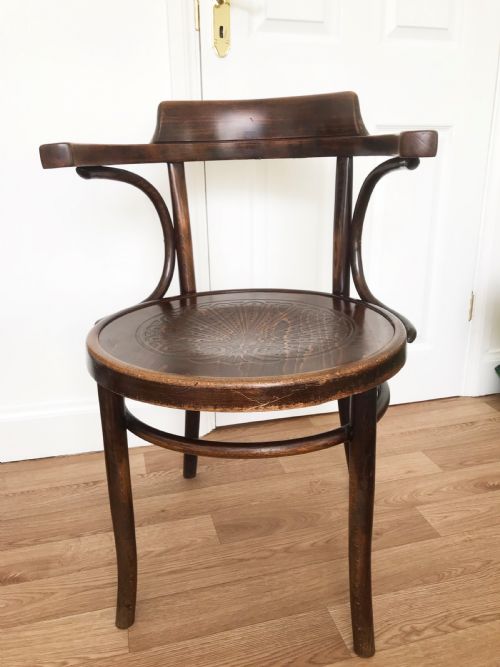
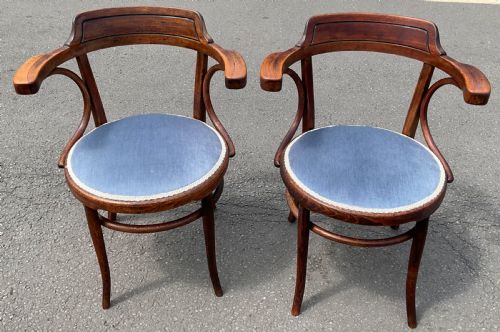
A bentwood desk chair brings together steam-pressed wooden frames and practical seating forms, spanning the 19th Century, Victorian, Edwardian, and early 20th Century periods. These pieces appear as swivel desk chairs, armchairs, carvers, and elbow chairs.
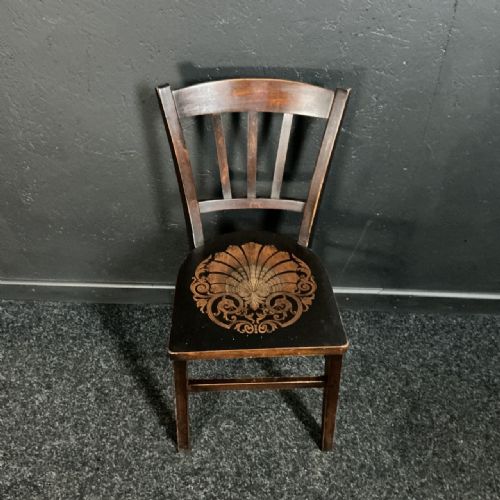
The versions most commonly met on this page include Thonet and J & J Kohn designs featuring leather pads, cane, or plywood seats. Edwardian and 1900s examples dominate the selection, offering sturdy seating suited for workspaces.
Makers such as Thonet and J & J Kohn shape these desk chairs with distinct regional styles, encompassing English Country, American Colonial, and Art Nouveau influences. Buyers encounter revolving office models alongside simpler carver and bistro formats.
What varies in quality
The integrity of the steam-bent frame dictates the structural standard, with smooth, unbroken curves holding greater merit than repaired or split timber. Original brass or iron swivel mechanisms operate more fluidly in superior examples.
The presence of intact leather upholstery, original plywood stampings, and authentic maker attribution distinguish standard workshop output from exceptional production.
Bentwood Desk Chair Retail Price Guide 2026
Typical asking prices for bentwood desk chair among the pieces listed under this phrase on Sellingantiques today, from the lower quarter to the upper quarter. They describe what is for sale here now, not the wider market.
The listings span five distinct periods, led by 1900, Edwardian, and 19th Century examples.
Thonet·J & J Kohn·Watkins & Doncaster
The Bentwood Desk Chair Glossary
- Bentwood
- Wood softened by steam and bent into curved structural forms. This technique creates lightweight yet rigid chair frames without traditional heavy joinery.
- Carver
- An armchair designed with open sides to accommodate clothing. These chairs often serve double duty at a desk or dining table.
- Plywood
- Thin layers of wood veneer glued together with grain at right angles. This material provides strong, stable seat panels.
- Swivel
- A pivoting mechanism allowing the seat to rotate on a central spindle. These fittings often incorporate iron and brass components.
Bentwood Desk Chair: Frequently Asked Questions
How do I identify a Thonet bentwood desk chair?
Examine the underside of the seat or the bent frame for maker paper labels, stamps, or impressed branding. Thonet pieces often display characteristic screwed-in joints and curved beech bracing.
Compare the silhouette against known catalogued forms from the late 19th Century and early 20th Century periods. The precision of the steam-bent curves helps separate genuine maker output from generic copies.
Are swivel bentwood desk chairs comfortable for daily use?
Many swivel versions feature contoured wooden seats or leather pads designed for extended sitting periods. The natural spring in the bentwood frame offers slight flex.
Adjustable mechanisms on Edwardian models allow users to modify seat heights for office desks. Pairing the chair with a suitable cushion improves long-term comfort.
How should I care for leather and bentwood?
Keep wooden frames away from direct heat sources and extreme humidity fluctuations to prevent the steam-bent timber from warping or splitting. Clean the beech surface with a dry or lightly damp cloth.
Condition leather upholstery periodically using appropriate balms to maintain flexibility. Avoid soaking the wooden joints during routine cleaning.
What is the difference between an armchair and a carver?
Armchairs feature side supports designed to rest the arms, whereas carver chairs traditionally denote a dining or desk chair with integrated armrests. Both terms often describe similar seating frameworks.
On this page, carver desks chairs frequently incorporate open bentwood loops forming the back and armrest in one continuous piece.