
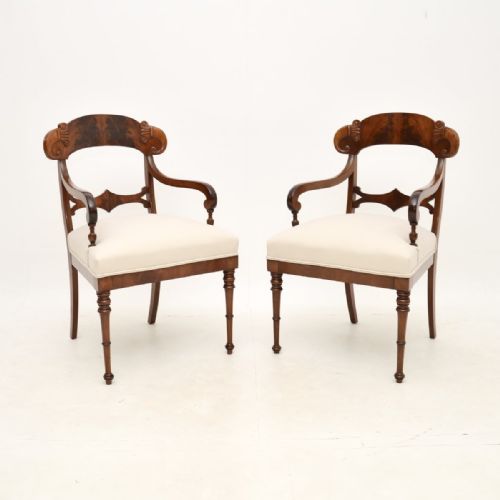

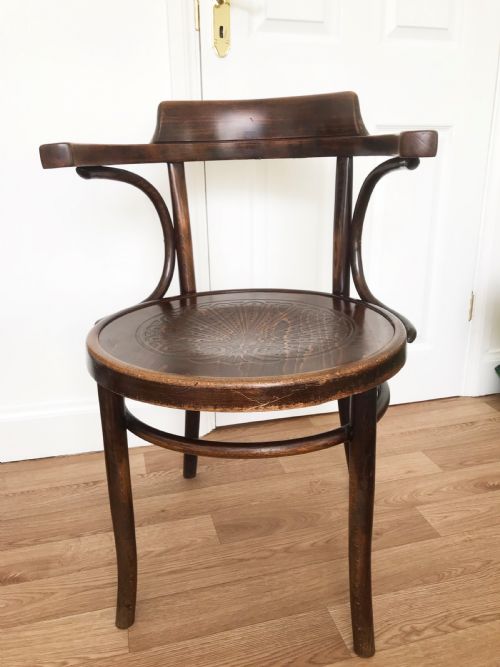
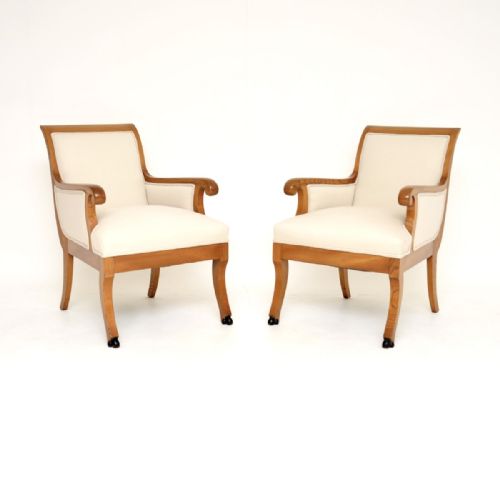
Curved Wood Armchair
A curved wood armchair brings organic line and solid timber support to a room, ranging from Edwardian elm to Art Deco satinwood.
Curved Wood Armchair
A curved wood armchair relies on rounded rails, bent frames, or bowed backs to shape its silhouette. When you search for a curved wood armchair, you encounter forms that span from Windsor and captain's desk chairs to bentwood rockers and horseshoe seats.
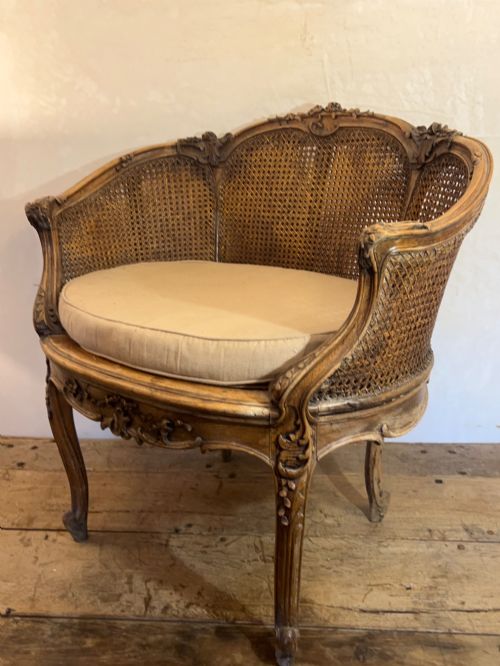
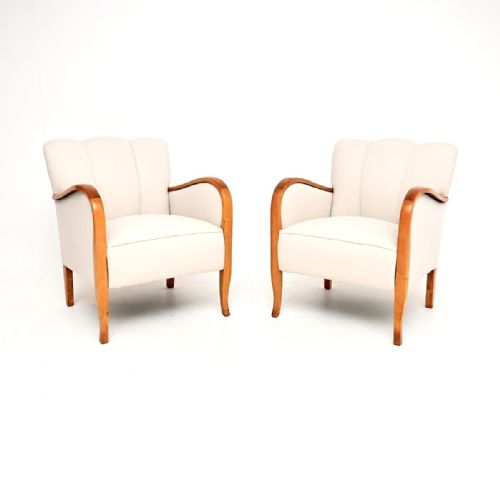
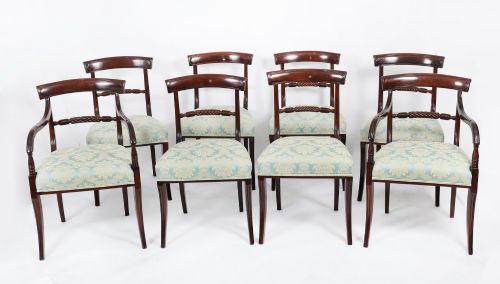
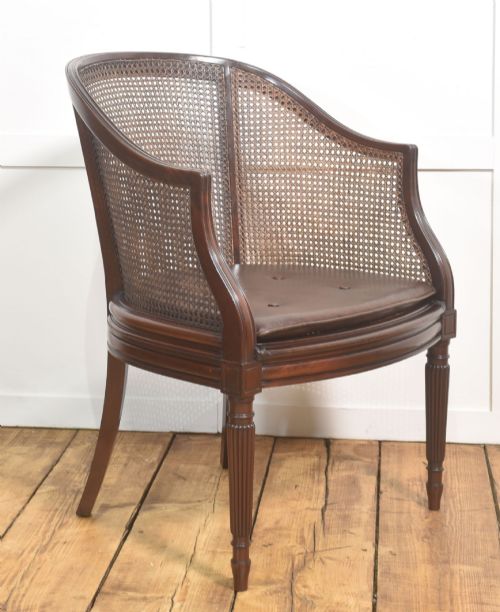
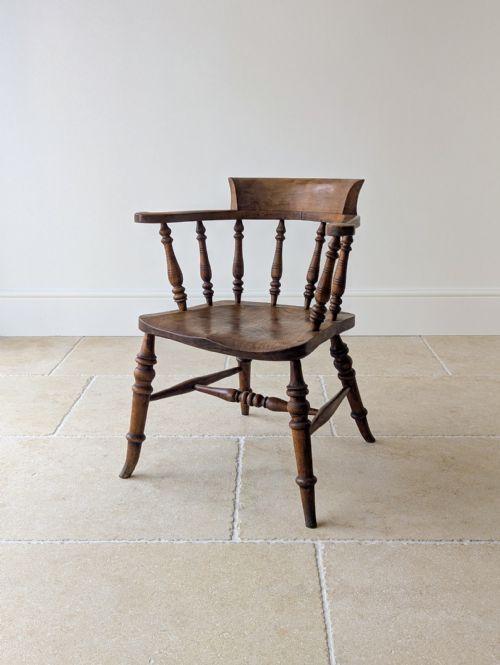
The selection on this page draws together 19th Century, Victorian, Edwardian, and 1930s periods alongside styles such as Regency, Art Deco, and Chinese traditional. Examples include elm smokers bow armchairs, mahogany tub chairs, and birch Swedish seating.
You meet variations intended for the desk, the drawing room, or the fireside, with woods ranging from local elm and beech to exotic mahogany and satin birch. The unifying element across these pieces is the deliberate bend or sweep given to the timber.
Materials and construction methods
Timbers like elm, beech, mahogany, birch, and satinwood form the structural foundation of these chairs. Woods such as elm and beech provide the toughness required for steam-bending and continuous hoop backs.
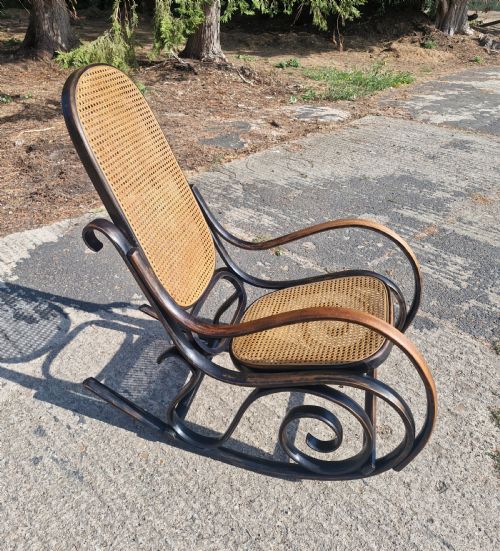
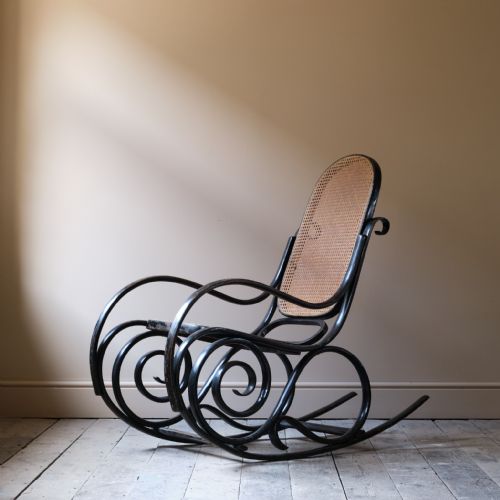
Steam-bending allows straight grained timber to take on flowing, continuous arcs without weakening the wood fibres. This technique creates the smooth lines seen in bentwood rocking chairs and curved back desk seats.
Joinery combines traditional pegging and mortise and tenon joints with steam-formed components. Caning, leather, and fabric are then integrated into seats and backrests to complete the design.
Object types range from desk chairs and Windsor forms to corner chairs and small settee suites.
Quality differences in timber and execution
The choice of primary timber sets the baseline for a piece, with figured grains like burr elm, satin birch, and flame mahogany marking out superior examples. Plain or utility timbers appear on simpler workshop chairs.
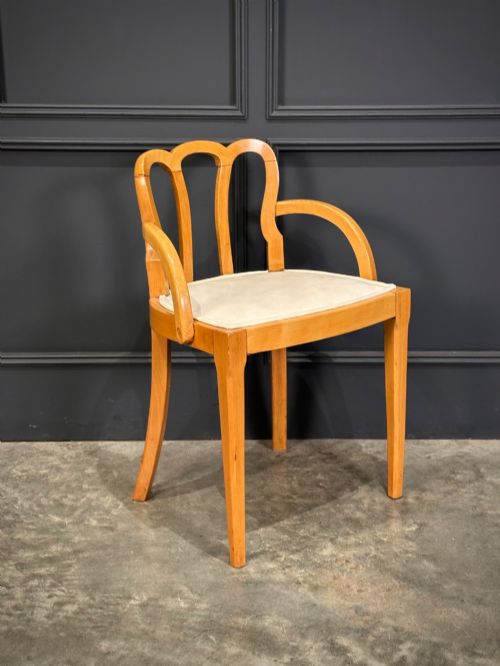
The skill of the timber bending determines the structural grace and longevity of the frame. Even curves without stress fractures or excessive filling show high workshop competence.
Original surface finishes, whether polished wood or period upholstery schemes, preserve the integrity of the piece. Later interventions alter the character, whereas intact original frames retain their intended balance.
Heals
The Curved Wood Armchair Glossary
- Bentwood
- Wood shaped by exposure to steam and pressure in a mould. This process creates smooth, continuous curves suitable for chairs and rockers.
- Tub Chair
- An upholstered seat with a low, curved back that wraps continuously into the arms. It provides an enclosed, supportive sit.
- Windsor
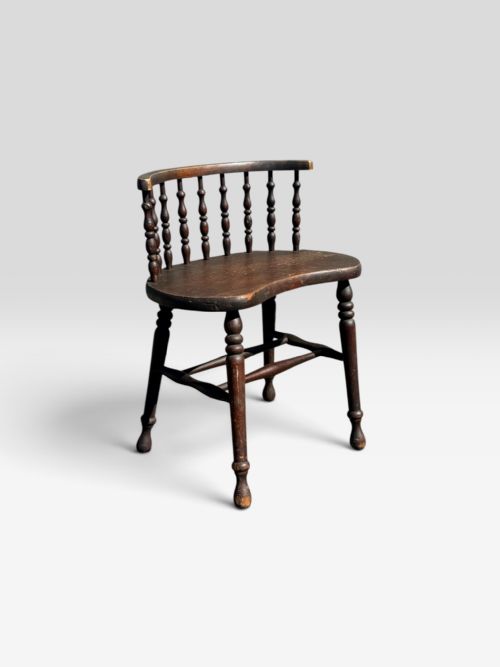
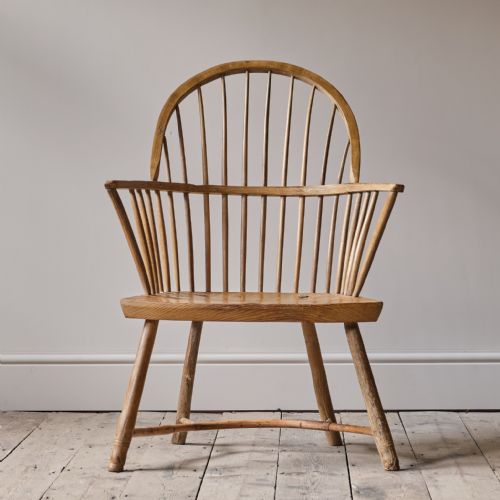
- A chair built with a solid wooden seat into which the legs and back spindles are wedged directly. The curved back rail is typically steam-bent.
- Horseshoe Back
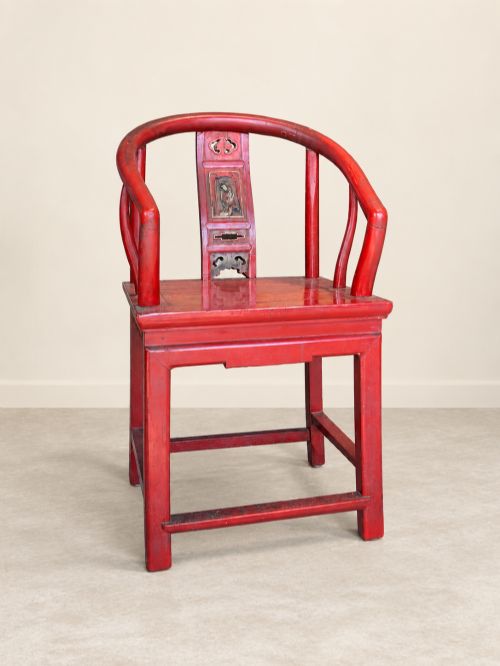
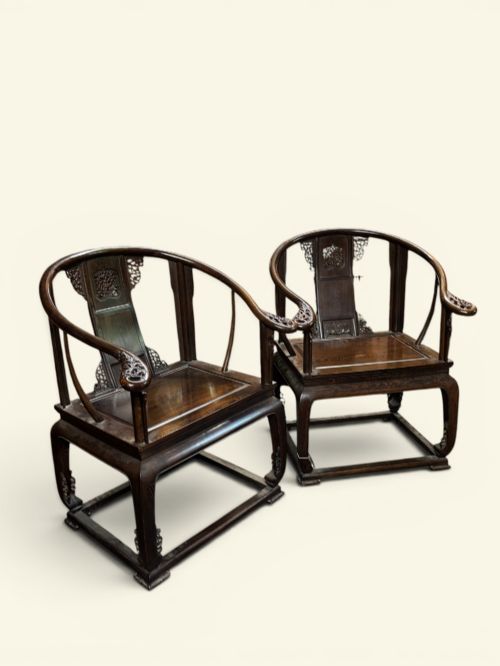
- A traditional chair design featuring a semicircular, continuous rail sweeping from the arms around the back. It originates in classical Chinese seating.
- Smokers Bow
- A low-backed Windsor variant with a heavy curved arm rail, common in 19th-century pubs and offices.
Curved Wood Armchair: Frequently Asked Questions
How do I identify a bentwood chair?
Bentwood chairs rely on solid timber rods softened in steam and bent into rounded frames. You spot them by their smooth, continuous curves and light, resilient construction.
They gained popularity in the late 19th and early 20th centuries, often appearing as cafes, bistro, or rocking chairs.
Are Chinese horseshoe chairs comfortable?
Chinese horseshoe chairs use a curved top rail designed to support the arms and lower back naturally. The solid hardwood construction provides a firm, upright posture.
Versions from the early 20th century utilise pickled elm or traditional hardwoods with understated joinery.
How do I care for antique wood chairs?
Antique wood chairs require stable indoor humidity to prevent timber shrinkage or cracking. Keep them away from direct heat sources and strong sunlight.
Apply a traditional beeswax polish occasionally to nourish the grain without building up heavy chemical layers.