





Thonet Style Armchair
A thonet style armchair offers distinctive curved timber lines and lightness, bringing classic European cafe seating into a modern room.
Thonet Style Armchair
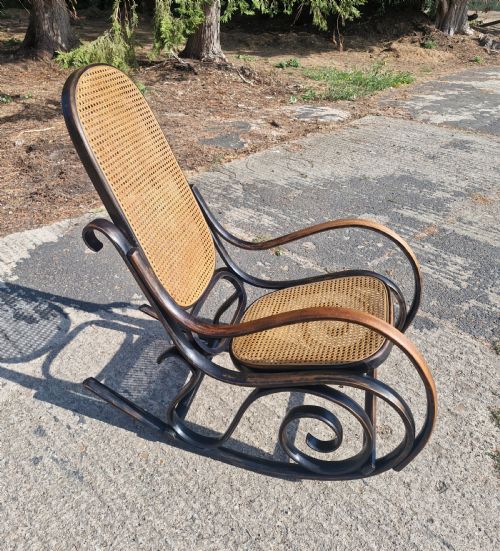
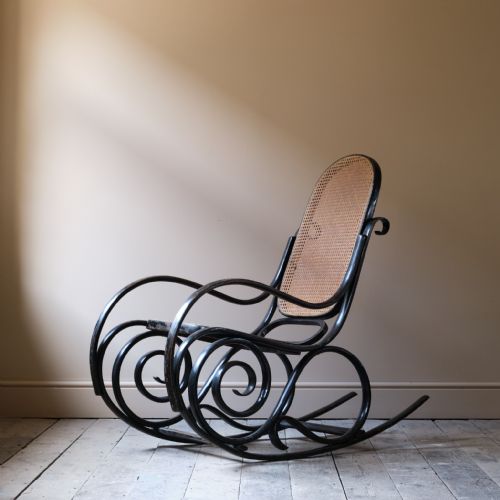
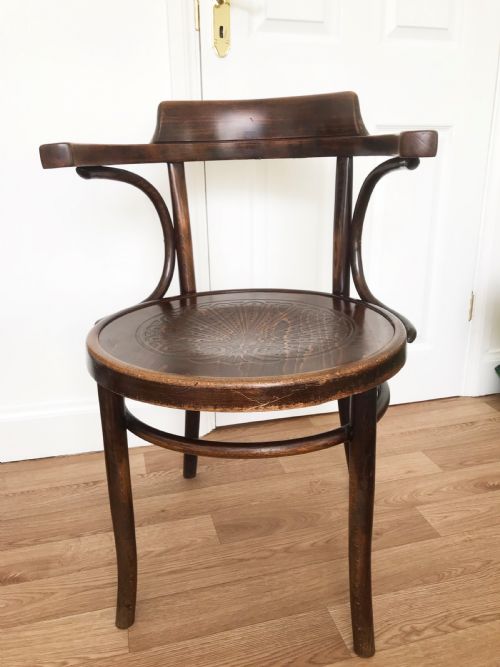
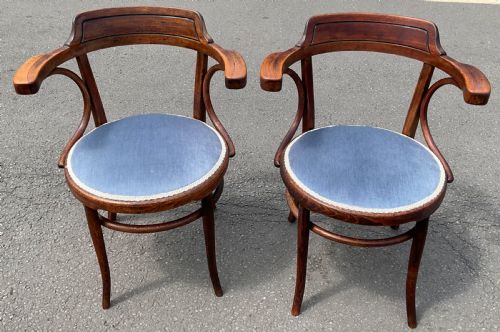
A thonet style armchair is a seating form defined by steam-bent timber, spanning Victorian, Edwardian, and early twentieth-century periods. These chairs appear in forms ranging from standard armchairs and carver desks to rocking chairs and tub chairs. Most pieces on this page emerge from 1900, 1920, 1910, and the nineteenth century, reflecting robust European production.
The most common versions met here are bentwood rocking chairs and desk chairs, often featuring woven seating surfaces. Originating in styles such as Vienna Secession, Art Nouveau, and Victorian, these seats balance structural elasticity with delicate visual profiles. Buyers typically encounter beech frames paired with cane inserts or upholstered pads.
How They Were Made
Makers produced these chairs by steaming solid timber until pliable, then bending the wood within iron forms to create continuous curves for the backrests and arms. Beech and beech wood served as the primary structural materials due to their ability to hold tight radiuses without fracturing. Artisans joined these curved elements using screws and internal blocks rather than complex traditional joinery.
Surfaces frequently received a dark stain or ebonised finish to mimic more costly hardwoods, while seating areas utilised woven rattan cane or layered plywood panels. Some variants incorporated added leather upholstery or loose cushions to provide extra comfort within office and lounge settings.
Listings feature pieces from the 19th Century, Edwardian era, 1900, 1910, and 1920, utilising beech, cane, bentwood, plywood, and leather.
What Varies in Quality
Quality in a thonet style armchair rests upon the tightness and symmetry of the bentwood curves and the integrity of the steam-formed joints. Superior examples maintain structural tension without excessive metal bracing, relying entirely on the resilience of the timber.
The refinement of the surface finish and the precision of the woven rattan cane panels further separate standard production from finer workshop pieces. Attribution to notable makers or specific period movements also distinguishes the upper tier of these chairs from utilitarian workshop output.
Thonet·Jacob and Josef Kohn
The Thonet Style Armchair Glossary
- Bentwood
- Wood shaped by applying steam to make it flexible, allowing craftsmen to form smooth, continuous curves. This technique defines the primary silhouette of the armchair.
- Cane
- Woven material made from the outer skin of rattan palms, commonly used for chair seats and back inserts. It provides a lightweight and breathable surface.
- Vienna Secession
- An artistic movement originating around 1900 that favoured clean lines and geometric decoration over ornate Victorian styles. Chairs from this period reflect a shift toward modernism.
- Ebonised
- Wood finished with a dark stain or black paint to resemble expensive ebony. This treatment was popular in nineteenth-century manufacturing.
Thonet Style Armchair: Frequently Asked Questions
What is a thonet style armchair?
A thonet style armchair is a lightweight seat built from steam-bent wood, commonly associated with nineteenth and early twentieth-century European design.
These chairs use continuous curved timber for their frames, often complemented by cane or plywood seating.
How do I date a bentwood chair?
Dating relies on examining the construction methods, materials, and stylistic markers such as Vienna Secession or Art Nouveau details.
Period labels, manufacturer stamps, and the complexity of the wood bending also help place a chair within the nineteenth or early twentieth century.
Are these chairs comfortable for daily use?
Many models, particularly the rocking chairs and tub armchairs, were engineered for ergonomic support through flexible wooden frames and supportive armrests.
Some variants include added cushions or leather pads to enhance everyday seating comfort in living spaces.
What materials are used in these chairs?
Beech and stained wood form the structural framework of nearly all pieces found in this category, valued for their flexibility under steam.
Secondary materials include rattan cane, plywood panels, and occasional leather upholstery for seats and cushions.