





Steam Bentwood Chair
A steam bentwood chair brings organic curves and lightness into a room, formed through heat and pressure.
Steam Bentwood Chair
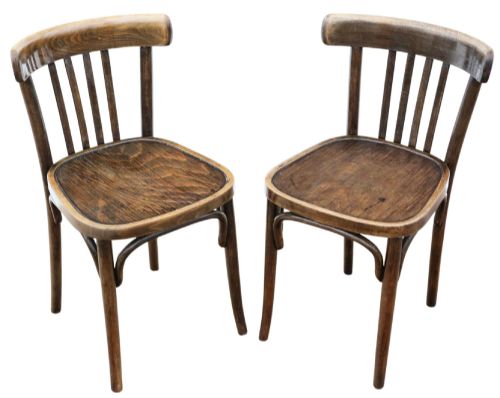
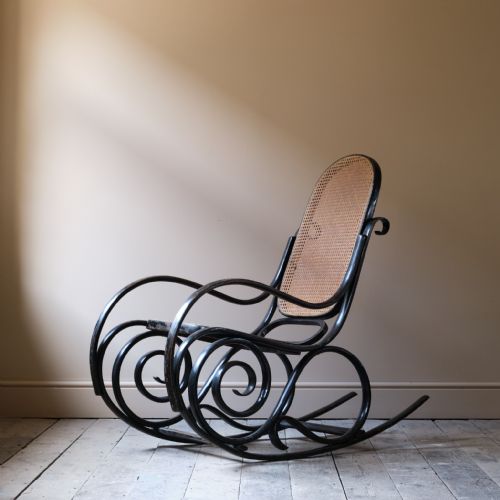
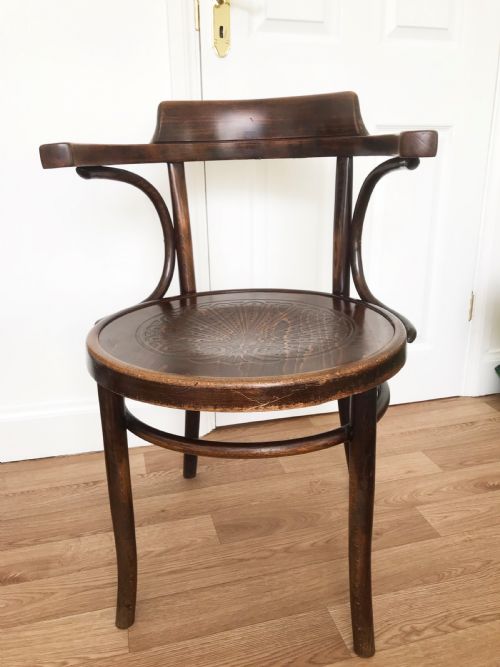
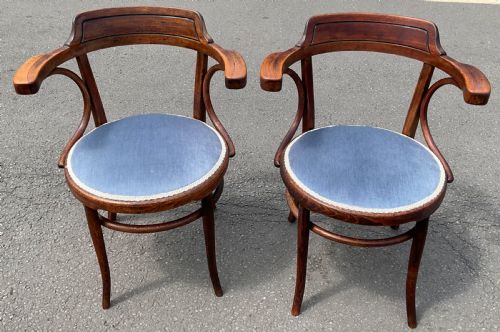
A steam bentwood chair represents an ingenious leap in furniture design, created by softening timber in steam chests and pulling it into sweeping, fluid curves. Buyers searching for a steam bentwood chair will find forms ranging from simple dining seats to expansive rocking chairs and carvers.
The pieces on this page span the nineteenth century through to the mid-twentieth century, capturing Victorian origins, Edwardian variations, and later interpretations. Dining chairs, armchairs, and rocking chairs dominate the selection, often originating from significant commercial interiors or domestic settings.
Makers such as Thonet and Jacob and Josef Kohn established the standard for these designs, whilst later production includes examples from Yugoslavia and Italy. Whether looking for a single rocking chair or a set of bistro chairs, the underlying architecture remains defined by continuous wooden loops.
How they were made
Beech and beechwood serve as the primary timbers, selected for their fibrous strength and ability to accept steam without fracturing. Once heated in a steam box, the solid wood was placed into metal straps and pulled tightly around cast-iron forms until it dried and retained its shape.
Plywood, cane, leather, and fabric appear across the seats and panels, adding contrasting texture and support to the rigid bentwood frames. Screws and metal brackets often secure the curved components together, balancing the tension of the bent parts.
A set of seven beech chairs once served patrons inside London's historic Cafe Royal.
What varies in quality
Quality rests in the purity of the curves and the crispness of any pressed seat patterns, where finer examples display smooth, unbroken lines without distortion at the bends. The complexity of the frame dictates the grade, moving from plain bistro seating to elaborate Vienna Secession rocking chairs.
The integrity of the original joints and the survival of secondary materials like cane or leather seating elevate a piece. Maker attribution also plays a role, with documented pieces carrying distinct structural refinement compared to anonymous production.
Jacob and Josef Kohn·Thonet
The Steam Bentwood Chair Glossary
- Bentwood
- Wood that has been shaped by applying steam and mechanical pressure. This technique allows for lightweight, curvaceous frames that replaced heavy traditional joinery.
- Carver
- An armchair designed with armrests, often used at the head of a dining table or as a desk chair. In bentwood forms, the arms sweep continuously from the backrest or seat.
- Caning
- Woven rattan cane used to form breathable seat and back panels. It adds textural lightness to the sturdy wooden frame.
- Secession
- An artistic movement from Vienna that influenced furniture design around 1900 with geometric clarity and restrained ornamentation. Pieces from this period exhibit distinct linear styling.
- Grotto style
- A decorative aesthetic referencing natural shell and rock formations. In this selection, it manifests as intricately shaped wooden framing reminiscent of rustic grottoes.
Steam Bentwood Chair: Frequently Asked Questions
How do I date a bentwood chair?
Dating relies on construction methods, labels, and stylistic markers such as Victorian ebonising or Vienna Secession geometry. Earlier pieces often display specific stamp marks or paper labels beneath the seat frame.
Changes in screw types and the complexity of the bent components also help narrow down the production era from the nineteenth century into the mid-twentieth century.
Are bentwood chairs sturdy enough for daily use?
These chairs were originally engineered for bustling nineteenth-century cafes and domestic drawing rooms, making them remarkably resilient. The inherent spring in the steam-shaped timber absorbs physical pressure effectively.
Regular checks on the screws and joints ensure the frame remains stable under daily sitting or rocking.
What is the difference between a bistro chair and a rocking chair?
Bistro chairs are upright, lightweight dining seats designed for commercial hospitality spaces and easy stacking or movement. Rocking chairs feature extended curved runners underneath for motion, alongside broader armrests and high backs.
Both utilise the same core steam-bending techniques but serve entirely different functions within a room layout.
How should I care for vintage bentwood?
Keep the wood conditioned with appropriate furniture wax and avoid placing the chair near direct heat sources or rapid temperature shifts. Excessive dryness can cause the steam-bent timber or cane panels to become brittle.
Gentle cleaning with a soft cloth preserves the original finish and the patina built up over decades.