


Painted Satinwood Furniture
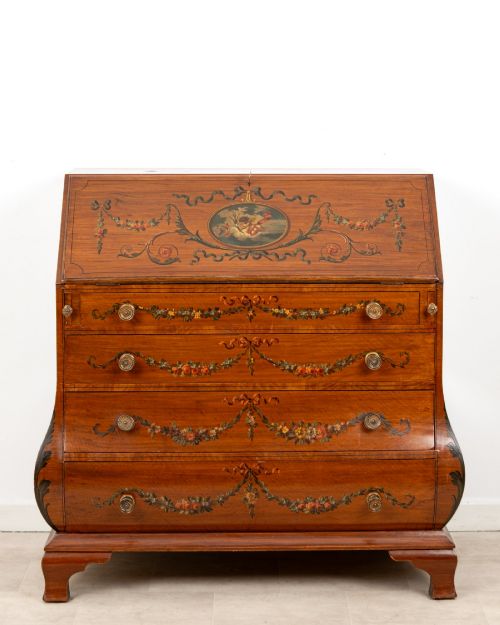
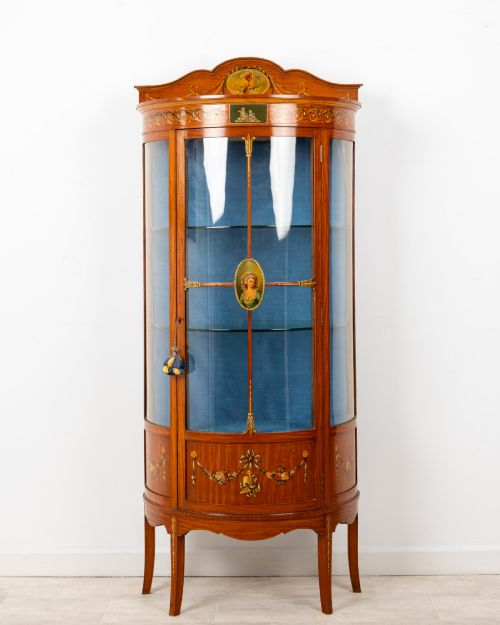
Painted satinwood furniture brings luminous timber and delicate brushwork together, offering a refined grace that transforms an interior.
What painted satinwood furniture is
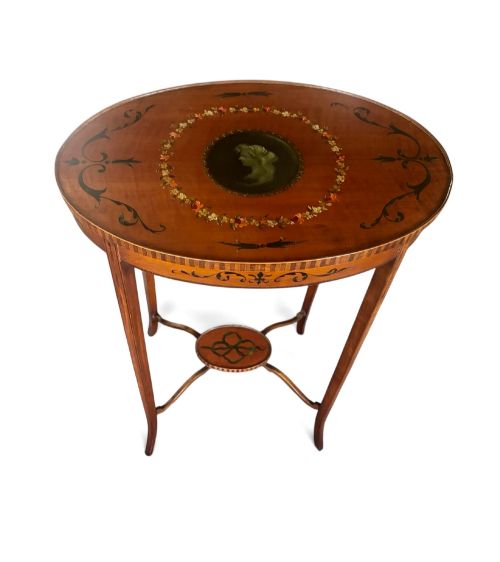
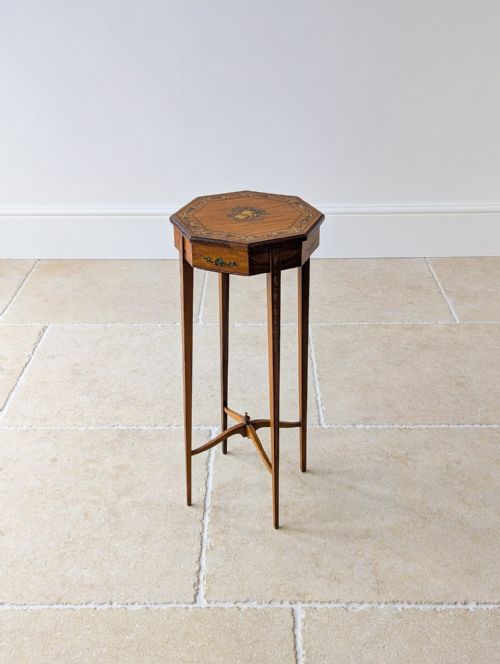
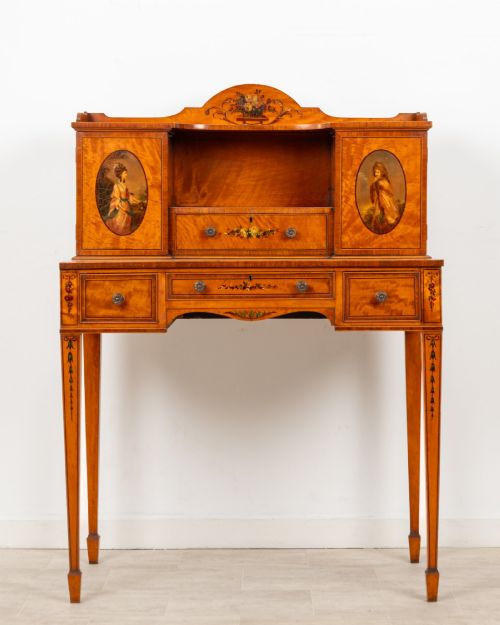
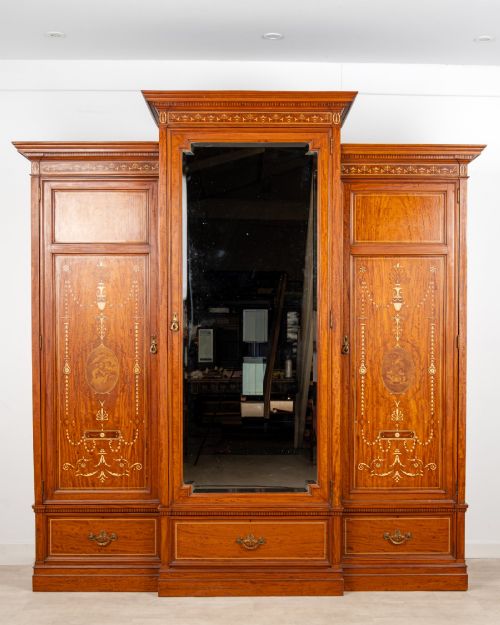
The pieces on this page span several distinct periods, with Edwardian interpretations and nineteenth-century examples appearing frequently alongside Regency forms and twentieth-century cabinetwork. Certain items reflect specific stylistic revivals, particularly the Sheraton taste, bringing classical symmetry and delicate proportions to domestic interiors.
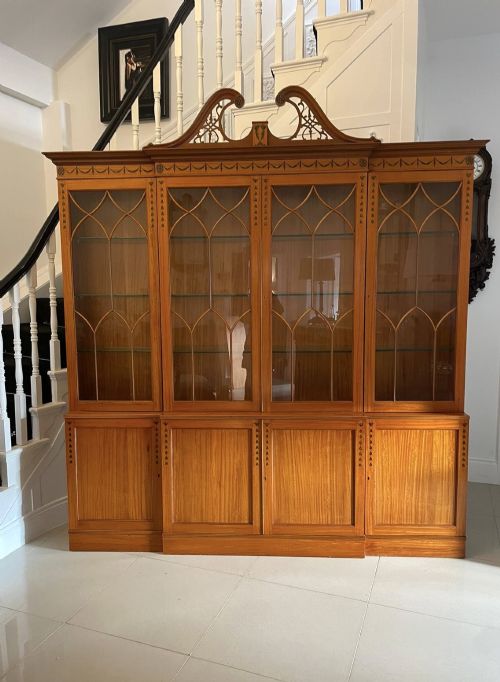
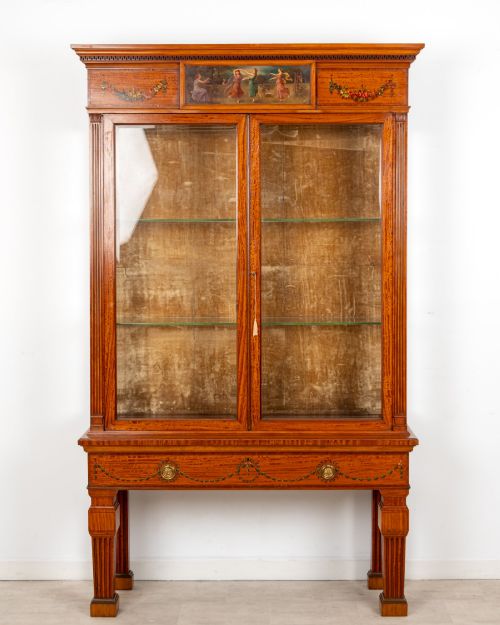
Buyers will encounter varied forms, from vitrines and bookcases with glass doors to fold-over tables designed for cards or games. These pieces rely on the contrast between the pale, shimmering grain of the wood and the fine details of the painted ornament.
How they were made
Makers utilised dense, figured satinwood as the primary timber, often combining it with mahogany or rosewood for contrasting borders and structural framing. Timber was selected for its natural chatoyancy, creating a shimmering surface that catches the light from different angles.
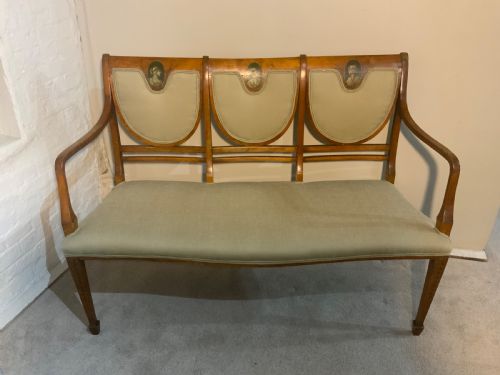
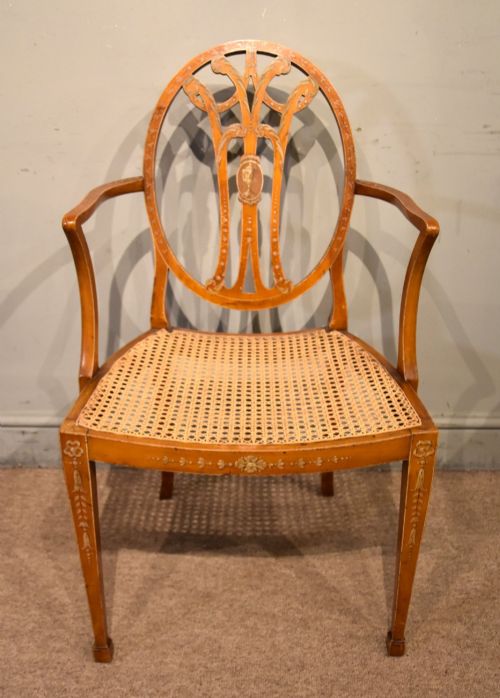
Decoration was applied directly to the wood through hand painting, sometimes accompanied by intricate inlay work using darker veneers. Glazed sections utilised glass panels within timber frameworks, while seating incorporated cane work and upholstered fabric elements.
Retail Price Guide 2026
Typical UK retail prices for painted satinwood furniture, calculated from the Sellingantiques database of over a million retail prices indexed since 2003. This retail price guide relies exclusively on Sellingantiques data; no external sources or auction records are used, so the figures do not describe the wider market.
Card tables hide their true purpose under smooth, painted lids until someone turns the leaf to reveal a green playing space.
What varies in quality
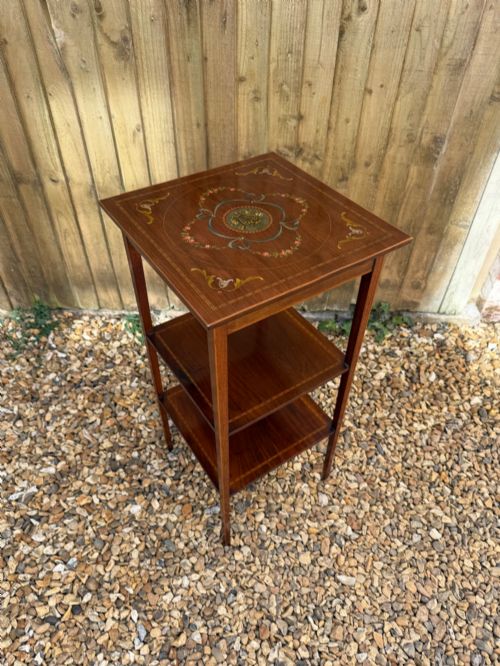
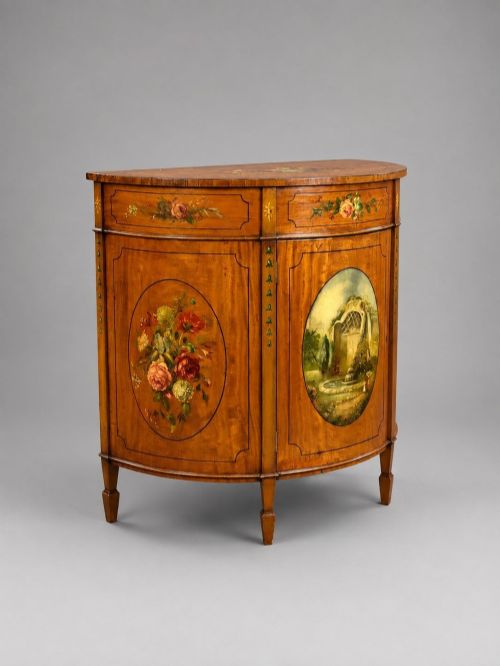
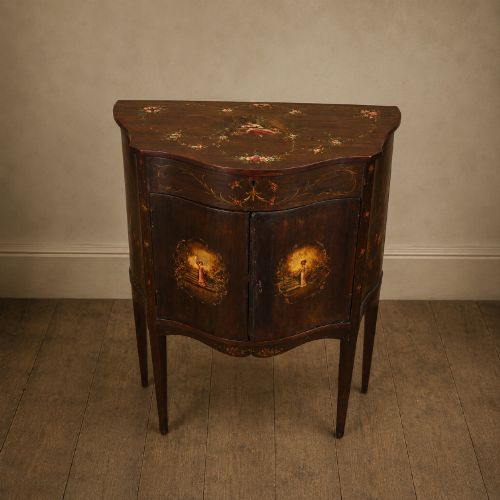
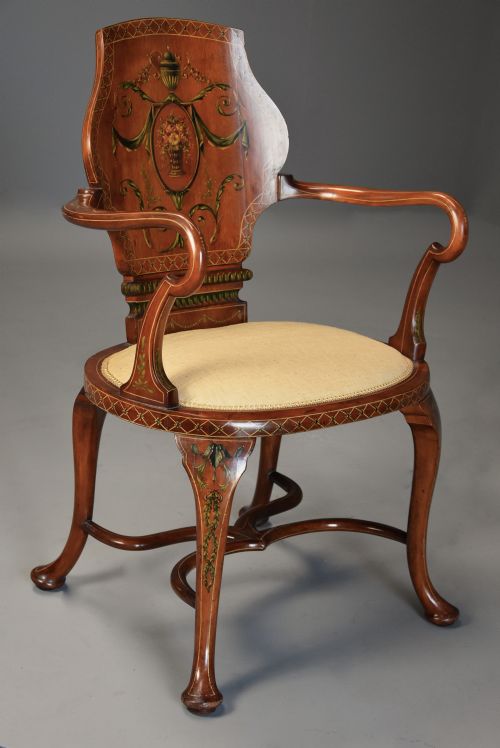
Quality rests principally on the crispness of the hand-painted decoration and the natural figure of the satinwood timber. Finer pieces demonstrate superior control in the brushwork, with finely rendered floral motifs, classical medallions, or ribbons that retain their definition and colour.
Construction standards further separate standard examples from exceptional ones, visible in the precision of the joinery and the integration of secondary woods such as mahogany. Cabinetwork featuring original painted decoration and well-figured timber maintains greater integrity than pieces with later surface embellishments.
Edwards & Roberts
The Painted Satinwood Furniture Glossary
- Satinwood
- A dense, hard timber possessing a lustrous golden-yellow sheen that resembles satin. It serves as the primary ground for painted decoration.
- Breakfront
- A cabinet design where the central section projects forward from the flanking wings. This configuration creates visual depth and architectural interest.
- Astral glazed
- A term describing glass cabinet doors divided by thin wooden bars into geometric patterns. These delicate frames protect the contents while maintaining maximum visibility.
- Turn over leaf
- A hinged table top that unfolds to double its surface area, commonly found on card and games tables. The mechanism often reveals a baize-lined playing surface beneath.
- Sheraton Revival
- A late nineteenth and early twentieth-century design movement inspired by the lightness and classical restraint of eighteenth-century designer Thomas Sheraton. It champions painted satinwood, tapered legs, and symmetrical proportions.
Frequently Asked Questions
What is satinwood?
Satinwood is a dense, durable timber known for its pale, golden colour and reflective, silky sheen. It provides an ideal canvas for hand-painted decoration.
Craftsmen prized this wood for its ability to catch the light, making it a favourite for formal drawing-room pieces during the eighteenth, nineteenth, and early twentieth centuries.
How do I care for painted surfaces?
Painted wooden surfaces require protection from direct sunlight and excessive humidity to prevent the paint from fading and the timber from shifting. Dusting gently with a dry, soft cloth is sufficient for routine maintenance.
Avoid using modern chemical sprays, silicone polishes, or abrasive cleaners, as these substances can soften or lift delicate historical paintwork.
Where were these pieces used?
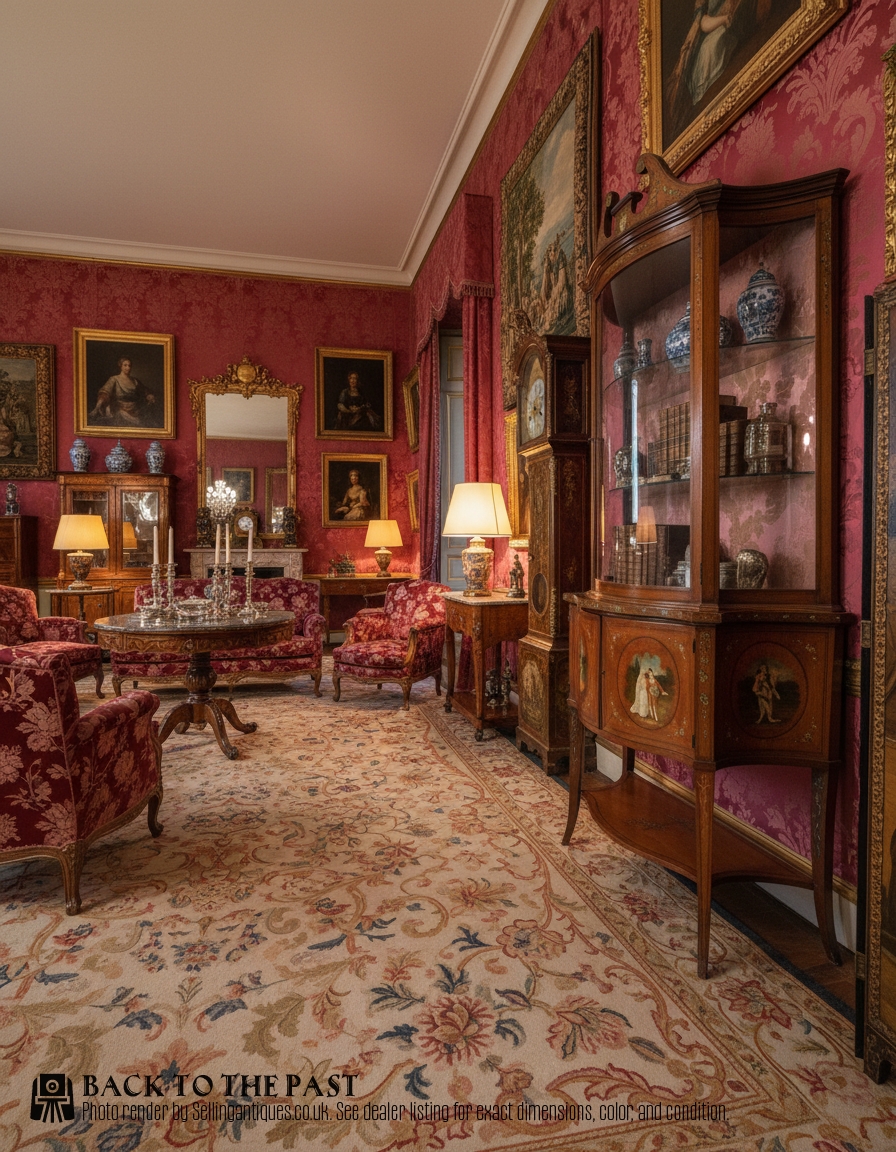
These refined items were traditionally housed in the principal public rooms of a residence, such as drawing rooms, boudoirs, and formal parlours. Display cabinets showcased treasured porcelain, while games tables provided after-dinner entertainment.
Their light tones and decorative schemes were specifically chosen to brighten interior spaces and reflect candlelight during evening gatherings.
How do I spot a revival piece?
Revival pieces, particularly those from the Edwardian era or the late nineteenth century, often display machine-sawn timber framing and standardised hardware behind their traditional appearance. Closer inspection of the secondary woods and construction methods reveals the later date of manufacture.
Comparing the painted motifs to documented eighteenth-century examples helps identify the stylistic traits characteristic of later revival workshops.