

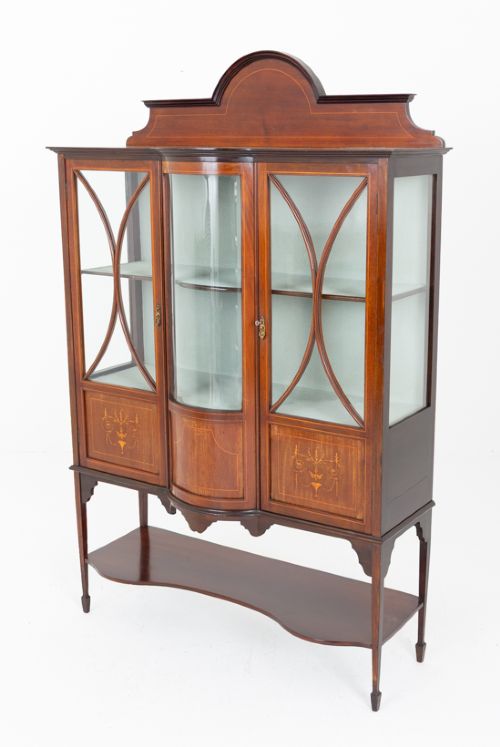
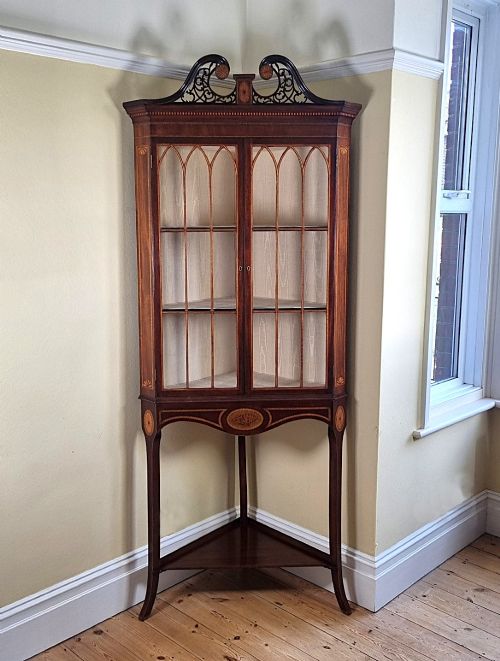
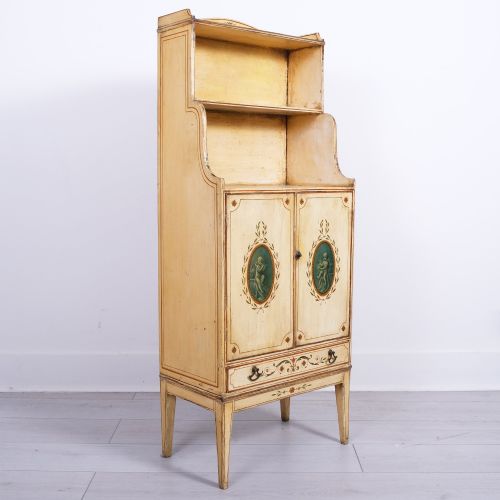
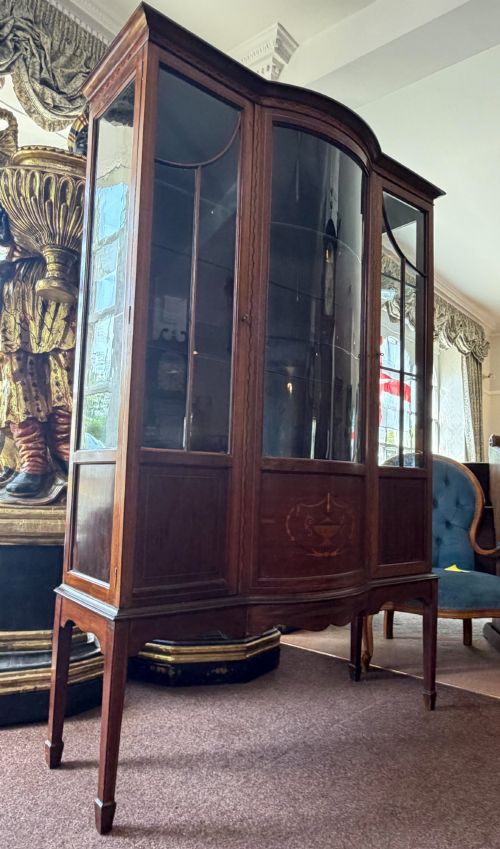
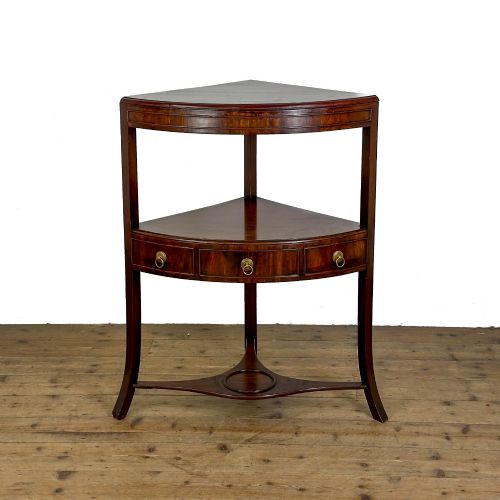
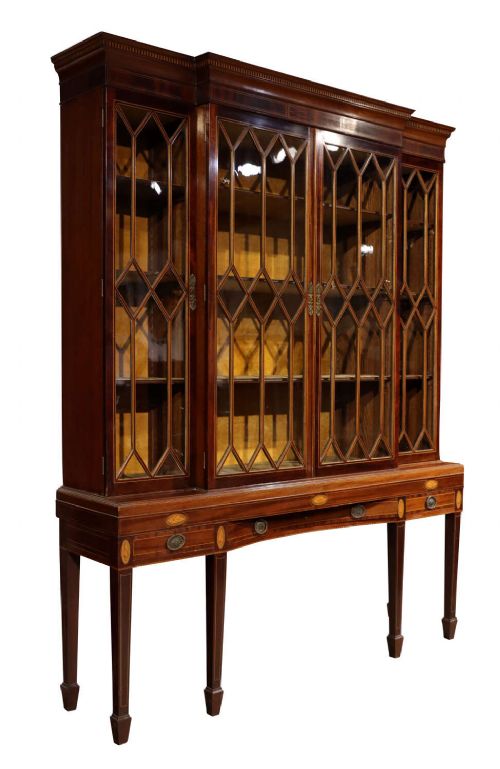
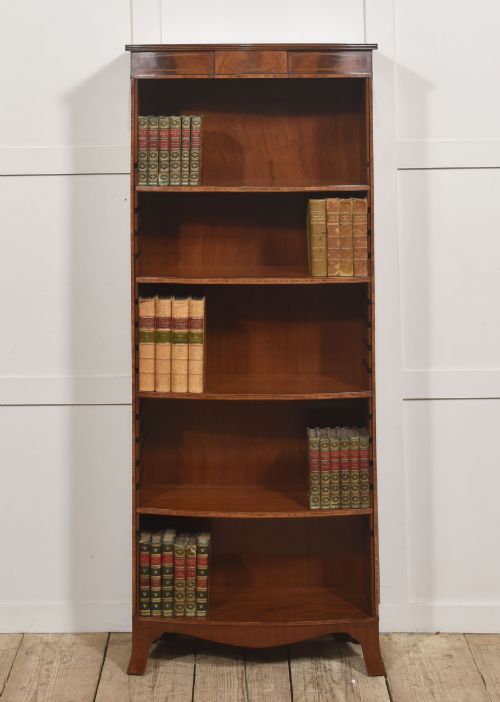
Sheraton Style Display Cabinet
A sheraton style display cabinet brings together fine timbers and delicate glazing to showcase treasured porcelain and books.
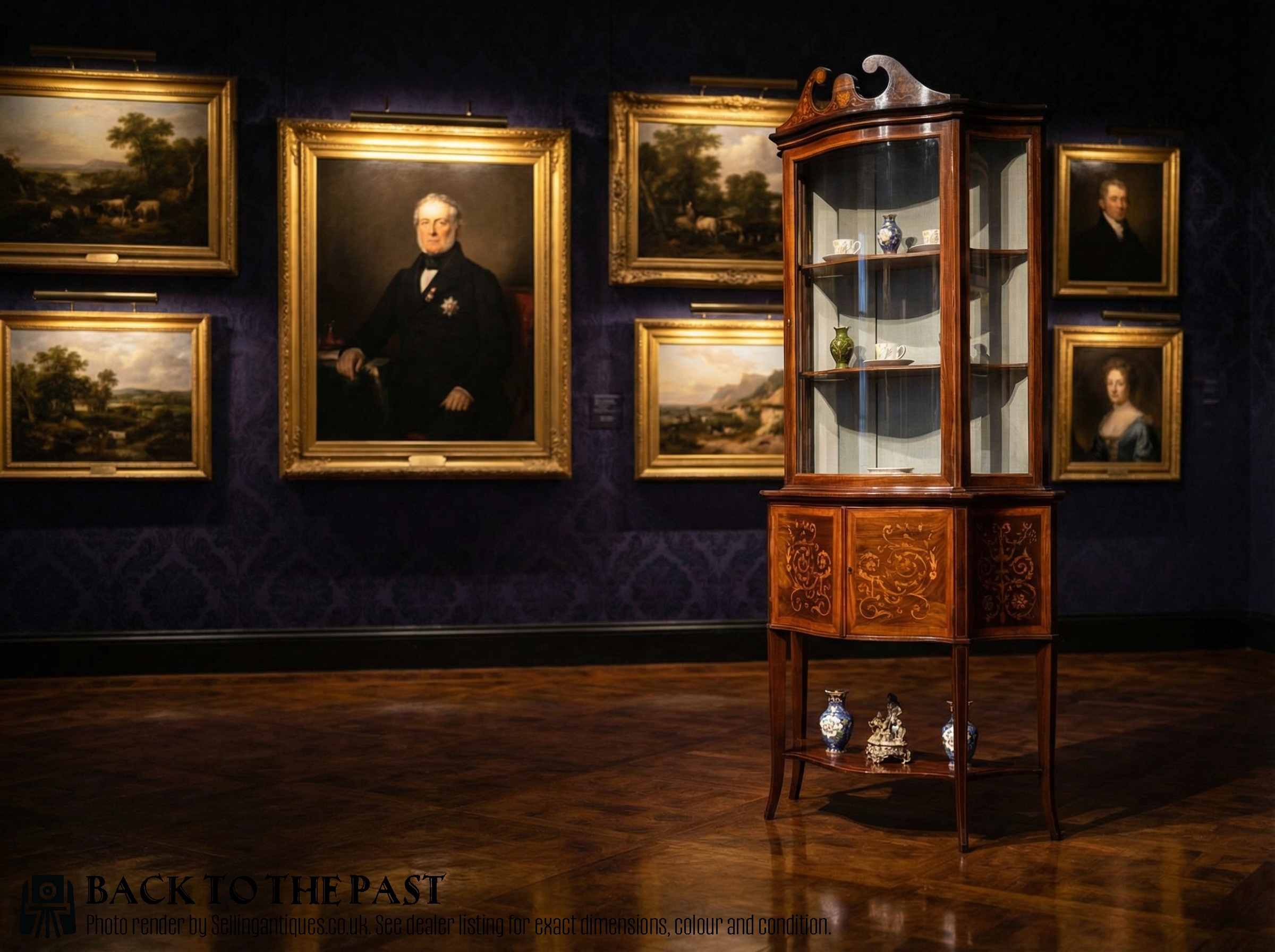
Sheraton Style Display Cabinet
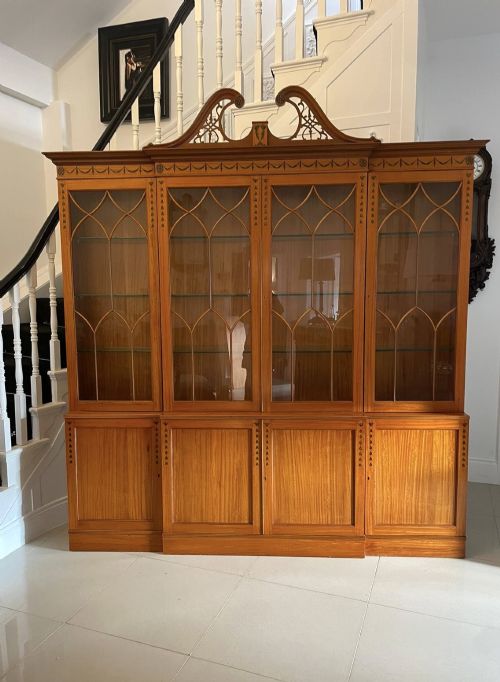
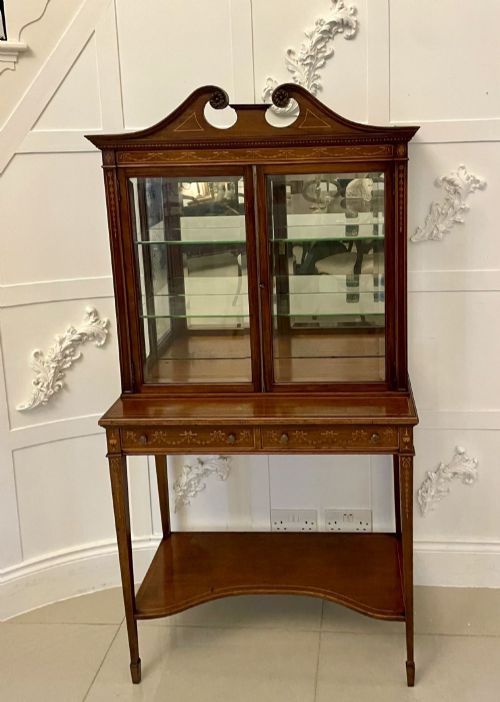
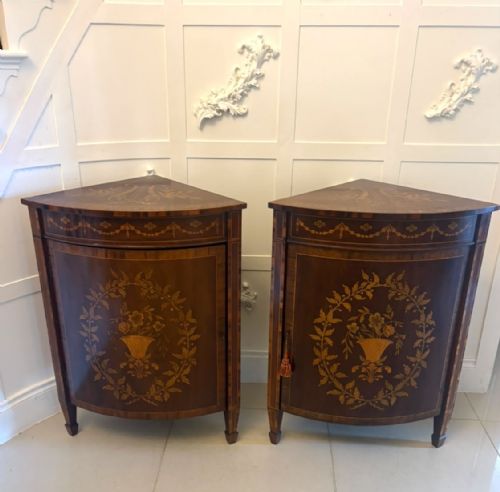
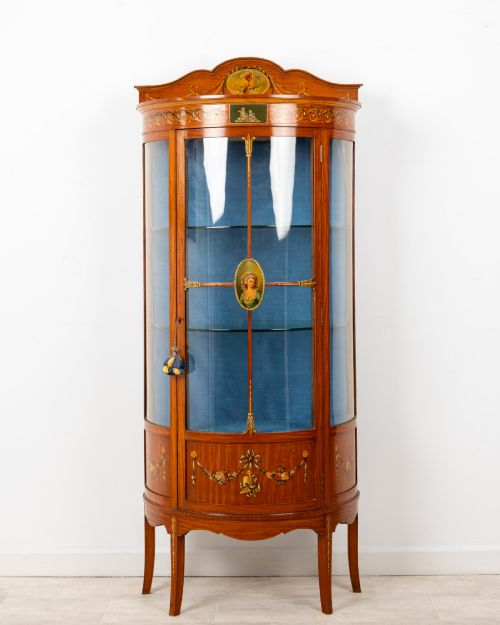
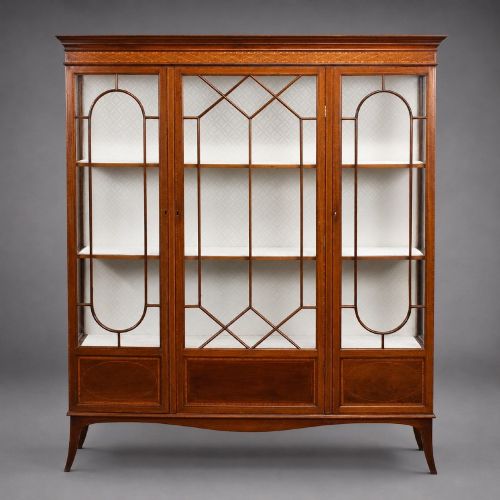
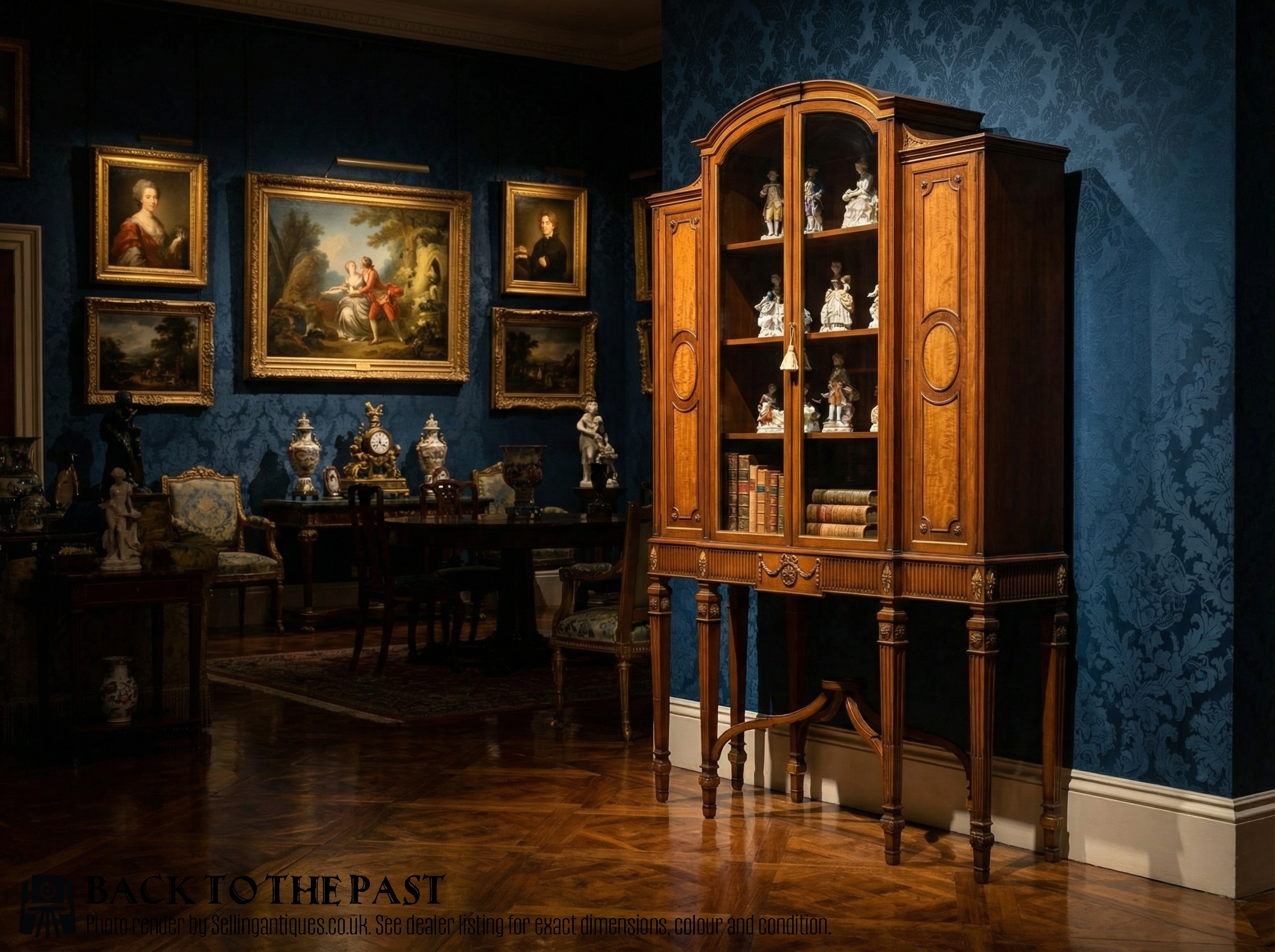
A sheraton style display cabinet is typically encountered in mahogany or satinwood, spanning the late eighteenth century through the Edwardian period and into the early twentieth century. These pieces encompass freestanding breakfront vitrines, corner cabinets, and library bookcases designed with glazed doors to protect collections while keeping them visible.
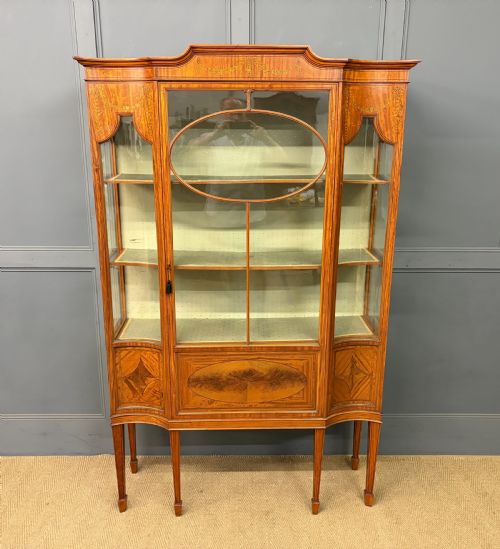
The Edwardian revival of the style dominates the available selection, often taking the form of light satinwood or mahogany cabinets decorated with intricate inlay. Georgian originals appear less frequently, offering heavier timber construction and classical proportions alongside period corner units and secretaries.
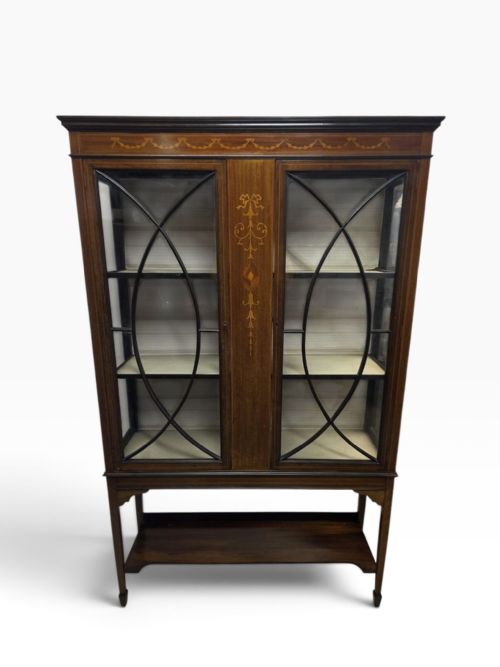
Makers and workshops of the revival era adapted eighteenth-century neoclassical principles into lighter domestic furniture, producing cabinets with bow fronts, tapered legs, and astral glazing bars. Buyers encounter diverse scales, ranging from single-door wall cabinets to large breakfront bookcases intended for grand drawing rooms.
Materials and Technique
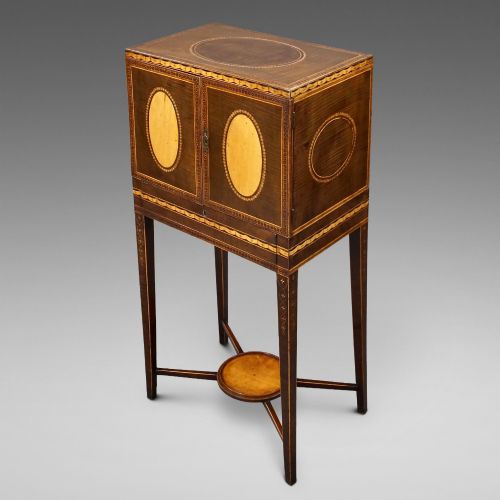
Cabinetmakers utilised dense foundational timbers like mahogany and rosewood, frequently overlaying them with pale satinwood veneers to create sharp visual contrast. These surfaces received elaborate decorative treatments including boxwood and harewood inlay, marquetry, and hand-painted motifs.
Glazing relied on individual wooden astrals forming geometric panes across the cabinet doors, housing thin drawn glass. Brass hardware such as hinges, key escutcheons, and locks completed the construction, whilst interior shelves were often lined with fabric or velvet.
Sheraton Style Display Cabinet Retail Price Guide 2026
Typical asking prices for sheraton style display cabinet among the pieces listed under this phrase on Sellingantiques today, from the lower quarter to the upper quarter. They describe what is for sale here now, not the wider market.
Listings feature satinwood, mahogany, and rosewood cabinets spanning the Georgian era to the Edwardian revival.
Gradations of Craftsmanship
The standard of a sheraton style display cabinet rests on the precision of its marquetry and the choice of primary veneers. Pieces featuring hand-painted decoration and finely figured satinwood or harewood sit at the upper end of the craft.
Structural finesse dictates value through tight joinery, carefully mitred glazing bars, and the retention of original brasswork and glass. Heavy-handed restoration or crude secondary timbers diminish the integrity of the piece.
Maple & Co·Waring & Gillow·Edwards & Roberts·Lamb & Co
The Sheraton Style Display Cabinet Glossary
- Astral glazing
- Wooden bars dividing glass panes into distinct geometric sections. These delicate frames require precise carpentry.
- Marquetry
- Decorative patterns formed by fitting contrasting veneers into a prepared wooden ground. This technique creates pictorial or floral designs across cabinet doors.
- Breakfront
- A piece of furniture where the central section projects forward from the flanking wings. It adds architectural depth to large cabinets.
- Satinwood
- A durable tropical timber yielding a lustrous, yellow-gold grain. It forms the primary visual surface for many revival pieces.
- Vitrine
- A glass-sided display cabinet designed for the exhibition of porcelain and small objects. The term derives from the French word for glass.
Sheraton Style Display Cabinet: Frequently Asked Questions
How do I date a sheraton style display cabinet?
Dating relies on timber characteristics, construction methods, and stylistic cues within the inlay and hardware. Georgian originals display heavier carcass work and native hardwoods, whereas Edwardian revival pieces often utilise lighter satinwood veneers and machine-cut elements.
Secondary woods inside the cabinet provide further clues to the period of manufacture. Oak or pine linings typical of the eighteenth century differ noticeably from the softwoods used in later workshops.
What rooms suit a corner cabinet?
Corner cabinets make efficient use of unused wall junctions in dining rooms, studies, or drawing rooms. Their angled footprint allows them to anchor an awkward space while offering vertical display capacity.
These pieces coordinate well with both period interiors and modern settings, particularly when housing collections of ceramics or glassware behind glass doors.
How should I care for satinwood veneer?
Satinwood surfaces require protection from direct sunlight to prevent the golden grain from fading over time. Regular dusting with a dry, soft cloth maintains the finish without moisture damage.
Applying microcrystalline wax periodically nourishes the wood and preserves the integrity of the delicate inlay work without building up heavy residues.