
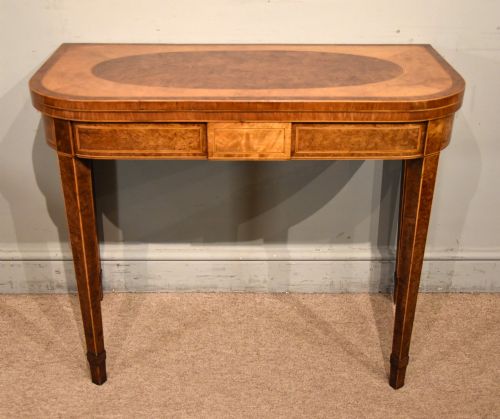
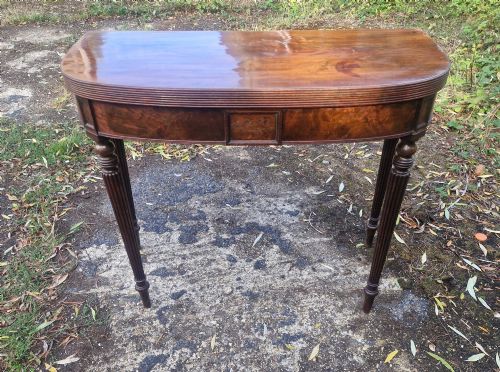
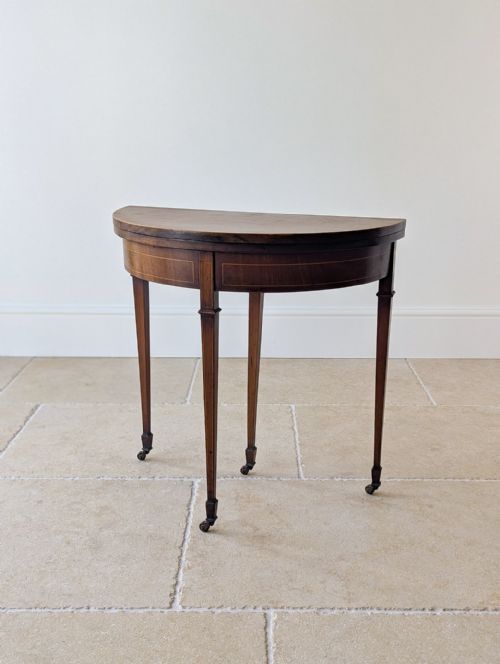
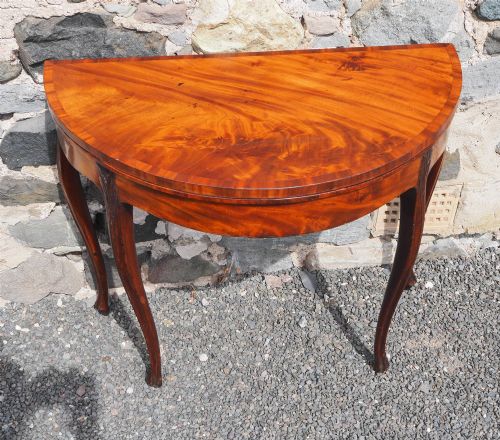


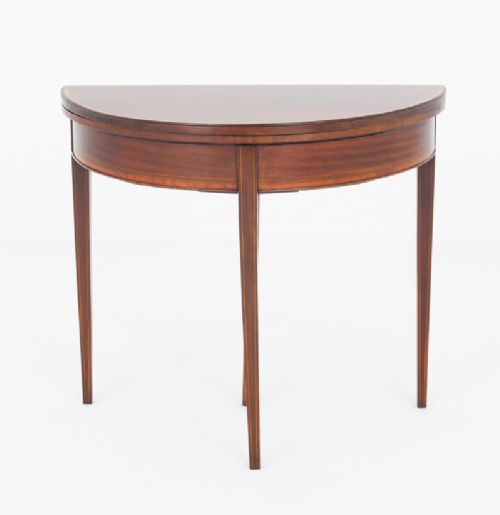


Georgian Style Games Table
A georgian style games table is a fold-over surface for card playing, and these examples range from period originals to later revival pieces.
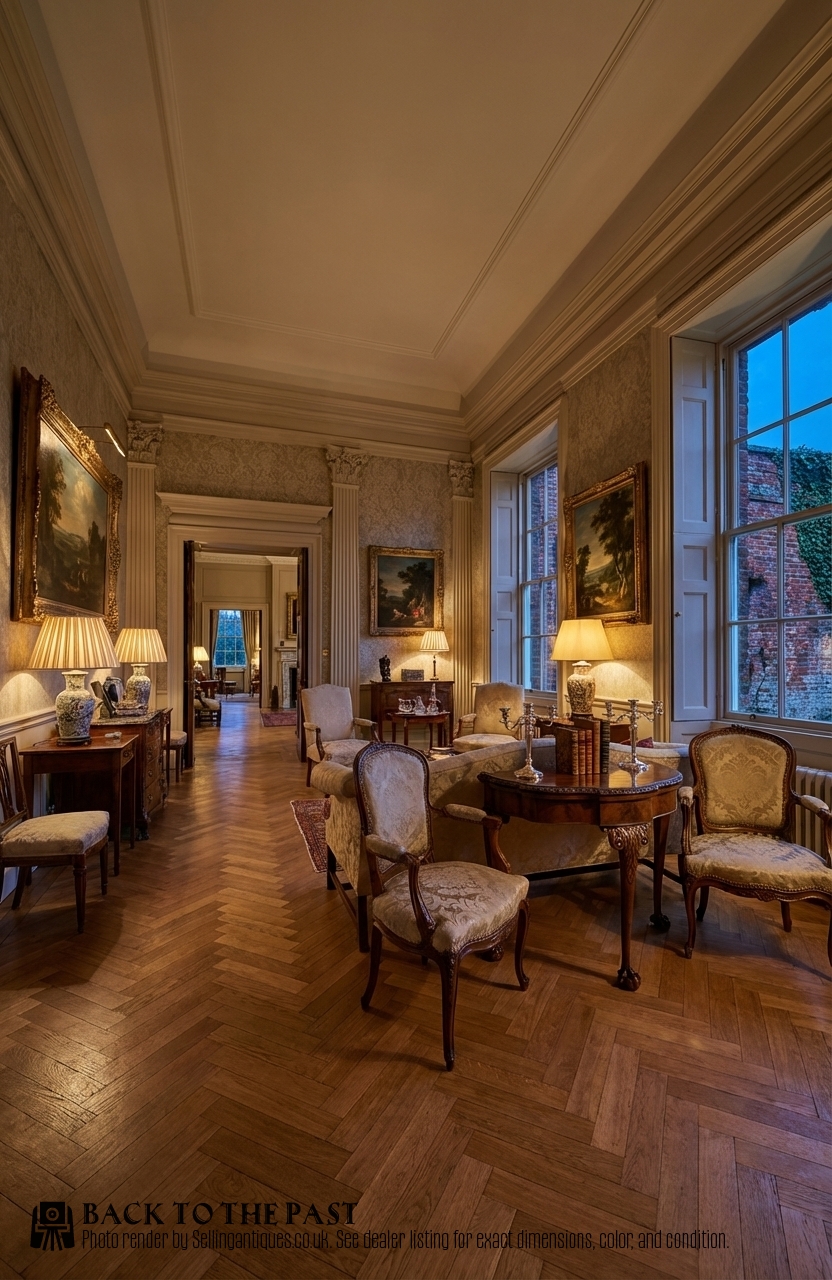
Georgian Style Games Table
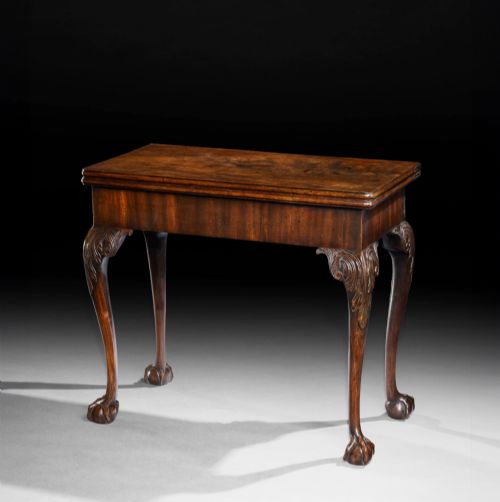
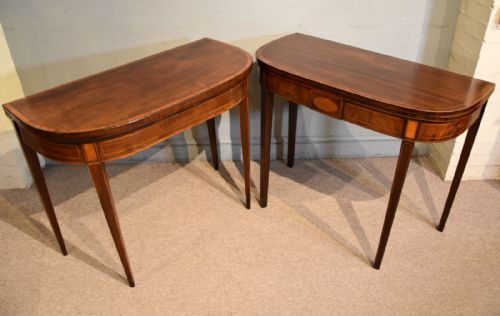
A georgian style games table encompasses card tables, tea and card tables, and demilune folding surfaces designed for domestic entertainment. These forms appear across the eighteenth century, the Victorian era, and into early twentieth-century revivals.
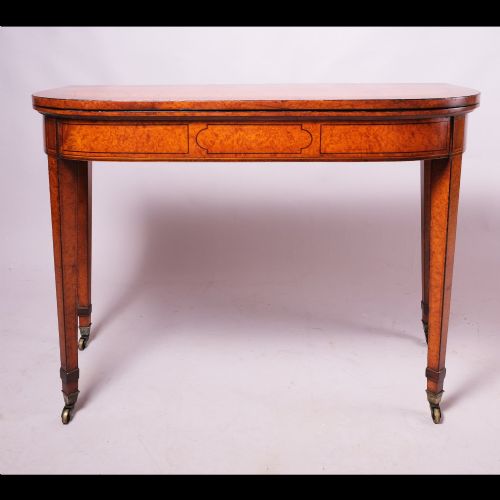
Buyers encounter genuine eighteenth-century pieces alongside Edwardian and 1920s interpretations built in the Georgian, Sheraton, Hepplewhite, and Queen Anne styles. Card tables and console side tables dominate the selection, often featuring fold-over or concertina actions.
Origins span English workshops, French influences, and specific revivals such as Queen Anne Style and Georgian Revival. The selection balances authentic period pieces with later craftsmanship adhering to the same proportions.
Materials and construction
Construction relies primarily on mahogany, walnut, and burr walnut, frequently enriched with satinwood, boxwood, and brass details. Craftsmen utilised solid timbers alongside veneers and crossbanding to create figured surfaces on top boards.
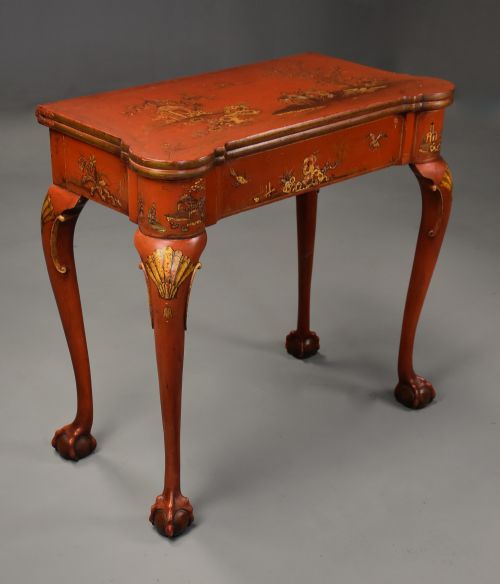
Specialised techniques include concertina actions, folding mechanisms, and demilune shapes that expand to support a baize-lined playing area. Decorative elements range from intricate satinwood inlay and red lacquered Chinoiserie to carved mahogany details.
Georgian Style Games Table Retail Price Guide 2026
Typical asking prices for georgian style games table among the pieces listed under this phrase on Sellingantiques today, from the lower quarter to the upper quarter. They describe what is for sale here now, not the wider market.
Prisoners of war carved bone domino sets occasionally appear alongside these tables, bridging tactical gameplay with historical craftsmanship.
Judging execution
Quality rests on the depth of figure in the timber, the precision of the crossbanding, and the integrity of the folding mechanism. Superior examples display seamless movement in concertina actions and thoughtful grain matching across the fold-over top.
The finesse of the carving, the selection of secondary woods, and the restraint of the inlay separate standard production from exceptional pieces. Later revivals vary from mechanical copies to faithful interpretations utilising high-grade burr walnut and satinwood.
Gillows·Giles Grendey·Maple & Co
The Georgian Style Games Table Glossary
- Demilune
- Half-moon shape, describing tables with a straight back edge and a curved front designed to sit flat against a wall.
- Concertina action
- An expanding frame mechanism that allows the rear legs of a card table to pull outward when the top unfolds.
- Crossbanding
- A narrow strip of veneer applied perpendicularly to the grain of the main surface to frame the top.
- Chinoiserie
- European imitation of traditional Chinese artistic motifs, executed here in red lacquered decoration.
- Fold-over
- A hinged top design where the surface doubles in size when opened for play.
Georgian Style Games Table: Frequently Asked Questions
What is a georgian style games table used for?
These tables served primarily for card games, social gatherings, and domestic entertainment in period drawing rooms. The folding top opened to reveal a baize-lined playing surface for cards and board games.
When closed, the pieces functioned as console tables, side tables, or tea tables against the wall. This dual purpose made them versatile furniture items in historical households.
How do I date a georgian style games table?
Dating relies on examining the timber species, construction techniques, and stylistic vocabulary used in the frame and legs. Eighteenth-century pieces typically show period joinery and native mahogany or walnut timbers.
Later Edwardian and 1920s revival pieces often exhibit cleaner internal secondary woods and machine-cut elements despite adopting Georgian styles. Comparing the veneer work and hardware helps distinguish original period items from later copies.
What is a concertina action on a card table?
A concertina action is an expandable frame linked to the rear legs that extends outward when the top unfolds. This mechanical design provides balanced support for the opened leaf without needing a pivoting swing leg.
High-grade eighteenth-century tables frequently utilise this complex mechanism for stability. It allows all four corners to remain supported when the table is open for play.
Are these tables solid wood or veneered?
Makers utilised both solid timbers and veneers depending on the decorative effect and the period of manufacture. Solid mahogany and walnut appear in earlier pieces, while decorative surfaces often feature burr yew, satinwood, or burr walnut veneers.
Veneering allowed craftsmen to display striking grain patterns across the fold-over top. Crossbanding and inlay work further enhanced these veneered panels.