
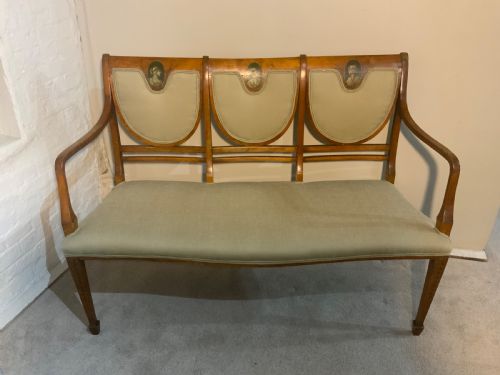


Sheraton Style Settee
These Sheraton style settees bring light frames, satinwood and mahogany to a room, offering refined seating with classic neoclassical lines.

What these pieces are
A sheraton style settee is a lighter form of seating appearing across the nineteenth and early twentieth centuries, spanning the Regency era, the Victorian period, and Edwardian revivals. These pieces draw on neoclassical design, offering graceful proportions and formal restraint rather than heavy upholstery.
The pieces listed here range from early nineteenth century satinwood examples to later Edwardian interpretations in mahogany and painted wood. Buyers meet both refined satinwood inlays and simpler mahogany frames fitted with cane or fabric upholstery.
How they were made
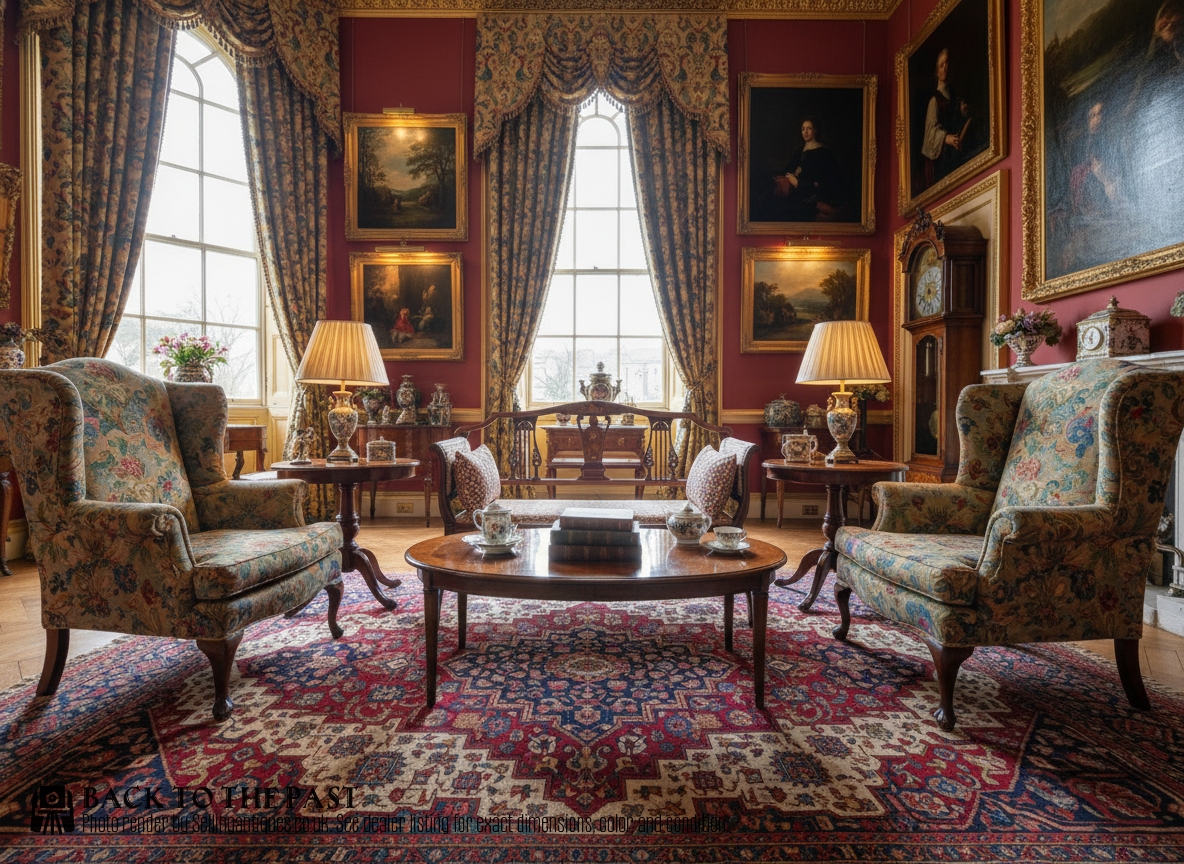
Cabinet makers constructed these frames predominantly from mahogany and satinwood, often embellishing the surfaces with marquetry and contrasting wood inlays. Selected pieces utilise paintwork to define the structure, whilst others incorporate cane panels into the backrests and seats.
Upholstery varies between exposed wooden frames with loose squab cushions and fully upholstered seats finished in velvet or patterned fabric. The joinery relies on slender uprights and tapered legs that echo classical architecture.
Retail Price Guide 2026
Typical UK retail prices for sheraton style settee, calculated from the Sellingantiques database of over a million retail prices indexed since 2003. This retail price guide relies exclusively on Sellingantiques data; no external sources or auction records are used, so the figures do not describe the wider market.
Listings feature mahogany and satinwood timbers alongside painted finishes, cane panels, and velvet upholstery across multiple periods.
What varies in quality
Quality rests in the crispness of the inlay work and the purity of the timber selection, distinguishing finely figured satinwood from plainer surfaces. The precision of the painted decoration and the tightness of the cane work also set finer examples apart from standard production.
Structural refinement dictates the overall success of the piece, with delicate proportions and well-balanced frames showing superior design. Pieces finished with intricate marquetry and careful hand-painting represent the upper end of this tradition.
The Sheraton Style Settee Glossary
- Satinwood
- A lustrous timber native to India and Sri Lanka, prized for its golden colour and used extensively for fine cabinet work and decorative veneer.
- Marquetry
- The art of applying pieces of veneer to a structure to form decorative patterns and pictorial designs, common on neoclassical furniture.
- Cane
- Strips of rattan woven into an open mesh pattern, utilised on backrests and seat panels to provide lightweight support.
- Regency
- A period of British design spanning the early nineteenth century, characterised by a revival of classical Greek and Roman motifs.
Frequently Asked Questions
What is a sheraton style settee?
A sheraton style settee is a light, elegant seat influenced by late eighteenth century neoclassical designs. These pieces often feature satinwood, mahogany, and tapered legs.
They provide formal seating with decorative inlays and painted details, appearing in both original nineteenth century formats and later Edwardian revivals.
How do I care for satinwood?
Satinwood requires gentle dusting with a soft, dry cloth to protect the polished surface. Keep these pieces away from direct sunlight and excessive heat.
Avoid using modern chemical polishes, as they can damage the delicate veneers and historical finishes over time.
Are these settees comfortable?
These settees are designed primarily for upright seating rather than deep lounging. Many examples feature firm squab cushions or cane bases that offer structured support.
Adding appropriate cushions can enhance comfort whilst preserving the visual balance of the wooden frame.
How do I distinguish Edwardian from Regency?
Regency pieces date from the early nineteenth century and typically display authentic period timber patination and construction methods. Edwardian revivals, dating around nineteen hundred, often employ machine-assisted inlays and lighter structural framing.
Examining the underside, secondary woods, and wear patterns helps clarify the age of the piece.