


Antique Satinwood Settee
An antique satinwood settee brings glowing grain and crisp marquetry into a drawing room, offering both historic elegance and a practical seat.
Antique Satinwood Settee
When you search for an antique satinwood settee, you are looking at timber seats built across the nineteenth and early twentieth centuries, spanning the Regency, Victorian, and Edwardian eras. These pieces take forms such as two-seater sofas, salon settees, chair back benches, and end of bed styles.
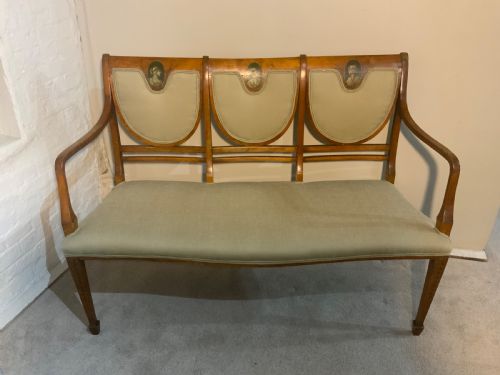
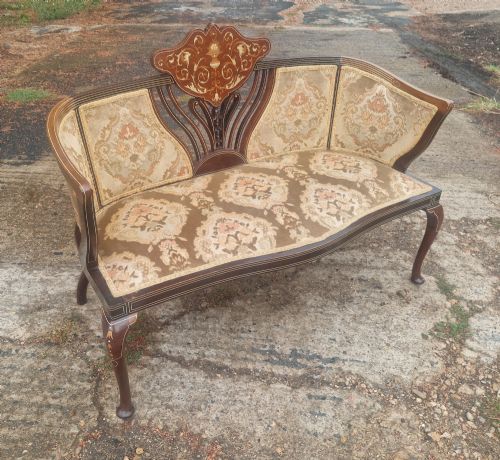
The version you are most likely to meet on this page is an Edwardian inlaid satinwood or mahogany salon settee, often decorated with delicate marquetry and occasionally featuring cane work or upholstery.
How they were made
Cabinet makers built these frames using dense hardwoods like mahogany as a structural carcass, then applied figured satinwood veneers and intricate marquetry inlay across the visible surfaces. Detail was added through contrasting woods, painted decoration, and bone inlay.
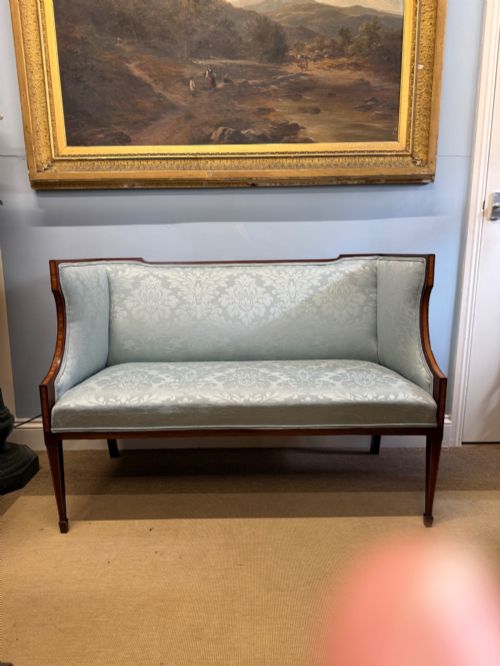
Seating portions were constructed with cane panels or prepared for fabric upholstery, utilising traditional stuffing methods and finished with textiles such as damask.
Some Edwardian makers tucked tiny bone inlays into the satinwood, giving polite little nudges to the eye across the drawing room.
What varies in quality
The distinction between the ordinary and the exceptional lies in the crispness of the marquetry and the choice of timber figure within the satinwood veneer. Hand-painted pictorial details and sophisticated Neo-Classical or Sheraton Revival design lines elevate individual examples.
Structural integrity of the frame, the preservation of original cane work, and the subtlety of bone inlay or contrasting stringing separate standard production pieces from finer salon furniture.
The Antique Satinwood Settee Glossary
- Satinwood
- A lustrous tropical timber known for its golden, reflective sheen and smooth grain. It was frequently used for fine veneer and inlay in late eighteenth and nineteenth century furniture.
- Marquetry
- Decorative patterns formed by fitting together small pieces of wood veneer, shell, or bone into a design. This technique adorned the backrests and rails of formal settees.
- Caning
- A woven mesh made from rattan or stripped cane plants, utilised for light and flexible seat bases or back panels. It appears on lighter Edwardian garden or salon pieces.
- Damask
- A reversible, figured fabric traditionally woven on a drawloom with patterns formed by contrasting warp and weft threads. It serves as a rich upholstery choice for formal sofas.
Antique Satinwood Settee: Frequently Asked Questions
What periods do these settees come from?
The pieces span the nineteenth and early twentieth centuries, covering Regency, Victorian, and Edwardian eras.
Most examples found here date from the Edwardian period and the late nineteenth century.
How were satinwood settees used originally?
They served as decorative seating in formal drawing rooms, parlours, and large antechambers.
Specific forms like end of bed sofas were also placed in upper chambers for resting.
Can I use these settees for daily sitting?
Many Edwardian and nineteenth-century frames are sturdy enough for regular use, depending on their construction.
Pieces requiring re-upholstery or featuring delicate caning benefit from more careful, light usage.
How do I identify a Sheraton Revival style?
Sheraton Revival pieces draw on late eighteenth-century classical geometry, straight tapered legs, and symmetrical inlay.
They often combine satinwood veneers with mahogany frames and painted floral motifs.