


Triple Chair Back Sofa
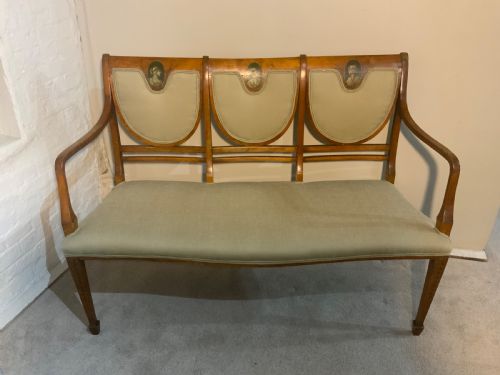
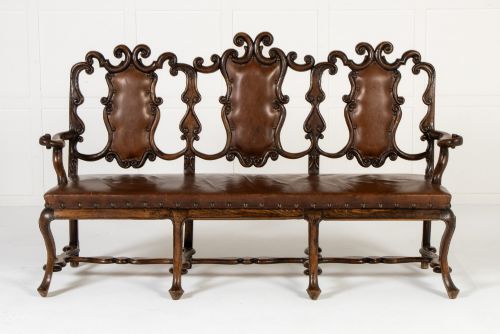
A triple chair back sofa offers the formal grace of joined dining chairs combined with the comfort of a long seat, making it a sophisticated centrepiece for a traditional drawing room.
Triple Chair Back Sofa
A triple chair back sofa presents a unified seating arrangement where three distinct chair frames share a continuous base and upholstered squab cushion. When you search for a triple chair back sofa, you encounter designs rooted in the eighteenth century alongside nineteenth-century revivals and early twentieth-century interpretations.
The most common versions on this page span the 19th Century, alongside examples from the 18th Century, 1900, Regency, 1920, Victorian, 1890, and 1880 periods. These pieces appear under various object types including settees, settees and sofas, settees and benches, and salon sofas.
Makers and designers drew upon established vocabularies, resulting in pieces executed in Hepplewhite, Regency, Edwardian, Carolean Revival, Baroque Revival, Chippendale, Dutch Rococo, and George II Style.
Materials and construction
Cabinetmakers utilised dense timbers such as mahogany, walnut, and satinwood to construct the intricate vertical splats and sturdy frames required for multi-backed seating. Painted wood also appears on specific decorative models alongside brass details.
The expansive seat bases and backrests accommodate various coverings including fabric, textile, and leather, often secured over traditional stuffing and webbing.
Triple Chair Back Sofa Retail Price Guide 2026
Typical asking prices for triple chair back sofa among the pieces listed under this phrase on Sellingantiques today, from the lower quarter to the upper quarter. They describe what is for sale here now, not the wider market.
Revival periods are strongly represented here, with nineteenth-century makers enthusiastically reinterpreting earlier Chippendale, Hepplewhite, and Carolean styles.
Qualities of craftsmanship
The distinction between standard production and finer work rests in the depth of carving upon the splats and the crispness of inlaid motifs such as satinwood banding. Superior examples maintain structural integrity across the triple junction points without excessive reinforcement.
Selection of figured timber veneers and the harmonious integration of the arm supports relative to the three back divisions further separate workshop tiers.
The Triple Chair Back Sofa Glossary
- Shield back
- A chair back contour shaped like a heraldic shield, commonly associated with Hepplewhite designs. This silhouette provides a lighter visual weight than solid rectangular frames.
- Splat
- The vertical wooden strip occupying the centre of a chair back between the top rail and the seat. On these sofas, three distinct splats stand side by side.
- Settee
- A long wooden or upholstered seat for more than one person, sharing terminology with the sofa. In older usage, the term often implies a formal timber framework.
- Satinwood
- A durable, lustrous timber native to Ceylon and India, prized for its golden yellow colour and fine grain. Cabinetmakers used it extensively for inlay and veneering during the eighteenth and nineteenth centuries.
Triple Chair Back Sofa: Frequently Asked Questions
What is a triple chair back sofa?
A triple chair back sofa is a seating form designed to look like three distinct chair backs joined together in a single continuous frame. It provides the visual rhythm of a row of dining chairs while functioning as a salon settee.
These pieces draw on eighteenth-century dining chair geometry, expanding the concept into a wider format intended for drawing rooms and formal reception spaces.
How do I date a triple chair back sofa?
Dating relies on examining the timber species, the style of carving, and the construction methods used in the frame and stretchers. Eighteenth-century models generally display native hardwoods with hand-cut joinery, while revival pieces from the nineteenth century often incorporate machine-cut components.
Style labels such as Hepplewhite or Chippendale provide initial clues, though many examples were produced decades later during Victorian and Edwardian revival movements.
Where should I place a triple chair back sofa?
These sofas suit formal reception rooms, large hallways, or studies where the decorative rear splats remain visible to observers. Because the backrest design is a primary aesthetic feature, floating the piece away from a wall allows the profile to be seen.
Pairing the settee with complementary period armchairs creates a cohesive seating group without overcrowding the floor space.
What is the difference between a settee and a sofa?
Historically, a settee referred to a wooden or partially upholstered seat with a rigid structure, whereas a sofa denoted a fully upholstered piece intended for lounging. Over time, the terms became largely interchangeable within the antiques trade.
In the context of chair back seating, the structure usually retains exposed timber frames and distinct back divisions reminiscent of individual chairs.