






Victorian Leather Settee
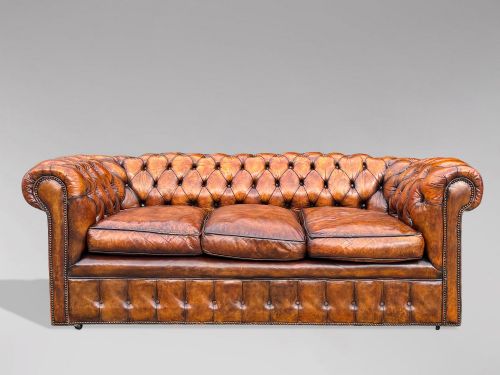
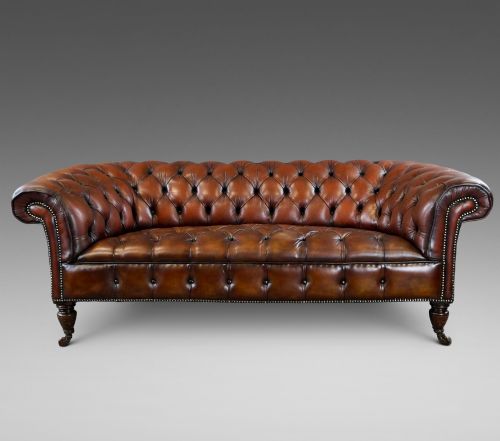
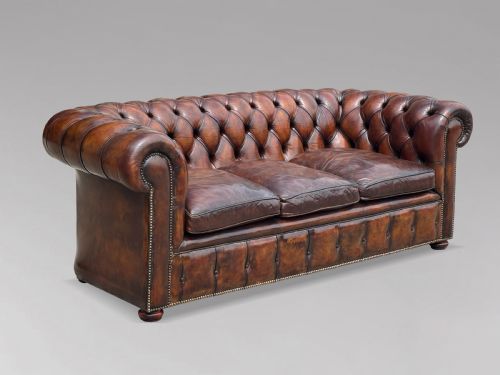
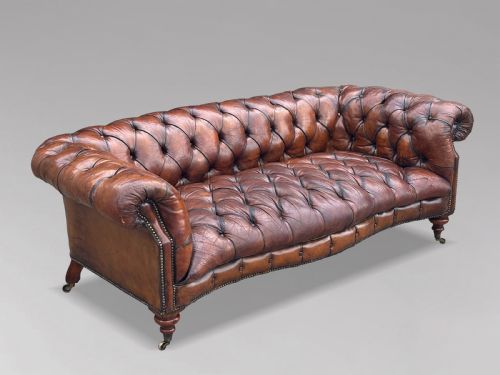
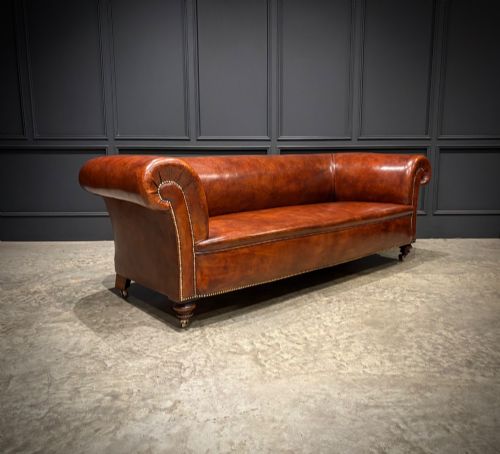
A victorian leather settee offers deep-buttoned comfort and rich nineteenth-century character, making it the focal point of any traditional study or library.
Victorian Leather Settee
A victorian leather settee encompasses a range of nineteenth-century seating forms, from classic Chesterfields to buttoned double spoon-back sofas and conversation pieces. These pieces span the nineteenth century, including specific dates such as eighteen-seventy, and appear as sofas, settees, love seats, and benches.
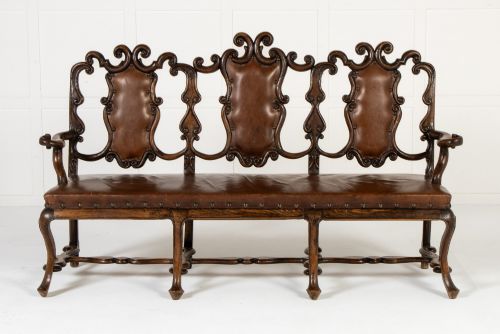
The materials paired with the hide include mahogany, walnut, rosewood, timber, and brass, creating solid frames beneath the upholstery. Stylistic influences range from standard Victorian design to Baroque Revival elements, often featuring carved wooden frames or open arms.
Buyers will encounter both fully restored hand-dyed leather finishes and examples retaining original leathers. Forms vary from serpentine-fronted Chesterhearts to swivel conversational layouts and pub or snooker hall benches.
Construction and Materials
Frames are built from sturdy timbers including mahogany, walnut, and rosewood, providing structural support for heavy daily use. Metal components such as brass often feature in castors or decorative studwork.
Upholstery relies on traditional leather hides, manipulated into deep-buttoned configurations across backs and arms. Wood framing exhibits carved detailing, particularly on open arm sofas, conversational seats, and nineteenth-century chaise long variants.
Victorian Leather Settee Retail Price Guide 2026
Typical asking prices for victorian leather settee among the pieces listed under this phrase on Sellingantiques today, from the lower quarter to the upper quarter. They describe what is for sale here now, not the wider market.
Materials recorded across these items include leather, brass, wood, mahogany, walnut, metal, timber, and rosewood.
Evaluating Quality and Authenticity
Quality rests in the integrity of the timber frame and the depth of the upholstery work. Pieces featuring resilient rosewood or walnut structures alongside well-executed buttoning command greater respect.
The condition of the leather distinguishes examples, whether preserved in original patinated hides or expertly re-dyed to match historical precedents. Maker attribution, such as work linked to specific nineteenth-century workshops, elevates a piece further.
Howard and Sons·Gillows of Lancaster
The Victorian Leather Settee Glossary
- Chesterfield
- A traditional sofa style characterised by rolled arms and a back of the same height, heavily upholstered in buttoned leather.
- Spoon-back
- A chair or sofa back shaped like the bowl of a spoon, typically padded and framed in exposed wood such as walnut or rosewood.
- Conversational sofa
- An S-shaped seating form designed to allow two people to converse face-to-face without turning their heads.
- Serpentine front
- A curved furniture front that undulates outward in the centre and inward at the sides, adding visual movement.
- Patination
- The surface alteration and ageing of leather and wood over time, producing a distinct sheen and depth of colour.
Victorian Leather Settee: Frequently Asked Questions
What is a Victorian leather settee?
A victorian leather settee is a nineteenth-century upholstered seating option, most commonly found as a deep-buttoned Chesterfield or a carved wooden framed sofa.
These pieces utilise timber frames such as mahogany, walnut, or rosewood, paired with leather hides and sometimes brass accents.
How were these settees used?
They served as formal and domestic seating in nineteenth-century drawing rooms, libraries, country houses, and commercial spaces like pubs.
Conversation settees specifically facilitated social interaction, while larger Chesterfields provided extended lounging comfort.
How do I care for nineteenth-century leather?
Leather upholstery requires regular dusting and periodic conditioning to maintain flexibility and prevent the hide from drying out.
Keeping the settee away from direct sunlight and heat sources preserves both original leathers and restored hand-dyed finishes.
How do I tell periods apart?
Dating relies on stylistic markers, framing timber choices, and structural joinery typical of the nineteenth century.
Specific design cues, such as Baroque Revival carving or specific spoon-back configurations, help narrow down the decade of production.