




Green Leather Sofa
A green leather sofa brings rich colour and enduring utility to a room, offering both traditional character and deep-seated comfort.
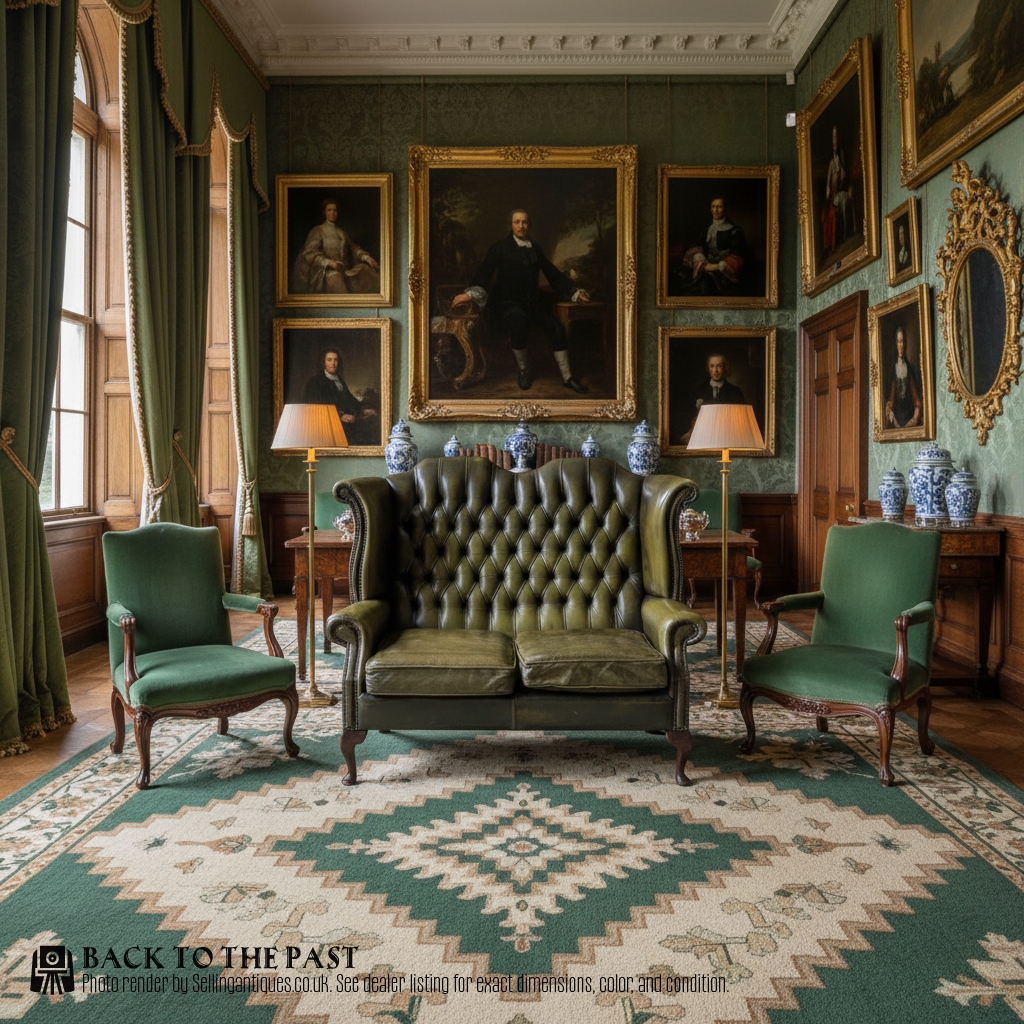
Understanding the green leather sofa
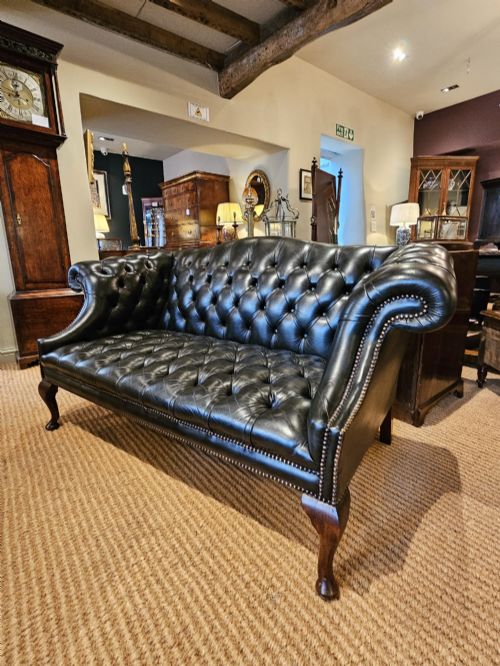
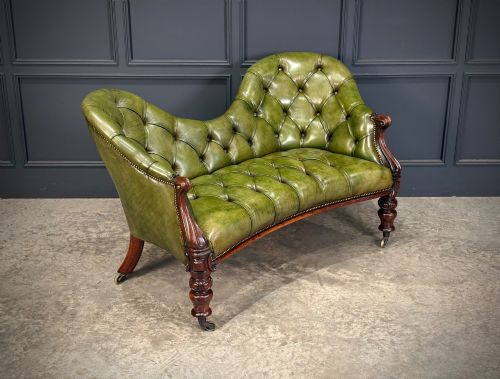
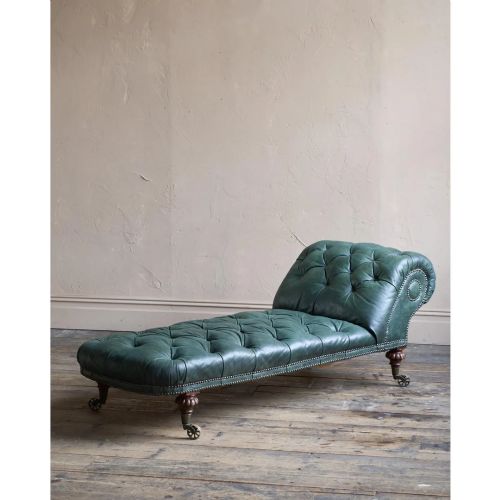
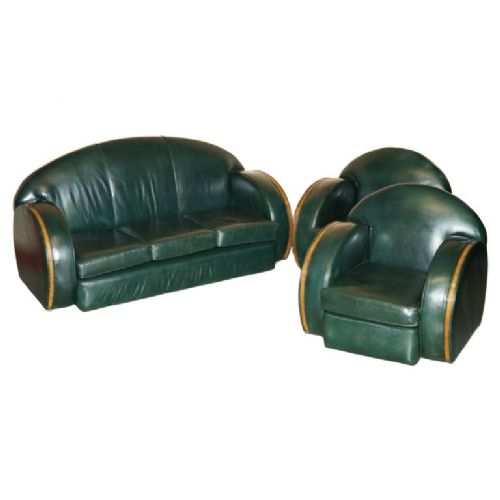
A green leather sofa appears in various forms across the Victorian and Edwardian periods, as well as the 1920s and 1930s. The selection spans traditional Chesterfields, button-backed double spoon-back settees, swivel conversational sofas, and chaise longues.
Buyers frequently encounter the classic Chesterfield style, alongside drop-arm variations and complete three-piece suites featuring matching armchairs. Materials paired with the green leather include mahogany, rosewood, hardwood, and timber, often accented with brass details.
The pieces reflect traditional design influences, ranging from Victorian craftsmanship to Art Deco aesthetics and George IV periods. Surviving examples demonstrate diverse upholstery shades, from dark bottle green to British racing green.
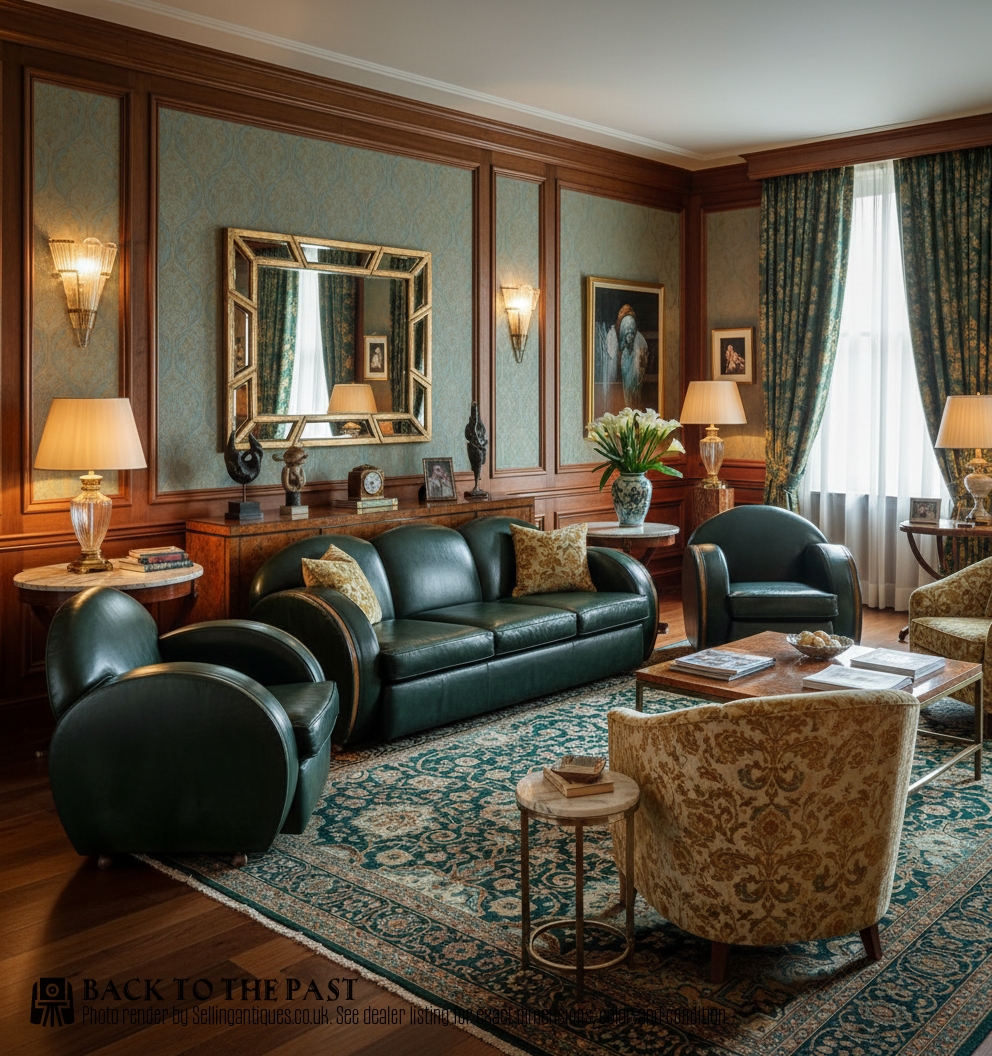
Construction and materials
Frames are built from solid timber foundations, incorporating hardwoods such as mahogany and rosewood. These robust structures support deep buttoning and hand-dyed leather upholstery.
Metal elements such as brass appear in the detailing and hardware of the seating. Upholstery methods include traditional deep buttoning techniques across backs and arms.
Retail Price Guide 2026
Typical UK retail prices for green leather sofa, calculated from the Sellingantiques database of over a million retail prices indexed since 2003. This retail price guide relies exclusively on Sellingantiques data; no external sources or auction records are used, so the figures do not describe the wider market.
Materials documented across the pieces include mahogany, rosewood, brass, and hand-dyed leather.
Markers of distinction
Quality rests in the integrity of the timber frame and the depth of the woodwork, particularly where rosewood or mahogany is carved and polished. The treatment of the leather, from hand-dyed finishes to original coverings, dictates the visual weight of the piece.
The complexity of the form distinguishes standard settees from specialised seating such as swivel conversational sofas or double spoon-back designs. Subtle variations in buttoning precision and structural proportions separate standard production from finer cabinetmaker work.
Howard & Sons
The Green Leather Sofa Glossary
- Chesterfield
- A large upholstered sofa with deep buttoning and arms of the same height as the back. This traditional form remains a central pillar of antique seating.
- Chaise Longue
- An upholstered long chair for reclining, typically featuring a single raised backrest at one end. Examples date from the nineteenth century.
- Spoon-Back
- A chair or sofa back carved in the shape of a spoon, popular during the Victorian era. It provides ergonomic support through its contoured wooden frame.
- Buttoned
- An upholstery technique where depressions are created in the leather using buttons pulled tight to the frame. This secures the padding and creates a distinctive geometric pattern.
Frequently Asked Questions
What periods do these green leather sofas come from?
The pieces span the nineteenth century, including Victorian and George IV eras, as well as the Edwardian period, 1920s, and 1930s. Different decades brought distinct frame shapes and upholstery treatments.
Buyers encounter styles ranging from traditional Chesterfield forms to Art Deco suites and specialised conversational seating.
How do I care for antique leather upholstery?
Antique leather requires gentle maintenance to preserve the original dye and material integrity. Avoid direct sunlight and excessive heat.
Regular dusting and specialised leather conditioners help maintain the suppleness of nineteenth and twentieth-century hides.
What is a conversational sofa?
A conversational sofa, often termed a confidante or courting sofa, is designed so two people can sit facing opposite directions while remaining adjacent. Victorian examples often incorporate rosewood and swivel mechanisms.
These pieces served a specific social function in period drawing rooms and studies.
Are these sofas suitable for daily use?
Many surviving pieces retain sturdy hardwood frames made from mahogany, timber, or rosewood. Their robust construction supports continued domestic use.
Restoration histories vary, with some pieces preserving original covers and others featuring renewed hand-dyed leathers.