
Button Back Sofa
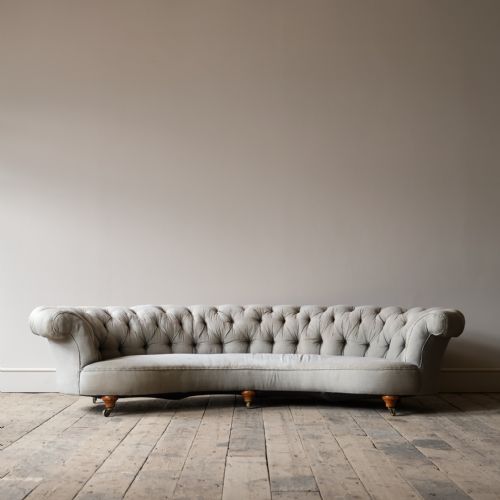
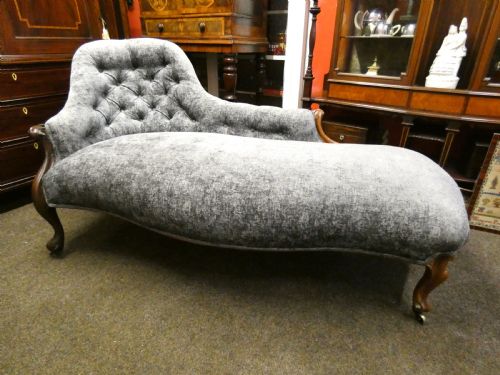
A button back sofa brings deep upholstery and distinct tufting together for both rich comfort and traditional presence in a room.
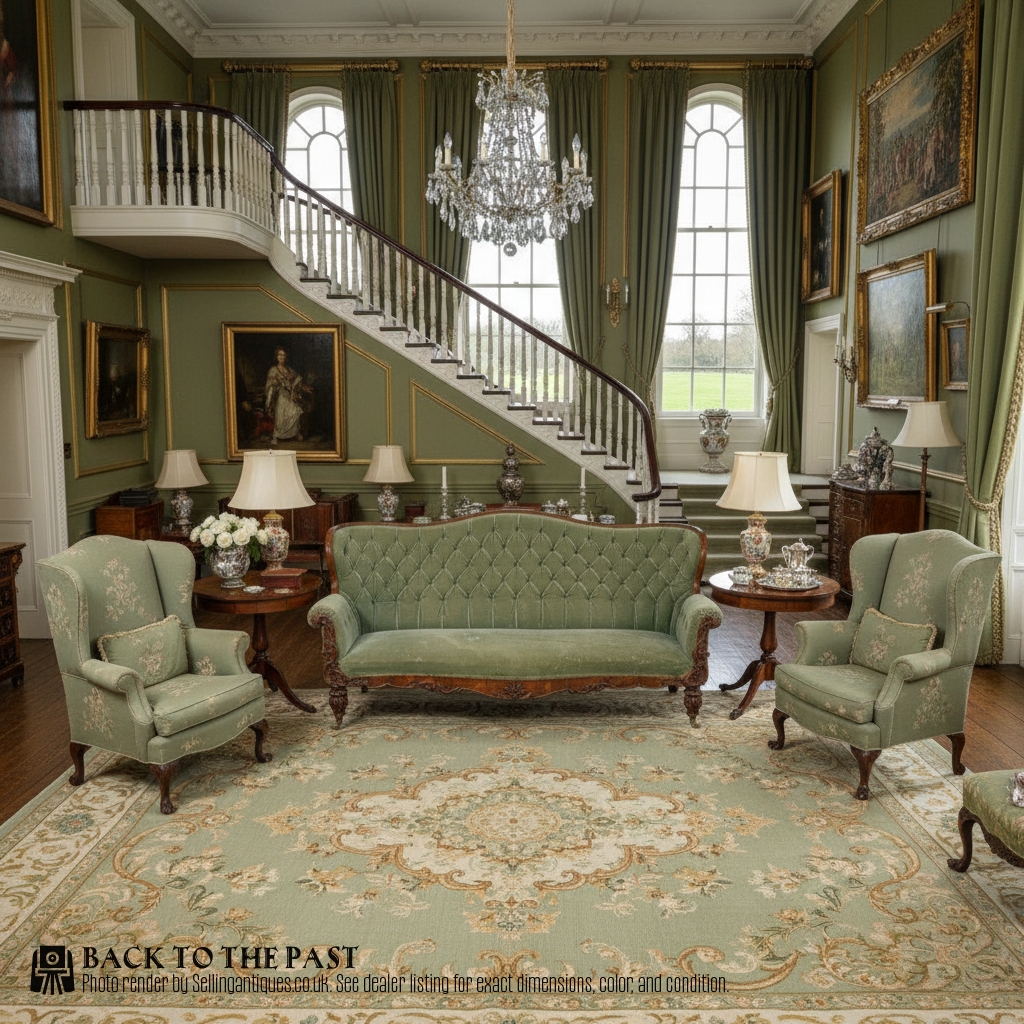
Button back sofa types and origins
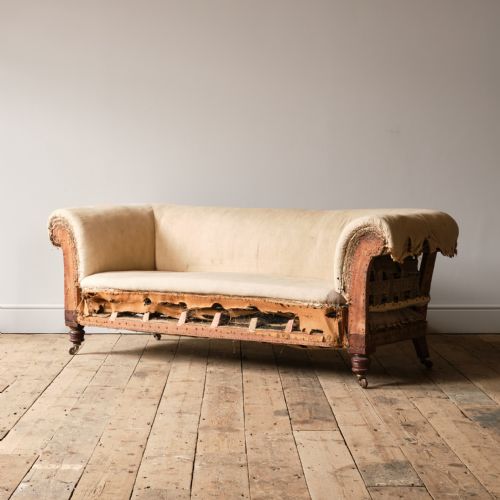
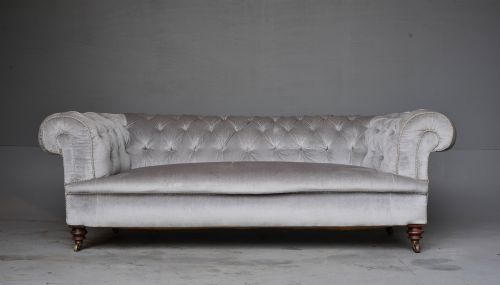
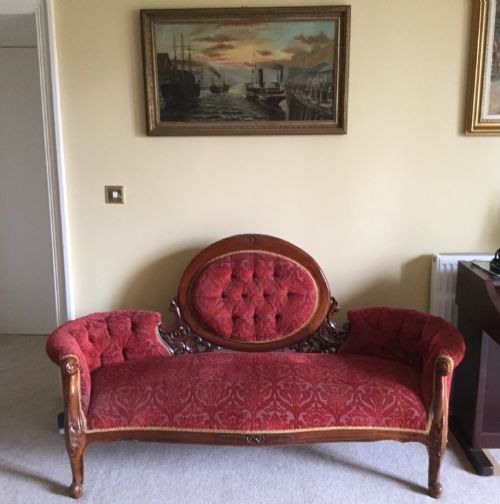
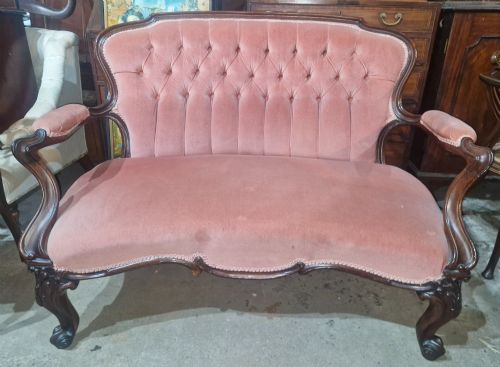
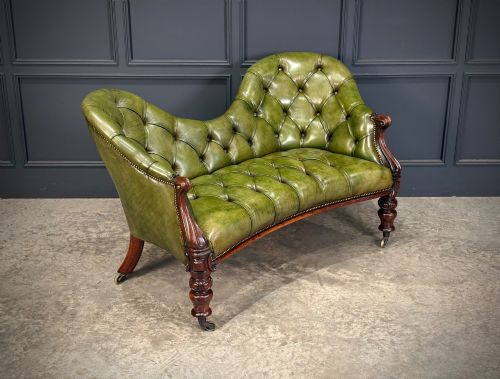
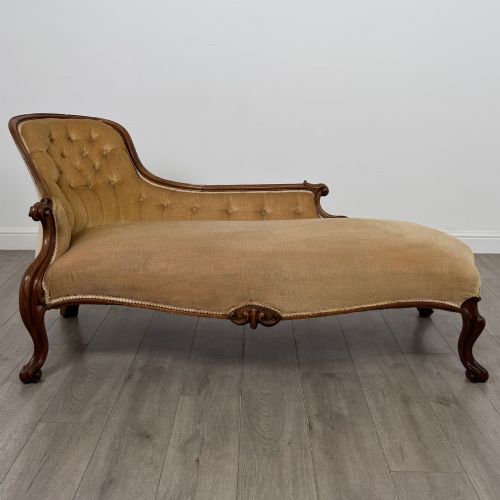
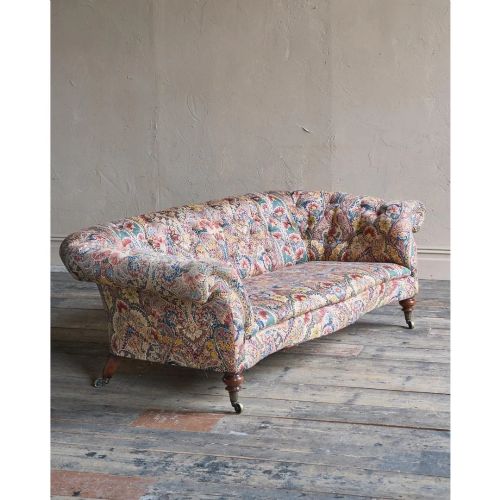
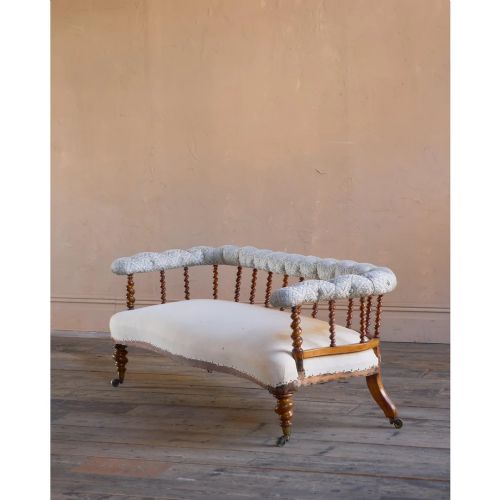
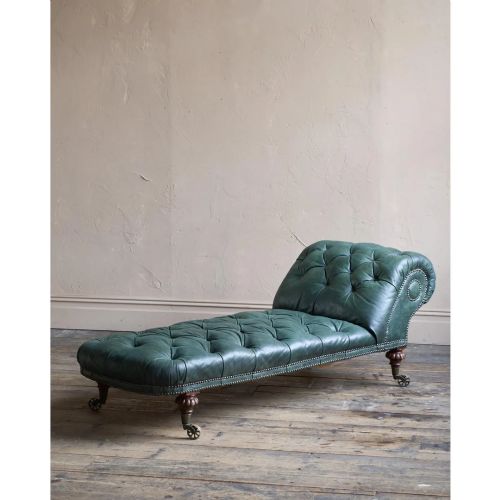
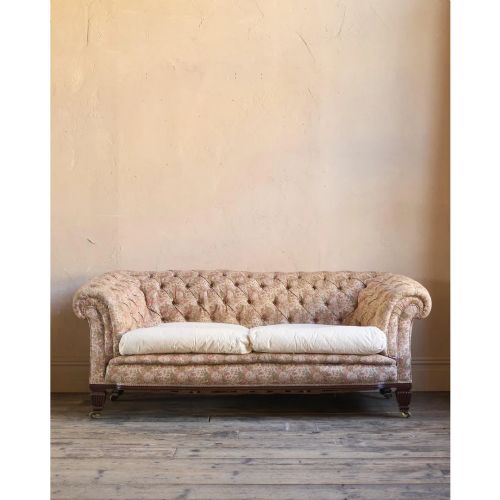
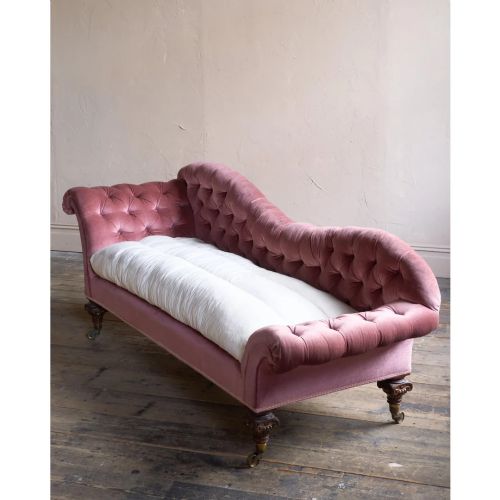
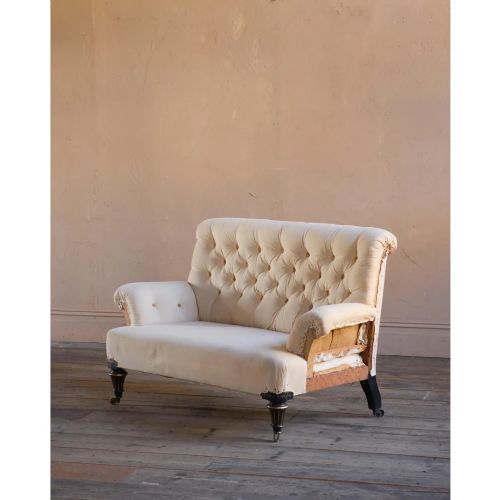
A button back sofa is defined by deep tufting secured with buttons across the upholstered backrest, creating a series of distinct padded diamonds or squares. These pieces appear most frequently from the nineteenth century, including Victorian and Napoleon III examples, alongside Regency and early twentieth-century interpretations.
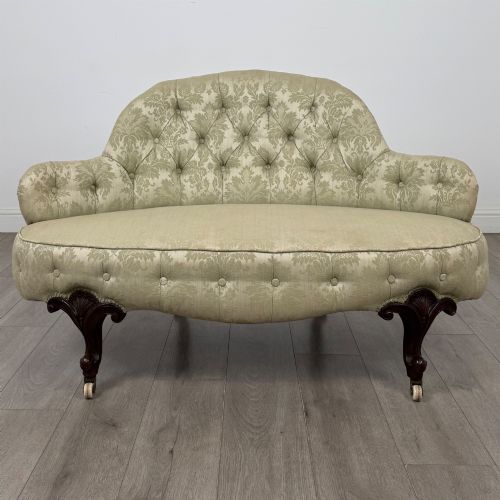
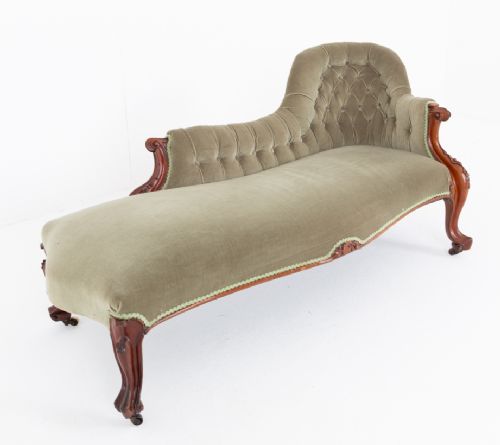
The evidence shows diverse forms ranging from compact boudoir and kidney-shaped settees to large country house chesterfields and corner configurations. Timber frames in mahogany, walnut, and giltwood support varied seating depths and roll arms.
English country house models and French salon pieces dominate the selection, often upholstered in leather, velvet, or silk damask. Such seating provides substantial presence whether placed in a drawing room or a library.
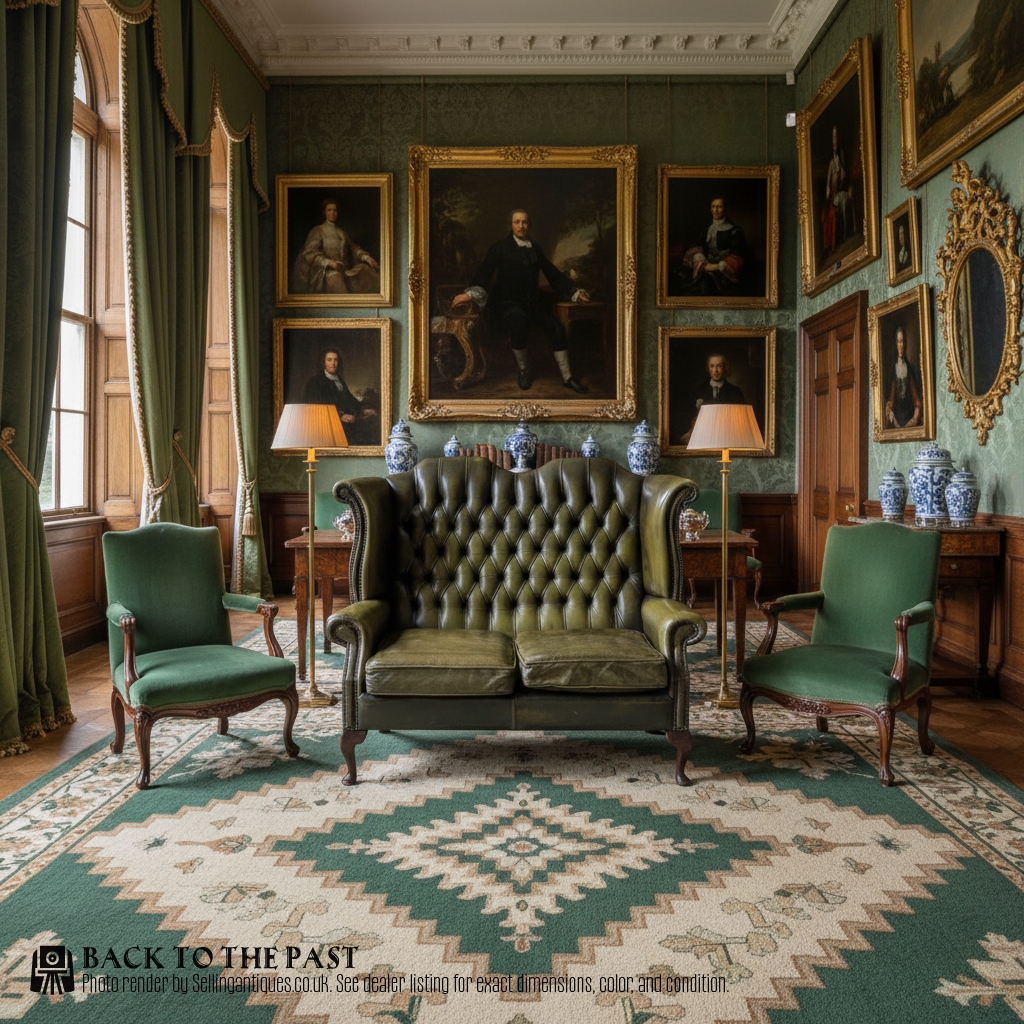
Materials and construction
Makers built the structural frames using hardwoods like mahogany, walnut, and sometimes iron, paired with exposed wooden elements such as carved show frames and cabriole legs. Brass hardware and giltwood enrichment appear on specific examples.
Upholstery techniques rely on deep buttoning through horsehair or stuffing, anchored to webbed foundations. Coverings span supple brown or coloured leather, plush velvet, and silk damask.
Retail Price Guide 2026
Typical UK retail prices for button back sofa, calculated from the Sellingantiques database of over a million retail prices indexed since 2003. This retail price guide relies exclusively on Sellingantiques data; no external sources or auction records are used, so the figures do not describe the wider market.
Materials recorded across the archive include mahogany, walnut, leather, velvet, silk damask, brass, and iron.
Distinctions in craftsmanship
Quality rests in the precision of the tufting grid and the tension of the upholstery across the curves of the backrest. Finer examples exhibit hand-carved wooden frames with crisp detail rather than simpler moulded elements.
The selection of materials dictates the standing of a piece, with heavy timber frames and thick hide or rich velvet distinguishing substantial country house and salon pieces from lighter occasional seating.
Miles & Edwards·John Taylor·George Smith
The Button Back Sofa Glossary
- Button back
- An upholstery technique where deep buttons are pulled tight through the padding to form a geometric pattern of tufts. This method adds structural firmness and decorative texture to the backrest.
- Chesterfield
- A large upholstered sofa traditionally featuring arms and back of the same height. This form frequently incorporates deep buttoning and roll arms.
- Show frame
- An exposed wooden structural frame around the upholstered portions of a seat. Walnut and mahogany are typical timbers used for this visible work.
- Cabriole leg
- A furniture leg that curves outward in a convex arc and then tapers inward in a concave arc, ending in a pad or scroll foot. This shape is common on French Napoleon III pieces.
- Scroll back
- A backrest shape that curves outward and backward in a scroll form. It often appears on Regency and William IV iterations.
Frequently Asked Questions
How do I identify a Victorian button back sofa?
Victorian examples typically feature heavily carved walnut or mahogany show frames with deep buttoned upholstery in velvet, silk damask, or leather. The proportions are often generous, designed for formal nineteenth-century reception rooms.
Look closely at the woodwork and the regularity of the tufting pattern to confirm the period characteristics. Regional English workshops and larger cabinet makers both contributed to this distinct style.
What is a Napoleon III button back sofa?
Napoleon III pieces originate from the French Second Empire period and often showcase curved backs, ebonised or giltwood frames, and cabriole legs. Upholstery on these seats frequently uses vibrant velvet or silk fabrics.
These sofas tend to offer a more compact or boudoir-scale footprint compared to large English country house chesterfields. Their silhouette emphasises flowing lines and decorative serpentine forms.
Are leather button back sofas durable?
Leather button back sofas utilise robust animal hide secured over traditional stuffing and webbing. This combination provides a sturdy surface that ages with character through regular use in libraries or studies.
The buttoning technique holds the leather tight against the internal padding, preventing excessive sagging across the backrest over decades of sitting.
Where should I place a button back sofa?
A button back sofa works well as a central seating element in a living room, drawing room, or large hallway. Because many examples feature finished backs and detailed frames, they can sit away from walls.
Consider the scale of the room and the reach of the arms, particularly with wide country house chesterfields or corner sofas. Ensure adequate clearance for the depth of the seat and any curved show frames.