
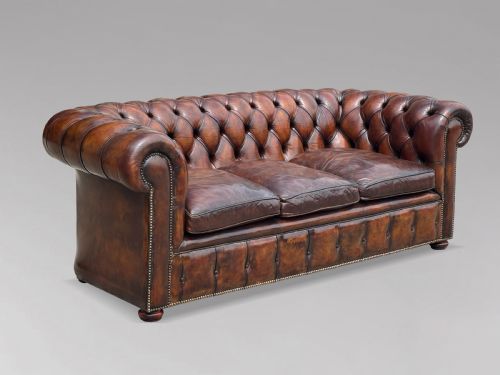
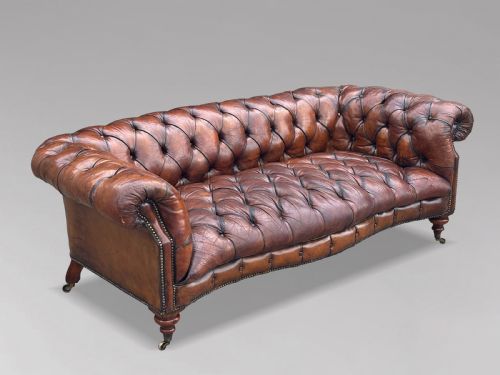


Tufted Leather Settee
A tufted leather settee offers deep buttoned comfort and enduring character, drawing on Victorian and 1930s forms.
Tufted Leather Settee
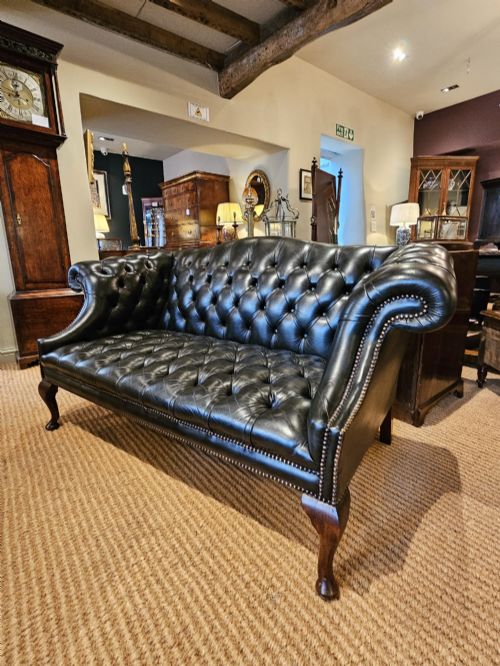
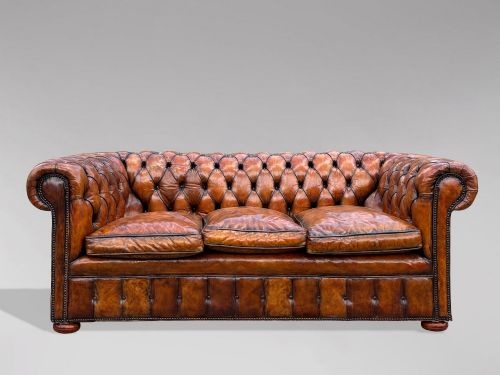
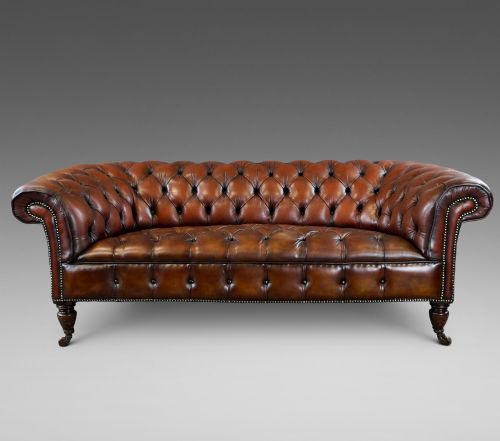
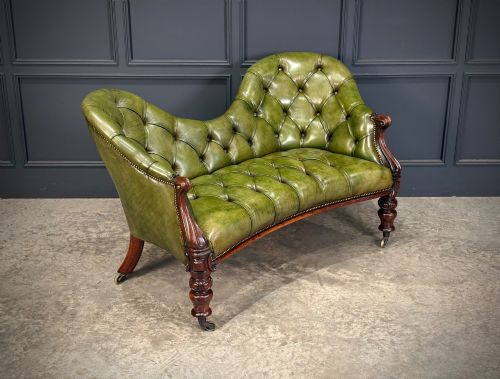
A tufted leather settee brings traditional seating into a room through forms such as Chesterfields, corner sofas, and scroll end settee designs. These pieces range from compact double spoon-back frames to large three-seater proportions originating in the nineteenth and early twentieth centuries.
The most common examples on this page are brown leather Chesterfields from the Victorian era, often featuring deep buttoning and hand-dyed finishes. Alongside these sit later twentieth-century interpretations, including 1930s club sofas and pub benches.
The framework underneath these upholstered bodies incorporates timber, mahogany, and walnut, sometimes showing carved details or show frames. Buyers encounter both restored examples with new hand-dyed leathers and untouched pieces retaining their original patination.
How they were made
Makers built these settees using sturdy timber frames of mahogany, walnut, or general hardwood to support heavy daily use. Traditional interior stuffing relied on horsehair and coil springing to give the seat pad its resilience and shape.
Upholstery involved stretching leather across the frame and securing the deep tufting pattern with tufting cord tied down to the internal webbing. Brass tacks often finished the borders, outlining the scroll arms and fronts of the upholstery.
Tufted Leather Settee Retail Price Guide 2026
Typical asking prices for tufted leather settee among the pieces listed under this phrase on Sellingantiques today, from the lower quarter to the upper quarter. They describe what is for sale here now, not the wider market.
One unexpected settee arrives newly upholstered in Alfa Romeo leather, bridging classic Victorian forms with automotive heritage.
What varies in quality
Quality rests in the integrity of the underlying frame and the historical accuracy of any restoration work. Pieces retaining original un-touched leathers differ fundamentally from those that have received modern hand-dyed treatments.
The precision of the deep buttoning and the density of the internal horsehair stuffing dictate how well the piece holds its contour over decades. Maker attribution, such as work originating from established firms, separates standard workshop output from exceptional examples.
Howard And Sons·Hampton And Sons Of Pall Mall
The Tufted Leather Settee Glossary
- Chesterfield
- A large upholstered sofa with arms and back of the same height, traditionally featuring deep button tufting. This form remains the defining style for nineteenth-century leather seating.
- Button-back
- An upholstery method where depressions are created in the leather using buttons pulled tight to the internal frame. This technique secures the padding and creates the characteristic tufted surface.
- Show frame
- A wooden structural framework left exposed around the edges of the upholstery rather than being entirely covered in leather. Walnut and mahogany frames of this type often feature carved ornamentation.
- Scroll end
- A sweeping, curved arm design that rolls outward at the end of the settee. This shape appears on nineteenth-century scroll end settees and refined Chesterfield variants.
- Hand-dyed
- A colouring process applied to leather to achieve variable tones such as whisky brown or bottle green. This method enhances the natural grain and aged character of restored hides.
Tufted Leather Settee: Frequently Asked Questions
What is a tufted leather settee?
A tufted leather settee is an upholstered seat characterised by deep buttoning pulled into the padding, most commonly seen in nineteenth-century Chesterfield designs.
These pieces use durable leather stretched over coiled springs and horsehair stuffing, housed within hardwood or mahogany frames.
How do I care for antique leather?
Antique leather benefits from regular dusting and occasional applications of suitable leather balms to prevent the hide from drying out.
Keeping these settees away from direct sunlight and heat sources preserves the natural oils and the hand-dyed colour.
Are these settees comfortable for daily use?
Traditional construction involving coil springing and horsehair stuffing provides a firm, supportive seat designed for long-term endurance.
Many surviving nineteenth and twentieth-century examples offer deep proportions suited to modern relaxation despite their formal appearance.
How can I tell the period of a settee?
Dating relies on examining the framing timbers, the style of the armrests, and the method of upholstery construction underneath.
Victorian pieces often display heavier proportions and show frames in walnut or mahogany, while 1930s variants introduce different club chair dimensions.