


Cream Leather Sofa
A cream leather sofa brings unmistakable presence to a room, offering tactile warmth and structural form drawn from Victorian and Art Deco eras.
What these pieces are
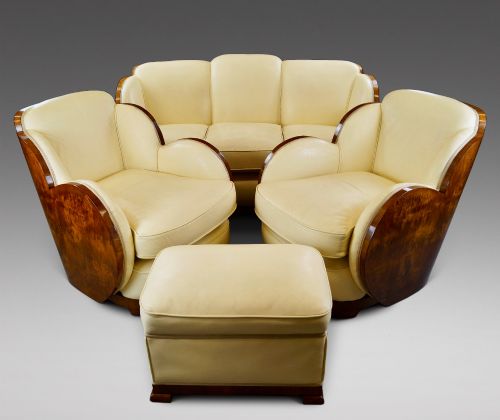
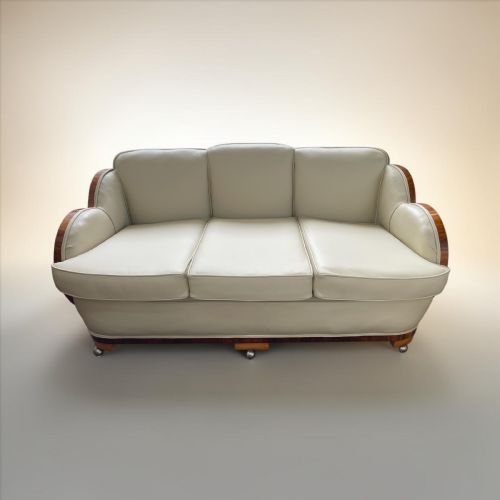
A cream leather sofa spans distinct periods, appearing in both nineteenth-century nineteenth and twentieth-century iterations. Buyers searching this phrase encounter substantial Victorian open arm pieces alongside distinct Art Deco cloud shapes.
The twentieth-century examples frequently emerge from the 1930s, showcasing rounded silhouettes and matching suite configurations. These pieces range from expansive three-seater models to intimate bankers sofas.
Nineteenth-century options include traditional Chesterfield designs paired with hardwood frames and exposed wooden elements. The material surface adapts across eras, shifting from antique patinated hides to smooth modernist upholstery.
How they were made
Construction relies upon robust internal timbers including hardwood, maple, and walnut veneer frameworks. Metal components and brass details occasionally provide structural reinforcement and decorative accenting.
Upholstery employs genuine leather stretched over padded foundations, fixed securely to the wooden skeletons. Veneer finishes on exposed wooden sections highlight the grain patterns of the walnut elements.
Retail Price Guide 2026
Typical UK retail prices for cream leather sofa, calculated from the Sellingantiques database of over a million retail prices indexed since 2003. This retail price guide relies exclusively on Sellingantiques data; no external sources or auction records are used, so the figures do not describe the wider market.
One listed nineteenth-century Chesterfield arrives fully restored yet deliberately left undyed, waiting for its next chapter.
What varies in quality
The distinction between standard examples and superior pieces rests in the integrity of the timber frame and the depth of the hide. Original maker attribution, such as work associated with documented workshops, elevates a piece significantly.
Execution of distinctive silhouettes, particularly the curved upholstery of cloud shapes, determines aesthetic success. The harmony between exposed wood veneers and the surrounding leather upholstery dictates visual balance.
Harry and Lou Epstein·Howard and Sons
The Cream Leather Sofa Glossary
- Chesterfield
- A traditional upholstered seating form characterised by deep buttoning and rolled arms. This classic British style remains a staple of period furniture.
- Cloud shape
- A rounded, swelling upholstery profile characteristic of 1930s modernism. The soft contours define the aesthetic of Art Deco lounge seating.
- Walnut veneer
- A thin layer of valuable walnut wood applied over a secondary timber base. This technique creates decorative grain patterns on exposed frame sections.
- Open arm
- A chair or sofa design featuring un-upholstered wooden armrests that reveal the structural timber beneath. It provides a lighter visual profile than fully padded versions.
Frequently Asked Questions
How do I identify a 1930s cream leather sofa?
Look for rounded cloud-shaped upholstery forms and walnut veneers that signal the Art Deco period. These pieces often feature matching armchair suites.
Examine the overall silhouette for the characteristic low, sweeping lines typical of twentieth-century modernism before the Second World War.
What wood types support these sofas?
Frames typically utilise hardwoods, maple, and walnut, sometimes enhanced with walnut veneer surfaces. Brass and other metals also appear in structural or decorative capacities.
These materials provide the heavy framework necessary to support deep leather upholstery and frequent daily use.
Are Victorian cream leather sofas different?
Victorian examples, such as nineteenth-century Chesterfield designs, rely on exposed wooden elements and traditional buttoned leather upholstery. They present a more upright posture compared to later modernist styles.
Open arm configurations from the 1870s showcase distinct joinery and carved wooden supports rather than fully padded frames.
How do I style a cream leather sofa?
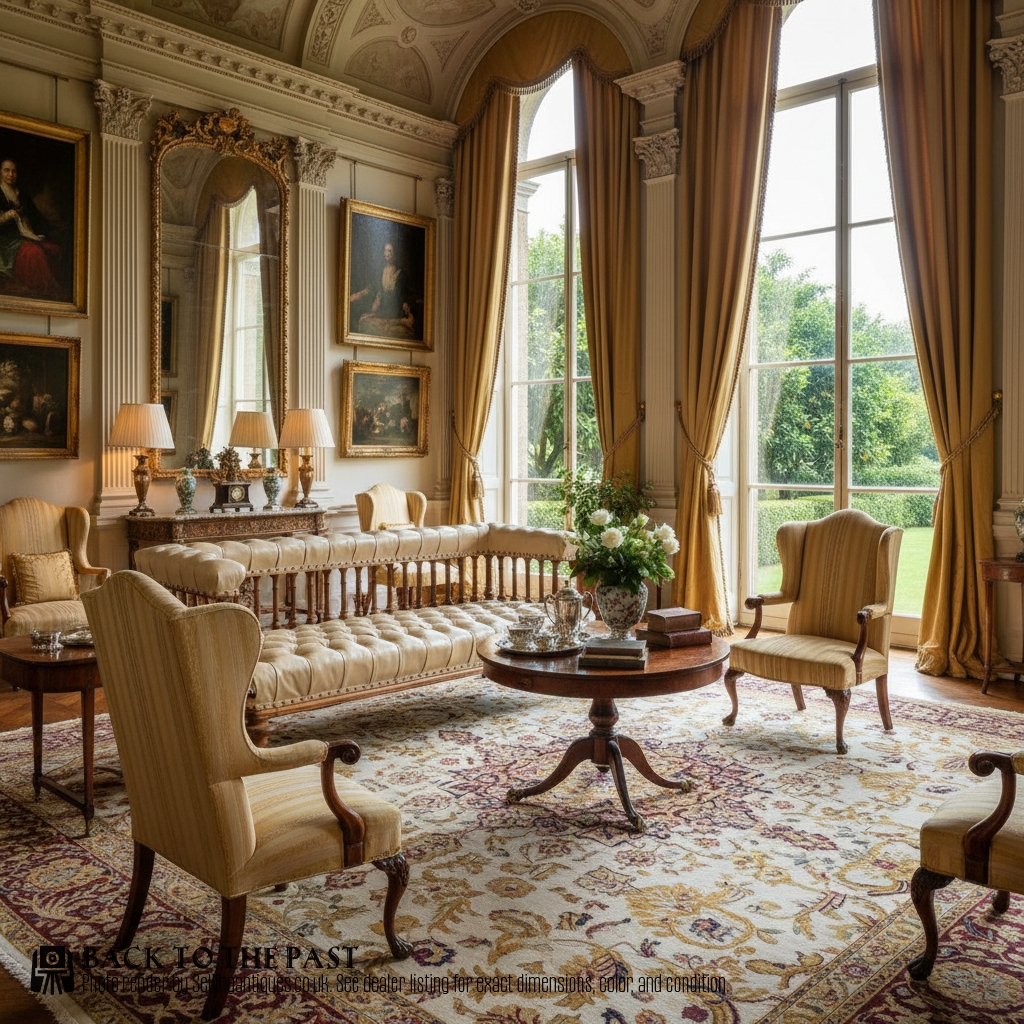
Pair the neutral tone of the leather with complementary period furnishings, balancing Art Deco curves with geometric rugs or Victorian woodwork with heavy drapery. The versatile shade adapts to both dark wood and light interiors.
Allow the sofa to anchor the room by ensuring surrounding pieces do not compete with its distinct silhouette.