




Art Deco Settee
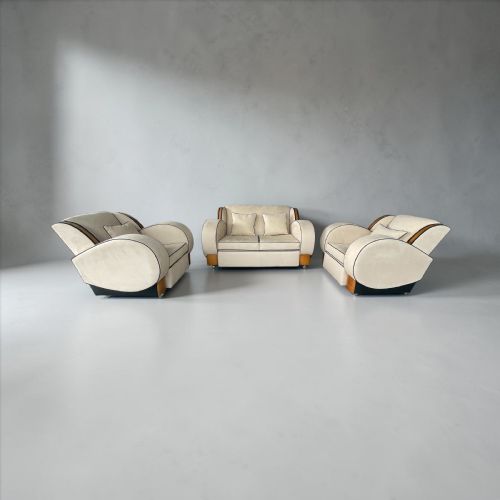
An art deco settee brings bold twentieth-century lines and deep comfort to a room, defined by its characteristic scroll shapes and substantial proportions.
Art Deco Settee
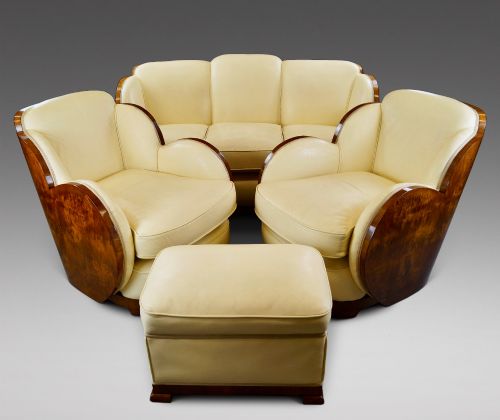
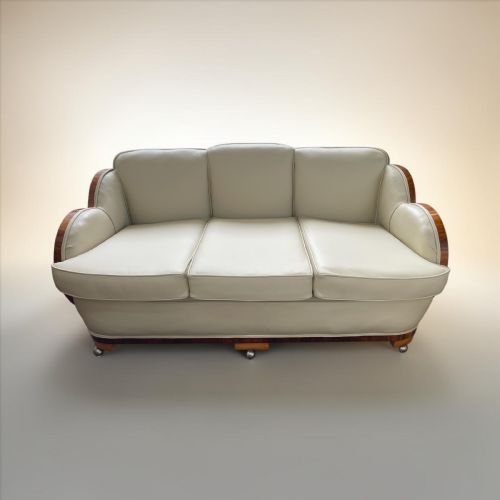
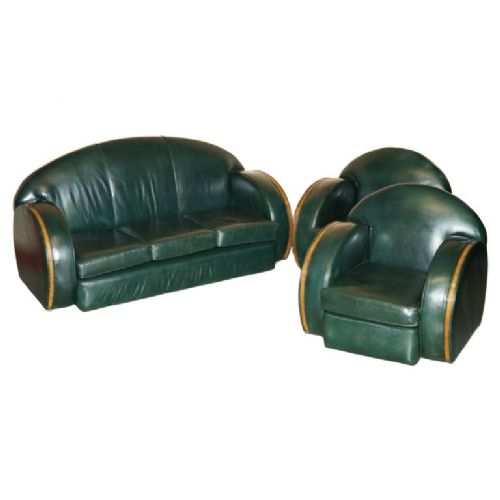
When searching for an art deco settee, buyers encounter substantial three-seater sofas, lounge suites, and compact drop-end designs that date from the nineteen-twenties and nineteen-thirties. The most frequently met examples on this page are generous three-seater configurations, often accompanied by matching armchairs to form complete suites.
The aesthetic embraces both streamlined functionalism and opulent club furniture styles. Pieces range from oak and walnut framed frames with cane work to heavy upholstered forms upholstered in leather, fabric, or moquette.
Makers and designers of the period experimented with dramatic silhouettes, producing scroll-shaped sofas, iconic cloud suites, and architectural seating suited to both domestic interiors and ocean liners.
How they were made
The construction of these settees relies heavily on hardwood frames built to support substantial cushioning and springs. Cabinetmakers applied decorative veneers such as walnut, burr walnut, and satin birch to exposed wooden elements to create rich grain patterns.
Surface ornamentation and detailing often incorporate brass fixtures and polished timber finishes. Upholstery techniques varied from traditional cane work to tight leather coverings and textured fabric finishes.
What varies in quality
Quality in these settees rests primarily on the integrity of the underlying timber frame and the sophistication of the veneer work. Finer examples display carefully selected burr walnut or palisander veneers with seamless grain matching across the curved surfaces.
The distinction between standard production pieces and high-end workshop output lies in the sculptural ambition of the design, such as complex scroll forms and attributed maker craftsmanship.
Harry and Lou Epstein·Mobelfabrik
The Art Deco Settee Glossary
- Cloud suite
- A distinctive style of upholstery characterised by rounded, bulbous cushioning reminiscent of cumulus clouds. This heavy, enveloping form became synonymous with luxurious nineteen-thirties lounge seating.
- Drop end sofa
- A settee featuring adjustable armrests that can be lowered to transform the seating into a daybed or extended lounging space. This mechanism offers versatile domestic utility.
- Palisander
- A dense, dark exotic hardwood often utilised for its striking grain patterns in high-end cabinet work. It provides a luxurious polished surface on statement furniture.
- Moquette
- A heavy, durable woven pile fabric frequently used for upholstery in public spaces and transport during the early twentieth century. It offers a tactile, hard-wearing surface texture.
- Bergere
- A traditional upholstered armchair or sofa style featuring exposed wooden frames and woven cane sides or backs. The technique adds lightness and visual texture to heavy timber designs.
- Veneer
- A thin layer of decorative wood applied over a secondary timber base to create a uniform exterior appearance. Burr walnut veneers utilise knotty growths for intricate, swirling patterns.
Art Deco Settee: Frequently Asked Questions
How do I identify a true nineteen-thirties settee?
Authentic pieces from this decade usually display characteristic geometric or rounded waterfall lines, utilising timbers like walnut and heavy leather upholstery.
Construction methods and material choices from the period help distinguish genuine twentieth-century examples from later reproductions.
Are these sofas suitable for daily use?
Many examples are built with robust hardwood frames and resilient sprung interiors designed for regular seating. Some older pieces may require professional reupholstery to restore their original comfort.
Checking the internal support ensures the furniture withstands everyday domestic living.
What is a cloud suite?
A cloud suite refers to heavily upholstered lounge furniture with rounded, cushion-heavy profiles that mimic cloud formations. These sets are prized for their dramatic silhouette and deep comfort.
They represent the bolder, more decadent end of interwar interior design.
How should I care for leather upholstery?
Leather surfaces require regular conditioning to prevent the hide from drying out and cracking over time. Keeping the material away from direct sunlight preserves its natural colour and supple texture.
Gentle cleaning with appropriate specialist balms maintains the historic finish of vintage hides.