




Art Deco Lounge Sofa
An art deco lounge sofa brings sculptural volume and low-slung comfort into a room, defining an interior through generous curves and rich materials.
Art Deco Lounge Sofa
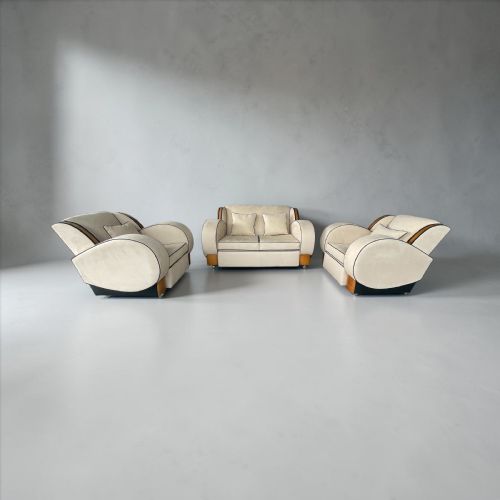
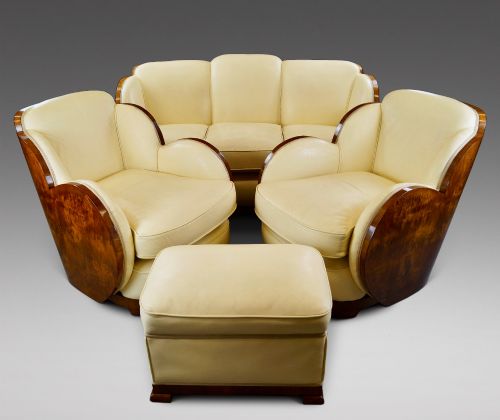
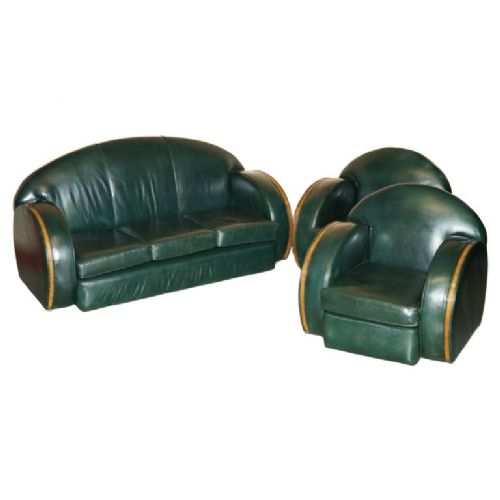
When you search for an art deco lounge sofa, you encounter substantial seating options originating from the 1920s and 1930s. The listings show these pieces frequently appearing as part of matching three-piece suites or sets that include armchairs and sofas.
Forms span from rounded cloud shapes to structured tank suites and low day beds. You also find club armchairs and settee configurations designed for heavy lounging.
Origins include English workshops and ocean liner interiors, grounding the furniture in robust domestic and institutional history.
Materials and construction
Construction relies upon internal hardwood frames supporting deep cushioning upholstered in leather or fabric. Upholstery choices range from green and brown leather to patterned textiles.
Cabinetwork elements utilise walnut, burr walnut, and walnut veneer to provide rich, figured wood surfaces along the bases and arms. Brass accents occasionally appear as detailing on these frames.
Listings demonstrate materials including leather, walnut, burr walnut, hardwood, brass, and walnut veneer across pieces dated to the 1920s and 1930s.
Assessing quality in the range
Quality reveals itself through the confidence of the silhouette and the grain selection in the wood veneers. Bold cloud shapes and matched burr walnut surfaces demonstrate superior design ambition.
The integration of the leather or fabric with the internal framing dictates the visual weight of the piece. Suites attributed to named makers command greater attention through precise proportions.
Harry and Lou Epstein·Syrie Maugham
The Art Deco Lounge Sofa Glossary
- Cloud suite
- A seating group characterised by rounded, billowing upholstery forms that mimic stacked clouds. This style defines much of the distinctive seating from the 1930s.
- Tank suite
- A heavy, blocky seating form with solid proportions reminiscent of mechanical strength. These sets offer an alternative to rounded cloud furniture.
- Burr walnut
- A wood veneer taken from the knotted growths of walnut trees, producing swirling, highly decorative grain patterns. Makers applied this to highlight prominent surfaces.
- Day bed
- A long seating unit intended for reclining during the day rather than sleeping overnight. Surrealist examples in this category draw upon modernist interior trends.
Art Deco Lounge Sofa: Frequently Asked Questions
What defines an art deco lounge sofa?
An art deco lounge sofa relies on low, heavy proportions and smooth, rounded upholstery lines. These pieces often feature generous armrests and deeply padded seats.
Materials typically combine rich leather or fabric with polished wood veneers like walnut. The overall aesthetic prioritises comfort paired with strong architectural presence.
How do I care for vintage leather?
Vintage leather requires regular conditioning to prevent the hide from drying and cracking over time. Avoid placing the sofa near direct heat sources or strong sunlight.
Clean the surface gently using specialised leather balms rather than harsh chemical detergents. Keeping the leather nourished preserves its natural suppleness.
Are these sofas comfortable for daily use?
These sofas were built for deep, relaxed seating with heavy internal padding. The low height and wide arms support various lounging postures.
Many surviving pieces retain comfortable sprung interiors, though some historic examples benefit from professional reupholstery to restore support.
How do I date a 1930s sofa?
Dating relies on stylistic markers such as cloud-shaped curves, waterfall edges, and the use of burr walnut veneers. Construction methods inside the frame provide further chronological clues.
Documentation or attribution to specific makers active in the interwar period also helps confirm the manufacturing era.