
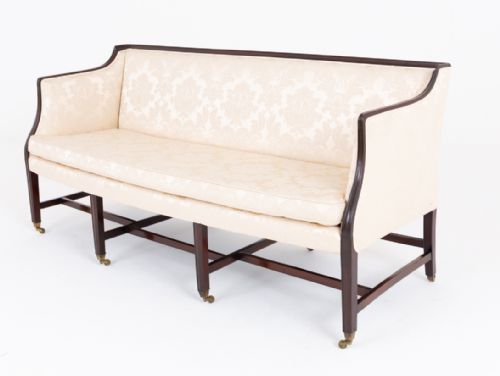


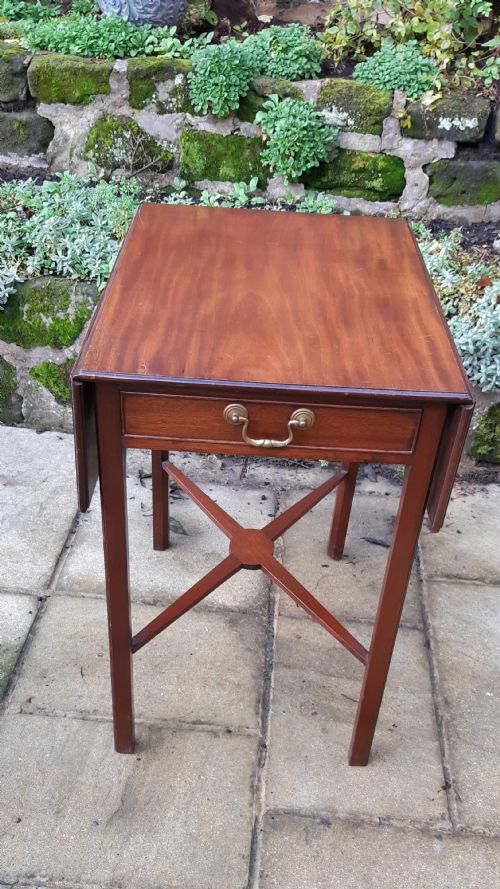

Hepplewhite Style Sofa
A hepplewhite style sofa brings the elegance of the eighteenth century into a room through carved timber and graceful lines.
Identifying a Hepplewhite Style Sofa
A hepplewhite style sofa embodies the refined neoclassical taste of the Georgian era and its later revivals, offering seating that balances structural lightness with decorative restraint. When a buyer searches for a hepplewhite style sofa, they encounter forms characterised by curved wooden frames and distinctive back designs.
The versions most frequently met on this page span the Georgian period and the nineteenth century, including the Victorian era and Edwardian period. These pieces appear as multi-seater settees, camel back sofas, serpentine sofas, and triple chair back sofas.
Makers and manufacturers during these periods drew inspiration from George Hepplewhite's published designs, translating shield backs and chair backs into upholstered furniture. The resulting silhouettes range from simple wooden frames to elaborate ribbon-carved or pierced splats.
Construction and Materials
The primary framing material recorded across these pieces is solid mahogany, selected for its strength and rich grain. Carpenters shaped this timber to form serpentine rails, curved arms, and supportive legs.
Upholstery forms an integral part of the construction, employing traditional fabrics such as damask and upholstery fabric to cover sprung or stuffed seats. Brass details occasionally appear as structural or decorative fixings, while some frames receive a painted finish.
Retail Price Guide 2026
Typical UK retail prices for hepplewhite style sofa, calculated from the Sellingantiques database of over a million retail prices indexed since 2003. This retail price guide relies exclusively on Sellingantiques data; no external sources or auction records are used, so the figures do not describe the wider market.
Listings feature mahogany framing paired with damask and upholstery fabric across the Georgian and nineteenth-century periods.
Assessing Quality and Execution
The distinction between a standard piece and an exceptional one lies in the crispness of the timber carving and the fluidity of the frame's silhouette. Superior examples exhibit finely detailed woodwork on the chair backs and legs, reflecting the skill of the cabinetmaker.
Proportion and structural harmony separate the refined examples from lesser adaptations. A well-balanced serpentine front and smoothly integrated arm supports demonstrate a higher tier of period craftsmanship.
The Hepplewhite Style Sofa Glossary
- Camel back
- A sofa or settee back featuring a sweeping, continuous convex curve that resembles a camel's hump. This profile provides both ergonomic support and a graceful visual line.
- Shield back
- A chair-back or settee-back design shaped like a traditional heraldic shield. It typically incorporates pierced wooden splats and carved motifs.
- Serpentine
- A furniture front or edge that curves outward in the centre and inward at the sides. This undulating shape adds movement and complexity to the wooden frame.
- Settee
- An upholstered wooden bench with a back and arms, designed to seat multiple people. It represents a primary seating form before the widespread adoption of large modern sofas.
- Georgian
- Pertaining to the period of the British monarchs George I through George IV, spanning the eighteenth and early nineteenth centuries. It defines an era of classical proportion in furniture design.
Frequently Asked Questions
What is a hepplewhite style sofa?
A hepplewhite style sofa is a piece of seating furniture inspired by the neoclassical designs published in the eighteenth century. These pieces typically feature exposed mahogany frames, curved backs, and upholstered seats.
They draw on the aesthetic principles associated with George Hepplewhite, favouring lighter proportions and graceful decorative details over heavy Baroque styles.
How do I date a mahogany settee?
Dating a mahogany settee involves examining the construction methods, tool marks, and timber characteristics. Georgian pieces display eighteenth-century joinery, while nineteenth-century revivals often incorporate slightly different framing techniques.
Comparing the specific back design, such as a shield back or camel back, against known period patterns helps narrow down the timeframe.
How were these settees used historically?
Historically, settees served as formal seating in reception rooms, parlours, and drawing rooms of large houses. They provided comfortable seating for multiple guests while displaying the wealth and taste of the homeowner.
The upholstered seats and decorative frames made them suitable for both social gatherings and private relaxation.
How do I care for antique upholstery and wood?
Caring for these items requires protecting the mahogany frame from direct sunlight and sudden temperature changes to prevent the timber from drying out. Regular dusting with a soft cloth preserves the finish of the wood.
Upholstered surfaces benefit from gentle vacuuming with a low-suction attachment and professional cleaning when required to maintain the fabric.