

Mahogany Upholstered Settee
When choosing a mahogany upholstered settee, you are selecting a substantial seating piece that combines solid timber frames with soft textile coverings for period drawing rooms.
Mahogany Upholstered Settee
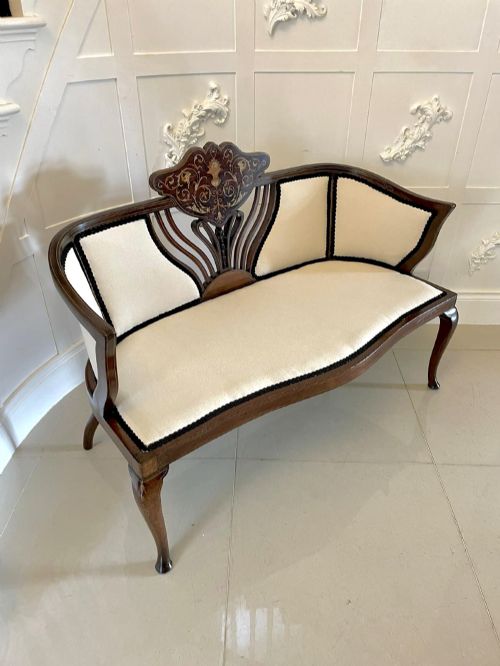
A mahogany upholstered settee is a formal wooden seating bench designed for two or more occupants, featuring padded surfaces supported by exposed timber framing. These items span periods from the eighteenth century through the Edwardian era, encompassing Georgian proportions and later revival styles.
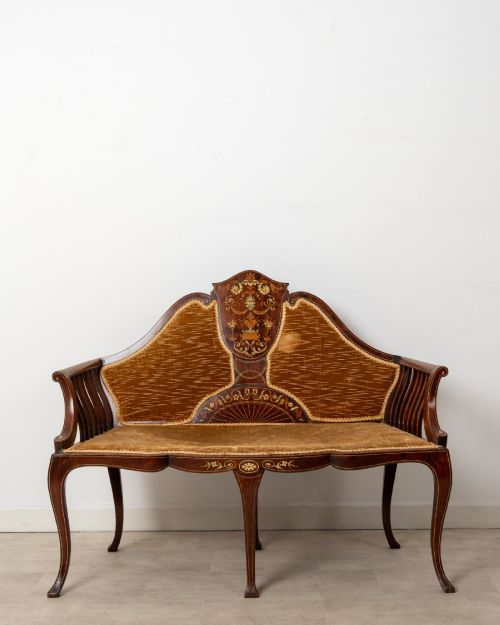
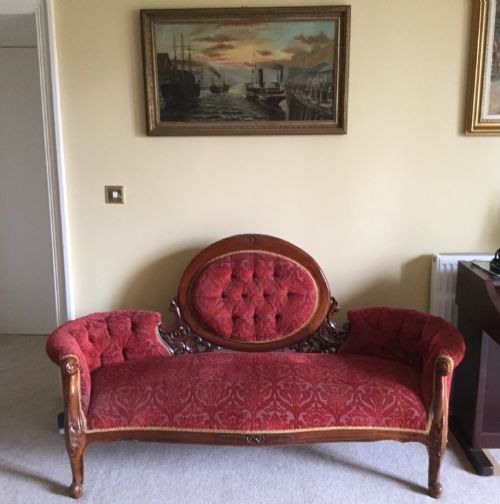
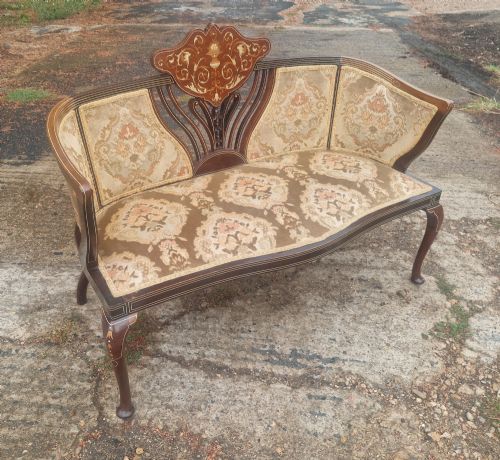
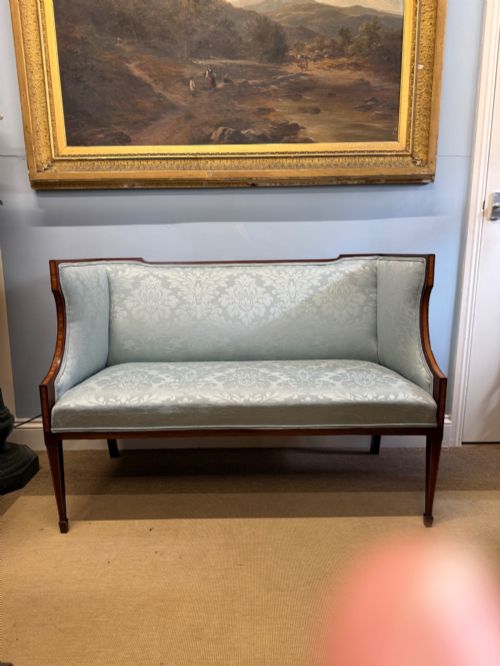
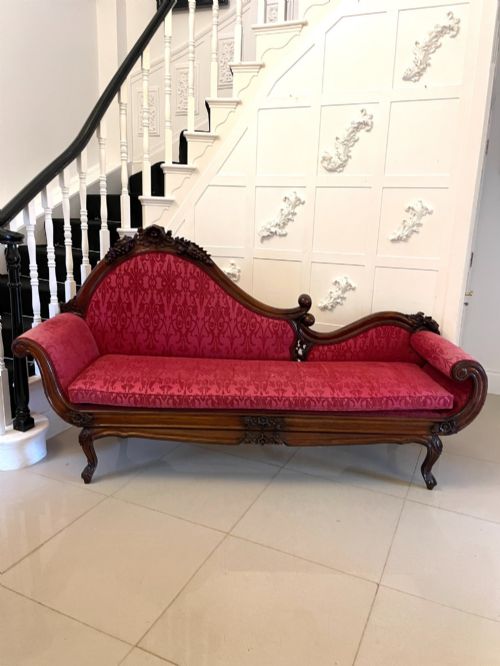
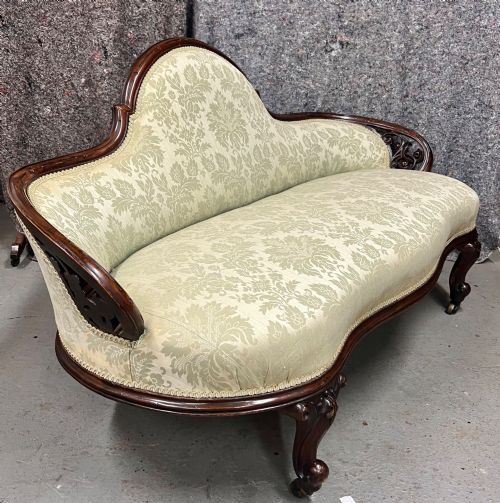
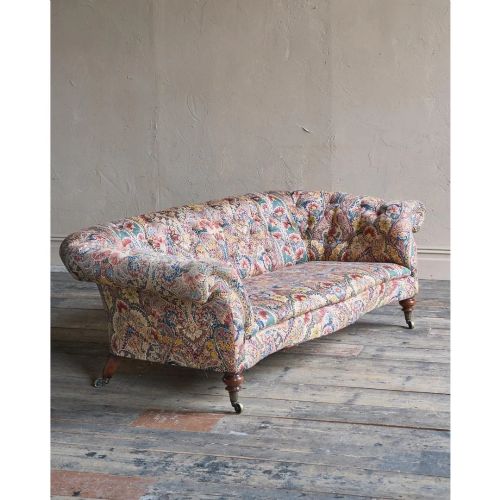
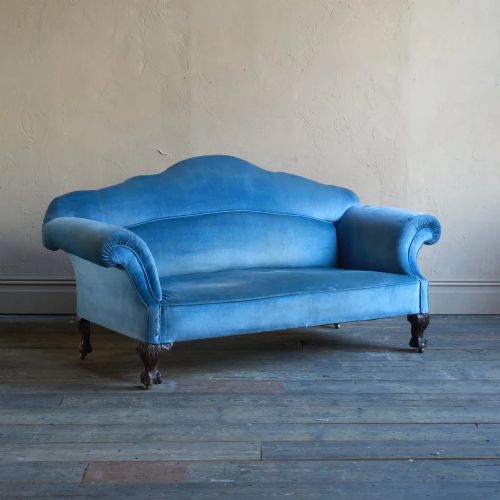
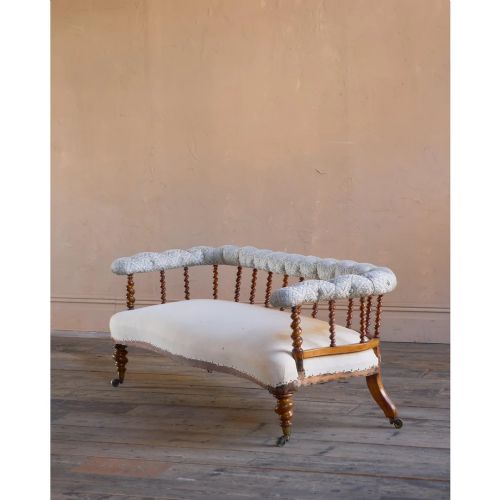
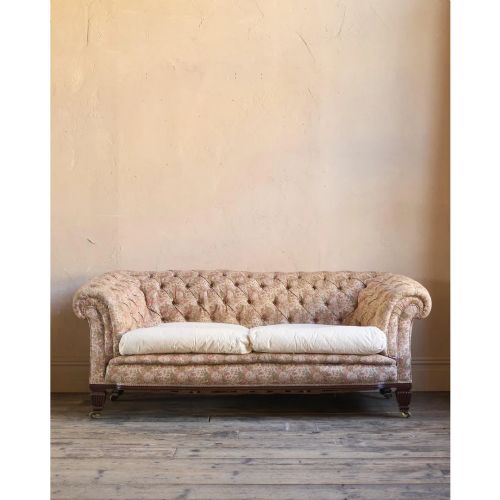
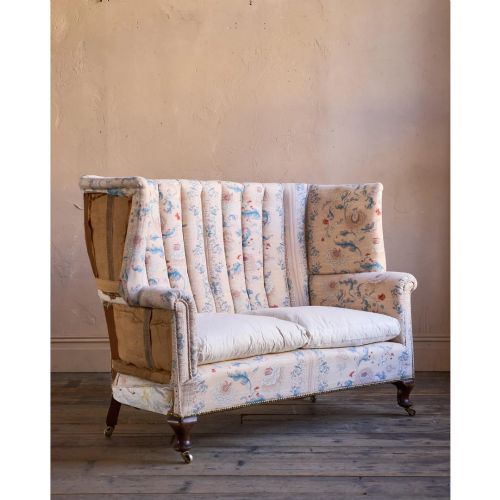
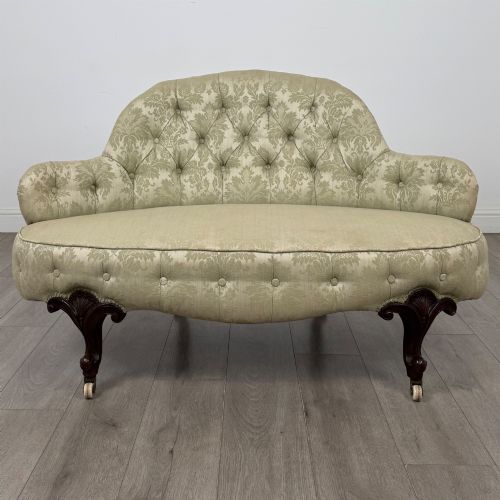
The most common examples on this page are Victorian and Edwardian pieces, frequently displaying mahogany frames paired with inlaid satinwood details or carved show-wood structures. Formats range from camel-back sofas and double-ended couches to salon suites and window seats.
Originating as formal drawing-room seating, these settees served both social gatherings and private repose in period homes. Their enduring appeal lies in the combination of architectural timber framing with comfortable sprung or stuffed upholstery.
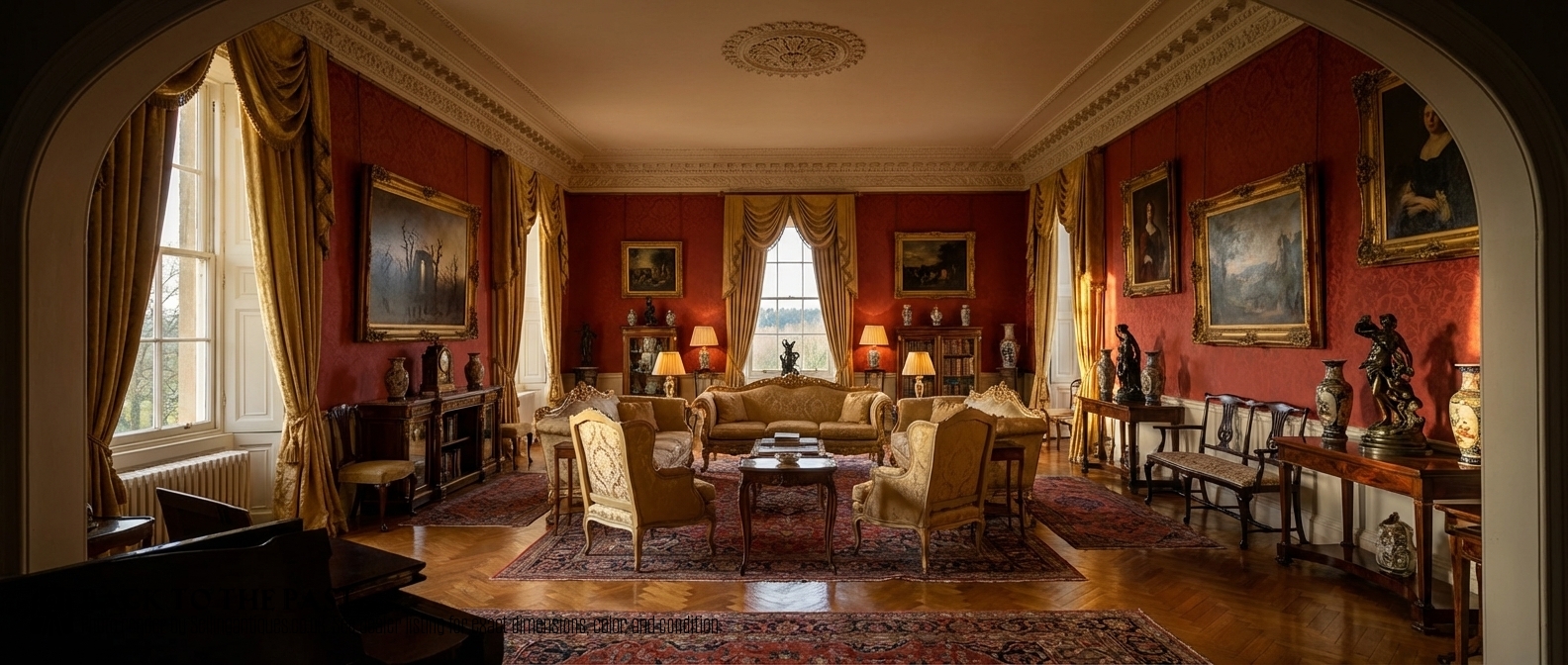
How They Were Made
Makers constructed the structural frames of a mahogany upholstered settee using dense tropical hardwood, frequently shaping the timber through carving, turning, or steam bending. These exposed wooden elements, known as show-wood, often featured delicate satinwood stringing, marquetry inlay, or brass mounts.
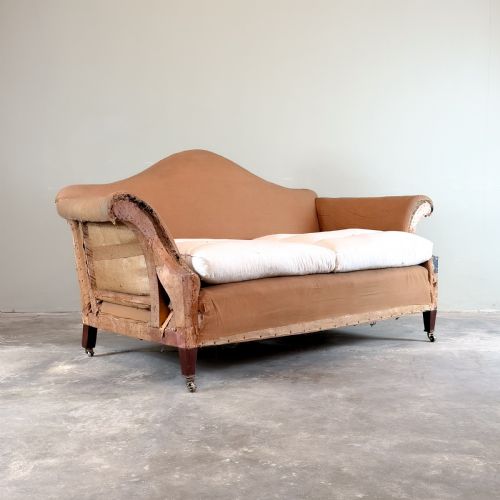
The internal construction relied on traditional joinery methods combined with webbing, hessian, and coiled steel springs to support the seat base. Artisans then applied outer textile layers, securing the coverings with close-piled velvet, damask, brocade, or wool fabric.
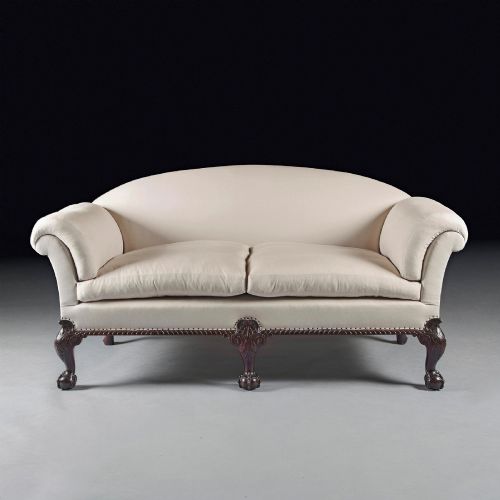
Finishing techniques involved hand-polishing the mahogany to a deep lustre, highlighting the natural grain of the timber alongside the decorative textiles. Structural details such as ball and claw feet, fluted legs, or carved scroll ends were hand-finished by cabinet makers.
Mahogany Upholstered Settee Retail Price Guide 2026
Typical asking prices for mahogany upholstered settee among the pieces listed under this phrase on Sellingantiques today, from the lower quarter to the upper quarter. They describe what is for sale here now, not the wider market.
Several Edwardian window seats managed to squeeze sophistication into the most awkward hallway corners.
What Varies in Quality
The distinction between standard examples and exceptional pieces rests primarily upon the crispness of the timber carving and the architectural proportions of the frame. Superior items exhibit deeply carved details, well-balanced camel-back or serpentine shapes, and choice cuts of figured mahogany.
Upholstery execution also defines the tier of the piece, with finer examples retaining hand-stitched internal springing, traditional stuffing materials like horsehair, and harmonious textile selections that respect the period of the frame. Secondary woods chosen for internal framing further indicate the standard of workshop production.
The integration of decorative flourishes, such as precise satinwood inlay, well-cast brass elements, or intact maker signatures, elevates a settee within its historical category. Lower tiers often show simplified joinery, plain unfigured timber, or later alterations that obscure the original silhouette.
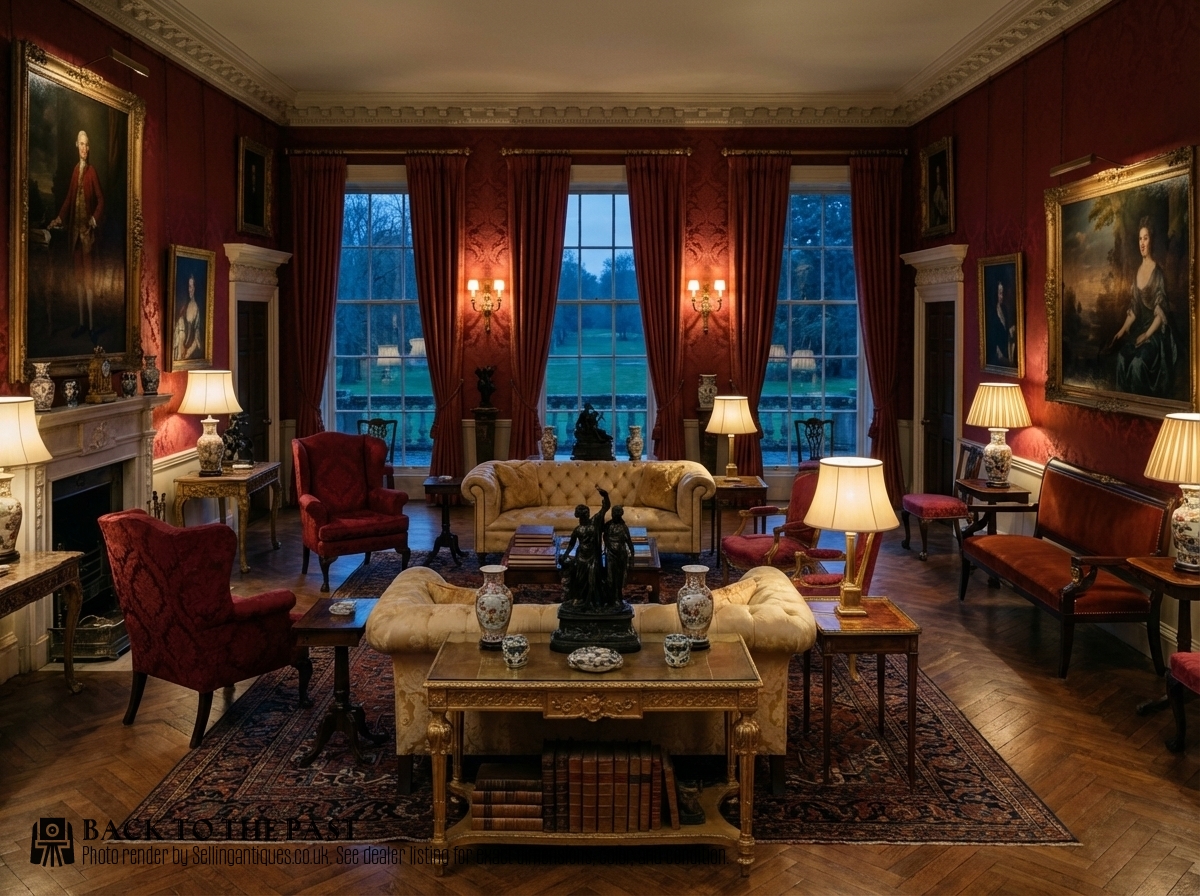
Howard and Sons·C. Hindley and Sons·Hampton and Sons
The Mahogany Upholstered Settee Glossary
- Show-wood
- The exposed polished wooden framework of an upholstered seat that remains visible around the cushions and backrest. This timber element showcases the cabinet maker's carving and polishing skills.
- Damask
- A reversible, figured fabric traditionally woven on a Jacquard loom with patterns formed by contrasting warp and weft threads. It frequently appears as an upholstery material on formal period settees.
- Camel-back
- A sofa or settee backrest profile that curves gracefully upward in a continuous convex arch resembling a camel's hump. This stylistic line originated in the eighteenth century and returned during later revival periods.
- Scroll end
- A rolled or curved wooden or upholstered arm terminal that sweeps outward in a spiral scroll. This form is particularly characteristic of Regency and nineteenth-century couches.
- Hessian
- A coarse woven fabric, typically made from jute fibres, utilised as a foundational scrim beneath the outer upholstery to contain stuffing materials. It provides structural tension across the sprung base of the seat.
Mahogany Upholstered Settee: Frequently Asked Questions
How do I date a mahogany settee?
Dating relies on examining the timber species, joinery methods, and the underlying silhouette of the wooden frame. Earlier eighteenth-century pieces display different proportions compared to later Victorian and Edwardian revival models.
The choice of secondary woods and decorative inlay techniques also provides chronological markers. Comparing the structural framing against documented regional cabinet-making styles helps narrow the period of manufacture.
Are these settees comfortable for daily use?
Many period settees offer firm support derived from traditional coiled spring units and dense stuffing materials. Their ergonomic design reflects the upright posture preferred during the Victorian and Edwardian eras.
While structurally robust, older seating benefits from careful placement and gentle daily use to preserve the integrity of the frame and internal webbing. Modern users often find them well-suited for reading and formal sitting areas.
How should I care for mahogany show-wood?
Maintaining mahogany show-wood requires regular dusting with a soft, dry cloth to prevent particulate accumulation on the polished surface. Avoiding direct sunlight and stable environmental humidity protects the timber from drying and splitting.
Periodic application of appropriate wax polish maintains the moisture and lustre of the polished grain. Care should be taken to shield the polished wooden frame when cleaning adjacent upholstered textile surfaces.
What is a salon suite?
A salon suite comprises a matching set of upholstered seating furniture, typically including a settee accompanied by several matching armchairs or occasional chairs. These coordinated ensembles were designed for formal reception rooms.
The matching timber frames and textile coverings created a unified aesthetic for entertaining guests in nineteenth-century homes. Finding an intact suite represents a complete historical grouping from the period.