

Georgian Mahogany Sofa
A georgian mahogany sofa brings enduring timber grain and fluid scroll arms to a drawing room.
Forms and periods
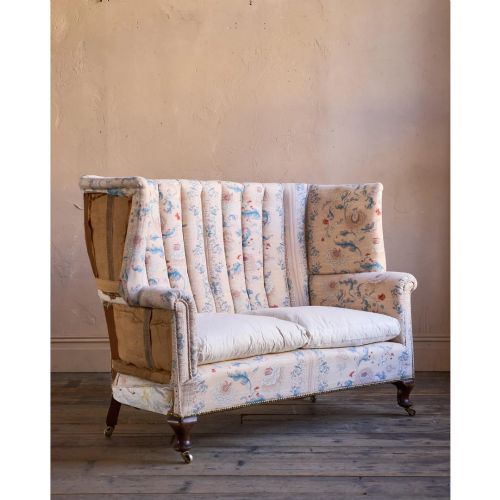
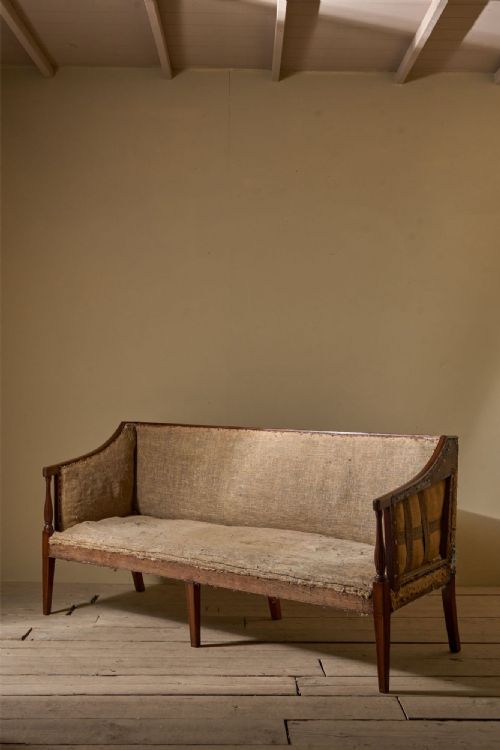
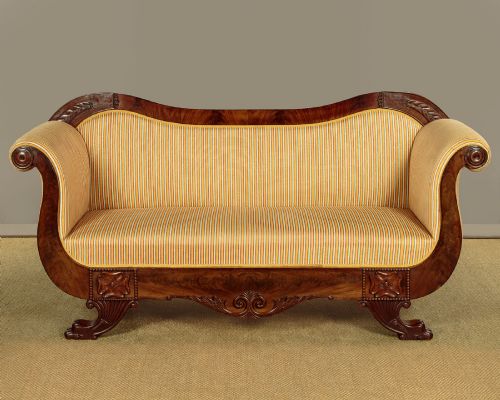
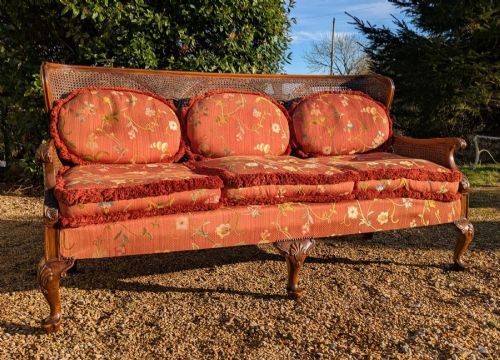
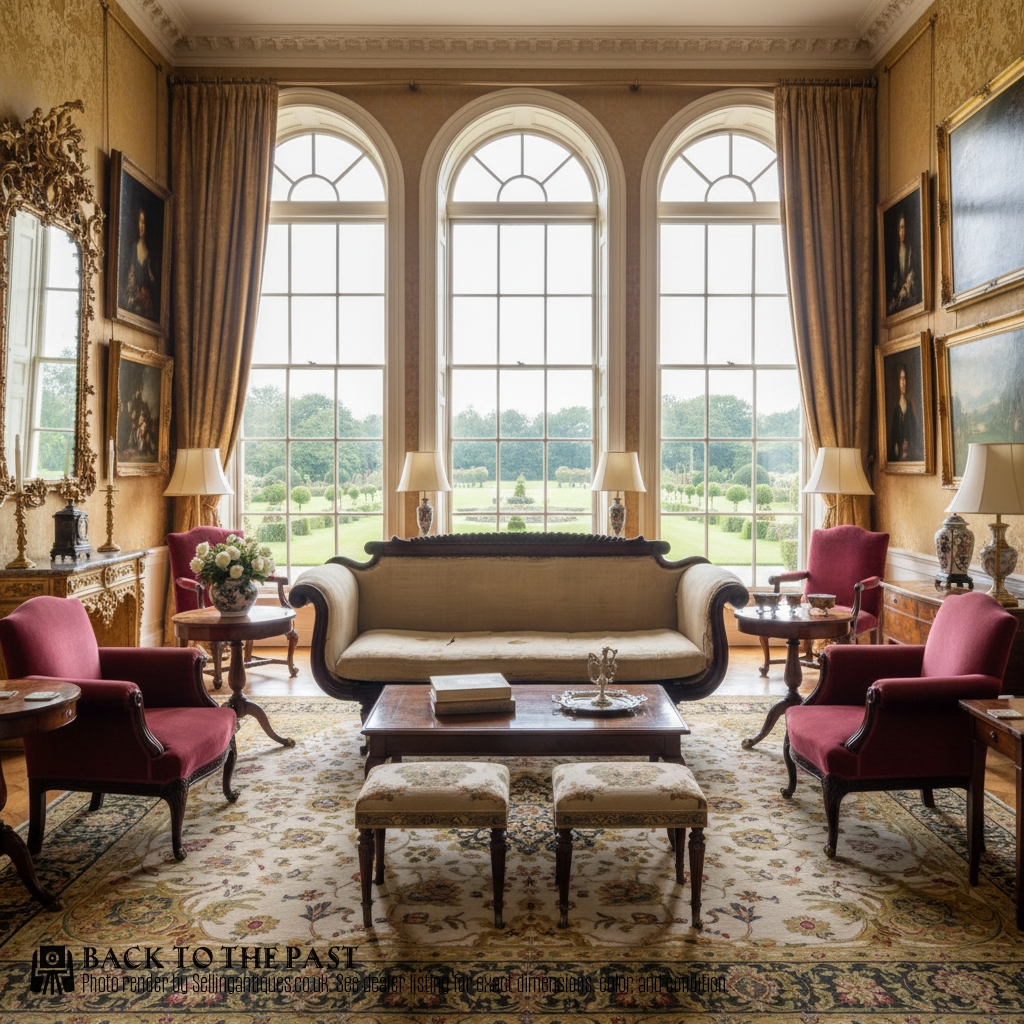
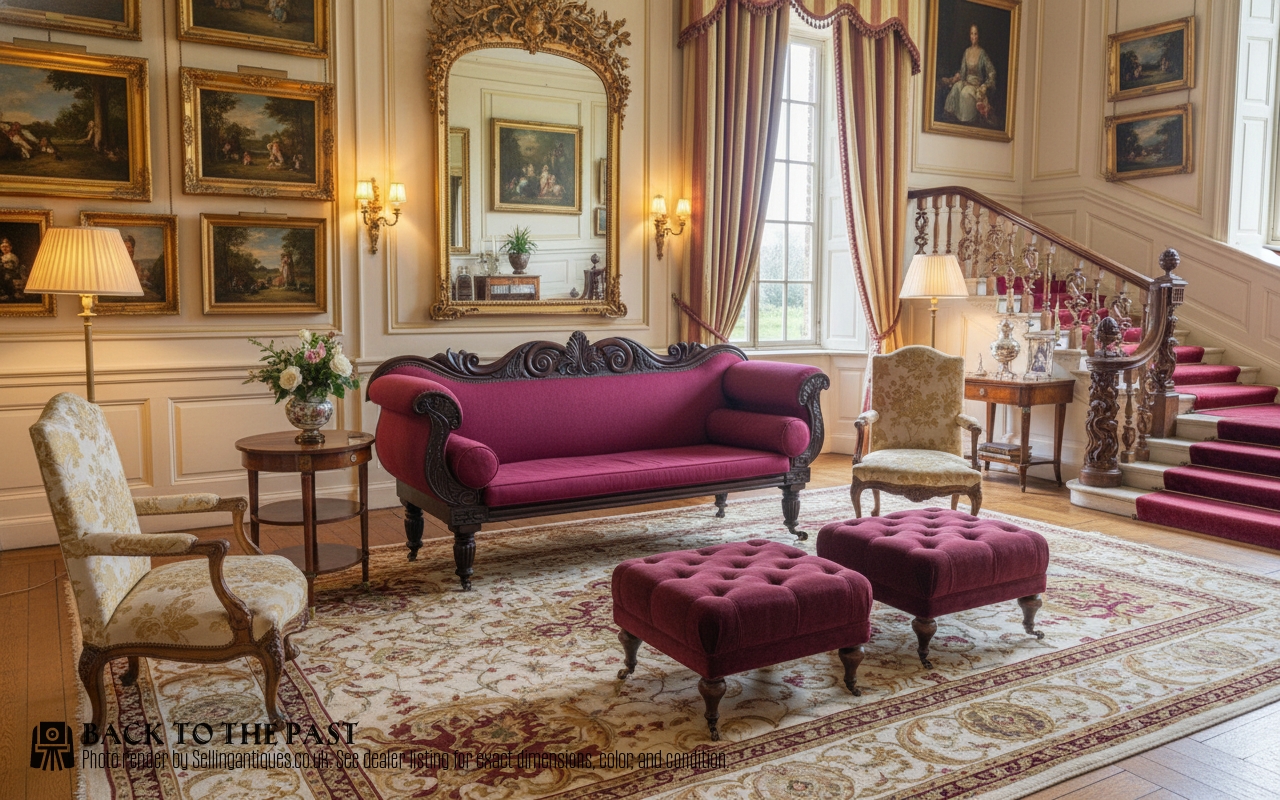
A georgian mahogany sofa spans the late eighteenth and early nineteenth centuries, taking the form of settees, double-ended couches, and triple chair-back designs. You will encounter George III examples alongside Regency and William IV interpretations, often defined by scroll ends or lyre supports.
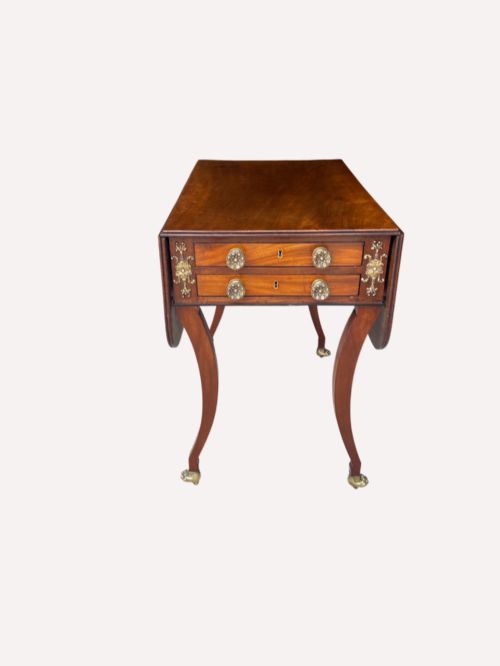
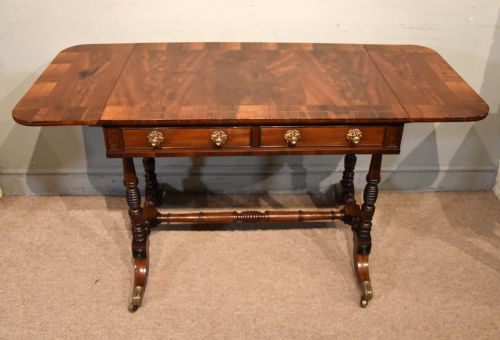
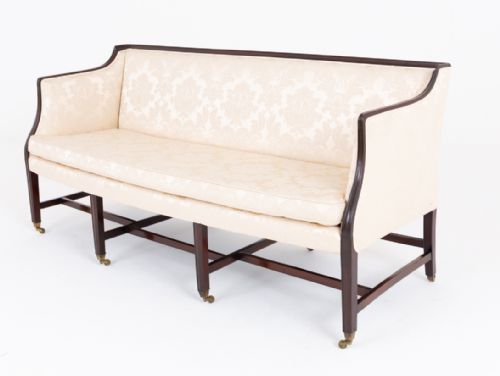
Makers produced both substantial six-leg frames and lighter sofa tables for parlour use, though primary seating forms rely on exposed timber rails. Proportions shift from restrained rectilinear outlines to sweeping scroll arms and bold carved details as the nineteenth century progresses.
Materials and construction
Frames rely on solid mahogany, sometimes combined with satinwood inlay or brass fittings, paired with underlying hessian and webbing. Upholstery fabrics range from damask and velvet to contemporary coverings applied over traditional stuffing.
Joinery techniques involve pegged mortise and tenon joints for structural stability, supporting carved show-wood frames that leave the timber grain visible along the arms and legs.
Retail Price Guide 2026
Typical UK retail prices for georgian mahogany sofa, calculated from the Sellingantiques database of over a million retail prices indexed since 2003. This retail price guide relies exclusively on Sellingantiques data; no external sources or auction records are used, so the figures do not describe the wider market.
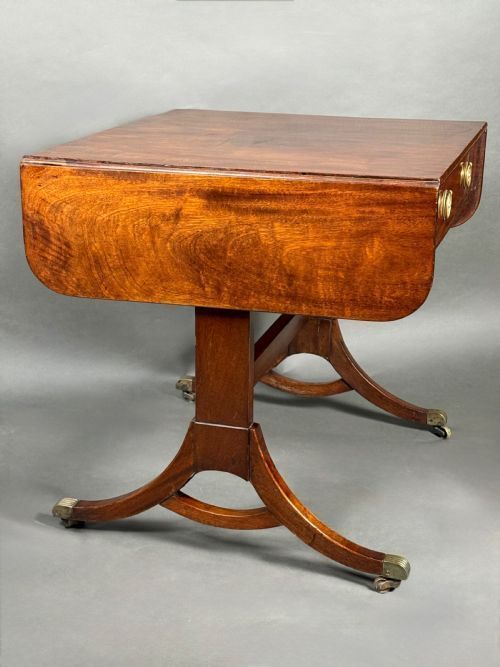
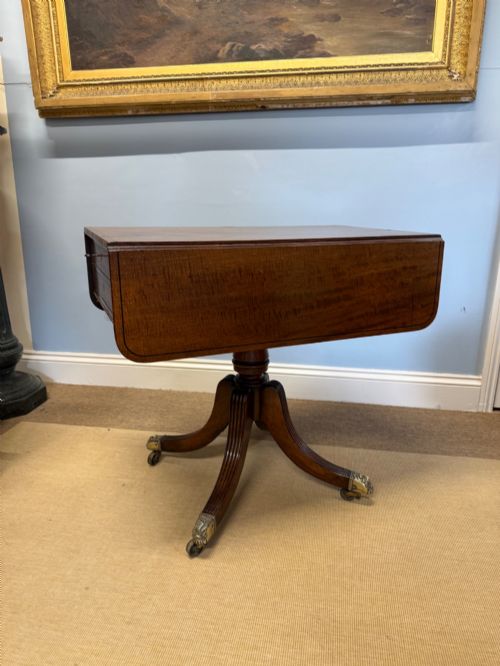
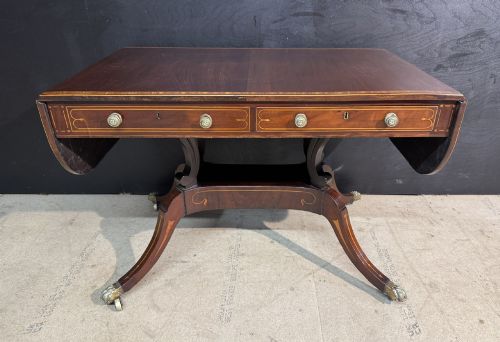
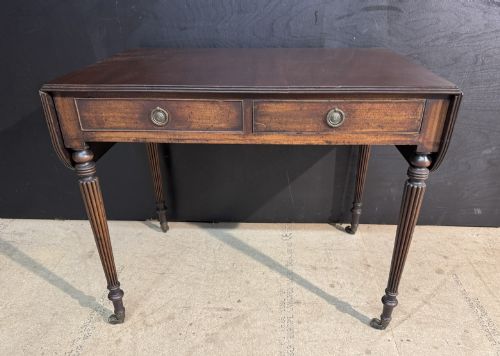
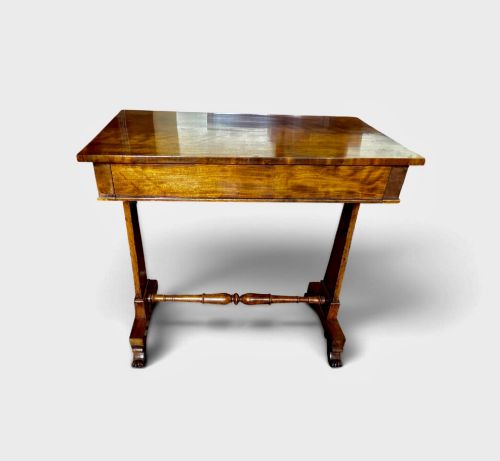
Early nineteenth-century makers evidently believed nobody could ever own too many surfaces for tea, resulting in an abundance of sofa tables.
Judging the range
The distinction between standard production and superior craftsmanship rests in the depth of carving and the selection of timber figure. Crisp lines along scroll arms and well-proportioned leg turnings elevate a piece above simpler vernacular alternatives.
Originality of the frame construction and the integrity of the timber influence overall merit. Pieces retaining their primary show-wood without extensive replacement timber command greater regard from collectors.
The Georgian Mahogany Sofa Glossary
- Scroll end
- A sofa arm that curls outward in a tight or sweeping volute. This shape defines many Regency and George III seating designs.
- Settee
- An upholstered bench with a back and arms, seating multiple people. The term frequently interchanges with sofa in early records.
- Drop leaf
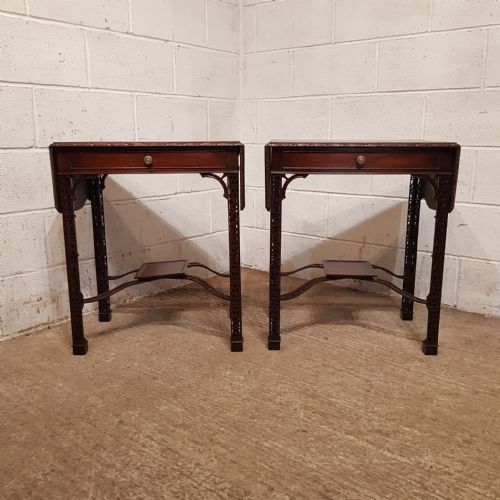
- A table top with hinged flaps that fold down at the sides. This mechanism appears on numerous mahogany sofa tables in the archive.
- Pedestal
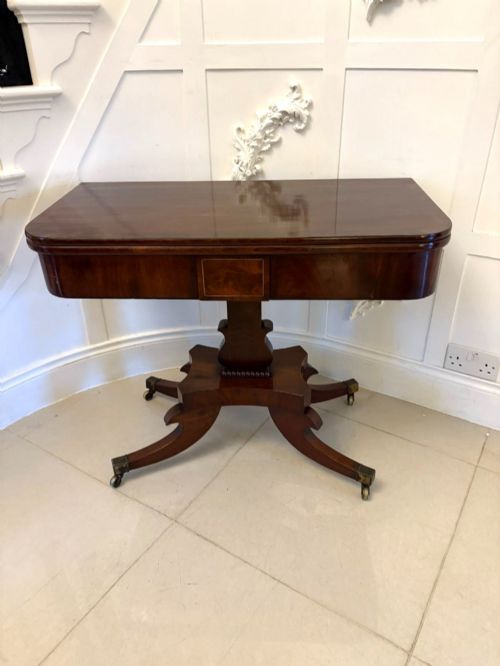
- A central column supporting a table or sofa structure. They often stand on splayed brass-capped legs.
- Damask
- A reversible figured fabric woven on a loom, utilised for traditional upholstery. It provides a patterned texture across the seating surface.
Frequently Asked Questions
How do I date a mahogany sofa?
Examine the leg shape, arm profile, and overall frame proportions against known design shifts from the eighteenth to the nineteenth century. Straight legs often suggest earlier George III work, while sweeping scroll arms point toward Regency or William IV periods.
Secondary woods and construction marks also help determine age. Hand-cut joints and original timber patination provide clearer chronological clues than surface finish alone.
What is the difference between a settee and a sofa?
Historically, settees often featured partially upholstered or exposed wooden backs, whereas sofas offered fully padded construction designed for reclining. Over time, the terms merged in everyday dealer descriptions.
Many listings apply both labels interchangeably to larger upholstered seating forms. Examining the frame architecture remains the best way to distinguish between them.
Are these sofas comfortable for daily use?
Period seating offers a firmer sit than modern equivalents due to traditional stuffing materials like horsehair and hessian. The shallow depth and upright backs reflect period standards of posture.
Comfort levels depend heavily on modern reupholstery choices. Re-webbing and padding adjustments during restoration can adapt the piece for contemporary living rooms.
How should I care for mahogany frames?
Keep mahogany furniture away from direct sunlight and heat sources to prevent the timber from drying and splitting. Regular dusting with a soft, dry cloth preserves the polished surface.
Apply quality beeswax sparingly to nourish the wood grain. Avoid commercial silicone sprays that build up and dull the historic finish.