

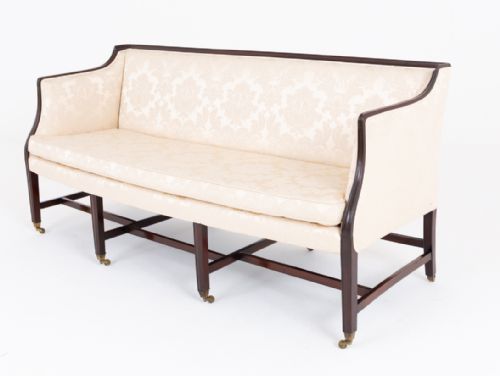
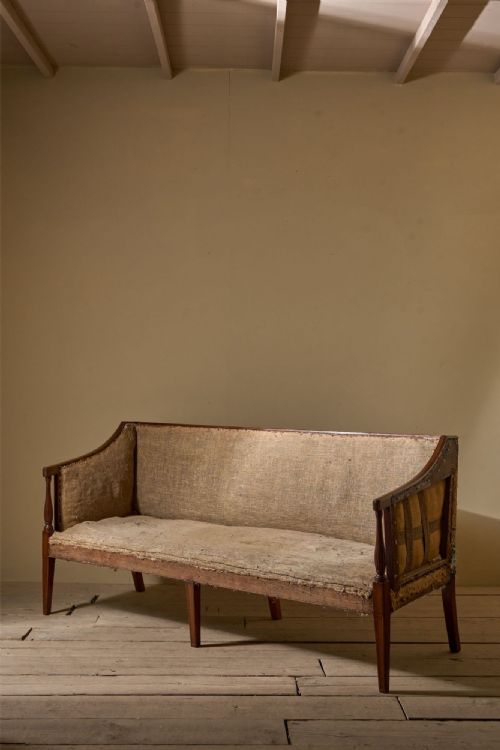


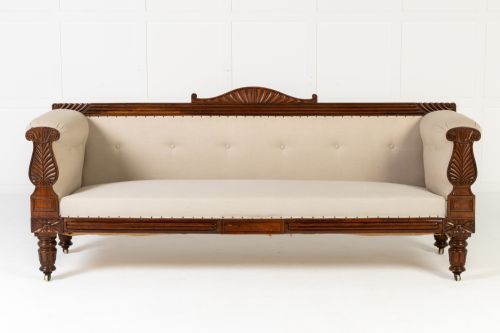


Georgian Period Settee
A georgian period settee brings timeless seating to a room, offering generous proportions and rich timber frames that anchor traditional spaces.
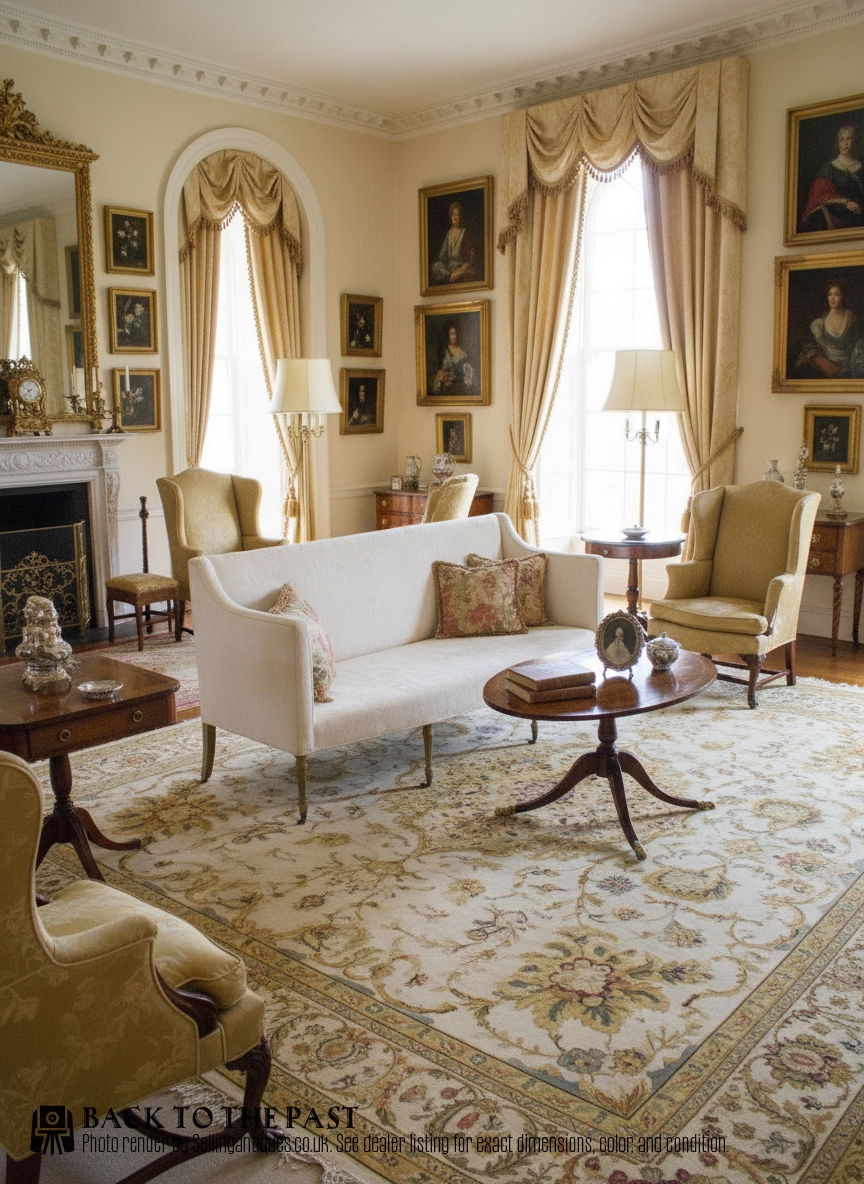
Georgian Period Settee
When searching for a georgian period settee, buyers encounter formal seating options spanning the eighteenth and nineteenth centuries, alongside later revival pieces. The selection includes grand camel-backed designs, double scroll-ended frames, and triple-back variations.
Most examples found on this page date from the Georgian era or the Regency period, with several later nineteenth-century interpretations also present. These items function primarily as large sofas or settees, with occasional garden benches appearing in iron.
The forms range from compact two-seat settees to large four-seater options, incorporating stylistic influences such as Chippendale, Hepplewhite, and Queen Anne. Buyers meet both authentic eighteenth-century seating and later revival pieces sharing the same structural vocabulary.
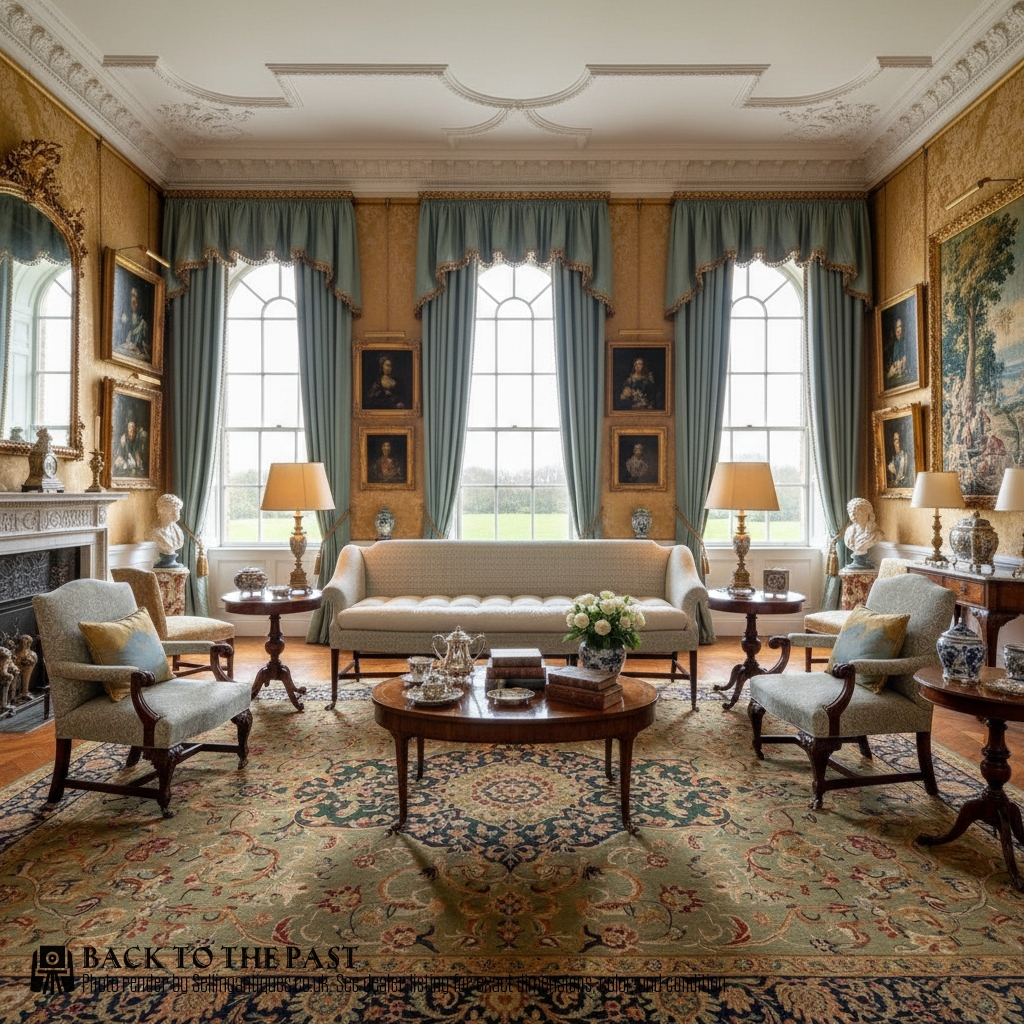
Materials and construction
Timbers form the core of these frames, with mahogany and rosewood dominating the selection, supplemented by walnut, giltwood, and simulated rosewood. Metal elements such as brass appear alongside wrought iron on specific garden forms.
Upholstery relies on fabric, damask, hessian, and general upholstery fabric to cover the substantial seats and backs. Carving and joinery define the timber frames, supporting complex shapes like camel backs and lyre-shaped ends.
Georgian Period Settee Retail Price Guide 2026
Typical asking prices for georgian period settee among the pieces listed under this phrase on Sellingantiques today, from the lower quarter to the upper quarter. They describe what is for sale here now, not the wider market.
Listings feature mahogany, rosewood, walnut, and wrought iron, spanning the Georgian, Regency, and Queen Anne periods.
Assessing quality in seating
The distinction between tiers rests upon the fluidity of the timber carving and the integrity of the frame's proportions. Superior pieces demonstrate crisp execution on details like lion mask hairy paw feet or intricate camel backs.
Material selection further divides the range, where dense, figured mahogany or rich rosewood elevates a piece above simpler timber examples. The harmony between the original frame structure and the chosen upholstery finish dictates the overall presence of the settee.
Giles Grendey
The Georgian Period Settee Glossary
- Camel back
- A serpentine, undulating top rail resembling a camel's hump, common on formal eighteenth-century settees. This profile provides both visual elegance and comfortable support.
- Giltwood
- Timber coated with gold leaf or gilt preparation, seen on high-status frames from the eighteenth century. It adds a reflective, decorative sheen to the carved structure.
- Scroll end
- A sweeping, curved arm or terminal that rolls outward, frequently seen on Regency period sofas and chaise longues. This shape emphasises horizontal flow.
- Hepplewhite manner
- A style derived from the design books of George Pendleton Hepplewhite, characterised by slender tapered legs and shield or camel backs. It brings a lighter aesthetic to mahogany frames.
- Triple-back
- A settee backrest constructed as three conjoined chair forms, creating a distinct division across the seating span. This layout is typical of specific Georgian style multiple-seaters.
Georgian Period Settee: Frequently Asked Questions
How do I identify a genuine georgian period settee?
Examine the timber species, frame construction methods, and stylistic cues like carved cabriole legs or camel backs. Genuine pieces from the era display period-appropriate joinery and timber ageing.
Compare the proportions and decorative details against documented examples from the eighteenth and early nineteenth centuries to confirm the period.
Where should I place a large settee in my home?
These substantial pieces anchor principal reception rooms, long hallways, or spacious drawing rooms where their length can be appreciated. Ensure adequate clearance around the frame to showcase the carved arms and back.
Positioning them away from direct sunlight protects the timber and upholstery fabric from fading over time.
What is the difference between a sofa and a settee?
Historically, settees often featured upholstered seats and backs within exposed wooden frameworks, while sofas typically offered more fully upholstered construction. Over time, the terms became largely interchangeable in marketplace descriptions.
Both forms serve the same primary function of providing multi-person seating within traditional interiors.
How do I care for antique upholstery and timber?
Dust timber frames regularly with a soft, dry cloth and avoid harsh chemical polishes that can degrade the finish. Keep upholstered surfaces clean by gentle vacuuming with a low-suction attachment.
Maintain stable room humidity to prevent the wood from drying out and the fabric from straining against the frame.