
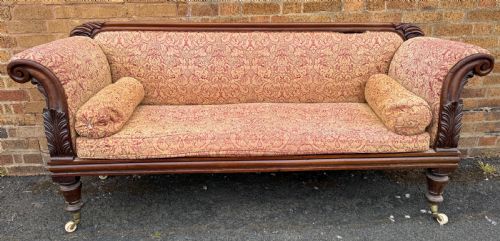


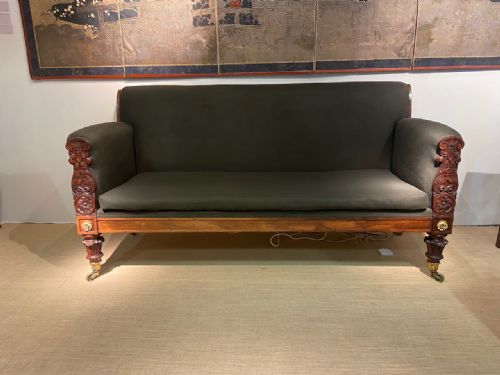
William IV Settee
A William iv settee brings substantial nineteenth-century presence to a room, offering deep comfort paired with robust architectural timber frames.

William IV Settee
A william iv settee is a nineteenth-century seating form that encompasses double ended sofas, scroll end settees, and chaise longues. These pieces are defined by their generous proportions and architectural lines.
You will most frequently encounter mahogany framed examples alongside pieces executed in rosewood. The listings show substantial two-seater settees and large country house sofas designed for formal drawing rooms.
The design vocabulary draws heavily upon Regency and Rococo Revival influences. Double scroll ends and show frames dominate the pieces recorded in this category.
Materials and construction
Makers utilised dense native and imported timbers, primarily solid mahogany and rosewood, to construct the heavy load-bearing frames. Brass fittings and castors frequently support the feet.
Upholstery techniques involve traditional stuffing secured over webbing and hessian foundations. Show frames display carved wooden details while enclosing upholstered backs and seats.
Coverings span damask, silk, and leather, often applied over complex double scroll end structures.
William IV Settee Retail Price Guide 2026
Typical asking prices for william iv settee among the pieces listed under this phrase on Sellingantiques today, from the lower quarter to the upper quarter. They describe what is for sale here now, not the wider market.
The recorded listings show pieces spanning the nineteenth century, with specific dates pointing to eighteen thirty and eighteen thirty-five.
Judging quality and execution
Quality rests upon the crispness of the timber carving and the weight of the mahogany or rosewood framing. Superior pieces exhibit deeply articulated scroll ends and substantial proportions.
The integrity of the show frame and the scale of the timber dictate the standing of a piece within its period. Finer examples display harmonious grain patterns in the rosewood or mahogany veneers and solids.
The William IV Settee Glossary
- Scroll-end
- A structural arm or terminal carved into a tight, inward-curling spiral shape. This form characterises the ends of nineteenth-century settees and couches.
- Show frame
- A exposed wooden framework surrounding the upholstered elements of a seat. It displays the timber grain and carved details rather than concealing them beneath fabric.
- Chaise longue
- An elongated seating form designed for reclining, combining a chair with an extended footrest. Examples appear in mahogany and rosewood with upholstered backs.
- Double ended
- A seating configuration featuring symmetrical scroll ends at both extremities of the frame. This allows a user to recline comfortably against either side.
- Rococo revival
- A mid-nineteenth-century decorative style reviving asymmetrical flowing curves and naturalistic ornamentation. It appears on carved mahogany frames from this period.
William IV Settee: Frequently Asked Questions
How were these settees used originally?
They served as formal drawing room seating designed for upright sitting or reclining during the nineteenth century.
Their substantial scale suited large country house interiors where they acted as central architectural and social furniture pieces.
How do I live with a william iv settee?
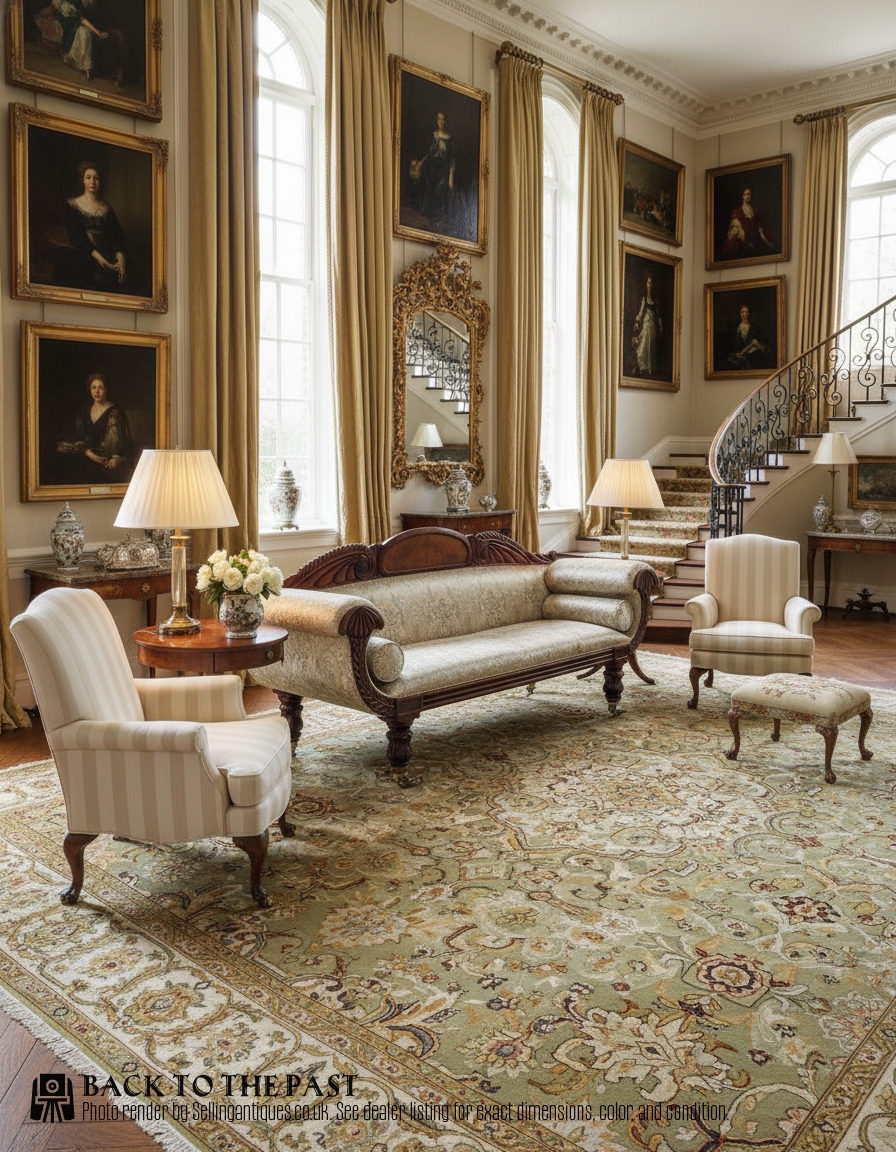
Place the settee where its deep proportions and decorative show frame can be viewed from multiple angles. Ensure adequate floor space for double scroll ends and substantial timber feet.
Pair the piece with traditional or contemporary interiors that benefit from nineteenth-century mahogany and rosewood tones.
How do I tell periods apart?
William iv pieces sit chronologically between late Regency and early Victorian eras, sharing transitional stylistic traits. Look for heavier architectural timber work and scroll carvings distinct from lighter eighteenth-century forms.
Materials like rosewood and mahogany alongside specific upholstery configurations help anchor a piece within the nineteenth century.