



Traditional Leather Settee
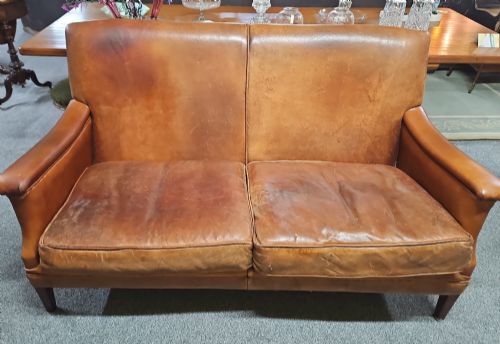
A traditional leather settee brings deep buttoning and rich hides into a room, offering enduring comfort and substantial period character.
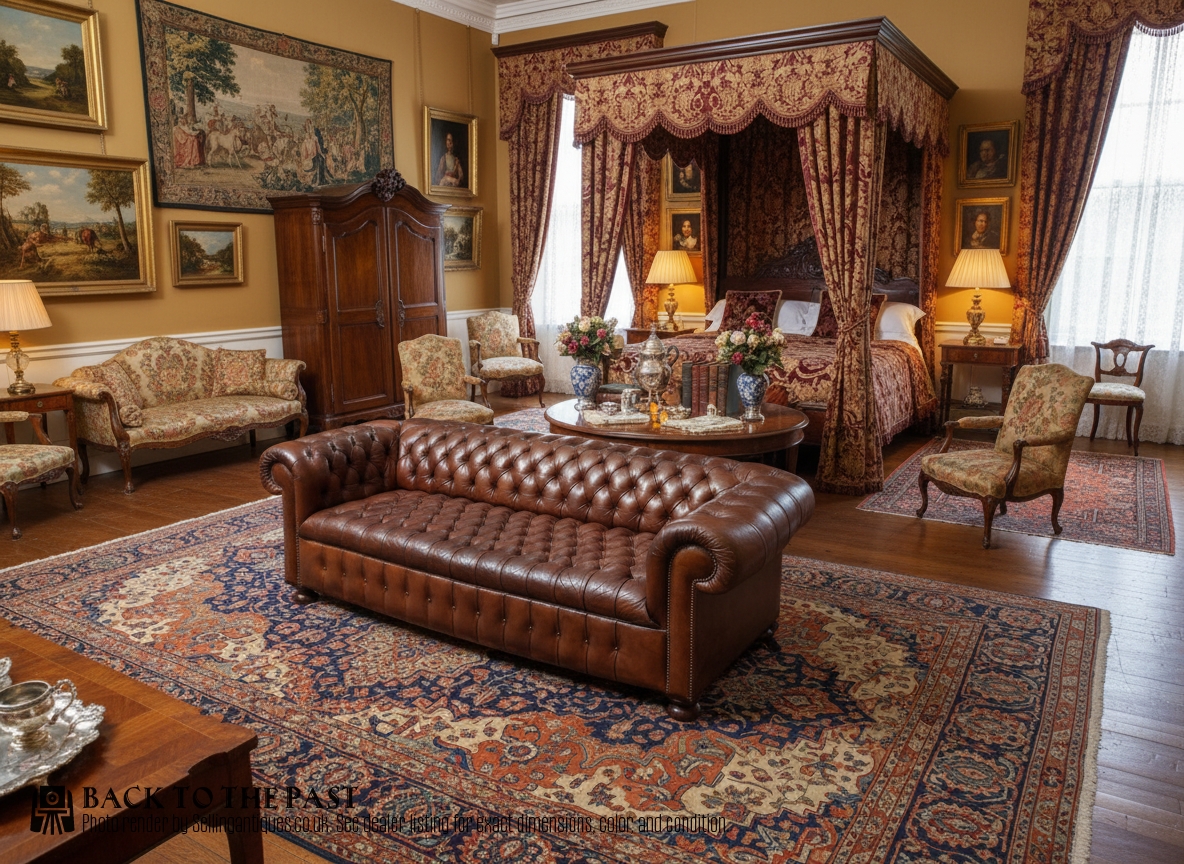
Traditional Leather Settee
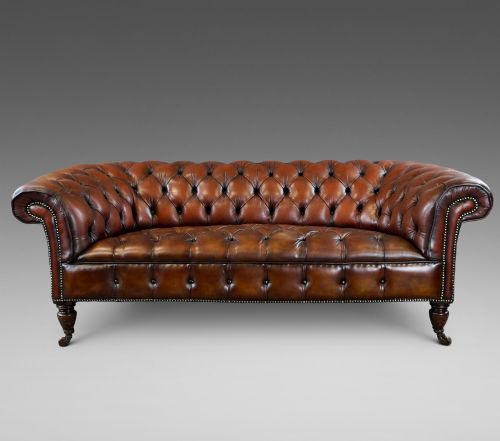
A traditional leather settee spans forms from low-slung club sofas to grand Victorian Chesterfields and early twentieth-century couches. Buyers navigating this selection encounter deep buttoned backs, scroll ends, and generous multi-seat frames designed for relaxed lounging.
The prevailing examples originate in the nineteenth and early twentieth centuries, anchored by Victorian and Edwardian craftsmanship. Pieces range from un-restored originals in untouched patinated hide to fully restored frameworks finished in hand-dyed whiskey or brown leathers.

How They Were Made
Construction relies on sturdy timber frames built from mahogany and seasoned hardwoods to support heavy daily use. Traditional upholstery methods incorporate coiled springs, hand-tied webbing, and horsehair stuffing to shape the seat and back.
Outer surfaces utilise durable leather stretched taut over deep tufting and secured with brass tacks. Many workshops finished these hides by hand, applying rich colour treatments that developed distinct patinas over decades.
Traditional Leather Settee Retail Price Guide 2026
Typical asking prices for traditional leather settee among the pieces listed under this phrase on Sellingantiques today, from the lower quarter to the upper quarter. They describe what is for sale here now, not the wider market.
The selection spans Victorian, Edwardian, and Regency periods alongside country house and Chippendale revival styles.
What Varies in Quality
Quality rests in the integrity of the internal stuffing and the original framing rather than surface appearance alone. Fine examples retain deep coil adoring, dense horsehair filling, and rigid hardwood structures that prevent sagging.
The treatment of the leather itself defines the upper tiers of craftsmanship. Supple, hand-dyed hides with retained grain and careful tufting distinguish superior workshops from later replacements.
Howard and Sons·Hampton and Sons of Pall Mall·Maple and Co
The Traditional Leather Settee Glossary
- Chesterfield
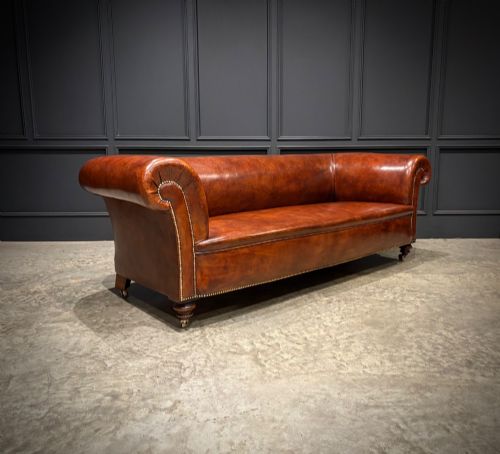
- A traditional sofa style characterised by deep button tufting, rolled arms of the same height as the back, and substantial padding. This form remains a staple of nineteenth-century seating design.
- Button-back
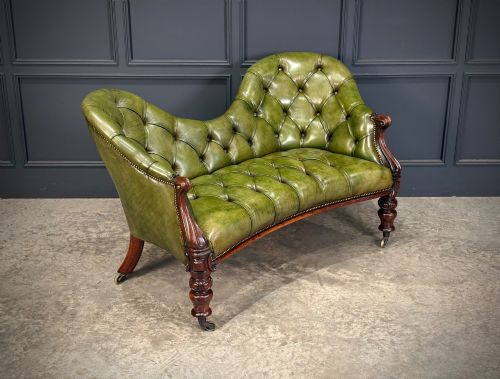
- An upholstery technique where buttons are pulled deep into the padding to create a diamond pattern. This method secures the internal filling while adding tactile texture.
- Scroll end
- A sweeping, curved armrest that rolls outward in a traditional scroll shape. Found frequently on nineteenth-century settees and chaise longues.
- Drop arm
- A mechanical or hinged armrest that can be lowered to transform a settee into a daybed. This design appears on Victorian chaise longues and specialised club sofas.
- Horsehair fill
- A traditional upholstery stuffing material gathered from horse manes and tails. Valued for its springiness and breathability, it provides durable support inside antique seats.
Traditional Leather Settee: Frequently Asked Questions
What is a traditional leather settee?
A traditional leather settee is a nineteenth or early twentieth-century upholstered seat, most commonly seen as a deep-buttoned Chesterfield or club sofa.
These pieces use durable leather hides stretched over robust hardwood frames and traditional coil springs.
How do I care for antique leather?
Antique leather requires regular conditioning with specialised balms to prevent the hide from drying out and cracking over time.
Keep these settees away from direct sunlight and strong heat sources to preserve the natural oils and rich patina of the finish.
Are these sofas comfortable for daily use?
Victorian and Edwardian settees were built with substantial interior padding, including horsehair and coil springs designed for deep, supportive lounging.
Their robust construction handles everyday sitting while offering firmer support than modern foam-filled alternatives.
How do I date a leather Chesterfield?
Dating relies on examining the internal framing, webbing materials, and the style of the wooden feet or castors underneath.
Nineteenth-century examples often display hand-stitched canvas linings and heavy mahogany frames beneath the leather upholstery.